 Reef
Reef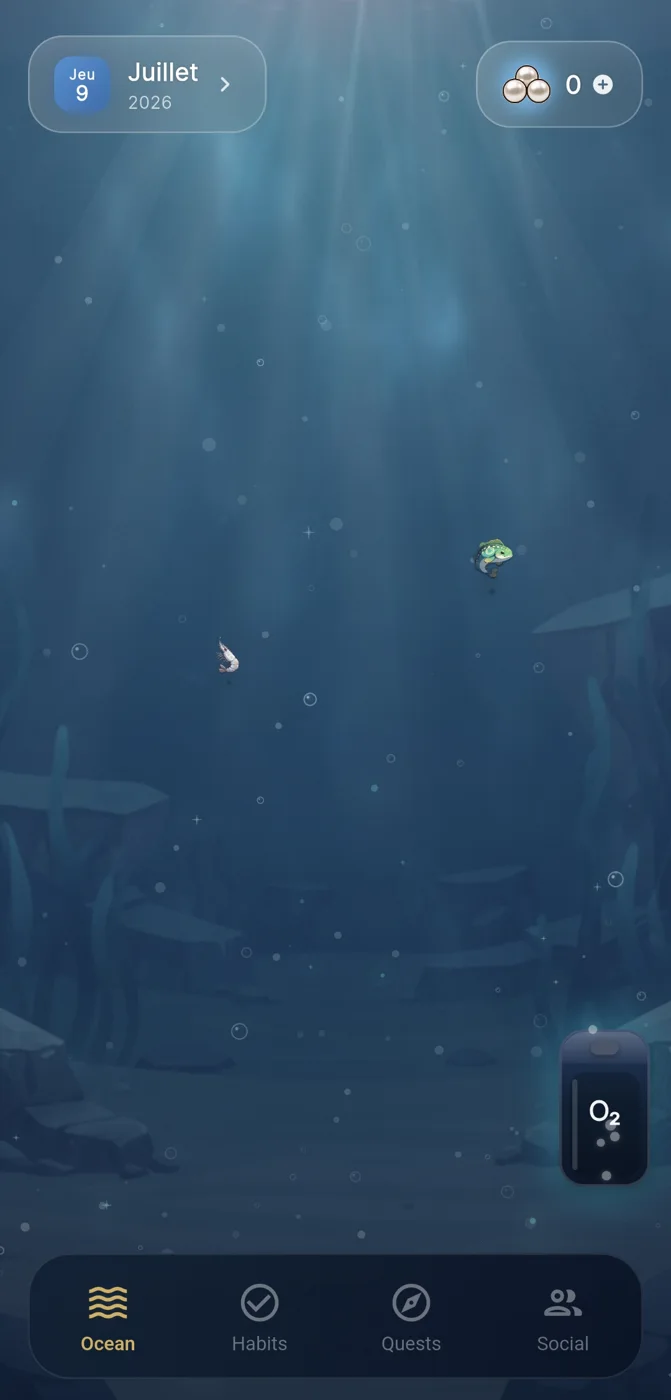
What apps to help with daily routine can and cannot do
People searching for apps to help with daily routine usually want one of three things: a reminder that a task exists, a record that it was done, and a reason to keep going tomorrow. A routine app can support all three. What it cannot do is perform the action for you, and no app can honestly promise that a routine will stick. This matters because the gap between a tidy checklist and a lived day is where most routines fail.
It helps to think of a routine app as a mirror rather than a motor. The mirror shows you what you repeated and what you skipped. The motor, the actual energy to do the thing, still has to come from the habit being small enough to start. Reef, a mobile habit tracker from IVRYN for iOS and Android, frames its own role in exactly these terms: it makes repeated actions visible, and it does not claim a guaranteed change in behaviour or health. That boundary is a useful standard to hold any routine app against.
So before downloading anything, decide which of the three jobs you actually need. If you forget tasks, prioritise reminders. If you lose track of consistency, prioritise a clear history. If you abandon routines after a bad week, prioritise how the app treats a missed day. Most people only need one of these to be excellent.
Start with small repeatable habits, not with the app
The most common mistake is loading an app with ten new routines on the first day. An app will faithfully display ten unchecked boxes each evening, and the sight of them becomes its own reason to stop opening it. A better pattern is to choose one or two actions that take under five minutes and that you could repeat on your worst day, then let the app track only those.
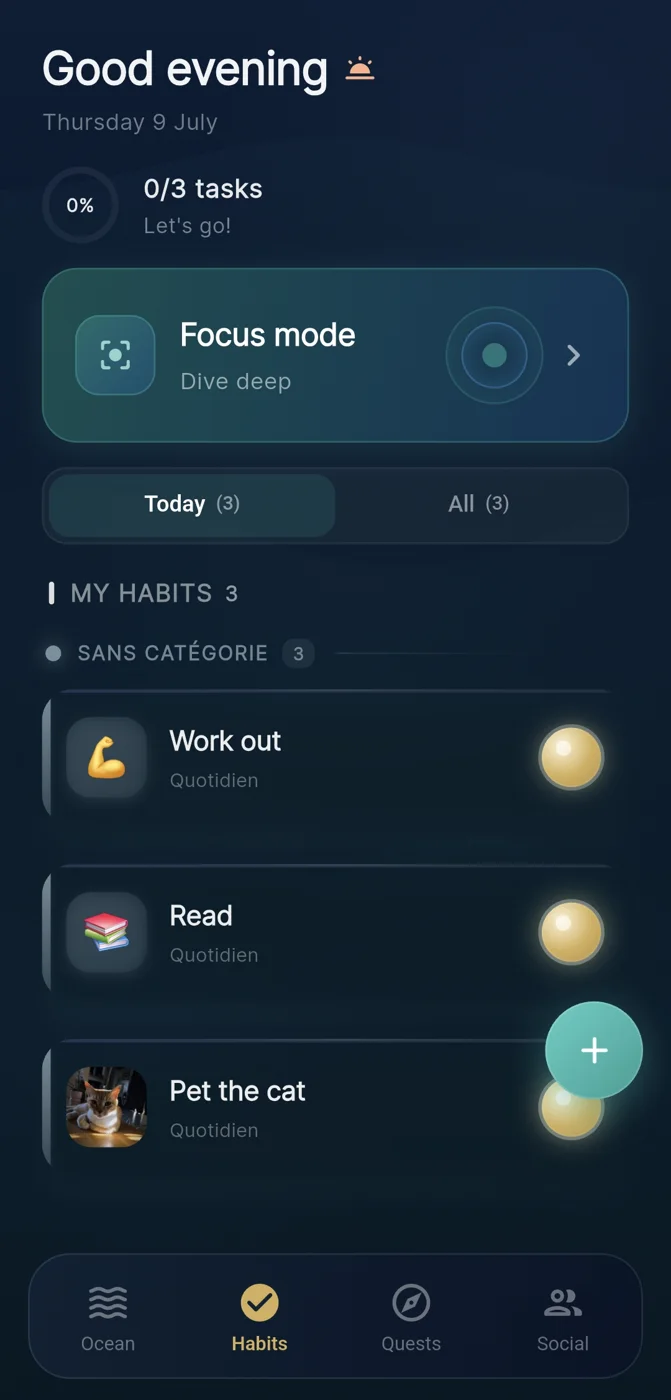
Reef's published habit design methodology leans on the same idea: small, repeatable actions that can be completed often enough to build a visible record. In its design, finishing a habit produces a pearl that joins a growing underwater scene. The point of the metaphor is not the decoration itself but that each small completion adds something you can see, which is what keeps a tiny habit from feeling pointless.
When evaluating any routine app, ask whether it makes a two-minute habit feel like a real entry or like clutter. Apps built around large goals and long streaks can quietly punish small habits. Apps built around frequent small completions tend to reward them.
- Pick habits you could do while tired, travelling or short on time.
- Write the habit as a single action, such as 'fill the water bottle', not as an outcome like 'be healthier'.
- Add a third habit only after the first two have survived a bad week.
Making progress visible without making it stressful
Visible progress is the strongest reason to use an app at all. A paper list shows today; an app can show the last month. But visibility has a tone. A red streak counter that resets to zero and a calendar full of grey gaps say 'you failed'. A scene that grows a little with each completion says 'you added something'. Both are showing the same data, yet they shape very different second weeks.
Gamified habit trackers, as Reef's own guide to the category describes, try to turn completions into something you want to look at rather than something you fear to open. The risk is that the game becomes the goal, and you check a box to earn a reward rather than to do the habit. The protection against that is to keep the reward modest and tied to a real action, which is what visual and cumulative systems like a growing ocean aim to do, as opposed to points leaderboards.
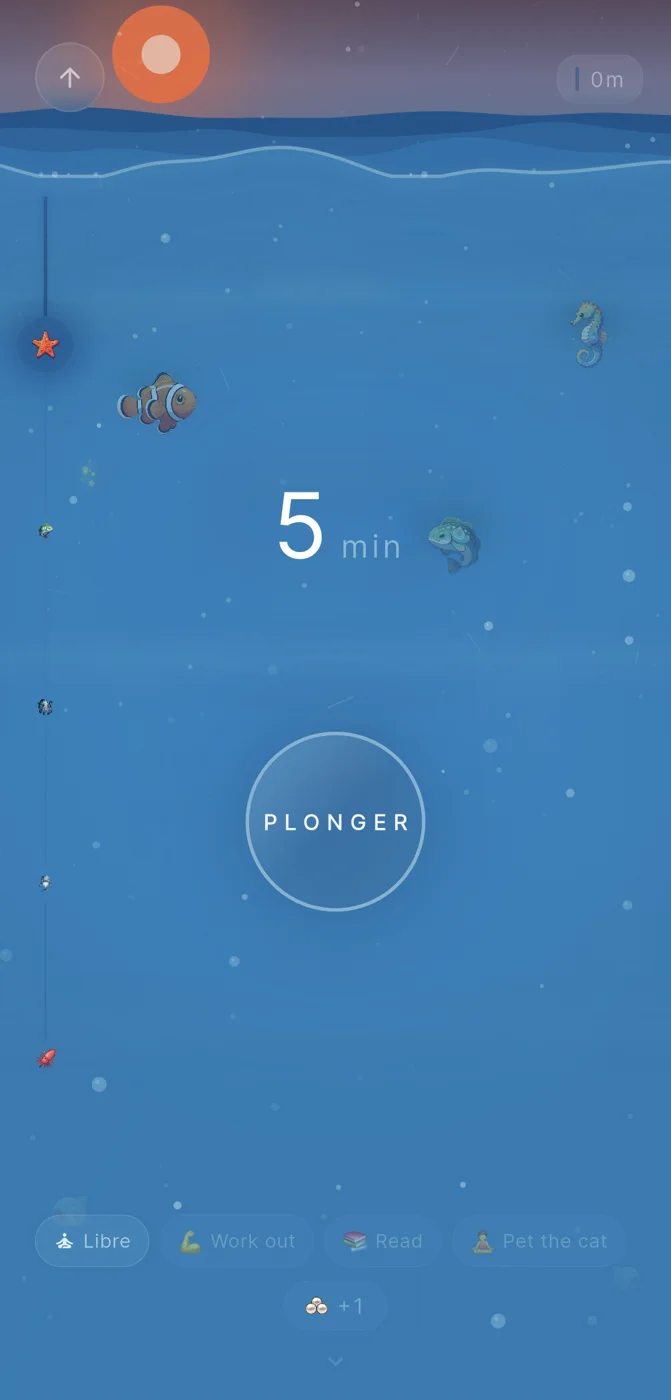
Focus time deserves the same treatment. Many routine apps now include a timer, because protecting a block of attention is itself a daily habit. Reef, for instance, presents a focus session as a dive and rewards the time you actually complete with the same pearls as a habit, so protecting focus and repeating a habit share one visual record. Whatever app you choose, check that focus time is tracked as a completion and not just as a stopwatch, otherwise it will not feel like part of the routine.
Gentle recovery after missed days is the real test
Every routine breaks eventually. Illness, travel, a demanding week at work, or simple boredom will interrupt even a two-minute habit. The question that separates useful apps from discouraging ones is what the screen looks like on the morning after. If the first thing you see is a collapsed streak and a scolding notification, the rational response is to avoid the app, and avoiding the app soon turns into abandoning the routine.
A gentle recovery design treats a missed day as information, not as a verdict. Your previous completions remain visible, the day is simply blank, and the next action is as small as it ever was. Reef's methodology and its guide on gamified trackers both describe this stance: the living scene you built does not drain away when you miss a day, so returning means adding to what exists rather than rebuilding from nothing. That design choice does not guarantee you will return, and Reef does not claim it does, but it removes one well-known reason not to.
When you test an app, deliberately skip a day during the trial. Notice your own reaction when you reopen it. If you feel a small pull to pick up where you left off, the design is working for you. If you feel judged, no amount of other features will compensate.
Optional social accountability, on your own terms
Some people keep routines better when someone else can see them. Others find any audience, even a supportive one, turns a private habit into a performance. Both reactions are legitimate, and a good routine app should allow either without penalty. Be wary of apps where social features are the default and solo use feels like a downgrade.
Reef's approach is to make crews optional: you can share your routine with a small group if you want shared accountability, and you can keep everything private if you do not. There is no claim that joining a crew produces better outcomes, only that the option exists. This is the right frame for judging any app. Ask whether you can opt in later, whether you can leave without losing your history, and whether the group sees completions or also sees misses.
If you do choose accountability, keep the group small and the agreement explicit. 'We each check in once a day' is a commitment people can keep. 'Let's motivate each other' is a sentiment that fades within a fortnight.
- Confirm you can use the app fully alone before inviting anyone.
- Agree with your group what a missed day means: usually nothing more than a blank.
- Prefer apps that let you leave a group while keeping your own record.
Example: a worked decision and a checklist before you commit
Here is a clearly hypothetical example to show how the principles fit together. Imagine Dana, who wants to read for ten minutes each evening and protect one undisturbed half hour of work each morning, and who has quit two routine apps already because their streaks reset after a long weekend away. Dana's needs map cleanly: two small habits, visible history, forgiving recovery, no social features yet. The right test is to install a candidate, log the two habits for a fortnight, skip one planned day on purpose, and then decide based on how the app and Dana's own mood respond. Any app that passes this test is good enough; features beyond this are a bonus rather than a requirement.
Reef fits a case like Dana's because its pearls accumulate for both habits and focus dives, and a skipped day leaves the ocean intact. It is still only a mirror. Whether Dana reads each evening depends on the book being near the bed, not on the app. Treat any routine app, Reef included, as bounded by that limit.
Use the checklist below during a trial week. Most of the items can be answered within days, and none of them requires paying before you know.
- Can I enter a habit that takes under five minutes and have it count fully?
- Does the home screen show my history as something I built, or as what I lost?
- What exactly happens visually and in notifications after a missed day?
- Is focus time recorded as a completed action, not just a timer?
- Are social features optional, and can I leave a group without losing data?
- Does the app make any promise about outcomes it cannot honestly keep?
- Will I still want to open this on a bad day?
Frequently asked questions
Do apps to help with daily routine actually make habits stick?
No app can guarantee that a habit will stick, and well-designed ones say so. A routine app can remind you, record what you did and make progress visible, which removes some common reasons for stopping. The habit itself still has to be small enough to repeat on a hard day, and the energy to do it comes from you rather than from the software.
Should I pick a routine app with streaks or one with a visual progress scene?
It depends on how you react to a missed day. Streaks give a sharp daily incentive but usually reset to zero after a gap, which many people find discouraging enough to quit. Cumulative visual systems, where each completion adds to a scene that is not erased by a miss, tend to be gentler to return to. Try skipping a day during a trial and notice which design you want to reopen.
Is it worth using the social features in a daily routine app?
Only if you genuinely want others to see your routine. Some people keep habits better with a small group checking in; others find an audience turns a private habit into a performance. Choose an app where social features are optional, where you can join later, and where leaving a group does not delete your own history. There is no evidence that social accountability works for everyone.
Sources and further reading
These resources provide the wider reference frame. Product statements on this page are limited to the public information provided by Reef.