 Reef
Reef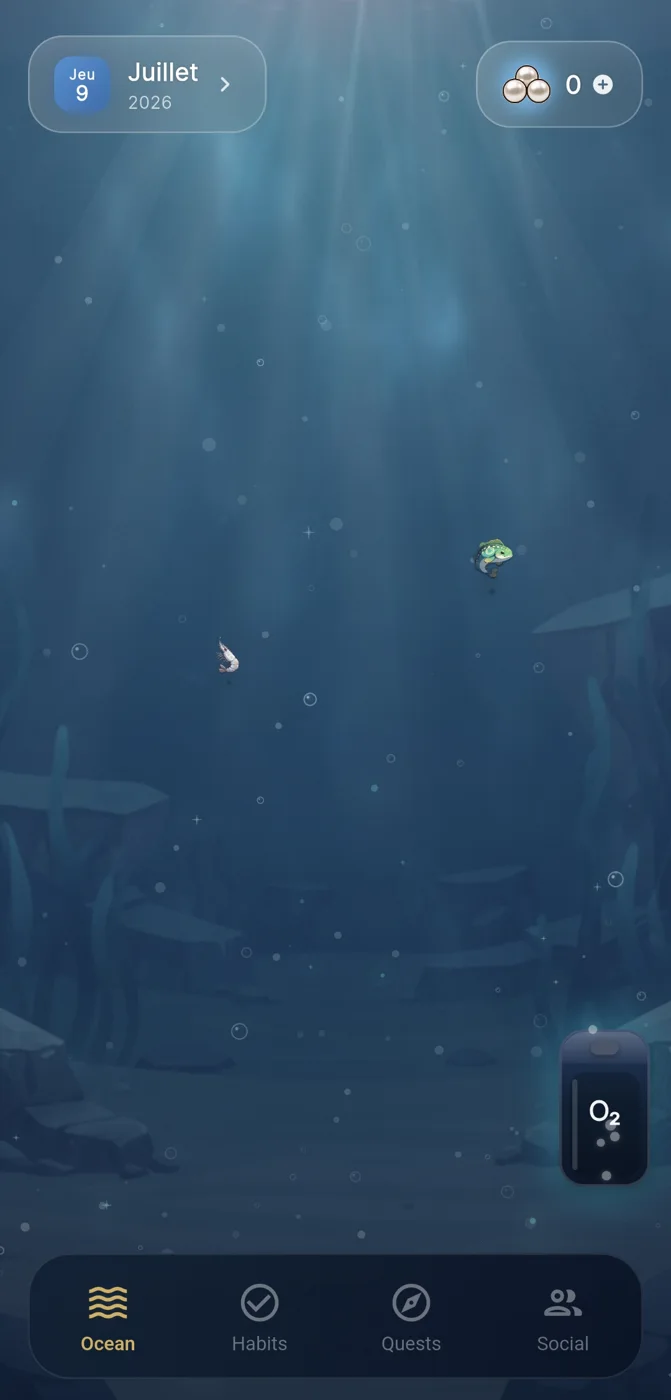
What people actually want from a daily routine application
When someone searches for a daily routine application, they are usually past the stage of wanting motivational quotes. They want a practical way to repeat small actions, see whether they are actually doing them, and keep that record somewhere that does not feel like a public performance. Privacy is not a side feature for this group; it is often the reason they avoided habit apps in the first place, having tried ones that push notifications, leaderboards, or public streak-shaming.
This creates a specific set of requirements: the app should make consistency visible to the user, it should not punish a missed day so harshly that people quit altogether, and any social element should be something the person opts into rather than something forced on them by default. An application that gets these three things right is doing the core job of a routine tool, independent of any particular design theme.
- A private-by-default record of actions taken
- Visible but non-punitive feedback on consistency
- Social features that are optional, not required
Small repeatable habits are the actual unit of progress
The most reliable way to build a routine is to work with actions small enough that missing a day does not feel catastrophic and completing one does not require unusual willpower. This is a design principle more than a motivational one: an application that only tracks large, effortful goals will produce sparse data and frequent gaps, which makes it harder for a person to judge whether their routine is working.
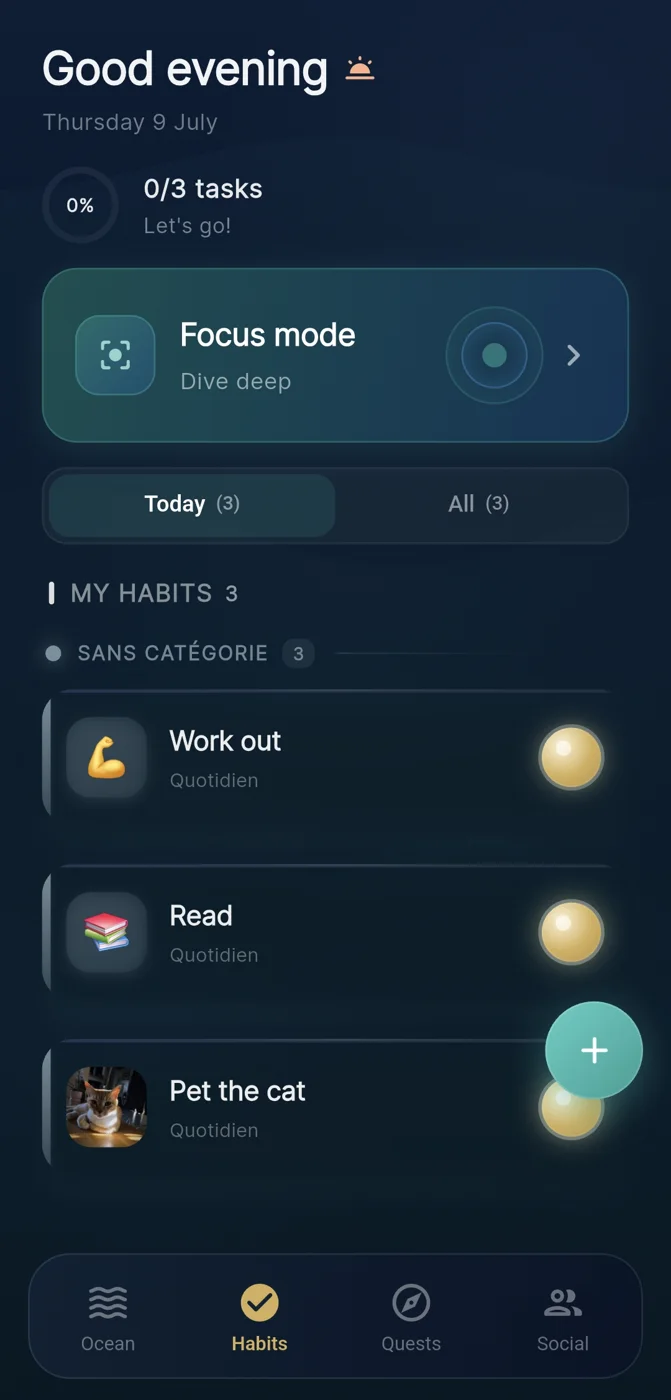
Reef is built around this idea of a recorded-action model, where completing a habit is registered as a discrete event that adds to a visual living ocean, rather than as a score to be maximised. Each completed habit releases a pearl into that ocean, which gives the person a cumulative picture of what they have actually done over time. This is a feedback mechanism, not a promise of behaviour change; the app records actions and shows them back, and what a person does with that information is up to them.
The practical implication for choosing any daily routine application is to look at whether it treats habits as small, frequent, recordable actions, or whether it nudges you toward broad, vague goals that are hard to mark as done. The former tends to produce a steadier, more honest record of a routine; the latter tends to produce gaps that are demoralising to look at.
Visible progress without public exposure
There is a meaningful difference between progress that is visible to you and progress that is visible to other people by default. A daily routine application can support the first without requiring the second. Visual feedback, such as a private display of accumulated actions, gives a person a way to notice patterns in their own behaviour, for example that mornings work better than evenings, without that record being shared anywhere.
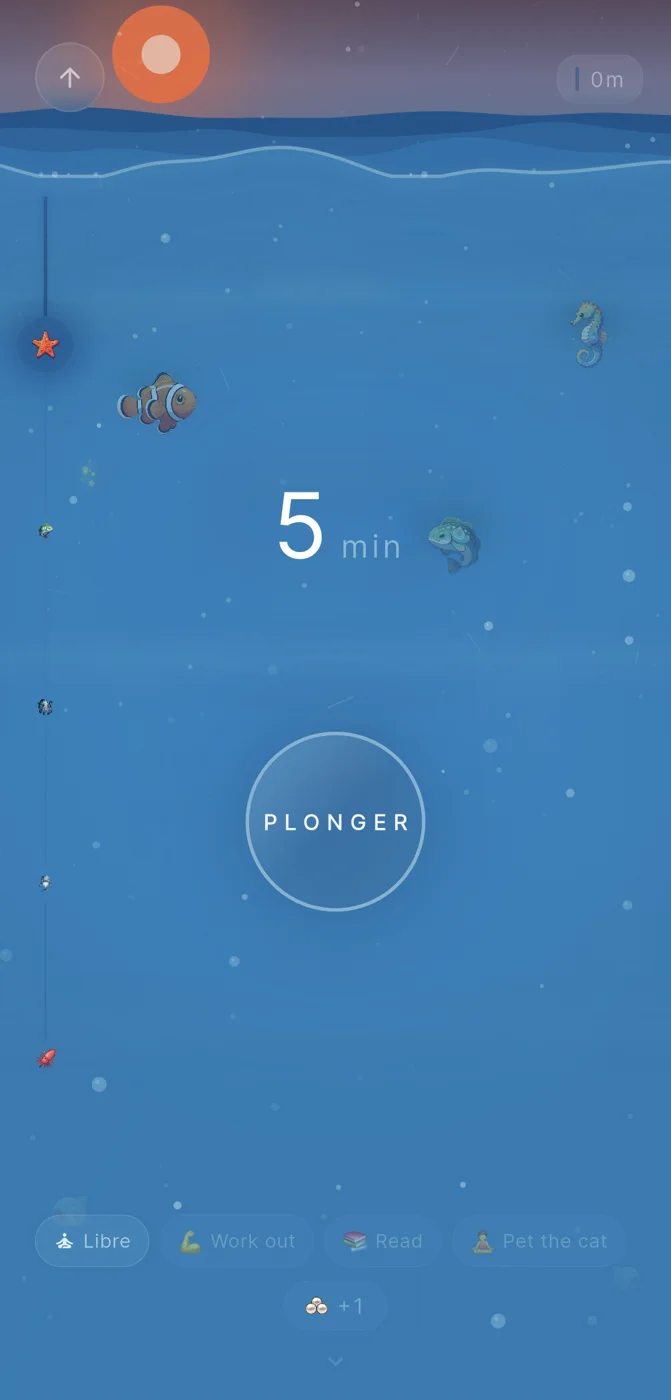
In Reef, the ocean metaphor and the pearls it accumulates are a personal, visual representation of recorded actions. Focus sessions use a related dive metaphor, where time spent focused is rewarded with pearls in the same way completed habits are, again as a private record rather than a public one. Nothing in this design implies that visibility to others is required for the tool to be useful; the visual feedback exists primarily for the person doing the tracking.
This matters for the search intent behind 'daily routine application' because many people evaluating these tools have specifically been put off by apps that default to public profiles, shared streak boards, or notifications that broadcast activity to a network. A tool that keeps the visual record private by default, and only introduces other people when the user chooses to, is answering a real and common concern rather than a hypothetical one.
Gentle recovery after a missed day
Almost everyone using a routine application misses a day eventually, and how the app responds to that moment often determines whether the person continues using it or abandons it. A design that treats a missed day as a reset to zero, or that surfaces a broken streak as the headline piece of information, tends to push people toward giving up rather than resuming.
A gentler approach is to let the missed day exist as a gap in the record without erasing the accumulated history around it. If pearls already added to a living ocean, or focus time already logged from past dives, remain visible and intact, the person can see that one missed day is a small gap in a longer pattern rather than the collapse of everything they had built. This does not require the app to make any claim about outcomes; it is simply a way of presenting the same recorded data so that recovery feels plausible rather than pointless.
When evaluating any daily routine application on this point, it is worth checking whether missing a day visibly destroys prior progress in the interface, or whether the interface continues to reflect the cumulative record. That single design choice has a large practical effect on whether people return after a lapse.
Optional social accountability, on the user's terms
Social accountability can genuinely help some people stay consistent, but it does not work for everyone, and making it mandatory tends to alienate the people who wanted privacy in the first place. The more workable pattern is to offer a social layer as an optional addition rather than a default state.
Reef's crews function this way: a person can choose to share aspects of their routine with a small group if they want that kind of accountability, but the core habit and focus tracking does not require it. This keeps the private, individual record as the default experience, with social features available for those who specifically want them.
It is worth being clear about what this kind of feature can and cannot do. Sharing progress with a crew may help some people stay motivated because they know others can see their activity, but neither Reef nor any comparable application can guarantee that this produces a particular behavioural or health outcome for a given individual. Anyone choosing an app for accountability purposes should treat social features as an optional tool to try, not a mechanism with predictable results.
A worked example: choosing a routine to track
Example, for illustration only. Suppose someone wants to build a morning routine consisting of three things: ten minutes of reading, a short walk, and twenty minutes of focused work on a personal project. Rather than tracking 'have a good morning' as a single vague goal, they set up each of the three as a separate small habit and a focus session for the work block.
Each morning, completing the reading and the walk registers as two recorded actions, contributing two pearls to their private ocean. The twenty-minute focus session, tracked as a dive, adds a further pearl on completion. Over a two-week period, this person can look back at the private record and see, for instance, that the walk was completed most days but the focus session was skipped on several mornings when they started work later than planned. That pattern is useful information: it suggests the ordering of the routine, not the person's willpower, might be the issue.
If they miss a day entirely, for example because of travel, the prior two weeks of recorded pearls remain visible, so the gap reads as one missed morning within a longer pattern rather than a reason to restart from nothing. If they later decide they want a bit of outside accountability for the focus sessions specifically, they could choose to share just that part with a small crew, while keeping the reading and walking habits private. This example illustrates how small habits, private visual feedback, gentle recovery and optional sharing can work together in practice, without asserting that this is how any specific person's routine will unfold.
Matching the daily routine application to your privacy needs
Not every person needs the same balance of privacy and social features, so it is worth being explicit about what you are looking for before choosing a tool. Someone who wants a purely private log of small actions has different requirements from someone who specifically wants a shared accountability group from day one.
A reasonable way to evaluate any candidate application, including Reef, is to check three things: whether habit and focus data is private by default, whether the interface preserves accumulated progress after a missed day rather than resetting it, and whether any social or sharing feature is something you opt into rather than something switched on automatically. Reef documents its recorded-action model, visual feedback design, and the boundaries of what it claims, in its public methodology page, which is a useful reference if you want to see how one specific application reasons about these choices before you decide whether that approach fits your own routine.
Frequently asked questions
Can a daily routine application keep my habit data private while still showing me progress?
Yes, this is achievable through a design where completed habits are recorded as private visual feedback, such as a personal display of accumulated actions, that is visible only to the user unless they actively choose to share it, for example through an optional social feature.
What should happen in a routine app when I miss a day?
A well-designed routine app should preserve the record of actions you completed before the missed day rather than resetting all progress to zero, since presenting a missed day as a small gap in a longer pattern makes it easier to resume than treating it as a total loss.
Is social accountability necessary for a habit tracker to be useful?
No, social accountability is optional and helps some people but not others; a habit tracker can function fully as a private, individual tool, with any group or sharing features available only for users who specifically choose to enable them, and no app can guarantee a particular behavioural outcome from using them.
Sources and further reading
These resources provide the wider reference frame. Product statements on this page are limited to the public information provided by Reef.