 Reef
Reef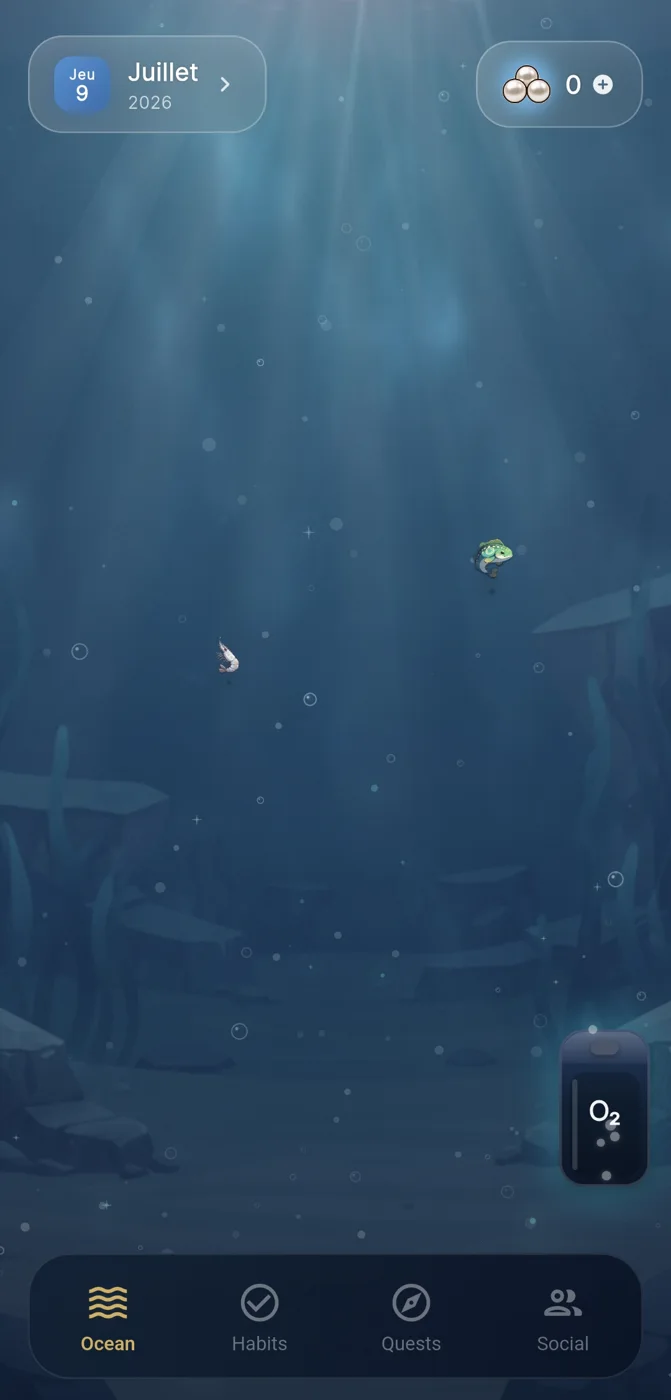
What can you use for free?
Many habit trackers offer a free tier with limits. In Reef, you can track up to 6 habits, keep one active expedition and use focus sessions up to 25 minutes without a subscription. Completing habits earns pearls for your living ocean. Optional Reef Premium raises limits and adds features.
Reef free plan
Start free and grow a living ocean
Download Reef on iPhone or Android and use it without a subscription. Every habit you complete releases a pearl into your own ocean.
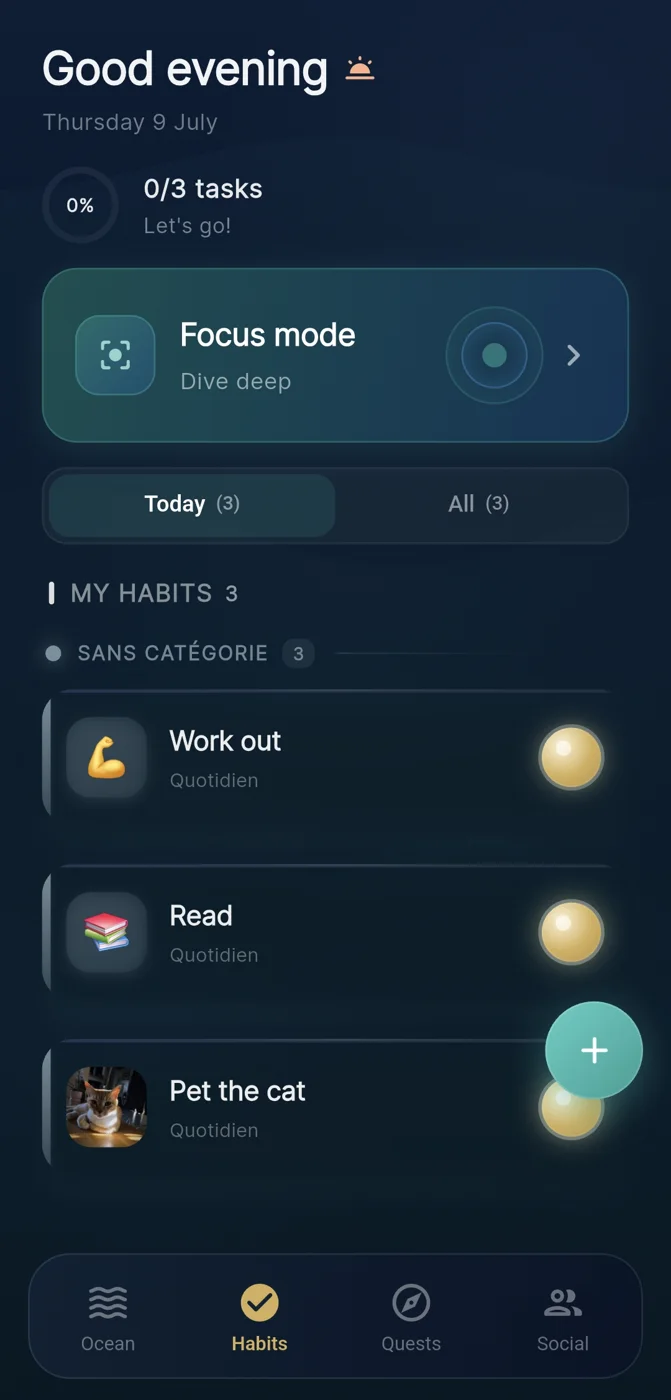
- Up to 6 habits, each with its own pearl to release once it is done.
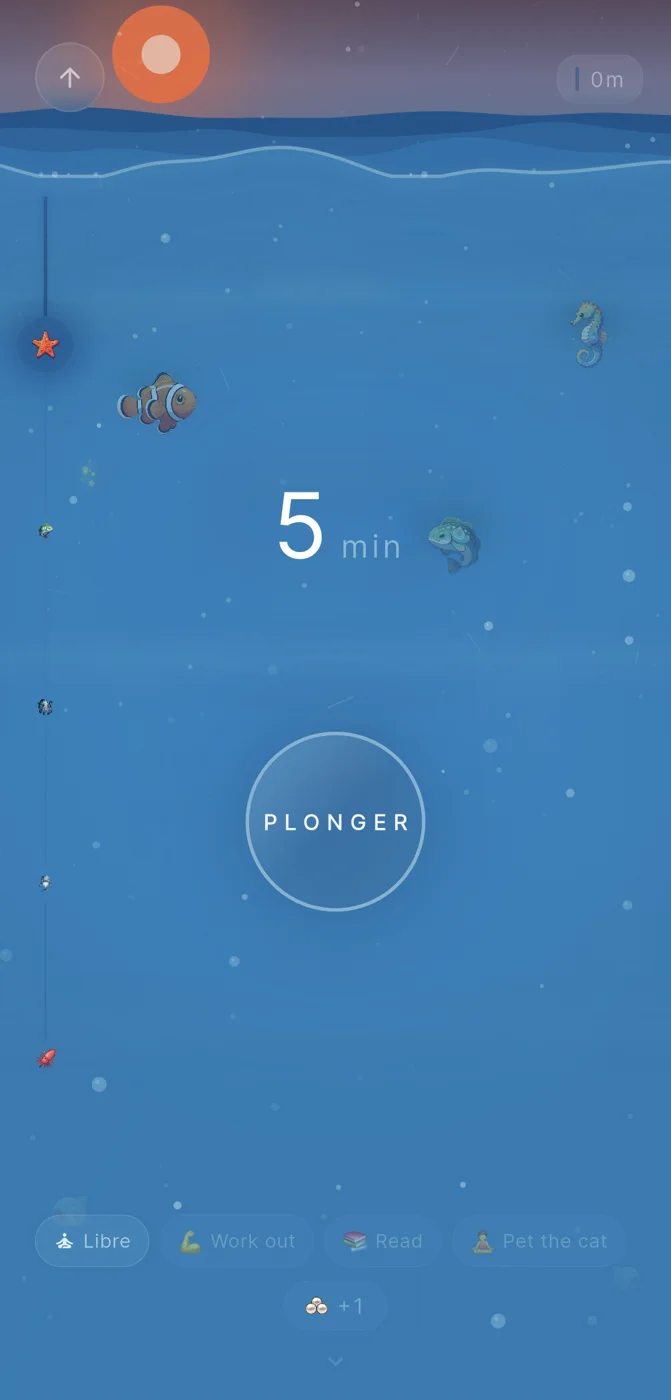
- Focus dives up to 25 minutes. A completed dive earns pearls too.
- Crews with friends are optional.
- Premium is optional and raises these limits. Its price shows in the store before you pay.
Free download. Reef makes completed habits visible. It does not promise that a habit will stick.
Is habit tracker app free? The short answer
Many habit trackers offer a free tier with limits. In Reef, you can track up to 6 habits, keep one active expedition and use focus sessions up to 25 minutes without a subscription. Completing habits earns pearls for your living ocean. Optional Reef Premium raises limits and adds features.
'Free' rarely means 'free forever with every feature.' It usually means free to start, with either a capped feature set, a capped number of habits, or a time-limited trial of premium features. The practical question isn't whether an app is free, but whether the free tier covers what you personally need to keep a small habit going for weeks or months, not just days.
What usually sits behind a free plan
Across the habit-tracking app category, the features that commonly move behind a paywall include: unlimited habit slots (free tiers often cap you at a handful), deeper stats or history beyond a recent window, customization like themes or reminders, and social or accountability features that involve other people. None of this is specific to any single app; it's a general pattern worth checking before you rely on a free tier long-term.
Reef’s App Store and Google Play descriptions, checked on 16 September 2026, confirm these free limits: 6 habits, one active expedition and focus sessions up to 25 minutes. Premium is optional. Check the current price, billing period and purchase conditions in your store before subscribing. Other apps set their own free limits.
- Habit or task limits on the free tier
- Limited history or stats retention
- Reminders, themes or customization gated behind payment
- Social or group accountability features often paid or optional
Why the free-plan question matters less than habit design
A generous free plan doesn't make a habit stick, and a paid plan doesn't guarantee it either. The more useful question for most readers is whether the app's underlying mechanics support small, repeatable actions, visible progress, and a gentle way to recover after a missed day. Those design principles matter more to whether you'll still be using the app in three months than whatever sits behind a paywall.
Reef, an IVRYN mobile habit tracker for iOS and Android, is built around this idea: completing a habit releases a pearl that contributes to a visual, living ocean, so progress is something you can see accumulate rather than a checkbox that resets. Focus sessions use a dive metaphor and also reward completed focus time with pearls, giving the same visual feedback to protected work time as to habit completion.
Reef documents this recorded-action model, along with its claim boundaries, in its public methodology artefact. It's worth reading if you want to understand how an app frames what it can and can't promise, since Reef does not claim to guarantee a behaviour or health outcome , it records actions and makes them visible, and the rest is up to the person using it.
A worked example: comparing two free tiers
Here is a hypothetical example, for illustration only, not a claim about any real app's current pricing or limits. Imagine you're comparing two habit apps. App A's free tier caps you at three habits with a 7-day history view. App B's free tier allows unlimited habits but strips out reminders and any social features. Neither is 'more free' in an absolute sense , they've just chosen different limits.
If your actual goal is to track two or three small habits (say, a short walk, a glass of water reminder, and ten minutes of reading) and you don't care about long-term stats yet, App A's free tier might cover you completely. If you want to track five or six habits from day one but don't mind manually remembering to open the app, App B might fit better despite missing reminders.
This example is meant to show a decision process, not to describe Reef or any named competitor's specific plan. The takeaway: match the free-plan limits to what you'd actually use in the first month, not to a hypothetical future where you're tracking twenty habits with a crew of friends.
A short checklist before you commit to any app
Before deciding whether a free tier is 'enough,' it helps to write down what you actually need in the first few weeks, since that's the period where most habit attempts either take hold or get abandoned. The checklist below is deliberately simple and platform-agnostic.
Small, repeatable habits are easier to sustain than ambitious ones, so check whether the free tier lets you track a small number of habits without friction. Visible progress , some way to see what you've done, even briefly , helps more than deep analytics you won't check in week one. Gentle recovery after a missed day matters: look at whether the app treats a skipped day as a reset-to-zero streak break or as something less punishing. And if social accountability appeals to you, check whether it's optional rather than required, since not everyone wants their habits visible to a group.
- Can you track your actual number of target habits on the free tier?
- Is there any visible progress indicator, not just a numeric streak?
- Does missing a day feel punishing or does the app allow gentle recovery?
- Is any social or crew feature optional rather than mandatory?
How Reef fits within these limits
Within Reef's public product context, the app is described around a small set of mechanics: habit completion feeds a visual living ocean, focus sessions use a dive metaphor with their own pearl rewards, and social crews are explicitly optional. That optionality matters for readers who want accountability without being forced into a group dynamic they didn't choose.
It's worth being clear about the boundary of what can be said here: Reef documents its recorded-action model and claim boundaries in its methodology artefact, and states it does not guarantee any behaviour or health outcome. That's consistent with a general truth about the whole app category , no tracker, free or paid, guarantees that you'll keep a habit. What an app can offer is a way to make your own repeated actions visible to yourself, and Reef's stated design leans on that visibility plus a gentle framing around missed days rather than promising results.
Frequently asked questions
What can I do in Reef without a subscription?
Many habit trackers offer a free tier with limits. In Reef, you can track up to 6 habits, keep one active expedition and use focus sessions up to 25 minutes without a subscription. Completing habits earns pearls for your living ocean. Optional Reef Premium raises limits and adds features.
Is a habit tracker app free to use, or do most require payment eventually?
Most habit tracker apps use a freemium model: a core version is free to download and use, and additional features like unlimited habits, deeper stats, or social tools are often gated behind a subscription or one-time purchase. Specific limits vary by app and change over time, so it's worth checking an app's current listing directly rather than assuming a fixed answer.
What features are usually limited on a free habit tracker plan?
Common limits include a cap on the number of habits you can track, a shorter history or stats window, restricted customization such as reminders or themes, and social or group accountability features that are often optional add-ons. These vary by app and by platform, so check the current details for any specific app before relying on them.
Does a free plan matter more than how the app is designed?
Design matters more for most people. Whether an app supports small repeatable habits, shows visible progress, allows gentle recovery after a missed day, and offers optional (not mandatory) social accountability tends to affect whether you keep using it more than whether the free tier is generous. A free plan with poor habit-design fundamentals is less useful than a well-designed app with a modest free tier.
Sources and further reading
These resources provide the wider reference frame. Product statements on this page are limited to the public information provided by Reef.