 Reef
Reef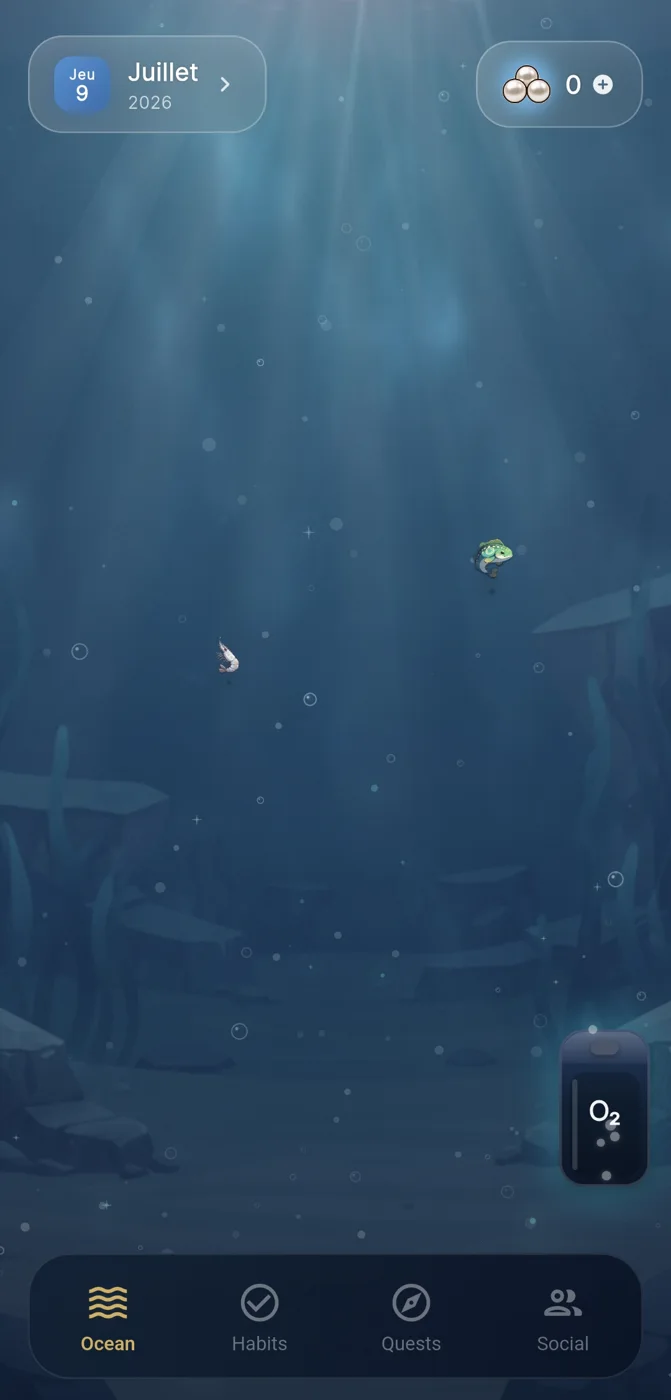
Why people search for daily routine apps free
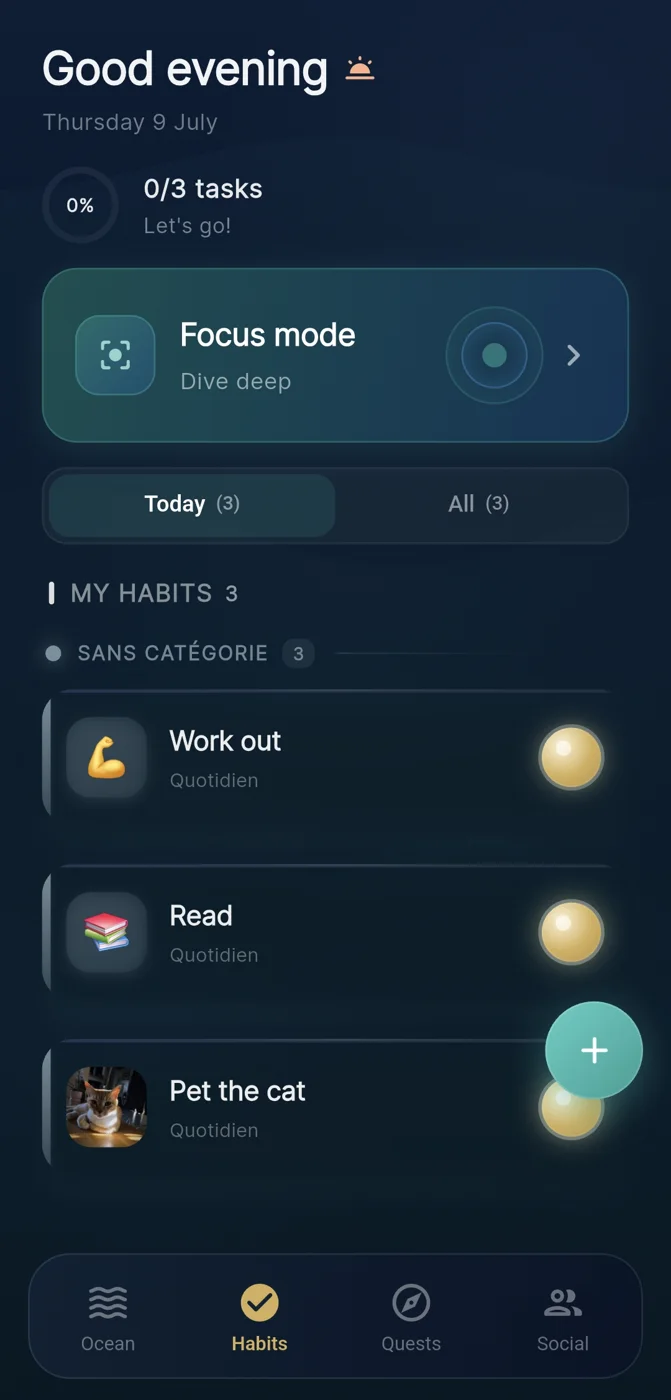
Searching for daily routine apps free usually means someone wants to start small - a morning stretch, a glass of water before coffee, a few minutes of reading - without committing money to find out whether the habit sticks. That's a reasonable way to test a new routine, because the friction of a paywall can be enough to stop someone before they've even tried the behaviour itself.
The trouble is that 'free' covers a wide range of products, from apps that are genuinely free with optional paid extras, to apps that gate almost everything useful behind a trial. Before comparing specific apps, it helps to know what you're actually judging: does the free tier let you track more than one habit, does it show your history in a way that motivates you, and does it handle missed days without shaming you into quitting altogether.
What free actually buys you
A free daily routine app typically gives you the basics: creating a habit, marking it done, and seeing a streak or calendar. What separates a genuinely useful free tier from a frustrating one is usually the presentation of progress and how it treats gaps, not the feature count.
Visual progress matters more than most people expect. A plain checklist can feel like homework, while a visual representation of accumulated effort - a growing plant, a filling jar, or something similar - gives a small but real sense of momentum. This is one of the reasons some apps lean on gamified or visual mechanics rather than a bare list; the design is meant to make repetition feel less like a chore, not to prove a health outcome.
Recovery after a missed day is the other quiet differentiator. Apps that reset a streak to zero and offer no acknowledgment of effort can discourage exactly the people who need the most flexibility. Look for language or mechanics that treat a missed day as a pause rather than a failure.
Reef's approach to habits, focus and free use
Reef, an IVRYN mobile habit tracker for iOS and Android, is one example of an app built around this idea of visible, low-pressure repetition. Completing a habit in Reef adds to an underwater scene that grows over time, so progress is something you see accumulate rather than a number that resets and disappoints you.
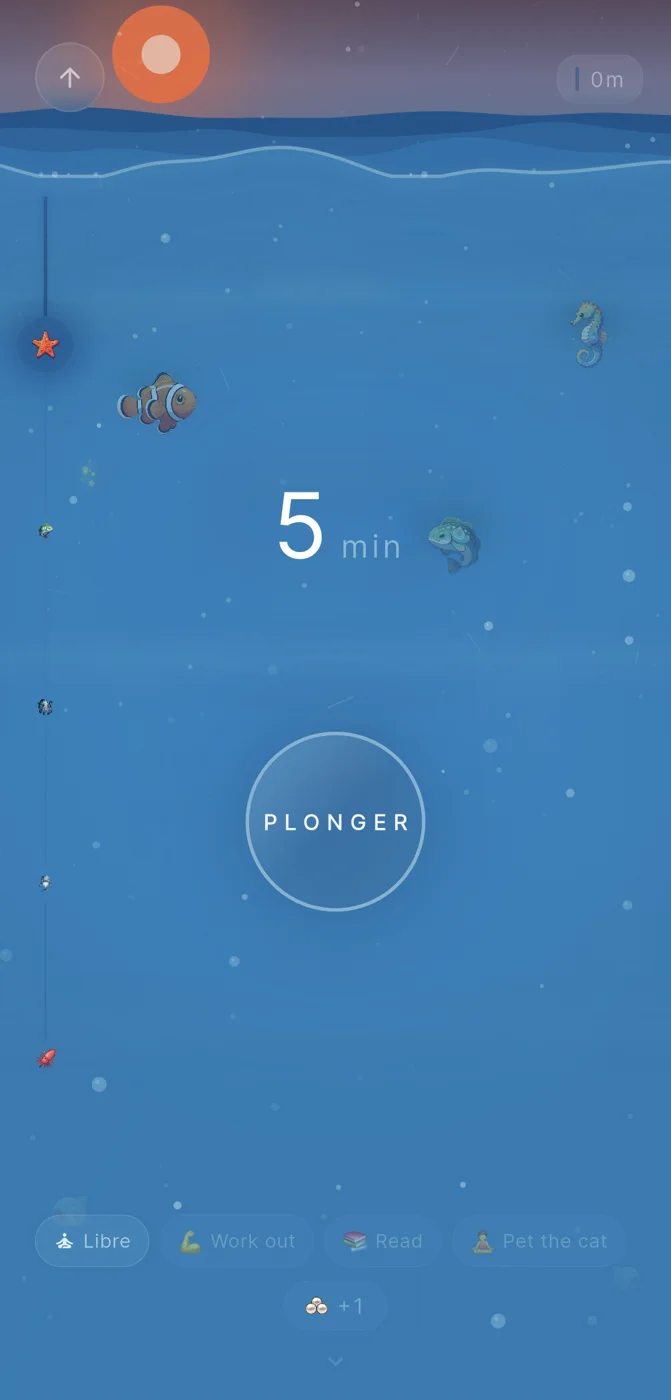
Reef also includes timed focus sessions framed as a dive, which is a way of making protected work or study time feel less abstract; finishing a session contributes to the same visual world as your habits do. Social crews are available if you want a small group to check in with, but they're optional - Reef doesn't claim that using them, or the app generally, guarantees any particular behaviour or health outcome.
Because this article isn't a competitive comparison, the point of mentioning Reef here isn't to rank it against other free routine apps, but to illustrate the kind of design choices - visible progress, gentle recovery, optional accountability - that are worth looking for regardless of which app you pick.
A worked example: choosing between two free apps
Here is a hypothetical, purely illustrative comparison to show how the principles above apply in practice - it does not describe any specific real product's pricing or features.
Imagine 'App A' offers unlimited habits for free but resets your streak to zero after one missed day and shows only a numeric counter. Imagine 'App B' limits you to three free habits but keeps a rolling history visible even after a miss, and shows a simple visual of accumulated progress. For someone starting out and worried about giving up after an inevitable bad week, App B's approach to recovery and visibility may matter more than App A's higher habit limit, even though App A looks more generous on paper.
This kind of trade-off - quantity of features versus how gently the app handles imperfection - is often the real decision point, more so than headline feature counts.
A short checklist before you commit
Use this checklist as a quick filter when comparing any free daily routine apps, including Reef:
- Can you track more than one habit for free, and is that limit clearly stated rather than discovered mid-use?
- Does the app show cumulative progress visually, or only a streak number that can reset to zero?
- What happens after a missed day - does the app treat it as a reset or as a pause you can resume from?
- If there's a social or accountability feature, is it optional, and does the app avoid promising specific outcomes from using it?
- Does a focus or session feature exist if you also want to protect blocks of time, not just tick off habits?
Limits to keep in mind
No habit app, free or paid, can guarantee that a routine will stick - that depends on far more than software, including sleep, stress, environment and personal motivation. Treat any app, including Reef, as a support for repetition and visibility, not a solution to the underlying reasons a habit is hard to keep.
Free tiers, pricing and specific feature limits change over time across the app market, so treat any comparison - including the hypothetical one above - as illustrative rather than a snapshot of current offers. Always check the current terms inside the app store listing or the app itself before deciding.
If a routine you're trying to build relates to a medical condition, sleep disorder, or mental health concern, a habit app is not a substitute for advice from a qualified professional; use it only as a tracking aid alongside that guidance.
Frequently asked questions
Are free daily routine apps as effective as paid ones?
Effectiveness depends more on how well the app's design fits your habits and how you use it than on whether you pay. Many free tiers cover the basics - tracking, visual progress, and simple recovery after a missed day - well enough for most starting routines, though some paid tiers add more habits, integrations or detailed history.
What should I check before trusting a free habit app with my routine?
Check what happens to your data if you stop using the app, whether the free tier's limits are clearly disclosed, and whether the app handles missed days without resetting all your progress. Also confirm current pricing and feature limits directly in the app store listing, since these change over time.
Does using social features in a habit app guarantee I'll stick to my routine?
No. Optional social or crew features can add light accountability, but no app, including Reef, guarantees a behaviour or health outcome. Consistency still depends on factors like motivation, environment and how realistic the habit is for your schedule.
Sources and further reading
These resources provide the wider reference frame. Product statements on this page are limited to the public information provided by Reef.