 Reef
Reef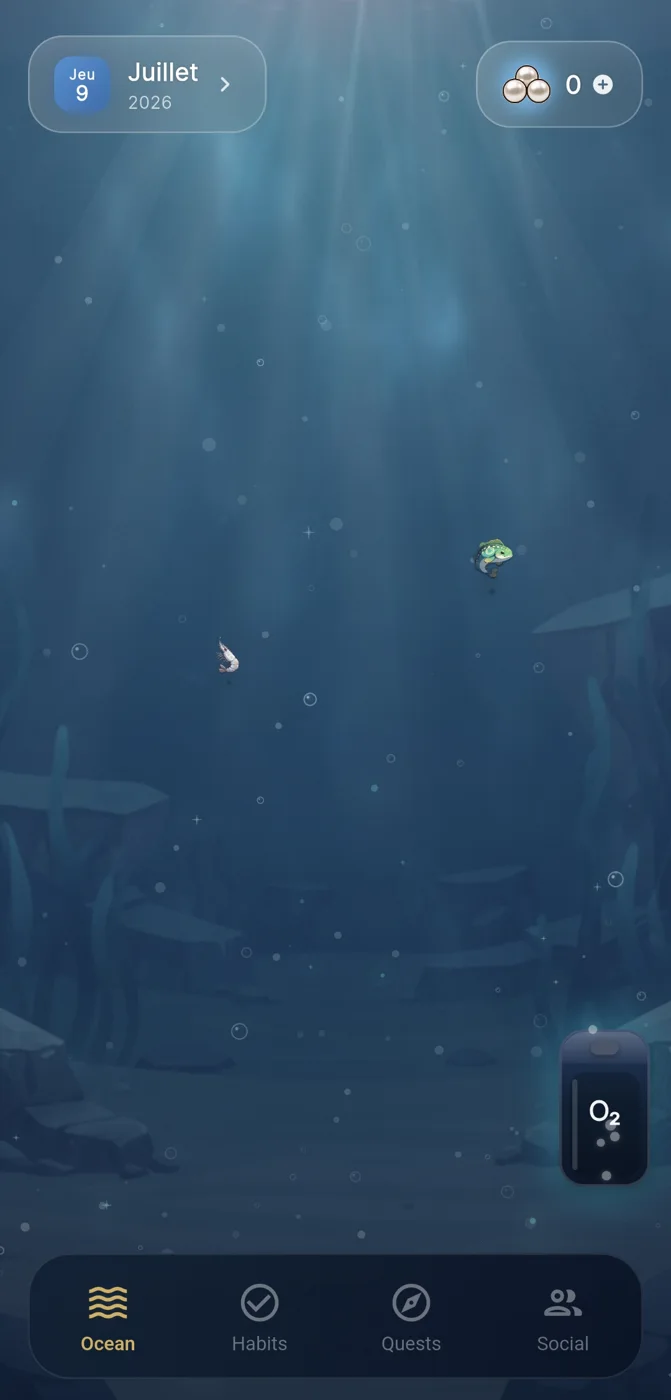
What people actually mean by a daily routine app offline
When someone searches for a daily routine app offline, they usually have one of two problems in mind: either they want to log habits during a train commute, a flight, or a stretch of poor signal, or they're wary of apps that feel unusable the moment connectivity drops. Both concerns are reasonable, and both deserve a clearer answer than 'yes it works offline' or 'no it doesn't.'
In practice, offline behaviour in habit and focus apps sits on a spectrum. Some apps let you tap a habit as done locally and sync later. Others require a live connection just to open the home screen. Still others handle offline logging fine but lose focus-session timers or streak calculations if the app is closed mid-session without a connection. None of this is fixed forever, since app behaviour changes with updates, so it's worth treating any specific claim about offline support as something to verify at the time you're deciding, not as a permanent fact.
Why offline reliability matters for small repeatable habits
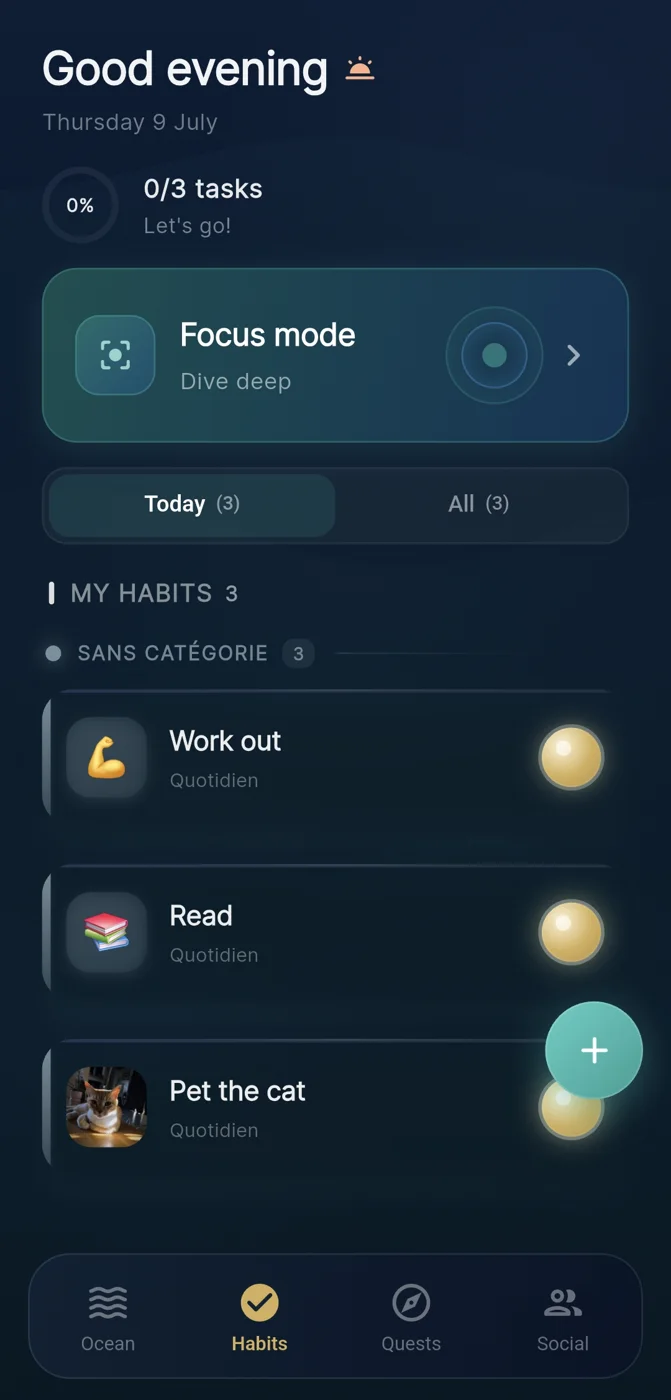
The core idea behind most habit-building approaches is that small, repeatable actions matter more than occasional large efforts. A habit tracker that requires perfect conditions - full battery, strong signal, app freshly updated - works against that principle, because it adds friction exactly at the moments when friction is most likely to break the habit: a rushed morning, a commute, a trip.
This is part of why visible, immediate feedback matters so much in habit design. If completing an action doesn't register something right away, even locally, the psychological reward of 'I did it' gets delayed or lost. Reef, for instance, is built around the idea that completing a habit releases a pearl that contributes to a visual living ocean - a mechanic meant to make repetition visible rather than to guarantee any particular behaviour change. Whether that kind of visual feedback works offline in practice is a device- and version-specific detail worth checking directly in the app rather than assuming from general habit-tracking guidance.
A worked example: planning around patchy connectivity
Consider a hypothetical reader - call her Priya - who commutes by subway with no signal for 25 minutes each morning and wants to log a reading habit and a short focus session during that window. Here's how she might reason through it, purely as an illustration and not a recommendation of one specific outcome.
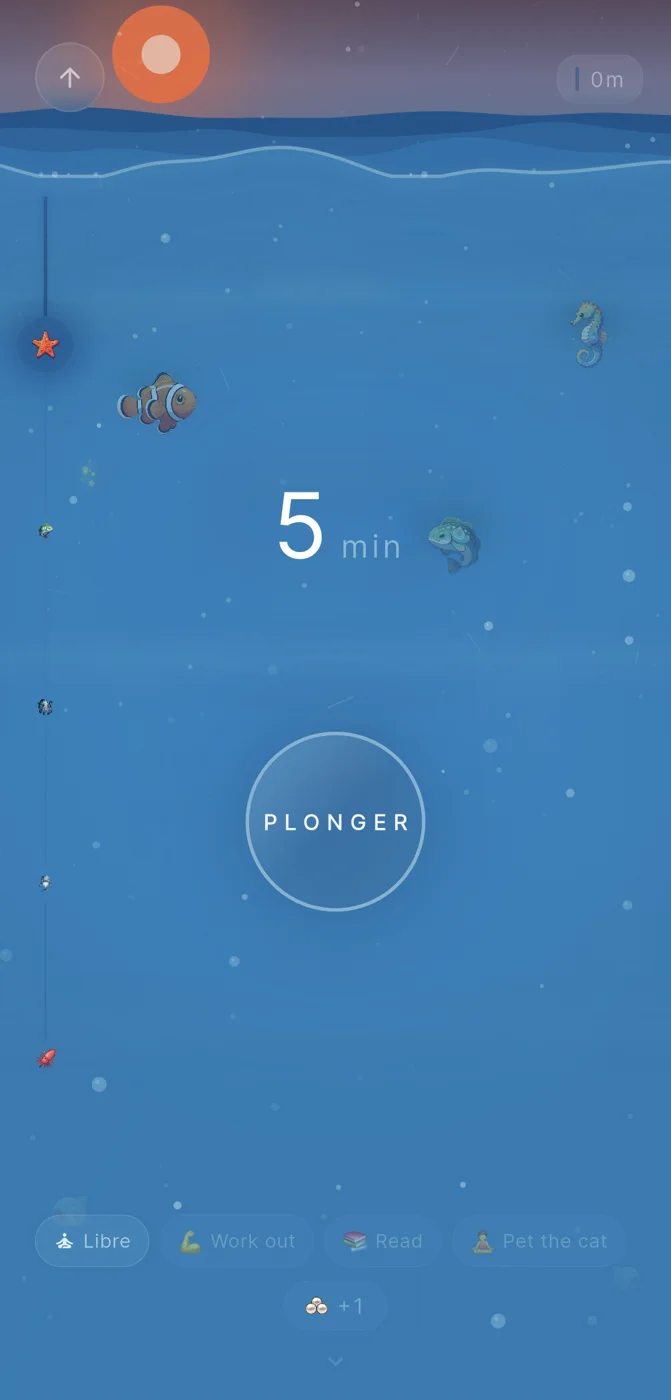
First, she'd check whether the app lets her mark a habit complete without a network connection at all, or whether it simply shows a loading spinner. Second, she'd test whether a focus session, if the dive-metaphor style of session is available, can be started and completed offline, and whether the reward for that focus time (in Reef's case, a pearl) appears once she's done, or only after reconnecting and syncing. Third, she'd note whether any social or accountability feature she's using depends on real-time connectivity to feel meaningful, since optional social crews are, by design, something a person opts into rather than something required for the habit itself to register.
This example illustrates a general decision process, not a claim about how any particular version of any particular app behaves today.
A short checklist for evaluating a daily routine app offline
Rather than trusting marketing copy, it helps to check a few concrete things directly on your device before relying on an app during regular no-signal periods.
This kind of checklist is meant to reduce guesswork, not replace it - actually testing on your own device and network conditions is the only reliable way to know.
- Can you mark a habit as done with airplane mode on, and does it stick after reconnecting?
- Does a focus or timer session survive being backgrounded or losing signal mid-session?
- Is any visual progress indicator (streaks, imagery, points) updated locally or only after a sync?
- Do optional social or sharing features fail gracefully offline, or do they block the rest of the app?
- How much local history does the app retain if you go several days without connectivity?
Gentle recovery matters more than perfect offline logging
Even with good offline support, gaps happen - a dead phone, a forgotten app, a genuinely offline week during travel. What matters longer-term is less about whether every single day synced perfectly and more about whether the app treats a missed streak as a minor setback rather than a failure state. Habit approaches that build in gentle recovery after missed days tend to be easier to sustain than ones built around unbroken streaks, because real routines aren't unbroken.
This is a design philosophy question as much as a technical one. An app can have flawless offline syncing and still discourage a user if it frames a broken streak harshly. Conversely, an app with occasional sync hiccups can still support the habit well if it doesn't punish the user for a gap. When evaluating a daily routine app offline, it's worth asking both questions - does it work without a connection, and does it forgive gaps in use - since they address different but related failure points.
Where optional social accountability fits in offline contexts
Social or crew-based accountability features are, for tools like Reef, explicitly optional rather than core to whether a habit gets tracked at all. That distinction matters for offline use: if a person is relying on connectivity-dependent social features as their main motivator, a period of poor signal could disrupt motivation even if the core logging still works fine locally. Someone who wants a daily routine app offline for regular commutes or travel might reasonably choose to treat social features as a nice-to-have rather than the backbone of their routine.
None of this amounts to a guarantee that any specific app, including Reef, will produce a particular behaviour change or health outcome. Offline reliability is one practical factor among several - alongside habit design, personal consistency, and how forgiving the app is after a missed day - that together shape whether a routine sticks.
Frequently asked questions
Does offline access guarantee that a habit tracker will help me build a routine?
No. Offline access only removes one source of friction - needing a connection to log an action. Whether a habit sticks depends on many other factors, including how small and repeatable the habit is, how the app handles missed days, and personal consistency. No app can guarantee a behaviour or health outcome.
What should I test before trusting an app to work during regular no-signal periods?
Turn on airplane mode and try to mark a habit complete, start and finish a timed session, and check whether any progress or reward indicator updates locally. Then reconnect and confirm everything synced correctly. This direct test is more reliable than any general claim about offline support, since app behaviour can change between versions.
Are optional social or accountability features usually available offline?
Often, social or crew-based features rely on real-time syncing between users, so they may be limited or unavailable without a connection, even if core habit logging still works. If offline reliability matters to you, it's worth treating social accountability as a supplementary feature rather than the main reason you use the app.
Sources and further reading
These resources provide the wider reference frame. Product statements on this page are limited to the public information provided by Reef.