 Reef
Reef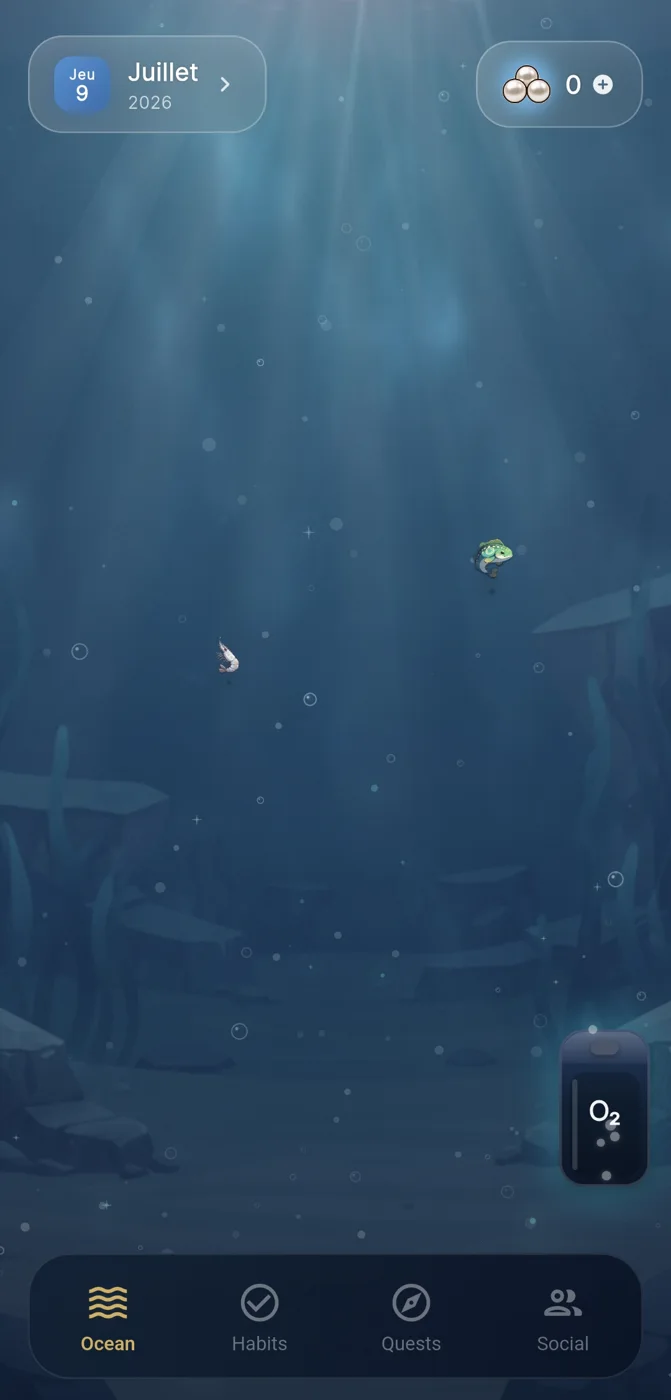

What a daily routine app android should actually help you do
Searching for a daily routine app android usually means you already have a rough set of habits in mind - a morning stretch, a reading block, a bedtime wind-down - and you want the phone to make repeating them easier, not to invent new discipline from nothing. The most useful way to evaluate any candidate app is to ask whether it reduces the friction of showing up again tomorrow, especially on the days you don't feel like it.
Most of these apps share a similar skeleton: a list of habits, a streak or points counter, and some kind of daily check-in screen. The differences that matter are usually in how the app treats a missed day, how visible your accumulated effort becomes over time, and whether any social features feel like pressure or like genuine support. Those three factors are where habit science and app design actually intersect.
Small repeatable habits work better than ambitious overhauls
The core principle behind most routine-building advice is that small, repeatable actions are easier to sustain than large one-off commitments. An app that encourages you to log a two-minute habit consistently is doing more useful work than one that nudges you toward an hour-long routine you'll abandon within a week.
When comparing apps, look at how easy it is to define a 'small' version of a habit. Some tools default to rigid targets like a fixed number of minutes or repetitions, which can discourage a lighter attempt on a busy day. Others let you log any completion, however brief, as a full success. The latter tends to be more forgiving and more aligned with how habits actually form.
Visible progress and why it matters more than raw data
A second principle worth prioritising is visible progress - some way to see, at a glance, that effort is accumulating. Numbers on a dashboard can do this, but many people respond better to a visual or symbolic representation that changes over time, since it turns abstract consistency into something concrete.
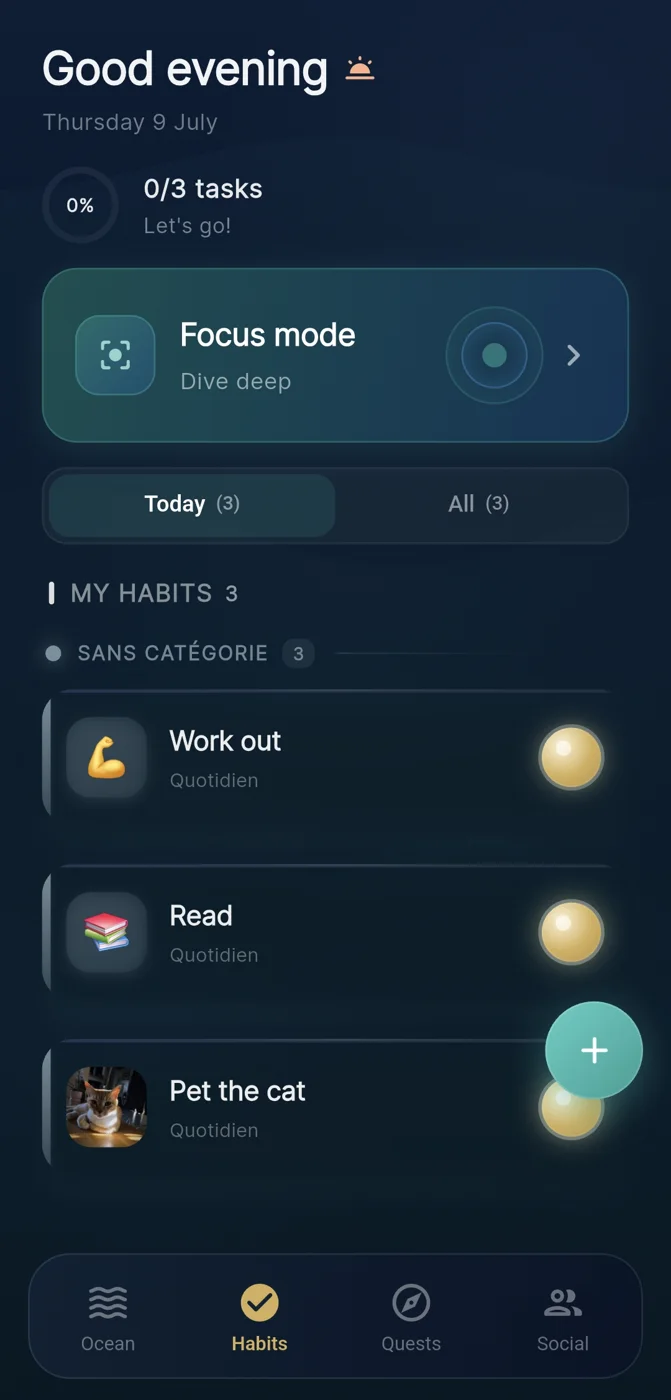
Reef, an IVRYN mobile habit tracker for iOS and Android, is one example of this approach: completing a habit is represented as releasing a pearl into a growing ocean scene, and focus sessions are framed as dives that also earn pearls for time spent concentrating. That kind of visual feedback doesn't change the underlying mechanics of habit formation, but it can make the accumulation of small efforts feel less abstract, which is often what keeps people returning to an app rather than deleting it after a week.
Gentle recovery after missed days is a design detail worth checking
One of the most practical things to evaluate in any daily routine app is what happens after you miss a day. Apps that reset a streak to zero and offer nothing else can make a single missed day feel like total failure, which is a common reason people abandon habit trackers altogether.
A gentler design treats a missed day as data rather than defeat, keeping historical progress visible and making it easy to simply resume the next day without extra friction or guilt-inducing messaging. This is less about any specific app's marketing and more about a general principle: recovery-friendly design tends to correlate with longer-term use, because it doesn't punish the normal unevenness of real life.
When you're comparing options, it can help to open the app's settings or FAQ and specifically look for language about streaks, misses, or 'grace periods.' If an app only celebrates unbroken streaks and says nothing about recovery, that absence is itself useful information.
Where optional social accountability helps - and where it doesn't
Some daily routine apps, Reef included through its optional crew feature, let you share progress with a small group of people. Social accountability can be genuinely useful for people who respond well to being seen, but it isn't universally helpful, and no habit app can guarantee that adding a social layer will produce a particular behaviour change or health outcome.
If you're the kind of person who feels motivated by a friend noticing your consistency, an optional social layer can add real value. If group visibility instead makes you anxious about being judged for a missed day, it's worth keeping habit tracking private, or choosing an app where social features are clearly optional rather than baked into the core experience.
A worked example: choosing between two habit-tracking approaches
Here is a hypothetical, illustrative only, comparison to make the decision concrete. Imagine two people, both trying to build a ten-minute daily reading habit.
Person A picks an app with rigid daily targets, no visible history after a missed day, and a public leaderboard shared with strangers. After missing two days during a busy week, their streak resets to zero, the app shows no record of prior effort, and they feel discouraged by their position on the leaderboard. This combination of harsh reset and unwanted public comparison is a plausible reason someone might stop using the app.
Person B picks an app with a flexible definition of 'reading' (even five minutes counts), a visual record that persists even after a missed day, and an optional small-group check-in with two friends they chose themselves. When they miss two days, the app still shows their accumulated progress, and their friends' visible activity - not judgment - mildly nudges them to resume the next day.
This example doesn't predict outcomes for any real person; it's meant only to illustrate why the specific design choices discussed above - flexible targets, persistent visible progress, and optional rather than forced social features - tend to align better with the stated principles of gentle, sustainable habit-building.
- Check whether missed days reset progress entirely or preserve history
- Check whether daily targets can be scaled down on hard days
- Check whether social features are opt-in and adjustable
- Check whether the app frames focus time (not just habits) with any reward
A short checklist before you install a daily routine app android
Before committing to any daily routine app android, it can help to run through a short checklist rather than relying on star ratings alone, since ratings rarely reveal how an app handles the specific moments - a missed day, a busy week, a social nudge - that determine whether you keep using it.
None of this checklist requires technical expertise; it just requires reading the app's own descriptions of its streak, recovery, and social mechanics before you commit real habits to it.
- Does the app let you log small, low-effort versions of a habit as a full success?
- Does it show a visual or numeric record of progress that survives a missed day?
- Is any social or group feature clearly optional, and can you turn it off?
- Does the app avoid promising specific health or behaviour outcomes?
- Can you see your full history, not just a current streak count?
Frequently asked questions
Is a daily routine app android alone enough to change a habit?
No app can guarantee behaviour change on its own; apps can make small habits easier to track and repeat, but consistency still depends on the person's own routine, environment and motivation, and any tool claiming a guaranteed outcome should be treated with caution.
What should I look for if I keep breaking streaks and losing motivation?
Look for apps that treat a missed day as recoverable rather than resetting all progress to zero, since gentle recovery design tends to support longer-term use better than rigid all-or-nothing streak systems.
Are social accountability features in habit apps worth using?
They can help if you're motivated by visibility to a small chosen group, but they are optional by design in tools like Reef and won't suit everyone; if group sharing feels like pressure rather than support, it's reasonable to keep habit tracking private instead.
Sources and further reading
These resources provide the wider reference frame. Product statements on this page are limited to the public information provided by Reef.