 Reef
Reef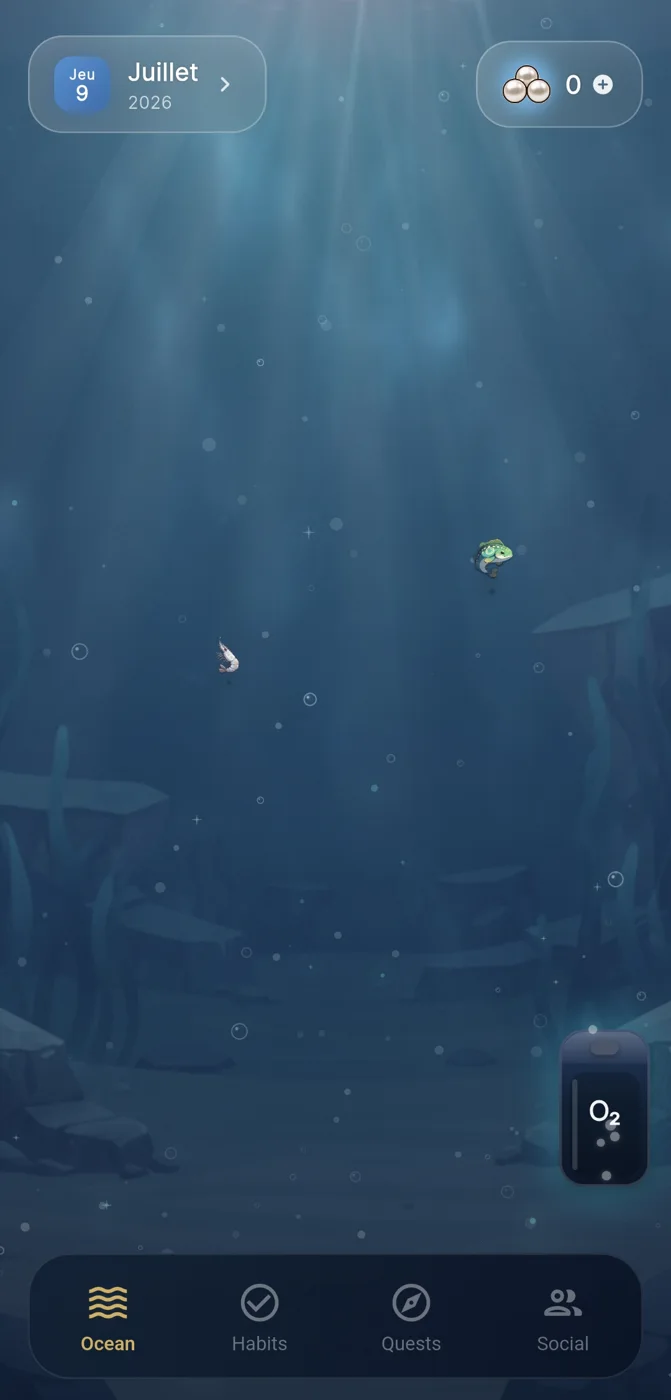
What a daily routine journal app can realistically do
Anyone searching for a daily routine journal app is usually trying to solve two problems at once: remembering to do small things consistently, and having some record that shows whether it's working. Most of these apps are built around the same basic idea - you log a habit, the app stores it, and over time you get a visible trail of what you actually did versus what you intended to do. That visibility is the main value, not any inherent power to change your behaviour.
It helps to be clear-eyed about what logging can and cannot do. Writing down that you meditated or stretched doesn't cause the habit to stick; it just makes the pattern easier to see, which in turn can support the small adjustments - timing, reminders, difficulty - that actually help a routine survive. An app is a mirror and a nudge, not a mechanism that guarantees follow-through.
Why visible progress matters more than streak pressure
A recurring idea across habit-formation writing is that small, repeatable actions are easier to sustain than ambitious ones, and that seeing progress - even in a simple, understated way - reinforces the behaviour better than raw willpower does. This is one reason many routine journal apps use some kind of visual feedback: a calendar fill-in, a growing chart, or a more playful visual metaphor.
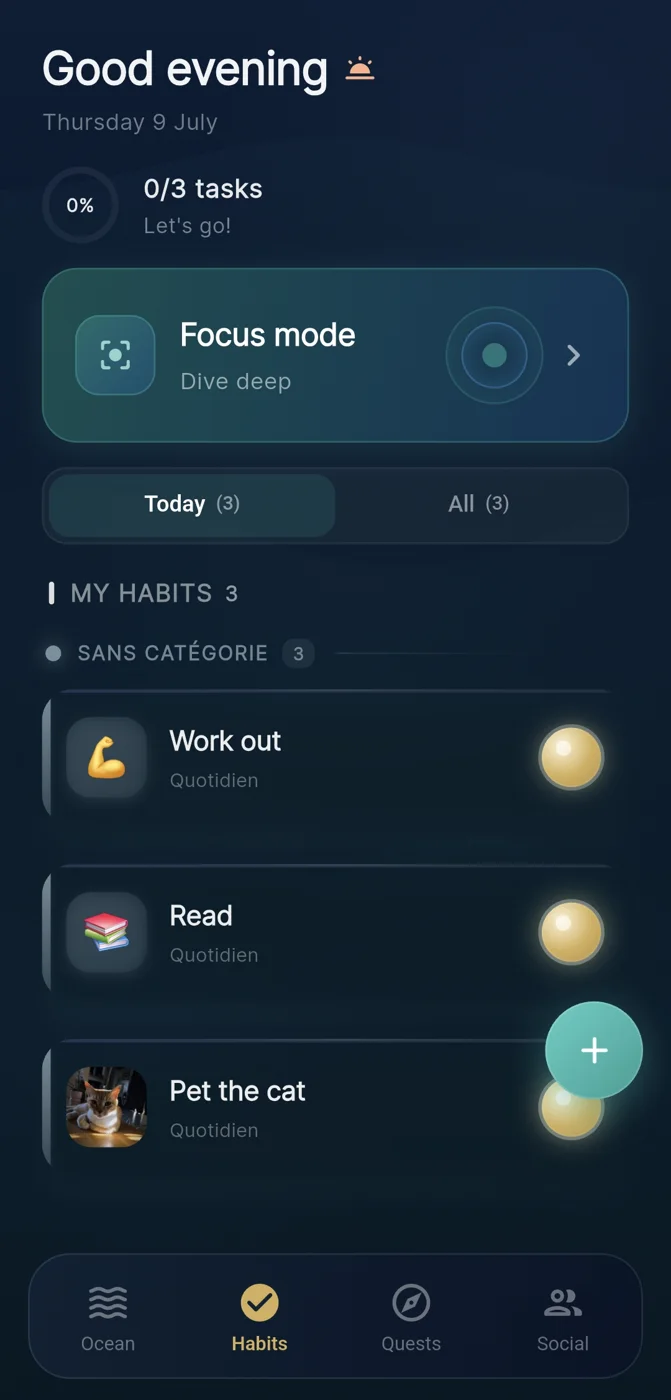
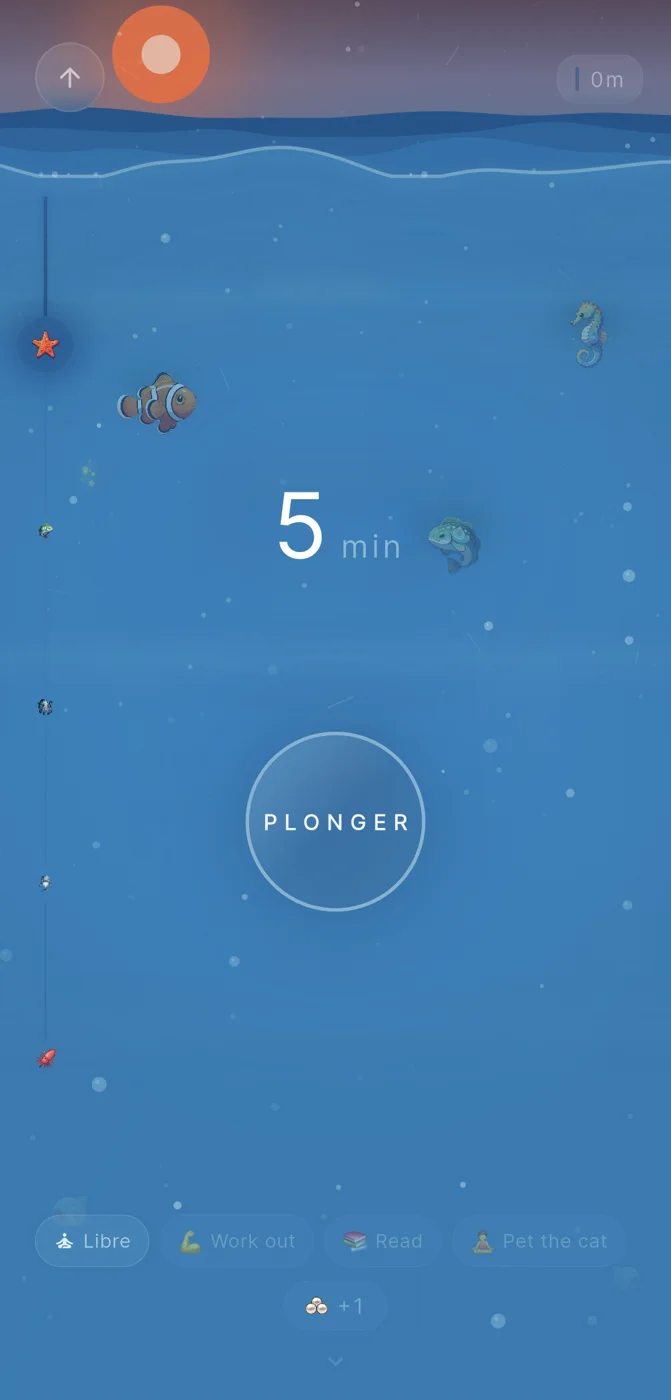
Reef, an IVRYN mobile habit tracker for iOS and Android, is one example of this approach. It represents completed habits as pearls that build up into a visual ocean scene over time, giving a low-pressure way to notice consistency without fixating on an unbroken streak. It also has focus sessions framed around a dive metaphor, where completed focused time is rewarded in the same pearl system. None of this is presented as a guarantee of behaviour change - it is simply a way of making repetition visible.
The practical takeaway for anyone evaluating apps in this category is to look for whether progress is shown in a way that tolerates imperfection, rather than one that punishes a missed day so heavily that people give up entirely.
The role of gentle recovery after a missed day
One of the more useful design principles in this space is gentle recovery: what happens in the app, and in your own head, the day after you break a streak. Apps that treat a missed day as a total reset can inadvertently make people quit rather than resume, because the emotional cost of restarting from zero feels too high.
A daily routine journal app worth using should make it easy to pick the habit back up without erasing the value of prior consistency, whether that's through visual framing, non-punitive language, or simply not deleting historical progress. This isn't about lowering standards - it's about matching the tool's feedback to how habits actually break down and get rebuilt in real life, which is rarely a straight line.
Where social accountability helps, and where it doesn't
Many routine journal apps offer some form of shared or social accountability - a friend group, a crew, a leaderboard. This can genuinely help some people stay consistent, since knowing someone else will notice a missed check-in adds a mild extra incentive. But it is optional by design in tools like Reef, and it should be, because social pressure works differently for different people and can backfire for those who find it stressful rather than motivating.
If you're choosing an app, it's worth asking whether social features are required or opt-in. A tool that forces you into a group before you're ready may add friction rather than reduce it. Equally, an app with zero social option removes a lever that some people rely on. Neither approach is objectively correct - it depends on how you personally respond to being seen by others.
Example: a short decision checklist
Here is a worked example of how someone might evaluate a daily routine journal app against their own situation, rather than against generic feature lists.
Imagine a reader named Priya who wants to journal a morning routine (water, stretching, five minutes of reading) and occasionally do a focused work block. She isn't sure whether she wants social features yet.
- Does the app let her log 2-3 small habits without requiring a paid tier just to start? If not, that's a friction point worth noting before committing.
- Is missing a day visually softened, or does it erase her progress entirely? This affects whether she'll return after a bad week.
- Does it separate habit logging from focus-time tracking, or force them into one confusing view? Priya wants both, kept distinct.
- Is any social or crew feature clearly marked as optional, so she can ignore it for the first month? This matters if she's unsure about sharing progress yet.
- Is it available on her phone's platform (iOS or Android, since that's the common baseline for apps like this) without needing a separate account system just to try it?
- This is a hypothetical walkthrough, not a review of a specific outcome - the point is the questions, which apply regardless of which app someone eventually picks.
Limits worth keeping in mind
No daily routine journal app, including Reef, can promise that using it will produce a health outcome or a permanent behaviour change; the public claims for these tools are about making repetition and focus time visible, not about clinical or guaranteed results. If a routine involves a health condition, sleep, diet, or mental health management, an app's tracking features are a personal organisational aid, not a substitute for professional medical guidance.
It's also worth treating any app's specific pricing, platform availability, or feature set as something that can change over time rather than a fixed fact, since app ecosystems update frequently. The steadier things to evaluate are the underlying principles - does it support small habits, visible progress, gentle recovery, and optional rather than mandatory social pressure - because those principles are what actually determine whether a tool fits how you personally maintain a routine.
Frequently asked questions
Is a daily routine journal app enough on its own to build a lasting habit?
Not by itself. These apps make your actions visible and can support small, repeatable habits, but consistency still depends on your own scheduling, environment, and motivation - the app is a tracking aid, not a guarantee of behaviour change.
What should I do if I miss several days in a row on a routine journal app?
Look for an app that treats a missed streak gently rather than erasing your history, and resume with a smaller version of the habit rather than trying to make up for lost days all at once. Gradual recovery tends to hold up better than an all-or-nothing restart.
Should I choose an app with social accountability features?
Only if you know social visibility motivates you rather than stresses you out. Optional social or crew features can help some people stay consistent, but they aren't necessary for a routine journal app to be effective, so it's fine to ignore them or pick a tool where they're not mandatory.
Sources and further reading
These resources provide the wider reference frame. Product statements on this page are limited to the public information provided by Reef.