 Reef
Reef
What to track on a habit tracker: start with the action, not the outcome
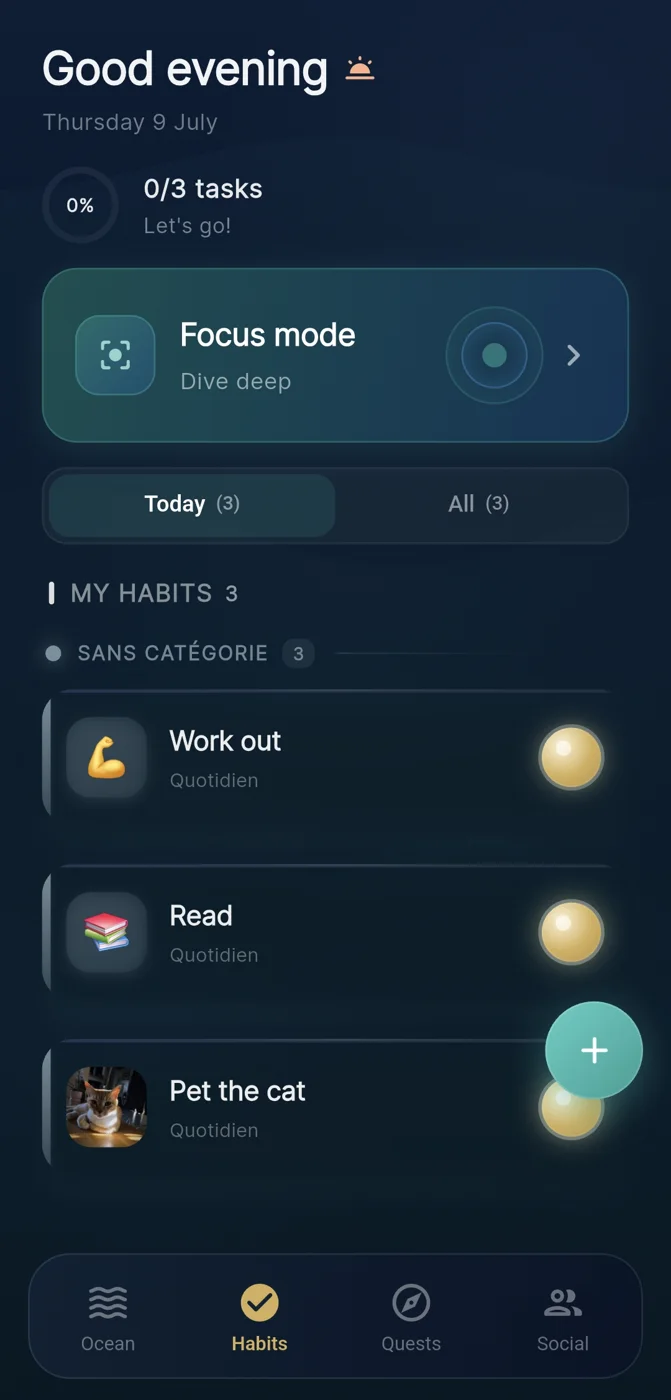
The most common mistake people make when deciding what to track on a habit tracker is choosing an outcome instead of an action. Outcomes like weight, savings totals, or productivity scores are shaped by many variables outside a person's daily control, so a tracker built around them tends to feel discouraging on ordinary days and misleading on unusual ones. A more durable approach is to track the specific, repeatable action a person actually performs: did they stretch for five minutes, did they write one paragraph, did they close their laptop by 10pm.
This distinction matters because a tracker's job is to make effort visible, not to judge results. When the tracked unit is a recorded action rather than a measured outcome, the record stays honest even on days when circumstances outside a person's control affect the bigger picture. A habit tracker that only rewards outcomes quietly punishes people for things they cannot fully control, which is part of why so many trackers get abandoned within weeks.
Reef, the IVRYN mobile habit tracker for iOS and Android, is built around this recorded-action idea: completing a habit releases a pearl that becomes part of a visual living ocean. That mechanic only works if what's being tracked is something a person can genuinely complete in a given day, which is why choosing action-based entries over outcome-based ones is the first practical decision in setting up any tracker.
Keep the list of tracked habits small and repeatable
Once the unit of tracking is settled, the next question is how many habits to track at once. A long list of aspirational habits looks impressive on day one and becomes a source of guilt by day ten. Small, repeatable habits are easier to sustain precisely because they ask little of any single day, which means they can survive busy weeks, travel, illness, or simple low motivation without collapsing entirely.
A useful test is whether a habit could realistically be completed on a person's worst day, not just their best one. If a tracked item only makes sense on a good day with plenty of time and energy, it is probably too large for a daily tracker and might belong in a weekly or monthly view instead. Splitting a big goal into a small daily action, such as tracking 'opened the notebook' rather than 'wrote 1,000 words,' keeps the record achievable without lowering the underlying ambition.
Three to five tracked habits is a reasonable starting range for most people, though the right number depends entirely on individual circumstances and is a personal choice rather than a fixed rule. What matters more than the number is that each habit is small enough to repeat on an ordinary Tuesday, not just an ideal one.
Track visible progress, not just streaks
Streaks are one of the most common features in habit trackers, and they can be motivating, but they carry a specific risk: a single missed day can feel like the whole record is broken, which sometimes leads people to abandon the tracker altogether rather than restart it. Tracking visible progress instead of, or alongside, a raw streak count gives a more forgiving and accurate picture of a habit over time.
Visible progress can take different forms depending on the tool: a calendar of completed days, a total count of times a habit was done, or a cumulative visual that grows with each completion. The key property is that progress accumulates rather than resets to zero after a lapse, so the record reflects the overall pattern of effort rather than punishing a single missed day disproportionately.
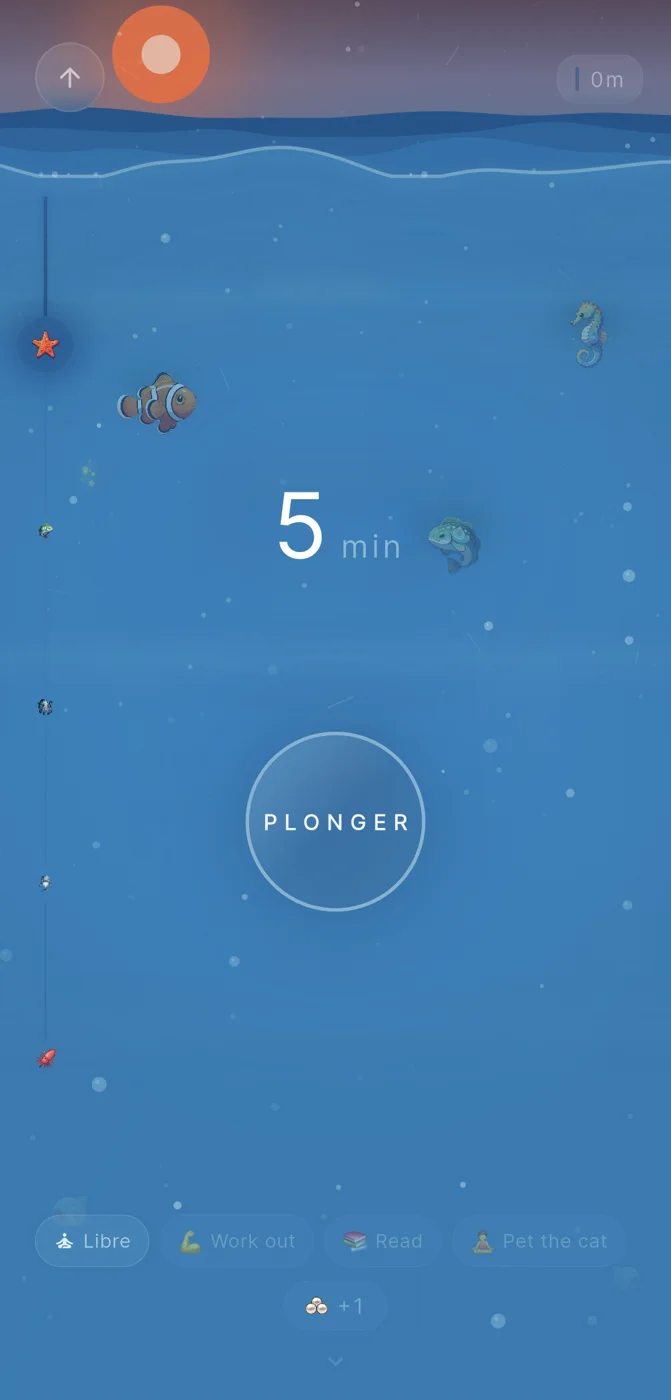
In Reef, this idea is expressed through the living ocean that grows as pearls are released from completed habits and focus sessions. The visual accumulates over time rather than being erased by a gap, which keeps the emphasis on the general pattern of showing up rather than on an unbroken chain that has to be perfectly maintained.
Track recovery after missed days, not just completions
Most habit-tracking advice focuses entirely on what happens when a habit is completed, but what a tracker records after a missed day matters just as much for whether the habit survives long-term. Gentle recovery means the tracker's design and the person's own approach to it treat a missed day as a data point, not a failure that requires starting over from scratch.
Concretely, this can mean tracking a return to a habit after a gap as a normal, even routine, event rather than a special exception. A tracker that visually distinguishes 'missed once and returned' from 'stopped entirely' gives a more honest picture of real habit patterns, which are rarely perfectly linear for anyone.
This is one of the reasons a visual, cumulative model like Reef's living ocean can be a reasonable fit for people who want gentle recovery built into the record: a missed day doesn't erase the pearls already released, so returning to a habit after a gap simply adds to the same ocean rather than requiring a fresh start.
Consider tracking focused time as its own category
Alongside discrete habits like drinking water or reading, many people find it useful to track blocks of focused time separately, since sustained attention is a different kind of effort than a single completed action. A focus session might be tracked as 'protected 25 minutes for deep work' rather than folded into a general productivity habit, which keeps the record specific and easy to complete.
Tracking focused time works best when it is framed around effort put in rather than output produced, for the same reason discrete habits work best when framed around action rather than outcome. Twenty-five minutes of protected attention is something a person can verify they did; 'finished the report' depends on far more variables.
Reef's focus sessions use a dive metaphor and reward completed focus time with pearls, treating protected attention as its own trackable category alongside habits and social accountability. This keeps the record honest about what was actually controlled: the decision to protect a block of time, not the outcome that time happened to produce.
Decide deliberately whether to track anything socially
Social accountability can help some people stay consistent and can feel like unnecessary pressure to others, so it's worth treating as a deliberate, optional layer rather than a default. If a person chooses to track habits alongside others, it's worth being clear about what is actually shared: completion counts, streaks, or the visual outcome, versus more sensitive details like the specific habit itself.
A reasonable approach is to start tracking privately for a few weeks before deciding whether to add a social layer, since this gives a person a sense of whether the habit itself is sustainable before introducing the added dynamic of being seen by others. Social accountability works best as a support for an already-forming habit, not as the sole reason a habit is attempted.
Reef includes optional social crews for this reason, and does not guarantee any behaviour or health outcome from using them or any other part of the app. Whether to track socially at all is left to the individual, which fits the broader principle that a tracker should reflect a person's own choices about what and how much to make visible.
Worked example: setting up a tracker for a busy week
Example, for illustration only: consider someone who wants to build a reading habit but has an unpredictable weekly schedule. Rather than tracking 'read for 30 minutes' as a single all-or-nothing habit, they could track three separate small actions: opened a book, read at least one page, and closed the book knowing where they stopped. On a good day, all three happen easily. On a difficult day, just opening the book and reading one page still counts as a completed record.
In this example, progress is tracked visually across the week rather than as a single streak, so a missed Wednesday doesn't erase Monday and Tuesday's entries. If the person also wants protected focus time, they could separately track a 15-minute distraction-free reading block once or twice a week, treated as its own category rather than merged into the daily habit. Whether to add a social element, such as sharing weekly totals with a friend, is left as a later, optional decision once the private habit feels sustainable.
This kind of setup illustrates the principles above working together: small repeatable actions, visible cumulative progress, room for gentle recovery, and an optional social layer added only if and when it seems genuinely useful, not because it's expected from the start.
Frequently asked questions
Should a habit tracker record outcomes like weight or income instead of daily actions?
Outcomes are influenced by many factors outside daily control, so a tracker that focuses on the specific, repeatable action a person performs each day, rather than the outcome that action is meant to produce, tends to give a more honest and sustainable record over time.
How many habits should someone track at once?
There's no fixed number, but starting with a small handful of habits that could realistically be completed even on a busy or low-energy day is more sustainable than tracking a long list of aspirational habits that only fit an ideal day.
What should happen on a habit tracker after a missed day?
A missed day is best treated as a normal data point rather than a reason to restart the whole record from zero. Trackers that show cumulative or visual progress, rather than resetting a streak to nothing, tend to make it easier to return to a habit after a gap.
Sources and further reading
These resources provide the wider reference frame. Product statements on this page are limited to the public information provided by Reef.