 Reef
Reef
What a habit tracker for two people is really for
A habit tracker for two people is any setup where two people can see some part of each other's progress: a shared app, a linked group, or even a paper chart on the fridge. People usually look for one because they hope that being noticed by someone they trust will make a small action easier to repeat. That hope is reasonable, but it is not a mechanism that works the same way for everyone.
Before acting on it, it helps to treat the shared part as an agreement between two people rather than a feature you switch on. The tool records what happened. The agreement decides what gets shared, how each person responds to a missed day, and when either of you can step back. We suggest having that conversation before you start, because a tool cannot settle questions the two of you have not discussed.
Decide what is shared and what stays private
There are two common shapes. In a shared habit, both people commit to the same action, such as a ten-minute walk after dinner. In parallel habits, each person works on something different and the other simply sees whether it happened. One possible reason to choose parallel habits is that neither person's progress then depends on the other's schedule.
Not everything belongs in the shared view. Reflections, reasons for a missed day, or habits connected to sensitive topics can stay private while the plain fact of completion is visible. A useful test is to ask whether you would still log the habit honestly if the other person saw every detail. If the answer is no, keep that detail out of the shared space.
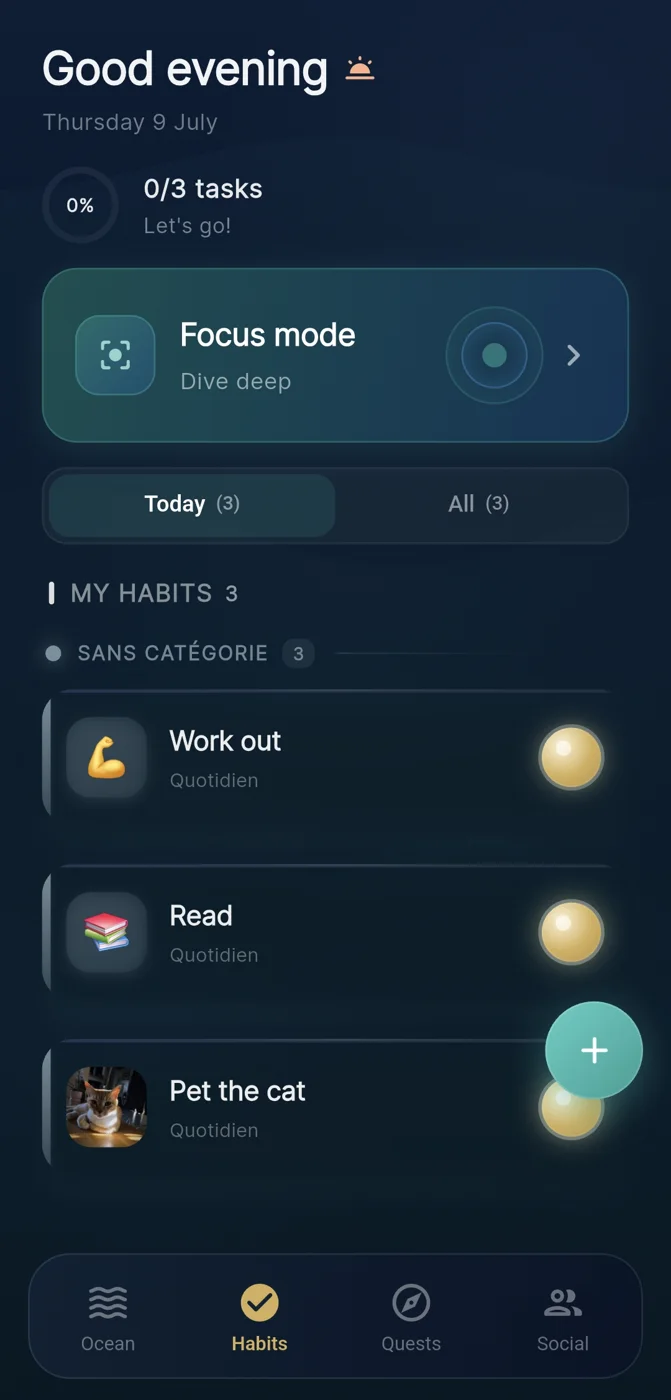
Before relying on any app's sharing features, the gamified habit tracker guide recommends testing social permissions with a second account. Confirm what the other person actually sees when a habit is completed, missed, renamed or deleted. This applies to Reef as well: its public information describes optional social crews but does not specify crew size or exactly what each member can see, so check it yourself rather than assuming.
- Share completion, not commentary, by default.
- Agree that either person can make a habit private at any time without explaining why.
- Avoid sharing anything one partner could later use as leverage in a disagreement.
- Test visibility with a second account before sharing real habits.
Keep each habit small enough to repeat on a bad day
One risk to watch for in a two-person setup is goal inflation. When someone is watching, it can be tempting to commit to an hour instead of ten minutes. If that happens, a run of missed days may become visible, and that can feel worse when it is shared. A habit sized for tired evenings, travel or illness leaves room to keep the shared record honest without strain.
Visible progress matters more than the size of any single entry. A chart that slowly fills up gives both people something concrete to notice and acknowledge. If one of you wants a bigger challenge, add it as a separate, optional habit rather than raising the baseline for both.
Plan for missed days before they happen
Missed days are certain, so the most important decision is how each person reacts to them. Agree in advance that a missed day gets no comment, or one neutral check-in at most. Questions like "Everything all right?" land very differently from "You broke the streak again." Gentle recovery keeps the arrangement from turning into surveillance.
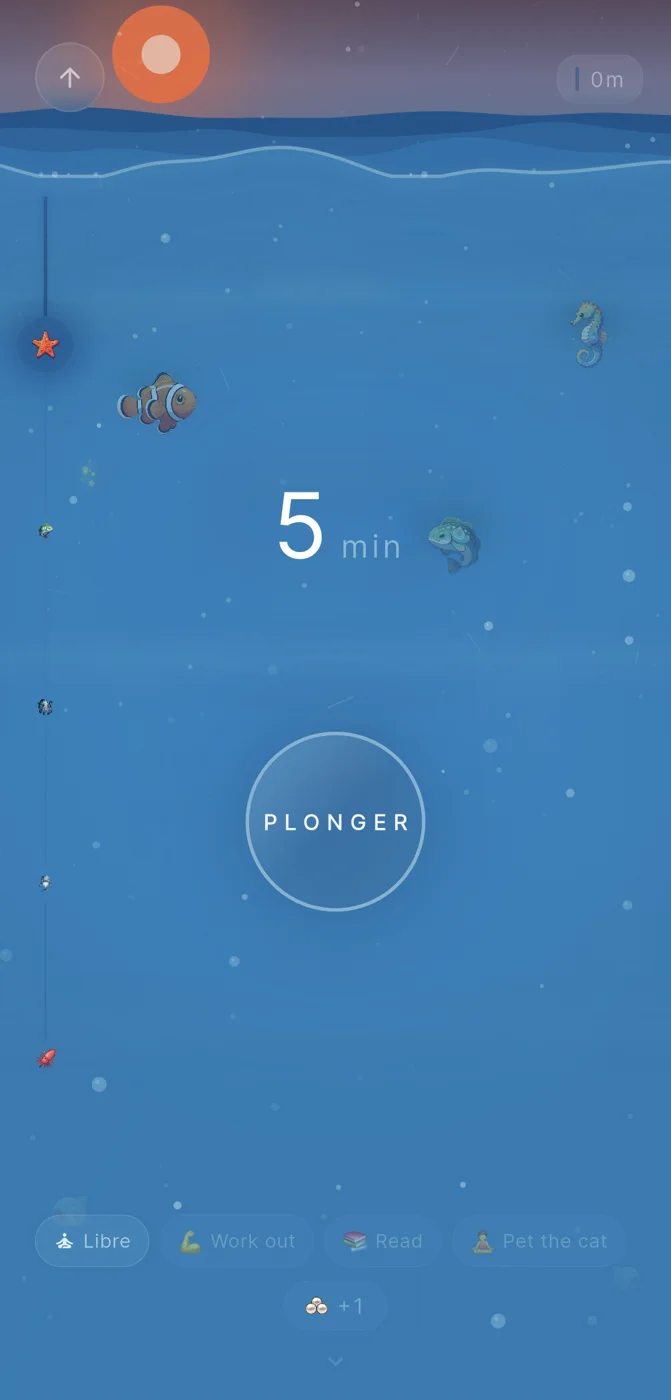
Some tools build this tone into the design. Reef, for example, lets a streak freeze cover an off day, and its shrimp companion, Gambi, responds to both finished and skipped days without blame, which supports the idea that one miss is not a failure. Whatever you use, check whether the app punishes gaps loudly, because that tone can spill into how two people talk about them.
Where shared accountability helps and where it stops
Accountability with one other person can make repetition more visible and give you a natural moment to talk about what is working. It works best when it is chosen freely and can be paused. If tracking starts to feel like monitoring, if one person checks the other's progress more than their own, or if missed days lead to arguments, the arrangement is doing harm and should be scaled back.
No tracker, shared or solo, can guarantee that a behaviour will change or that health will improve, and a partner's encouragement is not a substitute for professional support where that is needed. Reef's social crews are optional, so sharing is a choice rather than a requirement, and the app makes no promise about behaviour or health outcomes. Its published methodology describes the habit design approach behind those choices, which is a useful reference for what the product does and does not claim.
Example: a worked two-person setup checklist
Example (hypothetical): Sam and Alex want to read more and protect some focus time. Sam picks "read five pages" and Alex picks "twenty minutes of undistracted work." They choose parallel habits, share only whether each was done, and agree that neither comments on a miss unless asked. After two weeks they review together for five minutes and decide whether to keep, shrink or drop each habit.
This is an illustration of a process, not a reported outcome. Use the checklist below to build your own version, and revisit it whenever the arrangement starts to feel heavy rather than helpful.
- Pick one small habit each, sized for your worst day.
- Choose shared or parallel habits deliberately.
- List exactly what the other person can see, and verify it with a second account.
- Agree on a no-blame response to missed days.
- Set a short review date, such as two weeks.
- Confirm either person can pause or leave without explanation.
Frequently asked questions
Is a habit tracker for two people better than tracking habits alone?
Not automatically. Sharing progress with one trusted person can make small habits more visible and easier to talk about, but it can also add pressure. It tends to work best when both people choose it freely, keep habits small, agree not to criticise missed days, and can pause the arrangement at any time.
What should two people agree on before sharing a habit tracker?
Agree on which habits are shared, what details each person can see, how to respond to a missed day, and when you will review the setup. It also helps to state clearly that either person can make a habit private or stop sharing without needing to justify it, and to check the app's actual visibility settings before relying on them.
Can a shared habit tracker guarantee that someone changes their behaviour?
No. A tracker records actions and can make progress easier to see, but it cannot guarantee a change in behaviour or a health outcome. Encouragement from a partner or friend is also not a replacement for professional help when a habit is linked to a medical or mental health concern.
Sources and further reading
These resources provide the wider reference frame. Product statements on this page are limited to the public information provided by Reef.