 Reef
Reef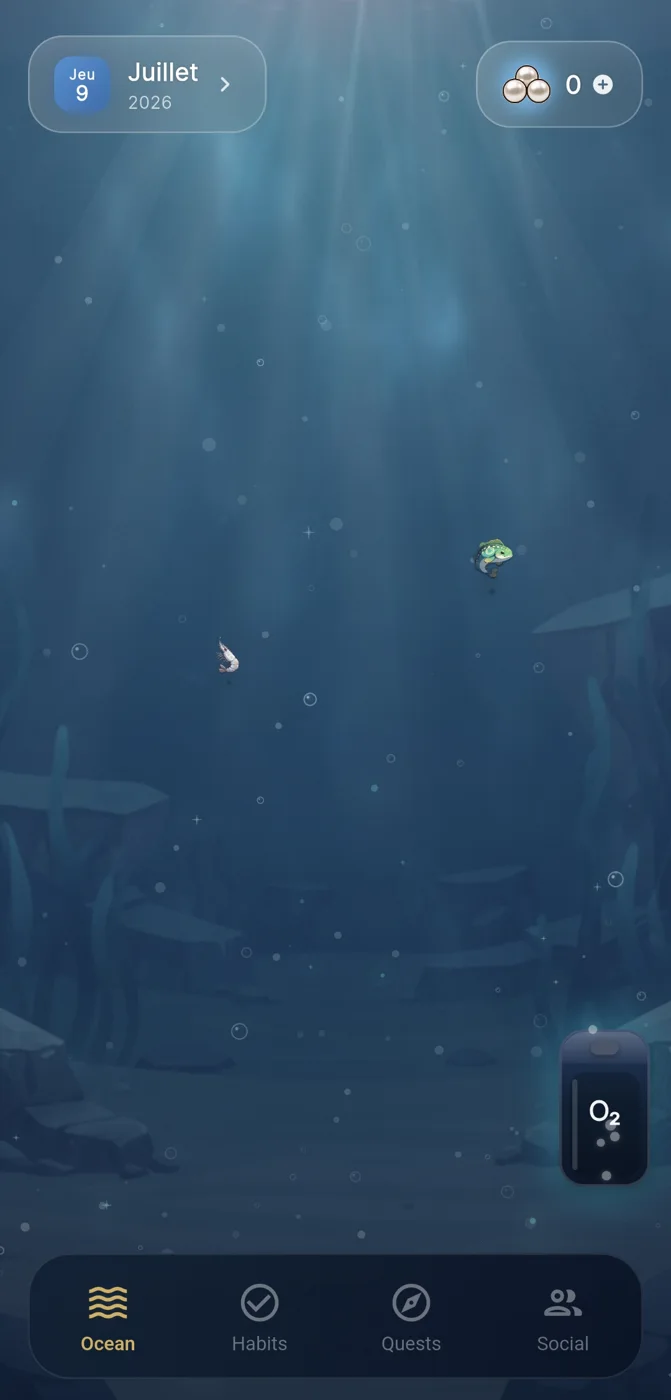
What 'best habit app' actually means for you
Searches for the best habit app usually hide a more specific question: which app will make it easier to keep doing a small thing repeatedly, without the process itself becoming another source of guilt or friction. That question doesn't have a single universal answer, because the right app depends on what tends to make you stop showing up - forgetting, losing motivation without visible progress, losing focus mid-task, or simply feeling alone in the effort.
Before comparing features, it helps to name which of those failure points applies to you. An app that is excellent at visual progress but weak on focus support won't help someone whose habits mostly break down during distracted afternoons. Framing the decision around your actual failure pattern, rather than a generic feature list, is what separates a useful choice from a cosmetic one.
This article treats 'best' as 'best fit for a specific reader', not as a ranking claim. No app, including Reef, can promise a guaranteed behaviour or health outcome, and any tool presented that way should be treated with caution.
Core principles worth checking in any habit app
Regardless of which app you consider, a small set of design principles tends to separate tools that support long-term habit repetition from tools that only look motivating in a screenshot. The first is small, repeatable habits: an app that pushes you toward large, infrequent goals works against the way habits are actually built, which is through small actions repeated often enough to become routine.
The second is visible progress. Habits are easy to abandon when the only evidence of effort is a memory. Some form of ongoing visual or structural representation of accumulated effort - a streak, a growing scene, a simple log - gives you something concrete to check in on, rather than relying on willpower alone.
The third is gentle recovery after missed days. Life interrupts routines regularly, and an app that treats a missed day as a failure state, resets all progress harshly, or shames the user tends to push people toward quitting altogether rather than resuming. Look for mechanics that let you pick back up without erasing what came before.
The fourth is optional social accountability. Sharing progress with others can help some people stay consistent, but it should be a choice rather than a requirement, since not everyone wants their habits visible to a group, and social pressure can itself become a reason to avoid the app.
- Small, repeatable actions rather than large infrequent goals
- Some visible, ongoing representation of progress
- A way to resume gently after missed days
- Social features that are optional, not mandatory
Where Reef fits, and where its limits are
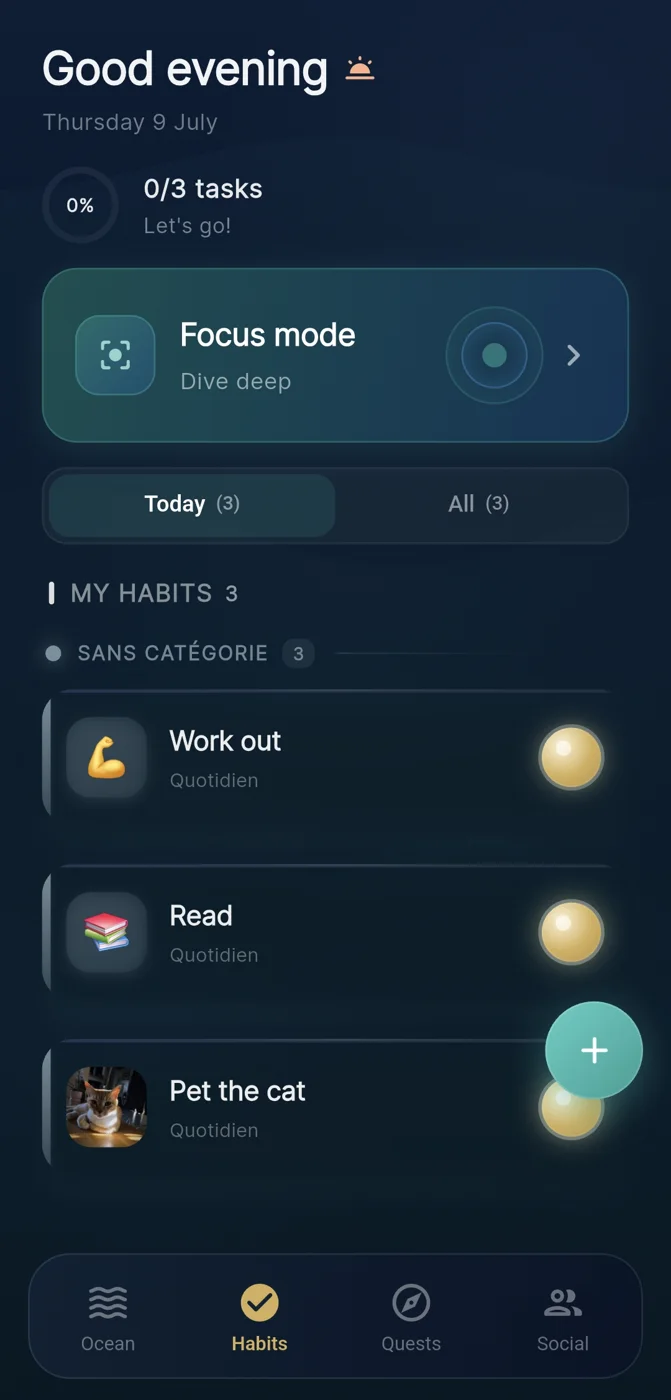
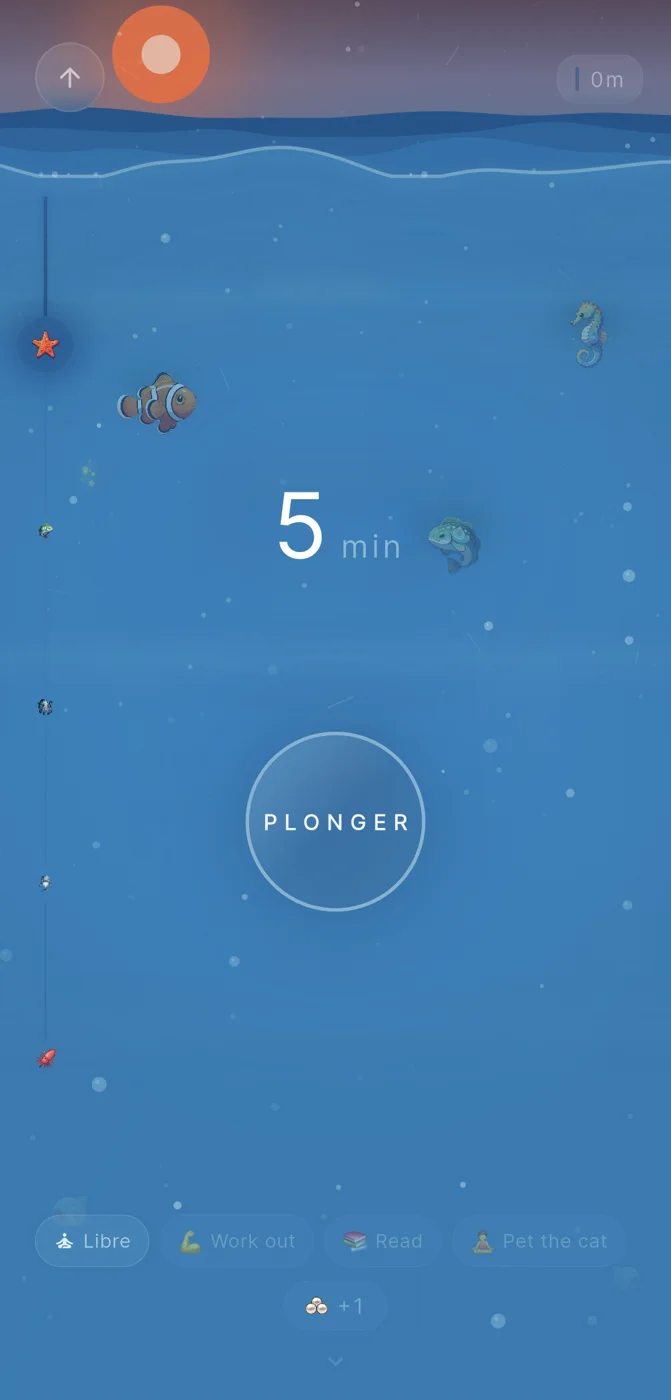
Reef is an IVRYN mobile habit tracker for iOS and Android that applies these same principles through a specific set of mechanics. Completing a habit releases a pearl that contributes to a visual, living ocean scene, which gives the 'visible progress' principle a concrete form rather than an abstract counter. Focus sessions use a dive metaphor, and completed focus time is rewarded with pearls as well, connecting sustained attention to the same visual system used for habits.
Reef's social crews are optional, which matches the accountability principle described above: you can use Reef entirely on your own, or opt into a group if shared visibility helps you personally. This is a design choice, not a claim about which mode works better for any given person.
It's worth being explicit about the limits here. Reef does not guarantee a behaviour or health outcome, and this article is not presenting a first-party study, user testing results, or comparative performance data about Reef or any other app. The claims above describe what the product does mechanically - pearls, dives, optional crews - not what outcomes it produces for a given individual, since that depends on factors outside any app's control.
A worked example: choosing between two habit patterns
Example (hypothetical, for illustration only): imagine two readers considering a habit app. Reader A wants to build a daily ten-minute reading habit and mainly struggles with forgetting and losing motivation once a streak breaks. Reader B wants to protect two hours of deep work each afternoon and struggles less with forgetting, more with getting distracted once the session starts.
For Reader A, the priority checklist would weight visible progress and gentle recovery most heavily: does the app make the cumulative effort visible in a way that feels rewarding rather than punitive, and does missing a day set the whole habit back to zero or allow a graceful restart? A habit tracker built around a growing visual scene, where a missed day doesn't erase prior pearls or progress, would directly address that failure pattern.
For Reader B, the priority shifts toward whether the app has any structured support for the focus session itself, not just the habit logging afterward. A tool that only records 'I did deep work today' after the fact doesn't help with the in-the-moment distraction problem the way a timed focus session with its own reward mechanic might.
This example is illustrative, not a testimonial or outcome claim. It is meant to show how to map your own failure pattern onto app features, not to assert that any specific reader will get a specific result from any specific app.
A practical checklist for evaluating any habit app
When you're comparing options, including but not limited to Reef, it helps to work through a short set of questions rather than relying on marketing copy or star ratings, which can shift over time and don't reflect your specific situation.
This checklist is meant to be used against the app's current, publicly stated features at the time you check, since availability and functionality can change and shouldn't be treated as fixed facts from an article written at a different point in time.
- Does it support small, frequent actions rather than pushing large infrequent goals?
- Is there a visible, ongoing representation of progress you'll actually want to check?
- What happens after a missed day - is recovery gentle or punitive?
- Is any social or sharing feature optional rather than required?
- Does it address your actual failure pattern (forgetting, motivation, distraction, isolation) rather than a generic one?
- Are its current claims about features and availability checked directly on the app's own listing, since these can change?
Setting realistic expectations for best habit app
It's worth returning to the search intent behind 'best habit app' directly: most people asking this are looking for a tool that removes friction from repetition, not a guaranteed fix for motivation or behaviour change. No habit app, including Reef, can promise outcomes like weight loss, productivity gains, or a permanent behaviour shift, because those depend on many factors an app cannot control or observe.
A more realistic framing is that a well-designed habit app can make small repeated actions easier to start, easier to see, and easier to resume after a lapse. Choosing 'the best' one is really about choosing the app whose mechanics - visual progress, gentle recovery, optional social features - line up with the specific way your own habits tend to break down.
If you're evaluating Reef specifically, treat its pearl and dive mechanics as one implementation of these general principles, bounded by the public facts about what it does, rather than as evidence of a particular outcome for you.
Frequently asked questions
Is there one objectively best habit app for everyone?
No single app is objectively best for everyone, because habit apps address different failure points such as forgetting, low motivation, distraction, or lack of accountability. The right choice depends on which of those patterns most often causes you to stop a habit, and matching an app's specific mechanics to that pattern is more useful than following a general ranking.
What should a habit app do after I miss a day?
A habit app should ideally let you resume without harsh penalties, such as erasing all prior progress or resetting a visual system to zero. Missing days is a normal part of maintaining routines, and apps that treat a lapse gently tend to make it easier to continue rather than abandon the habit altogether.
Does Reef guarantee that using it will change my habits?
No. Reef is an IVRYN mobile habit tracker for iOS and Android that turns completed habits and focus sessions into pearls within a visual ocean scene, and offers optional social crews, but it does not guarantee any behaviour or health outcome. Any actual change in habits depends on the individual using the app consistently over time, not on the app alone.
Sources and further reading
These resources provide the wider reference frame. Product statements on this page are limited to the public information provided by Reef.