 Reef
Reef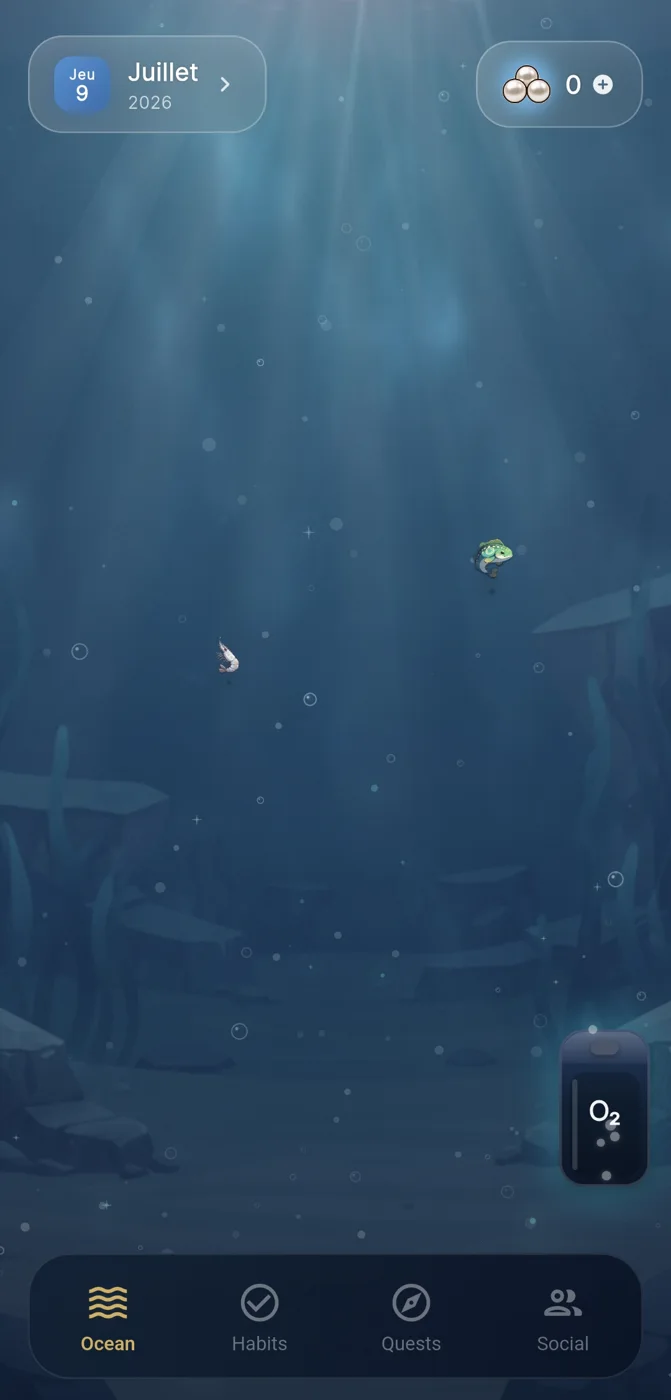
What a simple habit app review should actually check
When someone searches for a simple habit app review, they usually want a way to decide quickly whether an app fits their life, not a marketing pitch. The most useful review looks at four things: how the app breaks big goals into small repeatable actions, how it shows progress over time, what happens after a missed day, and whether any social features are optional rather than mandatory. Everything else, including visual style or gamified rewards, is secondary to those four questions.
This matters because most people abandon habit apps not from lack of willpower but from friction: too many steps to log an action, confusing streak resets, or pressure from social feeds when they fall behind. A review that only lists features misses the point. A useful review asks whether the design reduces friction on an ordinary Tuesday, not just on a motivated Monday.
Small repeatable habits over ambitious goals
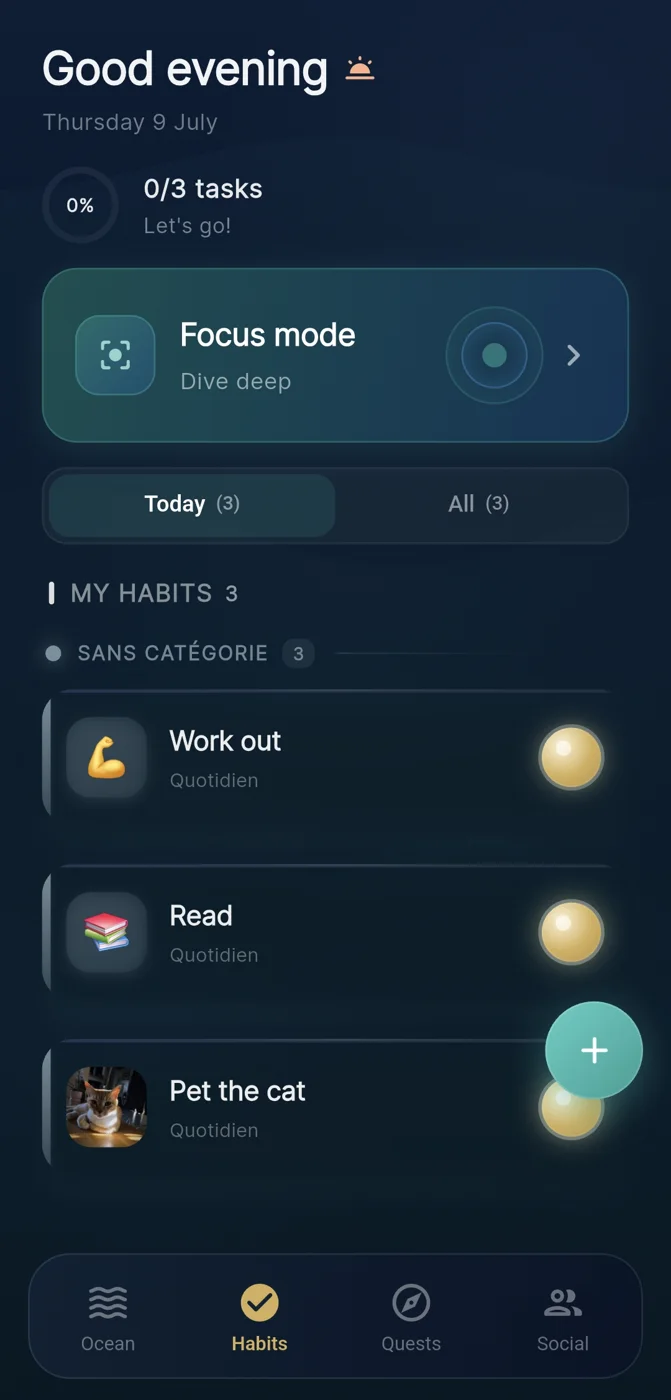
The strongest habit apps are built around small, repeatable actions rather than large one-time goals. A habit like 'read for five minutes' is easier to sustain than 'read a book a week' because it can be completed even on a bad day, which keeps the behaviour alive long enough to become automatic. When evaluating any app, check whether it nudges you toward these small units or encourages you to set goals that are hard to repeat under normal conditions.
Reef, an IVRYN mobile habit tracker for iOS and Android, is organised around this principle: completing a habit generates a small visual reward, described as a pearl, that becomes part of a growing underwater scene. The idea is to make repetition visible rather than to promise that the habit itself will change your health or behaviour, since no app can guarantee that outcome for an individual.
Visible progress and why it helps some people more than others
Visible progress systems, whether a calendar grid, a growing plant, or an ocean scene, work by giving people a concrete artifact that reflects consistency over time. This can be motivating because it turns an abstract intention into something you can look at and recognise. For visually oriented people, this kind of feedback often sustains attention longer than a simple checklist.
That said, visible progress is a preference, not a universal solution. Some people find visual metaphors distracting or feel pressure to keep a streak unbroken, which can backfire if a missed day feels like a full reset. A fair review should note that progress visuals are a tool for some users, not evidence that any particular design produces better long-term habit formation than another.
Gentle recovery after missed days
One of the more practical things to check in any habit app is what happens the day after you miss a habit. Apps that harshly reset all progress to zero can discourage people from restarting, while apps designed for gentle recovery treat a missed day as information rather than failure. This design choice affects whether someone returns to the app after a lapse, which is often more important than the app's design on a perfect streak day.
Reef's approach fits within this principle in its own product context: it frames habits, focus sessions, and pearls as ongoing contributions to a living scene rather than a single unbroken chain that resets to nothing. Framing recovery this way can make it easier to resume a habit, though it does not remove the underlying difficulty of building consistency, which still depends on the person's own routine and circumstances.
Focus sessions and optional social accountability
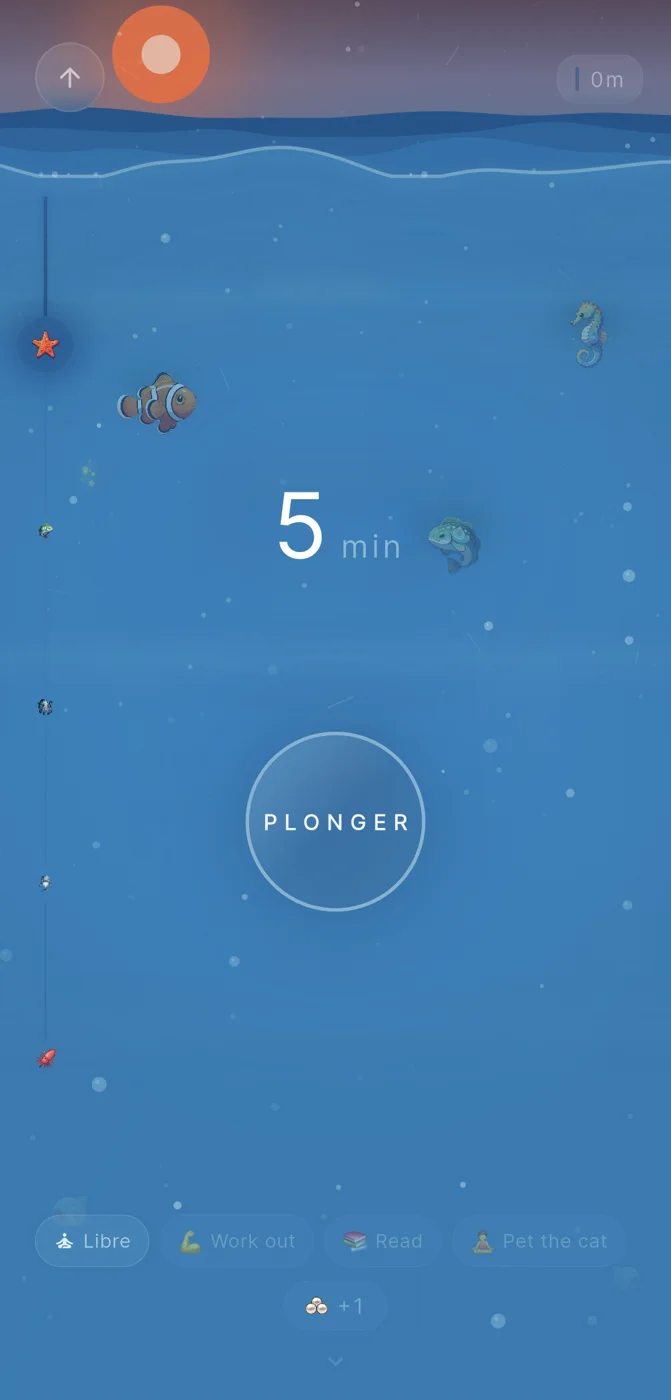
Beyond habit logging, some apps add focus session tools, often using a timer paired with a metaphor to make sustained attention feel like an activity rather than an abstract discipline. Reef uses a dive metaphor for this, where completed focus time is rewarded with the same pearl mechanic used for habits, tying attention management to the same visible-progress system rather than treating it as a separate feature.
Social accountability is the other variable worth checking carefully. In Reef, joining a social crew is optional, and the app does not claim that having a crew will improve outcomes or guarantee follow-through. This matters for a review because accountability features can help some people and add unwanted pressure for others; an app that makes such features optional gives the reader more control over their own experience.
A worked example: choosing an app for a two-week trial
Example (hypothetical, for illustration only): imagine someone wants to build a habit of stretching for five minutes each morning and also protect 25 minutes of focused work in the afternoon. Before installing anything, they could list their own non-negotiables, such as 'must allow me to skip a day without penalty' or 'must not require joining a group to use focus timers.'
During a two-week trial, they might track three things themselves, outside the app: whether logging a habit takes under 10 seconds, whether a missed day changes how they feel about opening the app the next morning, and whether any social or gamified elements feel motivating rather than distracting. At the end of two weeks, they compare these personal notes against their original non-negotiables rather than against marketing claims, since that comparison reflects their own experience rather than assumptions about how any app performs generally.
- List your own non-negotiables before comparing apps
- Time how long it takes to log a habit
- Notice your reaction to a missed day, not just a completed one
- Decide whether social features add support or pressure for you specifically
Limits to keep in mind before acting
No habit app, including Reef, can guarantee a specific behaviour or health outcome, and this review does not claim otherwise. Design choices like small repeatable actions, visible progress, gentle recovery, and optional social features can make consistency easier to sustain, but the underlying work of habit formation still depends on the person's circumstances, motivation, and environment.
If a habit is tied to a medical condition or a significant behaviour change with health implications, it is worth treating an app as a support tool alongside, not a substitute for, guidance from a qualified professional. This review is descriptive of design principles and product mechanics, not a clinical or investment recommendation of any kind.
Frequently asked questions
What should I look for first in a simple habit app review?
Check whether the app supports small, repeatable actions, shows progress visually, handles missed days without harsh resets, and keeps any social features optional rather than required.
Does a visually engaging habit app guarantee better habit formation?
No. Visual progress and gamified rewards can help some people stay engaged, but no app can guarantee a behaviour or health outcome, since consistency depends on the individual's own routine and circumstances.
Are social features in habit apps necessary for accountability?
Not necessarily. Social accountability features can help some people but add pressure for others, so apps that make them optional, such as Reef's social crews, let users decide what level of social involvement suits them.
Sources and further reading
These resources provide the wider reference frame. Product statements on this page are limited to the public information provided by Reef.