 Reef
Reef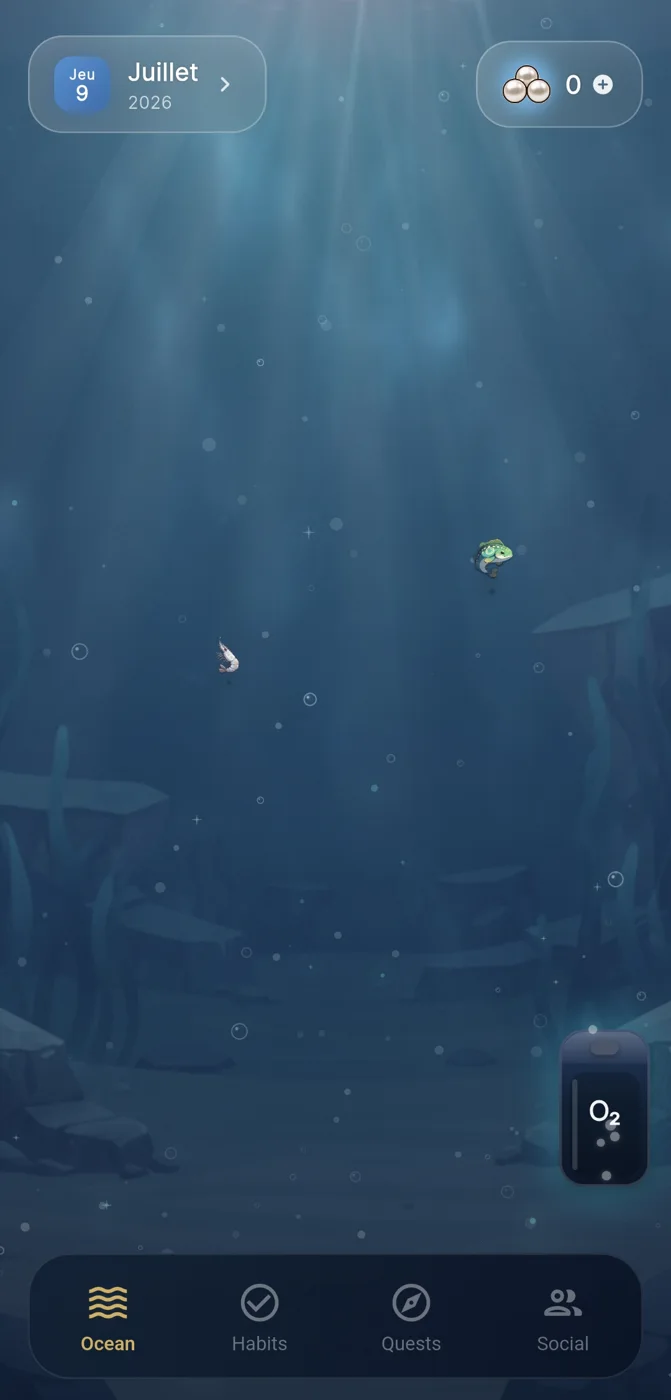
What a focus time app for students free should actually do
Most people searching for a focus time app for students free want two things: a timer that makes study blocks easier to start, and a reason to come back tomorrow. The timer part is simple, and almost any app can do it. The harder part is repetition: whether the app makes small, repeatable sessions feel worth continuing after the first enthusiastic week.
Before downloading anything, decide what success means for you. For most students it is not one heroic four-hour session but several modest blocks spread across a week, with visible progress you can glance at and a sensible way to restart after a bad day. An app that measures only long, unbroken sessions can quietly punish the realistic pattern of studying between lectures, shifts and everything else.
This article is written by Reef, a mobile habit and focus tracker, so it is bounded by what Reef publicly states about its own design. It does not rank other apps or report test results, because no such testing is claimed.
What 'free' usually means, and what to check first
Free can mean several different things: fully free with ads, free to start with optional paid extras, or a time-limited trial that converts to a subscription. None of these is automatically bad, but they lead to very different experiences six weeks in. Because pricing and plans change often, check the current store listing and the app's own terms rather than relying on any article, including this one.
For Reef specifically, you can begin without paying, the app carries no advertising, and it does not sell your data on to others. That still leaves a reasonable question for any student: which features matter to you, and are they part of what you get from the start? Look before you build a routine around something you might later lose access to.
- Is there a trial that converts automatically to a paid plan?
- Are there ads inside focus sessions, where they break concentration?
- What does the privacy policy say about selling or sharing data?
- Can you export or keep your history if you stop using it?
Matching sessions to how studying really works
Students rarely control their schedule fully, so short sessions that can be repeated tend to be more useful than ambitious targets that collapse under a busy week. A practical starting point is a block you are confident you can finish even on a tired day, then lengthening it only once it feels routine.
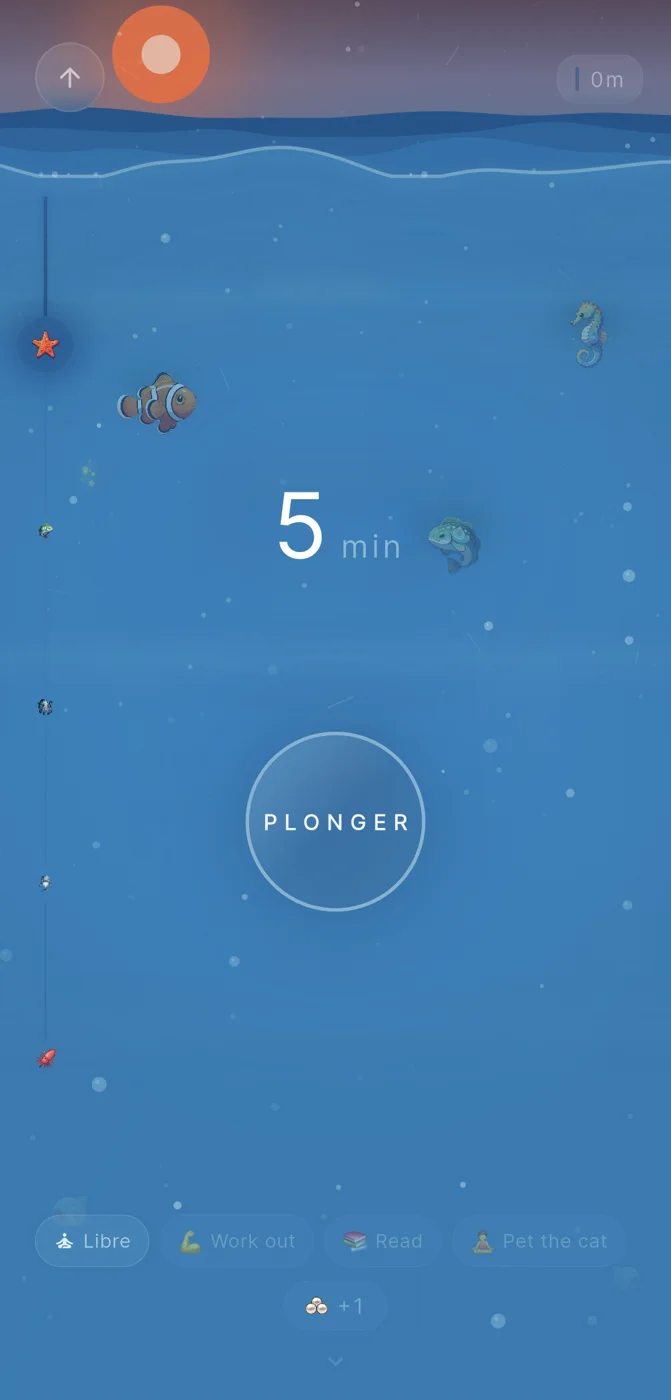
Feedback matters here. In Reef, a focus session is framed as a dive: staying with it longer takes you further down, through five depth zones from bright shallow reef to the deep abyss, and finished focus time earns pearls. Whether that kind of visual reward motivates you is personal; some people find it pleasant, others prefer a plain timer. The guide to gamified habit trackers linked below discusses that trade-off in more depth.
What happens after a missed day
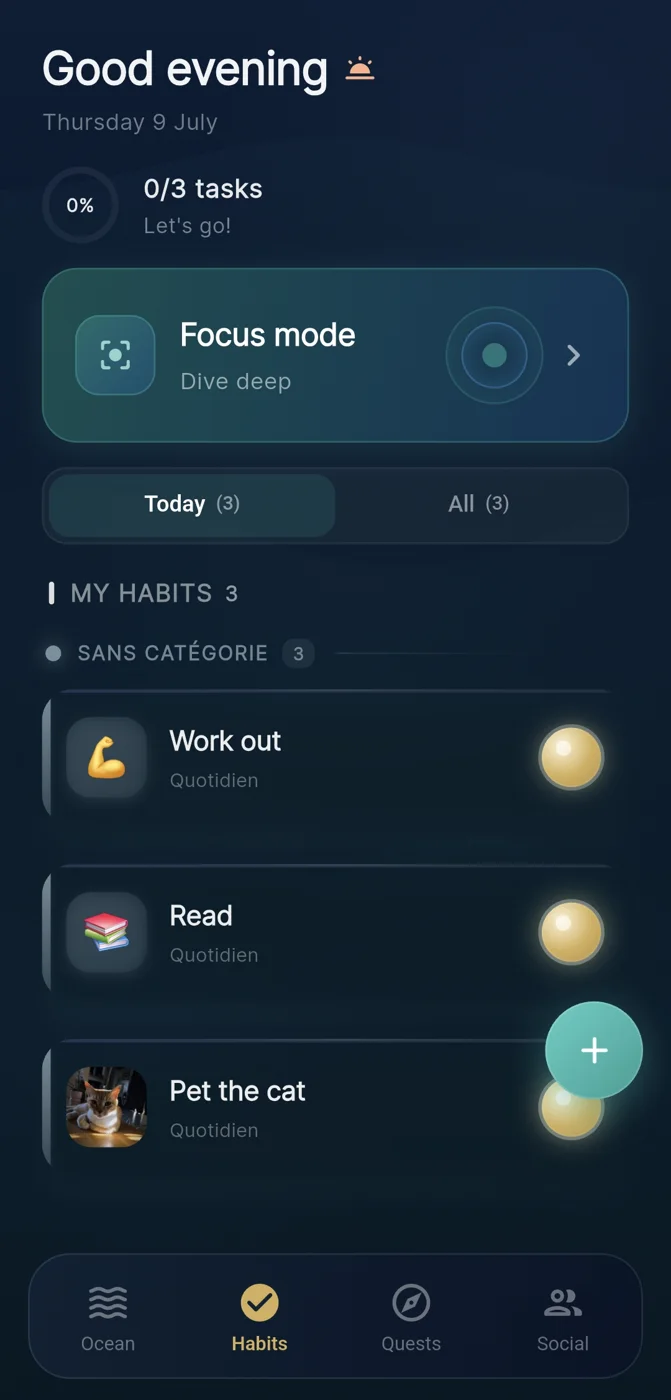
Exam season, illness and part-time work all interrupt routines. The way an app responds to a gap shapes whether you return. Harsh streak resets can turn one missed evening into a reason to abandon the whole thing, which defeats the purpose of tracking at all.
When comparing options, look for gentle recovery. Reef, for instance, lets a streak freeze cover an off day, and its shrimp companion, Gambi, acknowledges both kept and missed days without a guilt-trip tone. An optional evening question also builds a private journal, which some students use to note what got in the way rather than just counting failures.
Studying with others, only if you choose to
Accountability can help, but it is not neutral. Seeing friends' progress can encourage some people and add pressure for others, especially around exams. A good default is an app where social features exist but are entirely opt-in, so you can study privately and invite others later if it suits you.
Reef treats its crews this way: they are optional, and the app makes no promise about changing your behaviour or improving health. That honesty is a useful benchmark. Be cautious of any focus app, free or paid, that guarantees better grades or concentration. If difficulty concentrating feels persistent or distressing, a qualified professional is a better first step than any app.
Example: a two-week trial checklist
Example only, a hypothetical student: Sam has lectures three days a week and a part-time job. They pick one free focus app and commit to two 25-minute study blocks on weekdays for two weeks, deliberately small. They do not add social features in week one.
At the end of each week, Sam answers the checklist below honestly. If most answers are yes, the app is worth keeping; if not, switching costs little because only two weeks of habit were invested. The point is to judge the app against your real routine, not against its marketing, Reef's included.
- Did I start sessions without negotiating with myself every time?
- Could I see my progress at a glance?
- After a missed day, did I return within one or two days?
- Did anything (ads, prompts, upsells) interrupt a focus block?
- Do I understand exactly what stays free and what costs money?
- Would adding a friend help, or add pressure right now?
Frequently asked questions
Are free focus time apps for students really free?
It depends on the app. Some are fully free with ads, others are free to start with optional paid features, and some are trials that convert to subscriptions. Pricing changes, so check the current app store listing and terms before building a study routine around one.
How long should a study focus session be when starting out?
Start with a block you can reliably finish even on a tiring day, then lengthen it once it feels routine. Repeating short sessions across a week usually matters more than one long session that is hard to repeat.
Can a focus app guarantee better grades or concentration?
No. A focus app can make study time visible and easier to repeat, but it cannot guarantee changes in behaviour, grades or health. If concentration problems are persistent or distressing, speaking with a qualified professional is a better step than relying on an app.
Sources and further reading
These resources provide the wider reference frame. Product statements on this page are limited to the public information provided by Reef.