 Reef
Reef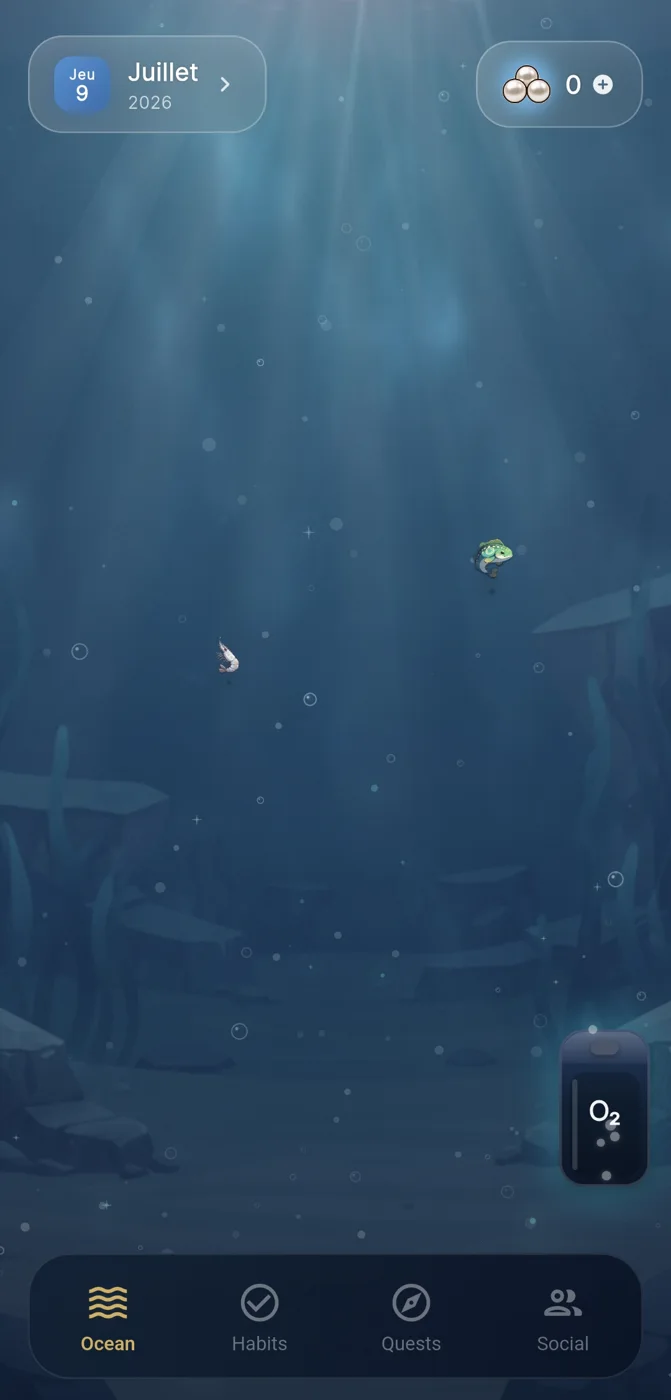
Why the habit tracker app vs streaks question comes up
Most people who search for habit tracker app vs streaks are not confused about what a streak is. A streak is simple: it counts consecutive days you did the thing, and it resets to zero the moment you miss one. The appeal is obvious, but so is the fragility. A single sick day, a busy week, or a missed alarm can wipe out months of effort in a way that feels disproportionate to what actually happened.
The underlying question is really about what kind of feedback keeps someone going after a bad week, not just a good one. A streak rewards unbroken chains. A fuller habit tracker app usually tries to represent the whole pattern of effort over time, not just whether the chain is currently alive. That distinction matters more than it first appears, because the moment after a missed day is often when people decide whether to continue at all.
What a pure streak counter optimizes for
A streak counter is intentionally narrow. It answers one question well: how many days in a row have you kept this up? That single number is easy to understand at a glance, and for some people that clarity is motivating on its own.
The tradeoff is that streaks treat every day as pass or fail, with no memory of the effort behind a near-miss or the context of why a day was skipped. Someone who did the habit 25 out of the last 30 days but broke the streak twice sees the same headline number as someone who barely tried at all: zero. For habits people intend to keep for months or years, that binary framing can discourage the exact recovery behaviour that keeps a habit alive long-term.
What a broader habit tracker app can add
A habit tracker app that goes beyond a bare streak count typically adds some form of cumulative or visual progress that survives a missed day, alongside features for focus time or optional social check-ins. The goal is to make the overall pattern of effort visible, not just whether today extends yesterday's chain.
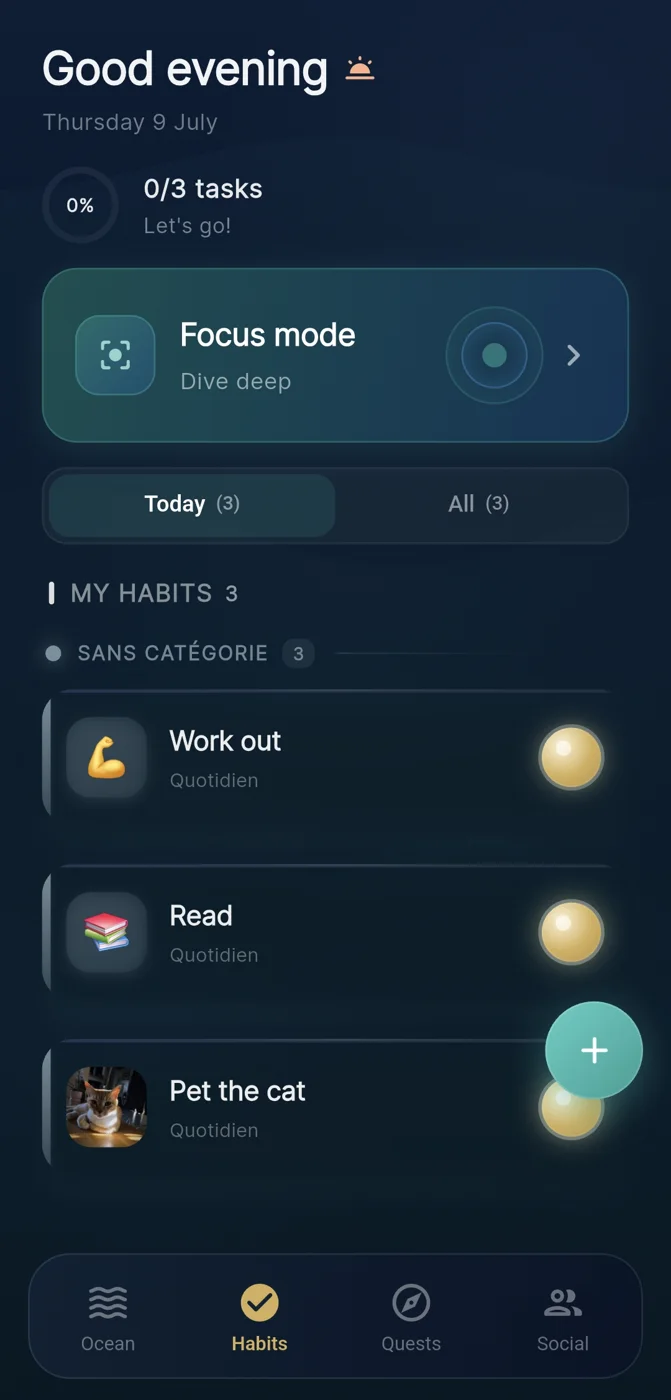
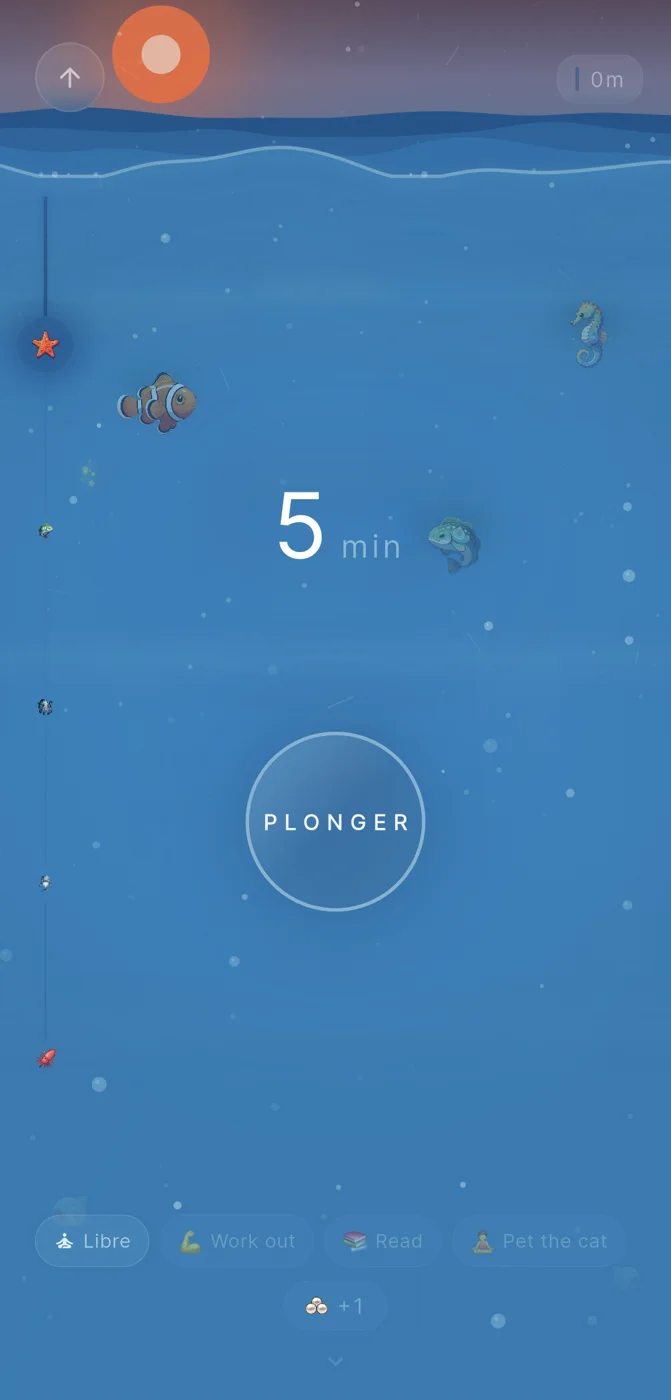
This is where Reef's approach fits as one example among many. Reef is an IVRYN habit tracker for iOS and Android where completing a habit releases a pearl into a visual ocean that keeps building over time, rather than resetting on a missed day. It also includes dive-metaphor focus sessions that reward completed focus time with pearls, and optional social crews for people who want light accountability. None of this guarantees a behaviour or health outcome, and it does not replace the basic discipline a streak-based approach also requires; it changes how progress is displayed and how a missed day is handled afterward.
The relevant question when comparing categories like this is not which display is more entertaining, but which one accurately reflects a principle worth building around: small repeatable habits, visible progress, gentle recovery after a missed day, and optional social accountability rather than mandatory pressure.
A worked example: two weeks of an imperfect habit
Consider a hypothetical, illustrative only: someone starts a daily reading habit. In week one they read on six of seven days, missing only Wednesday. In week two they read four of seven days, missing three scattered days including two in a row.
With a pure streak counter, the story after two weeks is blunt. Their current streak on the last successful day is short, because the two consecutive misses in week two reset it. Looking only at the streak number, the two weeks look like a near-failure, even though they read on ten of fourteen days.
With a cumulative, visual approach, the same two weeks would show ten completed days out of fourteen, an ocean or progress display that reflects steady, if imperfect, effort. Neither display changes what actually happened; they change what the person sees when deciding whether to keep going. This is the practical core of the habit tracker app vs streaks decision: pick the feedback style that would make you continue on your worst week, not your best one.
A checklist for choosing between the two
Since this is a personal fit question rather than one with a universally correct answer, a short checklist can help someone decide without needing to test every option.
- Ask how you tend to react to a broken streak: does it motivate a restart, or does it make you stop entirely for weeks?
- Decide whether you want a habit's history to reset on a miss, or accumulate regardless of gaps.
- Check whether focus time, not just habit completion, matters to you, since some apps separate the two.
- Decide upfront whether you want any social or crew-style accountability, and whether it should be optional or required.
- Notice whether you're choosing based on a feature list or based on what would actually keep you consistent after a bad week.
Where this leaves the decision
There is no single right answer to habit tracker app vs streaks, because the two approaches optimize for different psychological patterns. A streak rewards unbroken consistency and can be a strong short-term motivator for people who respond well to a clean, simple number. A broader habit tracker app, including the pearl-and-ocean model Reef uses, is built around the idea that visible cumulative progress and gentle recovery after a missed day matter more for sustaining a habit over months, especially when paired with optional focus sessions and social accountability rather than a hard reset.
Neither approach can promise a specific behaviour change or health outcome on its own, and the right fit depends more on how a person responds to a missed day than on any feature comparison. Trying a habit for a couple of weeks, watching how you react the first time you break a streak or skip a day, is a more reliable way to decide than reading feature lists alone.
Frequently asked questions
Is a streak counter worse than a full habit tracker app?
Neither is objectively worse; a streak counter is a simple, binary measure of consecutive days, while a fuller habit tracker app usually adds cumulative or visual progress that survives a missed day. The better fit depends on how a person reacts to a broken streak.
Does using a habit tracker app like Reef guarantee a habit will stick?
No. Reef, like any habit tracker app, does not guarantee a behaviour or health outcome. It provides visual progress, dive-based focus sessions, and optional social crews, but sticking with a habit still depends on the person's own effort and circumstances.
What should someone do after breaking a streak?
There is no single correct response, but many people find it easier to continue when their tracking method reflects overall effort rather than resetting to zero. Reviewing how discouraged a broken streak makes you feel is a useful signal for choosing between a streak-only tool and a broader habit tracker.
Sources and further reading
These resources provide the wider reference frame. Product statements on this page are limited to the public information provided by Reef.