 Reef
Reef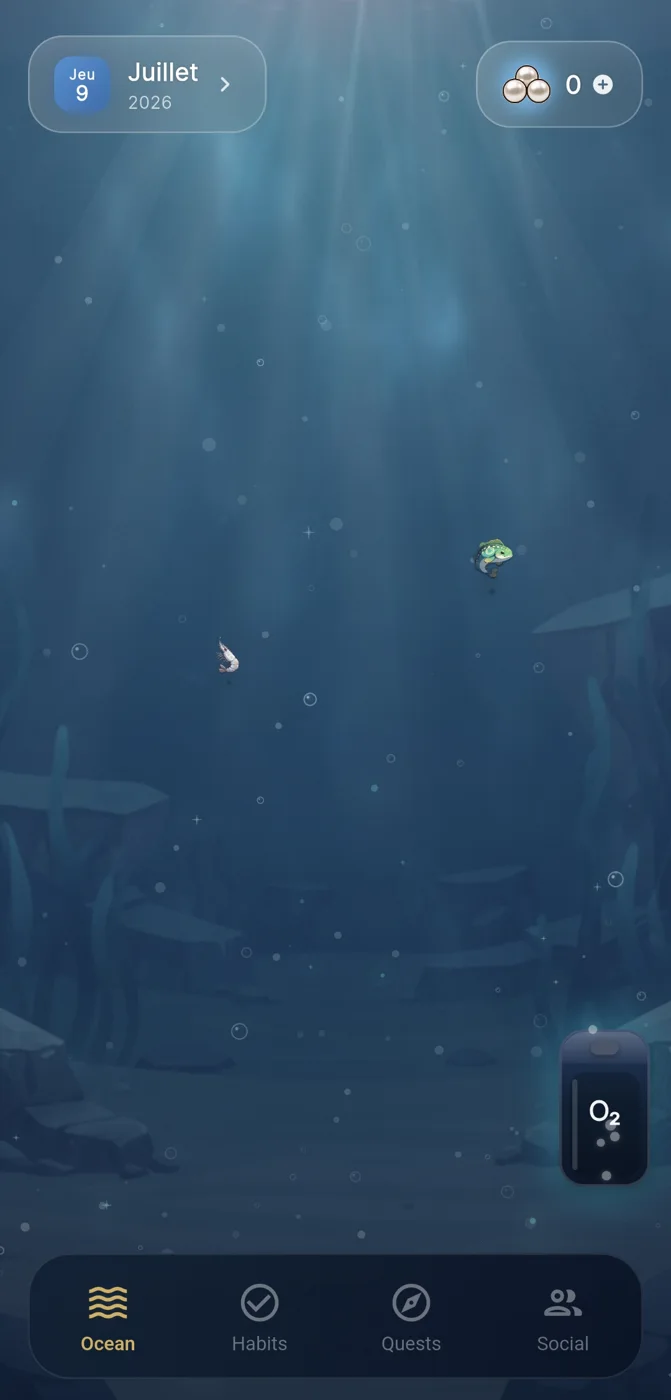
What 'best habit app for adhd' actually needs to solve
When someone searches for the best habit app for adhd, they are rarely looking for a longer list of features. ADHD-related executive function differences tend to make two things hard: keeping a habit visible enough to remember it exists, and staying engaged after a missed day without the whole system feeling ruined. A useful app is judged less by how many habits it can track and more by how it behaves at those two moments.
This means the evaluation criteria should be narrower than a general productivity app comparison. Instead of asking 'does it have reminders, streaks, and reports,' it helps to ask 'does completing a habit feel immediately noticeable, and does missing one still leave something intact to return to.' Those two questions filter out a lot of otherwise similar-looking apps.
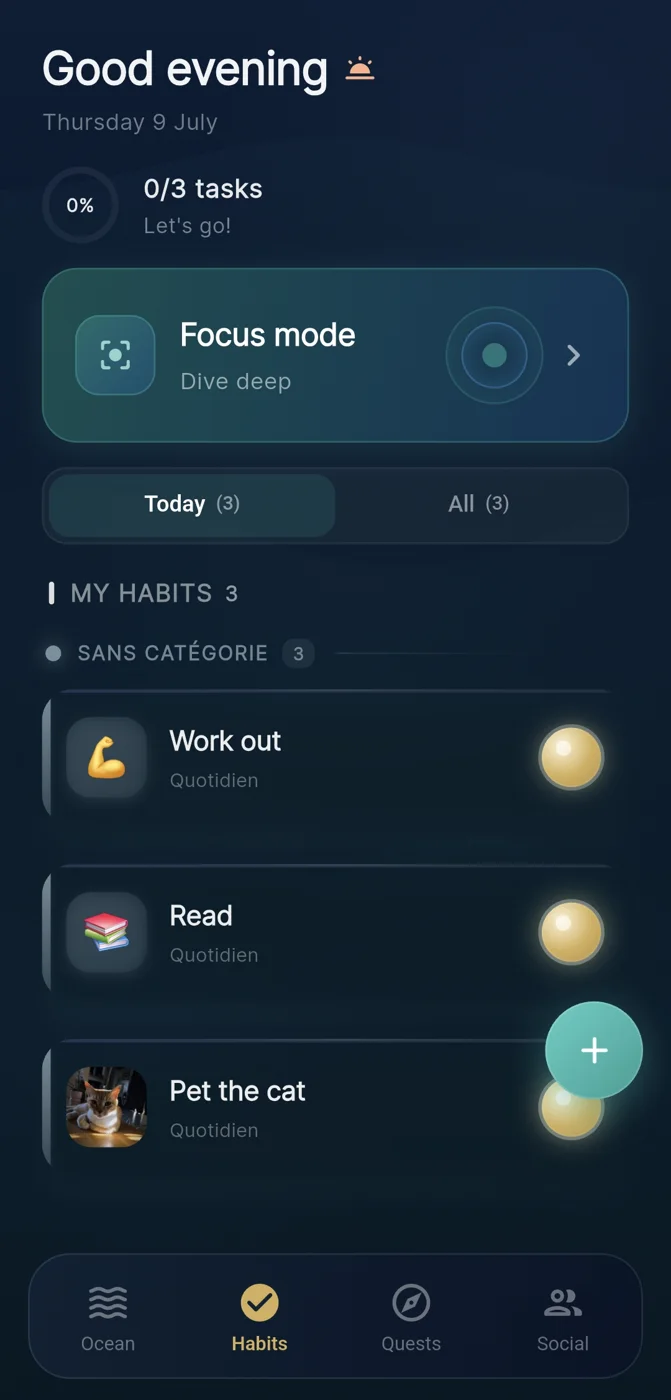
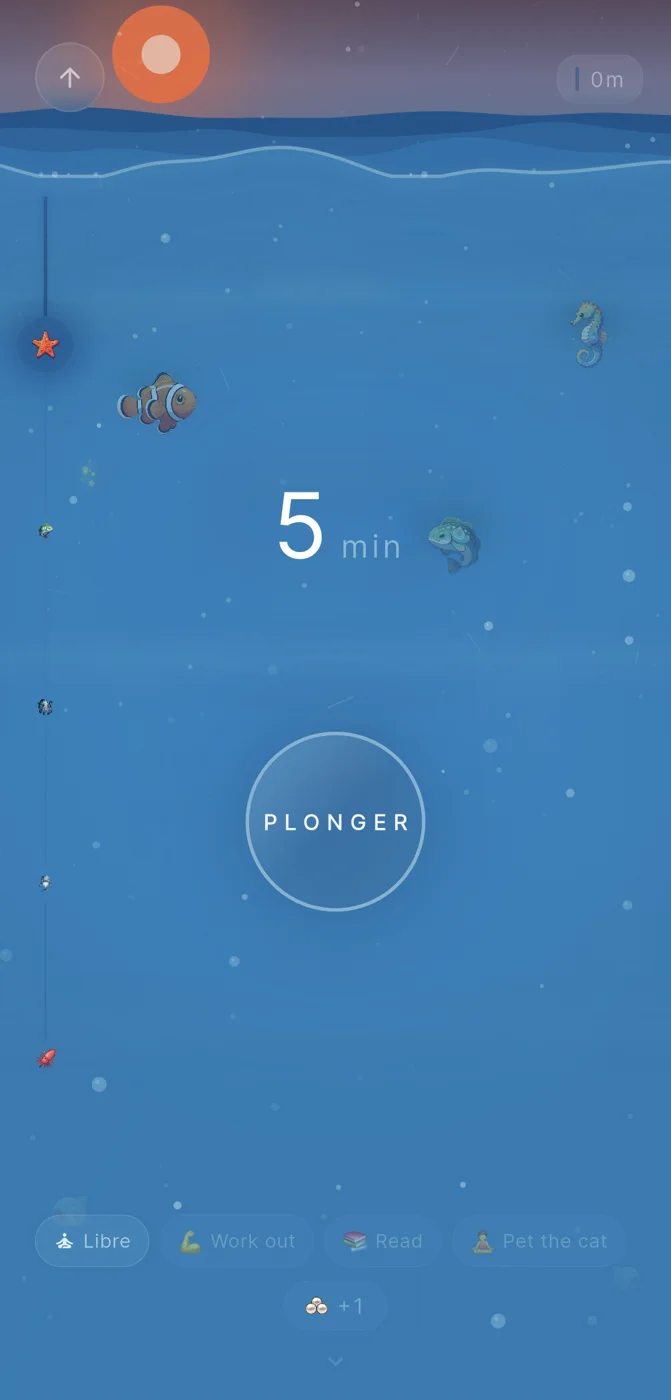
Reef is one entry in this category. It is a mobile habit tracker where completing a habit releases a pearl that contributes to a visual living ocean, and where focus sessions use a dive metaphor that also rewards completed time with pearls. That structure is relevant here because it ties directly to the 'visible progress' and 'gentle recovery' principles below, not because it is presented as a clinical solution.
Principle 1: small repeatable habits over ambitious systems
The most reliable habits for anyone, and especially for people managing attention or motivation differences, are ones scaled down to something that can be repeated on a low-energy day. A habit that only works when energy and focus are both high will look successful for a week and then quietly disappear. When comparing apps, it is worth checking whether the interface nudges you toward one or two small actions rather than a long checklist.
This is also where focus tools intersect with habit tracking. A short, bounded focus session is a smaller commitment than an open-ended 'work on this for a while' block, and smaller commitments are easier to start on hard days. Reef's dive-metaphor focus sessions are built around finite, completable stretches of time rather than open-ended tracking, which fits this same logic of keeping the unit of effort small enough to actually finish.
- Prefer a 5-10 minute version of a habit over the 'ideal' 30-minute version when energy is low
- Check whether the app makes it easy to log a small version of a habit, not just the full one
- Treat a completed short session as a full success, not a partial one
Principle 2: visible progress that does not require interpretation
Streak counters and numeric stats require a small amount of mental translation before they feel meaningful, and that translation step is exactly the kind of extra cognitive load that ADHD can make more costly. A visual representation that changes immediately after an action, without needing to check a chart, reduces that gap between doing something and feeling like it happened.
This is one of the more concrete reasons a visual metaphor can be useful for this audience: it turns 'I did the habit' into something perceivable rather than something you have to look up. In Reef's case, that takes the form of a pearl being added to a visual ocean each time a habit or focus session is completed. The value here is not the specific aesthetic, but the general principle: progress that is seen rather than counted tends to register faster for people whose attention moves quickly between things.
Principle 3: gentle recovery after a missed day
Almost every habit app markets streaks, and almost every habit app has the same failure mode: a missed day breaks the streak, and the visible loss of that streak can feel disproportionate to the actual missed action. For people who already experience more friction around consistency, a system that treats one missed day as a total reset can discourage the exact behaviour it is meant to encourage.
When evaluating any habit app for this reason, it is worth looking specifically at what happens the day after a miss. Does the accumulated progress disappear entirely, or does most of it remain intact with only a small, proportionate effect? A tracker built around an accumulating visual (rather than a single streak number) is more naturally suited to this, since a missed day affects the pace of accumulation rather than erasing what has already been built.
This does not mean any app, including Reef, can guarantee that a person will stick with a habit or achieve a particular outcome. What it can do is remove one common source of unnecessary discouragement: the feeling that a single missed day undoes everything.
Principle 4: optional accountability, not mandatory social pressure
Social accountability can help some people and add stress for others, and for ADHD in particular, unpredictable social pressure (like an unexpected notification calling out a missed day) can be counterproductive. The safer default is an app where social features are opt-in and can be turned off or ignored without breaking the core tracking experience.
Reef's social 'crews' are described as optional rather than required, which matters for this audience: someone can use the habit and focus tracking entirely on their own, and only add a crew later if and when shared accountability feels helpful rather than pressuring.
A worked example: choosing an app for a scattered morning routine
Example (illustrative, not a case study): Imagine someone wants to build three small morning habits, taking medication, drinking a glass of water, and a two-minute stretch, but mornings are unpredictable and some days none of it happens. When testing an app against the four principles above, they might set each habit as a single tap with no sub-steps, look for whether completing all three visibly changes something on the main screen that same morning, and deliberately skip a day mid-week to see whether the app still shows meaningful progress the next day rather than a blank reset.
In this example, an app that shows a small addition to a visual scene per completed habit, keeps most of that visual intact after a missed day, and leaves any social layer switched off by default would satisfy the four principles described here. This is a way of stress-testing any candidate app, including Reef, against the reader's own routine before committing to it, rather than relying on a generic feature checklist.
A short decision checklist
Before choosing among habit apps, it can help to run through a short, concrete checklist rather than comparing marketing pages. None of these questions require special expertise, only a few minutes of using the app's free tier or trial with a real habit.
- Can I log a small version of the habit in one tap, without extra steps?
- Does completing the habit change something I can see immediately?
- If I skip a day, does most of my progress still remain visible afterward?
- Are social or sharing features optional, and can I ignore them entirely?
- Does the app avoid promising a guaranteed outcome, and does that match my expectations?
Frequently asked questions
Is there one best habit app for ADHD that works for everyone?
No single app works for everyone with ADHD, since attention, motivation and sensory preferences vary widely between people. It is more useful to judge any candidate app against specific principles, such as how small a habit can be logged, how visible progress feels immediately after an action, and how gently the app handles a missed day, then test it against your own routine for a week or two before deciding.
Can a habit app guarantee that someone with ADHD will stick to a routine?
No habit app, including Reef, can guarantee a behaviour or health outcome. Apps can reduce some common sources of friction, like making progress visible or softening the effect of a missed day, but consistency still depends on the person's routine, environment and, where relevant, guidance from a qualified professional.
Should social accountability features be required in a habit app for ADHD?
They should generally be optional rather than required. Social accountability helps some people stay consistent but can add unpredictable pressure for others, particularly around missed days, so an app that lets you use core tracking features without engaging any social layer offers more flexibility for different needs.
Sources and further reading
These resources provide the wider reference frame. Product statements on this page are limited to the public information provided by Reef.