 Reef
Reef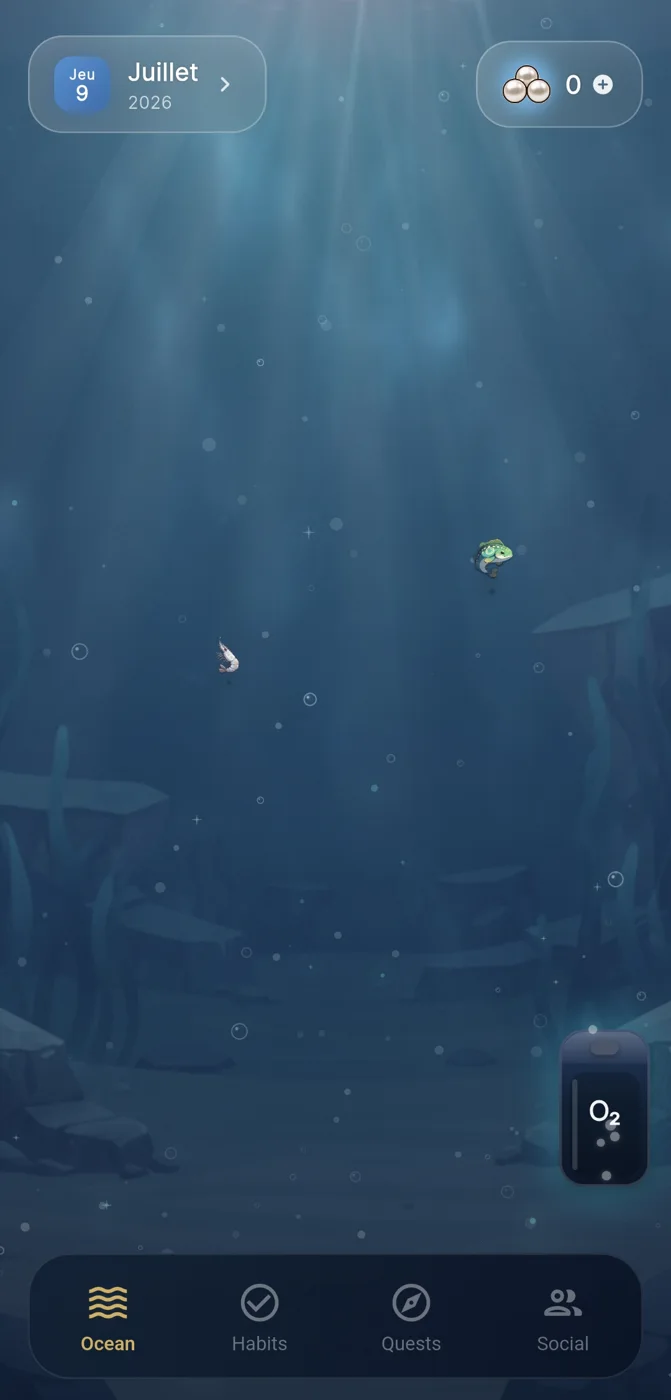
What 'free' actually means when you search for a daily routine app free
When someone searches daily routine app free, they usually mean two different things at once: an app that costs nothing to start with, and an app that will actually help them build a routine rather than just log one. Those two goals can pull against each other. A free tier that limits how many habits you can track, or hides progress history behind a paywall, may look free at signup but stop being useful right when a routine gets tested by a busy week.
Before comparing apps, it helps to separate the cost question from the design question. The cost question is about what you get without paying, and that changes over time as apps update their plans, so it's worth checking current pricing directly on each app's own page rather than trusting older reviews. The design question is more stable: does the app make it easy to do a small habit repeatedly, see that you did it, and recover gently when you miss a day. That second question is where most of the real difference between apps shows up, free or not.
The four things worth checking before you commit to any app
Four features matter more than most others for someone trying to build a routine that survives real life: how small the habits can be, how visible progress is, how the app handles a missed day, and whether any social layer is optional rather than mandatory. These map closely to how habit-focused apps, including Reef, are typically designed and described in habit-tracking guides.
Small repeatable habits matter because routines that depend on big daily commitments tend to break under normal disruptions like travel, illness or a heavy workweek. An app that lets you define a habit as small as 'read one page' or 'stretch for two minutes' is easier to sustain than one that nudges you toward ambitious daily targets.
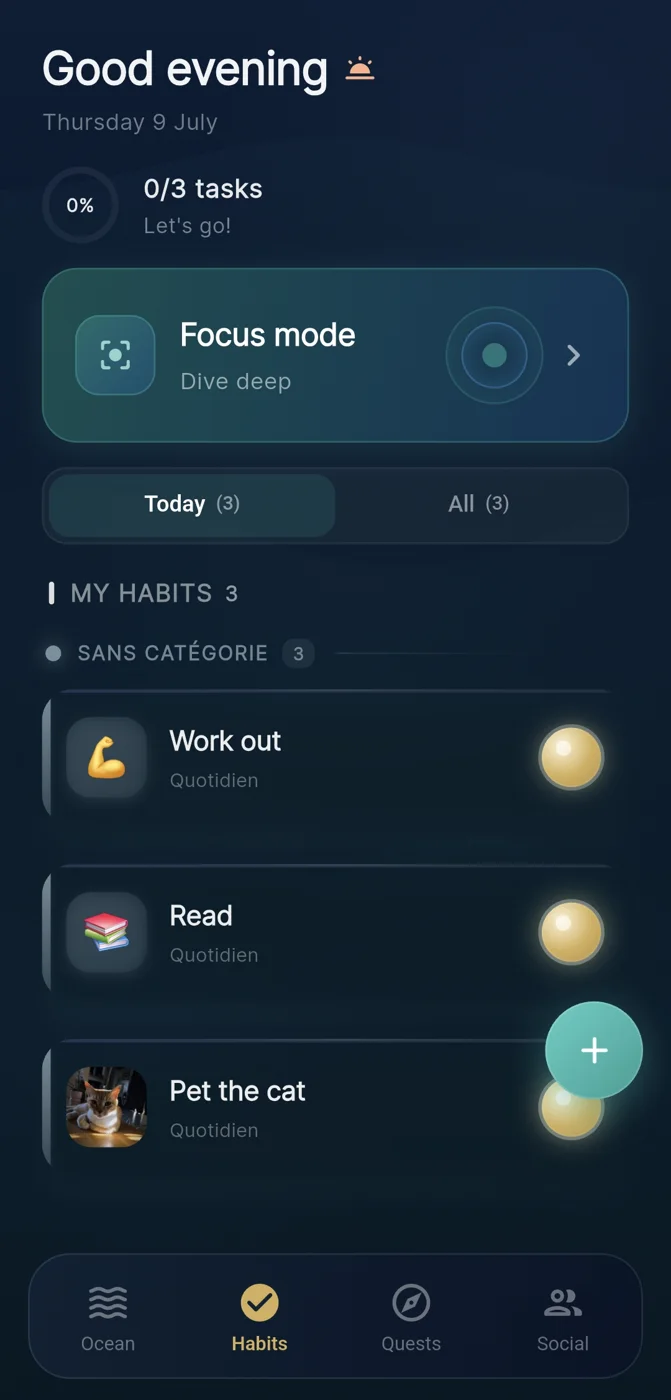
Visible progress matters because most people underestimate consistency they can't see. A simple streak count, a calendar of completed days, or in Reef's case a pearl added to a visual ocean each time a habit is completed, gives you a concrete signal that something is accumulating, even on days that otherwise feel uneventful.
Gentle recovery after a missed day matters more than it might seem. Apps that reset a streak to zero after one miss can make a lapse feel like failure, which sometimes leads people to abandon the habit altogether rather than resume it. Look for language or design that treats a missed day as normal rather than as the end of the attempt.
- Can habits be set small enough to survive a bad week?
- Is progress visible in a way that doesn't require checking detailed stats?
- Does missing a day feel like a reset or a pause?
- Is any social or group feature optional rather than required to use the app?
Focus time and daily routines are related but not identical
Many people searching for a daily routine app free are really trying to solve two problems at once: doing recurring habits, and protecting blocks of focused time. These overlap but aren't the same feature. A habit tracker tells you whether you did something today; a focus tool helps you actually get through the doing part without switching away.
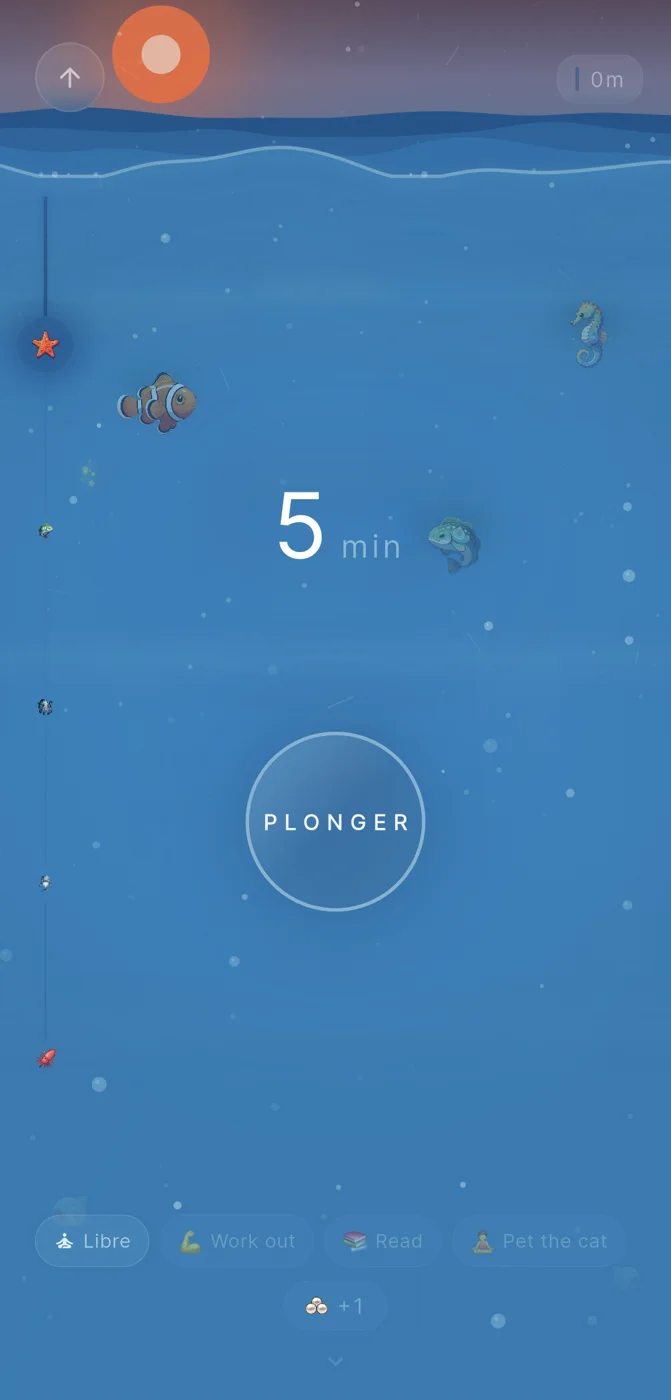
Reef combines both in a bounded way: habit completions release a pearl that adds to a visual ocean, and separate focus sessions use a dive metaphor, rewarding completed focus time with pearls as well. This is a design choice about how progress is represented, not a claim that using the app will change behaviour on its own. Reef does not guarantee a behaviour or health outcome, and no routine app can substitute for the reader's own judgment about what they need.
Worked example: comparing two hypothetical free plans
Here is a labelled hypothetical, not a real comparison, to show how the four checks above might apply in practice. Imagine two free routine apps, 'App A' and 'App B'. App A's free tier allows unlimited habits but shows only a raw checklist with no visual progress marker, and a missed day silently resets any streak counter to zero. App B's free tier caps habits at three, but shows a simple growing visual (comparable in spirit to Reef's pearl-and-ocean approach) and explicitly separates 'missed' from 'broken', letting you resume without penalty.
For someone whose main risk is losing motivation after a bad week, App B's smaller habit limit is likely a smaller cost than App A's harsh reset behaviour, even though App A technically offers more habits for free. For someone who wants to track many small routines and doesn't mind a plain list, App A's higher limit might matter more. There is no single right answer here; the point of the example is to show that 'free' and 'a small number of habits' are not the deciding factors on their own, and that recovery behaviour and visibility often matter more day to day.
This example is illustrative only and does not describe any specific app's actual current features or pricing, which change over time and should be checked directly.
Where social accountability fits, and where it doesn't
Some people find that sharing progress with a small group keeps them consistent; others find social features add pressure that makes a routine feel like a performance rather than a habit. Neither reaction is wrong, which is why it's worth checking whether an app's social layer, if it has one, is optional. In Reef, social crews are optional, meaning the core habit and focus mechanics work without joining or maintaining a group.
If you're evaluating an app for yourself, it's reasonable to ask whether you could turn off or ignore any social feature entirely and still get value from the app's habit and progress tracking. If the answer is no, that's useful information about fit, not a flaw in the app itself, since some people genuinely want the accountability a group provides.
A short checklist before you download anything
Given all of the above, a practical way to evaluate any daily routine app free option is to run through a short checklist rather than relying on star ratings or marketing copy alone. This won't tell you which app is 'best', because that depends on your own habits and preferences, but it will tell you whether an app is likely to fit how you actually work.
Treat this as a starting filter, not a guarantee of results. No app, including Reef, can promise that using it will produce a specific health or behaviour outcome; what it can do is make the habits and focus time you choose to act on more visible and easier to repeat.
- Check current pricing and free-tier limits directly on the app's own page before deciding.
- Confirm habits can be set small enough to survive a disrupted week.
- Look for a visible progress signal that doesn't require digging into settings.
- Check how the app treats a missed day: reset, pause, or something in between.
- If there's a social feature, confirm it's optional rather than required.
Frequently asked questions
Is a free daily routine app enough, or do I need a paid one?
It depends on what you need rather than on price alone. A free tier is usually enough if it lets you set small habits, see progress clearly, and recover from a missed day without penalty; paying only makes sense if a specific feature you actually need, such as more habit slots or detailed history, is locked behind a paywall. Check each app's current free-tier limits directly, since these change over time.
Will a routine app actually change my habits?
A routine app can make small habits and focus time more visible and easier to repeat, but no app can guarantee a behaviour or health outcome on its own, including Reef. Whether a habit sticks depends mainly on how realistic the habit is and how you respond to missed days, not on the app itself.
What should I do if I miss a day in my routine app?
Look for an app design that treats a missed day as normal rather than as a reset. Apps that support gentle recovery after missed days tend to help people resume rather than abandon a routine, so it's worth checking how an app handles this before you rely on it long term.
Sources and further reading
These resources provide the wider reference frame. Product statements on this page are limited to the public information provided by Reef.