 Reef
Reef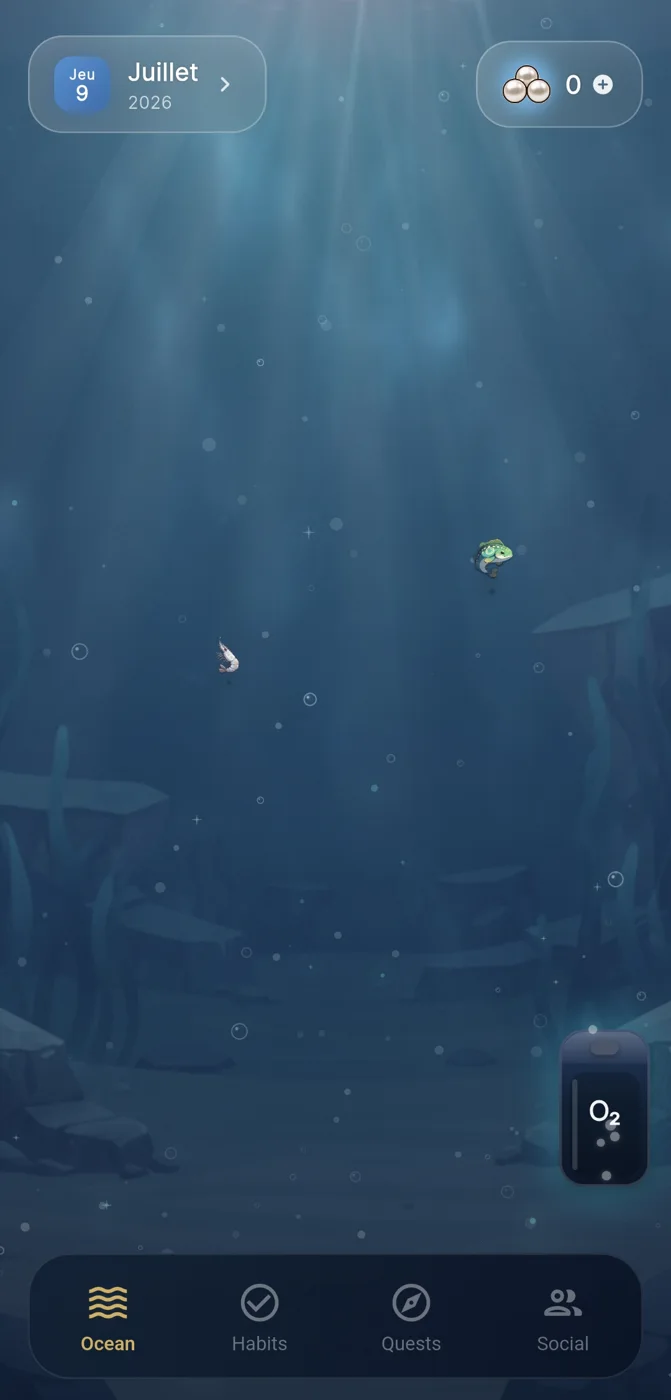
What to know before choosing a habit tracker app with friends free
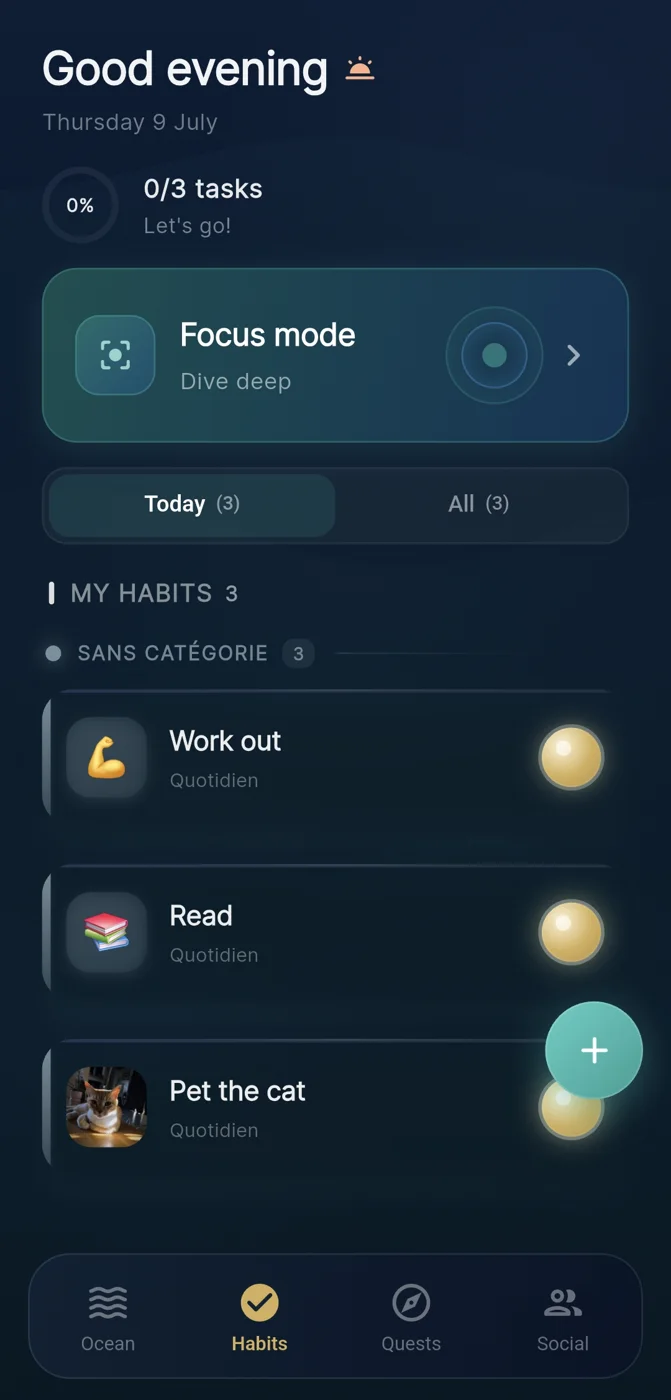
Searching for a habit tracker app with friends free usually means looking for more than a checklist. You may want a simple way to repeat a small action, a visible signal that you are returning to it, room to protect focus time, and the option to involve people you trust. Before acting, separate those needs. A free app may let you start tracking, but its social features, limits, platform support and approach to reminders can differ over time, so check the current app listing and in-app details before committing.
Reef is an IVRYN mobile habit tracker available for iOS and Android. Its public product context is visual: completing a habit releases a pearl that contributes to a living ocean. That can make repeated actions easier to see without turning an app into proof that a routine will work for every person. Reef describes its mechanics as a way to make habits, focus and optional social accountability visible; it does not guarantee a behaviour or health outcome.
- Decide whether you primarily need habit repetition, focused work time, optional accountability, or a combination.
- Check the current free-plan details directly before relying on a particular limit or feature.
- Choose an approach you can return to after an interrupted day, not only one that feels motivating on day one.
Start with small repeatable habits, not an ideal schedule
A useful tracker should support actions that are concrete enough to complete in ordinary conditions. “Read more” may be meaningful, but “read one page after lunch” gives you a clearer decision point. Small actions are not trivial when they create a repeatable return point. They also make it easier to tell the difference between a habit you want and a plan that asks too much from a busy day.
This is especially important when an app presents progress visually. A growing ocean or collection of pearls can make completion legible, but the visual is most helpful when it reflects an action you can realistically repeat. Start with one or two habits and make the definition modest. Add complexity only when the routine itself feels understandable, rather than using more tracked habits to compensate for uncertainty.
Reef’s public methodology and guide frame habit design around visible, game-like progress while keeping the interpretation bounded. A reward can acknowledge completion; it cannot establish that a habit is permanently formed, that motivation will remain constant, or that a particular method is right for everyone.
- Write each habit as an observable action.
- Attach it to a familiar moment when possible.
- Set a version that still counts on a low-energy day.
- Review the definition if you repeatedly avoid logging it.
Use visible progress as feedback, not a verdict
Visible progress works best as feedback. It can answer, “Did I return to this action today?” and “What have I completed recently?” It should not become a verdict on discipline, worth or future success. If a visual system makes you feel pressure to preserve a perfect record, reduce the scope of the routine or reconsider how you interpret missed days.
In Reef, each completed habit releases a pearl into a visual living ocean. The practical value of that mechanic is not a promised outcome; it is a concrete representation of completed actions. For some people, that may be a more gentle cue than a bare number or streak. Others may prefer a simpler view. The right choice depends on whether the visual helps you notice progress and return to the next action.
Treat gaps as information. A missed day can reveal that a cue was unclear, the action was too large, the timing was unsuitable, or life simply changed. None of those explanations requires starting over. The next useful step is usually to make the next repetition easier to begin.
- Ask what a missed day changed in your plan, if anything.
- Avoid making one missed check-in mean the whole routine has failed.
- Keep the next action available at the smallest workable size.
Protect focus time with a clear boundary
Habit tracking and focus sessions solve related but different problems. A habit can be a small recurring action; a focus session is a protected period for attention. If you want both, make the relationship explicit. For example, a habit might be “plan the next task,” while a focus session is the time reserved to work on it.
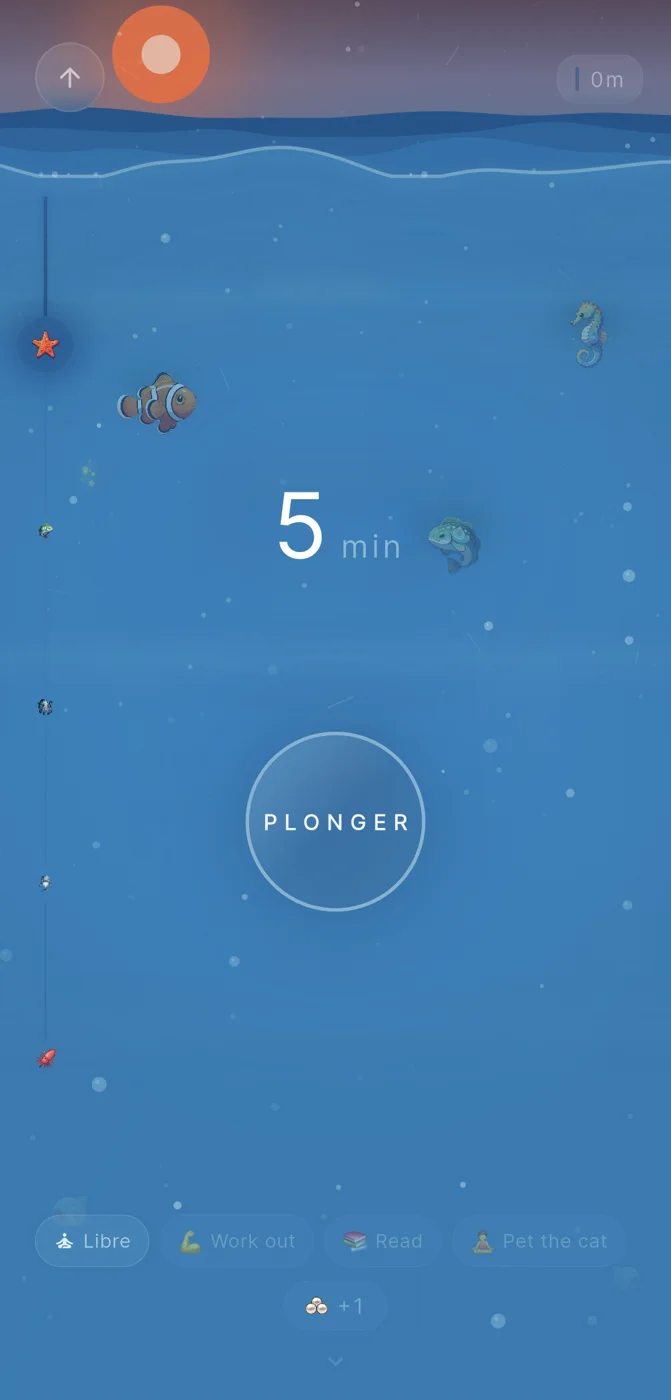
Reef uses a dive metaphor for focus sessions and rewards completed focus time with pearls. This gives focus time a place in the same visual system as habit completion. It does not mean a timer can remove interruptions, create concentration on demand or guarantee productive output. The useful question is whether the session boundary helps you begin, stay with a chosen task and acknowledge time you completed.
Choose a focus length that matches the work and your current capacity. A short session can be a valid way to restart after distraction. At the end, record a simple next step rather than judging the session only by how much was finished.
- Name one task before starting the session.
- Silence or move likely distractions when practical.
- Use a brief end note: completed, paused, or next action.
- Count completed focus time as time protected, not as a guarantee of output.
Optional friends should create accountability without pressure
Friends can make a tracker feel more present, but social accountability should remain optional. A useful shared setup lets people decide what to share, who sees it and how much interaction feels supportive. It is reasonable to keep private habits private, especially when the action concerns personal routines or sensitive circumstances.
Reef includes optional social crews. That means social participation is a choice, not a requirement for using the app’s habit or focus mechanics. Before inviting anyone, agree on the purpose: encouragement, a shared check-in rhythm, or simply seeing that others are also making time for their priorities. Avoid treating the crew as a monitoring system or a source of promises about results.
The social layer has limits. Friends cannot reliably know your context from a completion signal, and an app cannot guarantee that accountability will change anyone’s behaviour. Make leaving, muting or reducing sharing an acceptable part of the arrangement. Accountability works better as an invitation to return than as a penalty for missed days.
- Invite only people whose communication style feels safe and constructive.
- Agree that missed days do not require an explanation.
- Choose a light check-in cadence instead of constant monitoring.
- Keep the option to use the tracker solo.
Example decision aid: choosing a gentle setup
Example: Maya wants to restart evening reading, protect two periods of concentrated study each week and share only the study goal with a friend. She is not looking for a guarantee that she will become consistent; she wants a visible, manageable system for returning to her intentions. She chooses a habit defined as “read one page after dinner” and treats any additional reading as optional.
For focus, Maya schedules two short dive-style sessions around a specific study task. Completing the time can add pearls in Reef, but she judges the setup by a simpler question: did the boundary make it easier to begin? She shares the study intention through an optional crew, while keeping the reading habit private. If she misses three evenings, she does not try to catch up. She changes the cue, shortens the action if needed, and resumes with the next available day.
This example is a planning aid, not evidence that one configuration will work for everyone. Your own setup may need fewer habits, different cues, no social layer, or a focus routine that is separate from habit tracking.
- Decision checklist: Can I describe the action in one sentence?
- Decision checklist: Is the smallest version realistic on a difficult day?
- Decision checklist: Does visible progress feel informative rather than pressuring?
- Decision checklist: Do I want social accountability, and what is safe to share?
- Decision checklist: Have I checked the current iOS or Android listing for the free option and relevant details?
Frequently asked questions
Is Reef a free habit tracker app with friends?
Reef is an IVRYN mobile habit tracker for iOS and Android with optional social crews. Check its current app listing and in-app details for the current free option, limits and availability before deciding.
How does Reef show habit progress?
When you complete a habit in Reef, it releases a pearl that contributes to a visual living ocean. The visual represents completed actions; it does not guarantee behaviour or health outcomes.
Can I use Reef without sharing habits with friends?
Yes. Reef’s social crews are optional, so you can use its habit and focus mechanics without participating socially. You can choose what, if anything, to share with others.
Sources and further reading
These resources provide the wider reference frame. Product statements on this page are limited to the public information provided by Reef.