 Reef
Reef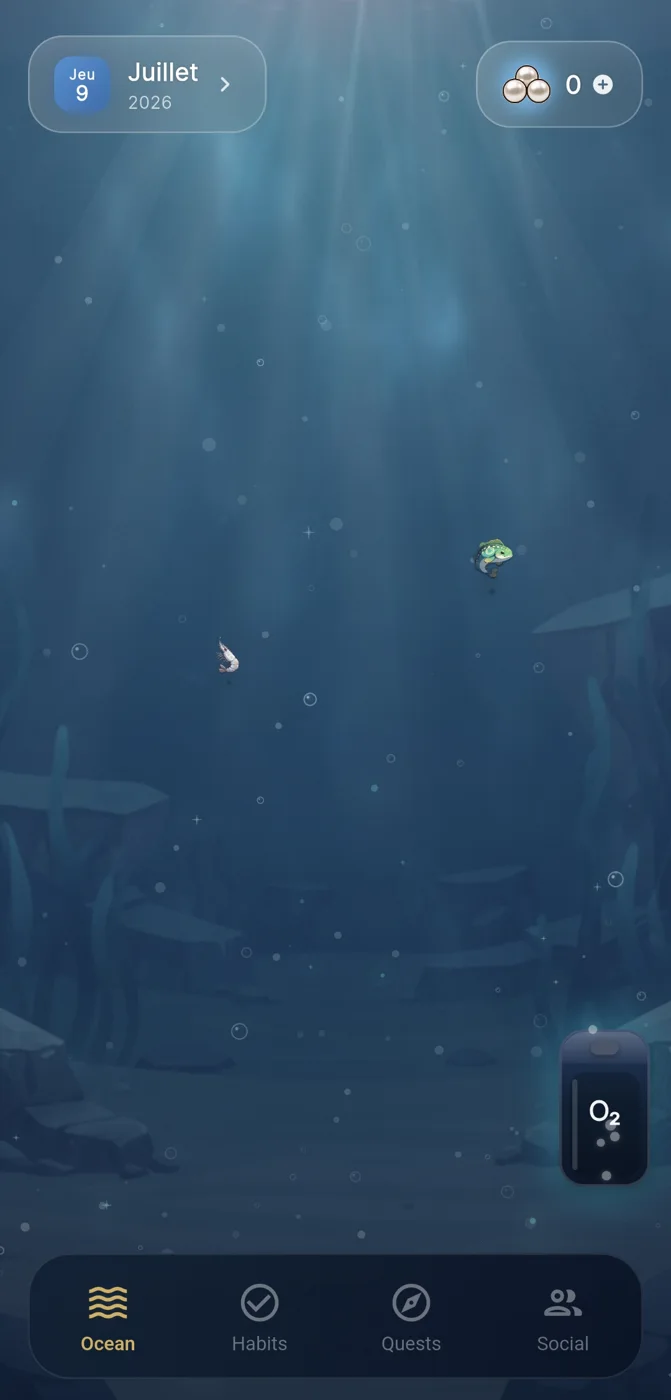

What people actually mean by best habit tracker diary
When someone searches for a best habit tracker diary, they are usually not asking for a feature list. They want something that will still feel worth opening in three weeks, after the initial motivation has faded and the habit has become ordinary again. That's a different question than 'which app has the most streak badges', and it changes what you should be evaluating.
A diary framing matters because it implies a record you look back on, not just a checkbox you tap and forget. The best tools in this category tend to combine a quick daily log with some form of visible history, so a missed day sits inside a longer pattern rather than feeling like a verdict on the whole habit.
The core principles worth checking for
Most durable habit systems rest on a small set of ideas: keep the habit small enough to repeat on a bad day, make progress visible without demanding constant attention, allow gentle recovery after a miss instead of resetting everything to zero, and treat social accountability as optional rather than mandatory.
These principles are worth using as a checklist when comparing any habit tracker diary, including Reef. A tool that only rewards perfect streaks tends to punish the exact moments where support is most needed - after a lapse. A tool that makes recovery feel normal, rather than shameful, is more likely to still be in use months later.
- Does the habit unit feel small and repeatable, or does it invite all-or-nothing thinking?
- Is progress shown visually, so effort accumulates somewhere you can see it?
- What happens in the app the day after you miss a habit - is there a soft path back in?
- Is any social or sharing feature something you opt into, or something forced on you?
Where visual progress and focus mechanics fit in
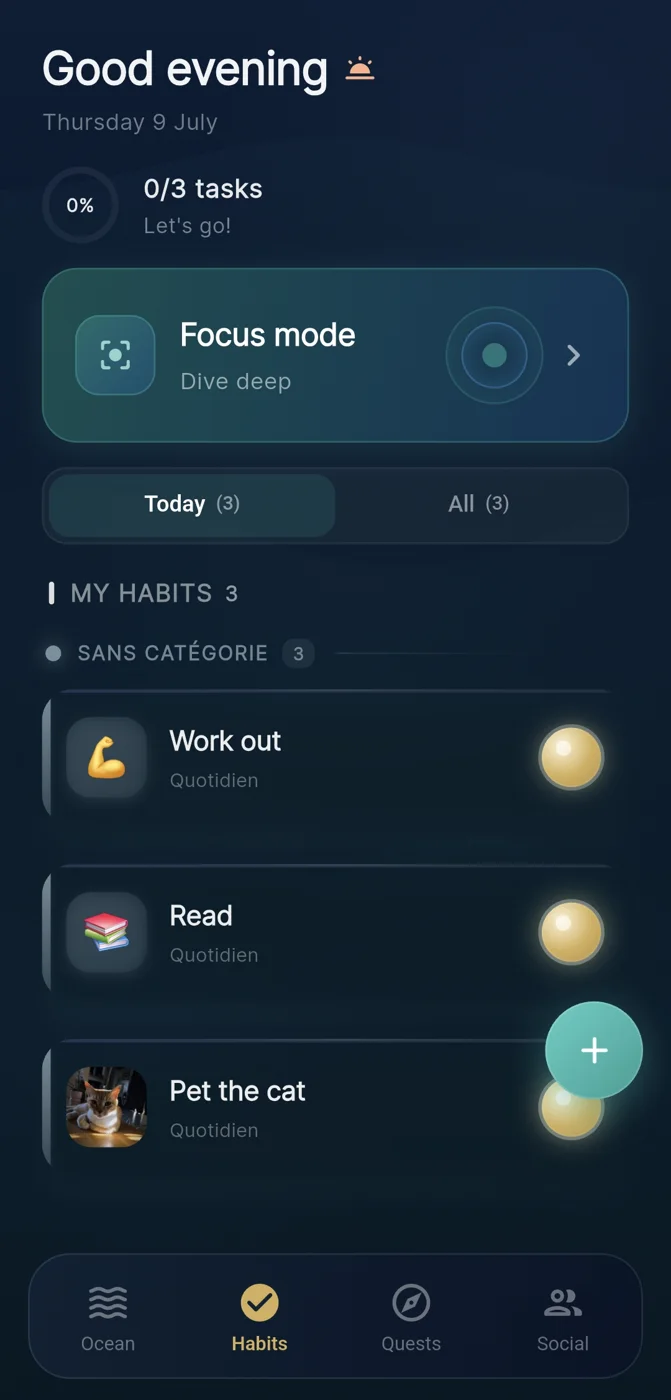
Reef is one example of this category: an IVRYN mobile habit tracker for iOS and Android that turns each completed habit into a pearl feeding a visual ocean, so the accumulation of small actions has something to look at rather than just a number. The same dive-themed approach carries into focus sessions, where completed focus time also earns pearls rather than only logging elapsed minutes.
The point of a visual layer like this isn't decoration for its own sake - it's meant to make otherwise invisible consistency easier to notice, which can help some people stay engaged with a habit diary longer. That said, this is a design choice about presentation, not a claim about outcomes; a living-ocean visual won't itself change how consistent someone is, and Reef doesn't claim otherwise.
If your reader question is really 'will visual feedback help me stick with habits', the honest answer is that it depends on whether that kind of feedback motivates you personally. Some people are moved by seeing progress accumulate somewhere; others find it beside the point. It's worth treating visual mechanics as one input among several rather than the deciding factor.
Social accountability: useful, but only if it's optional
Sharing progress with others can help some people follow through, but it can also backfire - turning a private habit into a performance, or adding pressure that makes lapses feel worse. Because of this, whether a social feature is optional matters more than whether it exists at all.
In Reef, any social or crew-style accountability sits alongside the habit and focus tracking as something you choose to use, not something the core experience depends on. That distinction is worth checking in any tool you're comparing: can you get full value from the diary and focus features alone, or does the app quietly nudge you toward sharing to stay motivated?
Neither approach is inherently better. Some people do better with visible peer accountability; others do better keeping the habit private until it's established. A best habit tracker diary, for your purposes, is one that lets you decide which mode fits rather than forcing one on you.
A worked example: choosing between two habits to track first
Example (hypothetical, not a Reef case study): imagine someone wants to build two habits at once - drinking more water and writing in a journal each evening. They open a new habit tracker diary and are tempted to log both from day one, each with an ambitious daily target.
A more workable approach, following the small-repeatable-habit principle, would be to pick one habit first, define it in the smallest form that still counts (one glass of water logged, three sentences written), and let the tracker's visible progress build before adding the second habit. If a day is missed, the useful move is to log it honestly and continue the next day, rather than trying to retroactively fix the streak or abandoning the habit out of frustration.
This kind of staged approach isn't specific to any single app - it's a general way to use a habit diary so the tool supports the behaviour instead of becoming another source of pressure. Whatever app is chosen, the same sequence (start small, make it visible, recover gently, add social sharing only if wanted) applies.
A short decision checklist before you commit
Before settling on a best habit tracker diary, it helps to run through a short set of questions rather than judging by app store ratings or feature counts alone. None of these questions has a universally right answer - they're meant to match the tool to how you actually behave, not to an ideal user.
- Can I define habits small enough to complete even on a low-energy day?
- Does the app show me a visual or numeric sense of accumulated effort I actually want to look at?
- What does the app do the day after a missed habit - does it welcome me back or reset progress punitively?
- Is any focus-session or deep-work feature separate from habit tracking, or bundled in a way that suits how I work?
- Can I use the habit and focus features fully without engaging any social or sharing component?
- Is the app available on the devices I actually use day to day?
Setting realistic expectations
It's worth being direct about limits. No habit tracker diary, including Reef, guarantees a behaviour or health outcome - the tool can make effort visible and repeatable, but the habit itself still depends on the person doing it. Framing a tracker as a guarantee of change sets up disappointment that has nothing to do with the app's design.
If a habit relates to health, sleep, medication, or anything with medical implications, a habit tracker diary is a logging aid, not medical guidance, and decisions in that area should involve a qualified professional rather than an app's streak count.
Frequently asked questions
What is the single most important feature to look for in a habit tracker diary?
Look for how the app handles a missed day. A tracker that lets you log a lapse honestly and continue, rather than resetting all progress or shaming the miss, tends to support longer-term use better than one focused purely on unbroken streaks.
Do I need social accountability features to make a habit tracker diary work?
No. Social or sharing features can help some people stay consistent, but they are not required for a habit diary to work. Optional social accountability, used only if you choose it, tends to suit more people than a design that makes sharing mandatory.
Will a visually engaging habit tracker guarantee I stick with a habit?
No app can guarantee behaviour change. Visual progress, like pearls accumulating in an ocean scene, can make consistency easier to notice for some people, but sticking with a habit still depends on how the habit itself is defined and repeated, not on the visuals alone.
Sources and further reading
These resources provide the wider reference frame. Product statements on this page are limited to the public information provided by Reef.