 Reef
Reef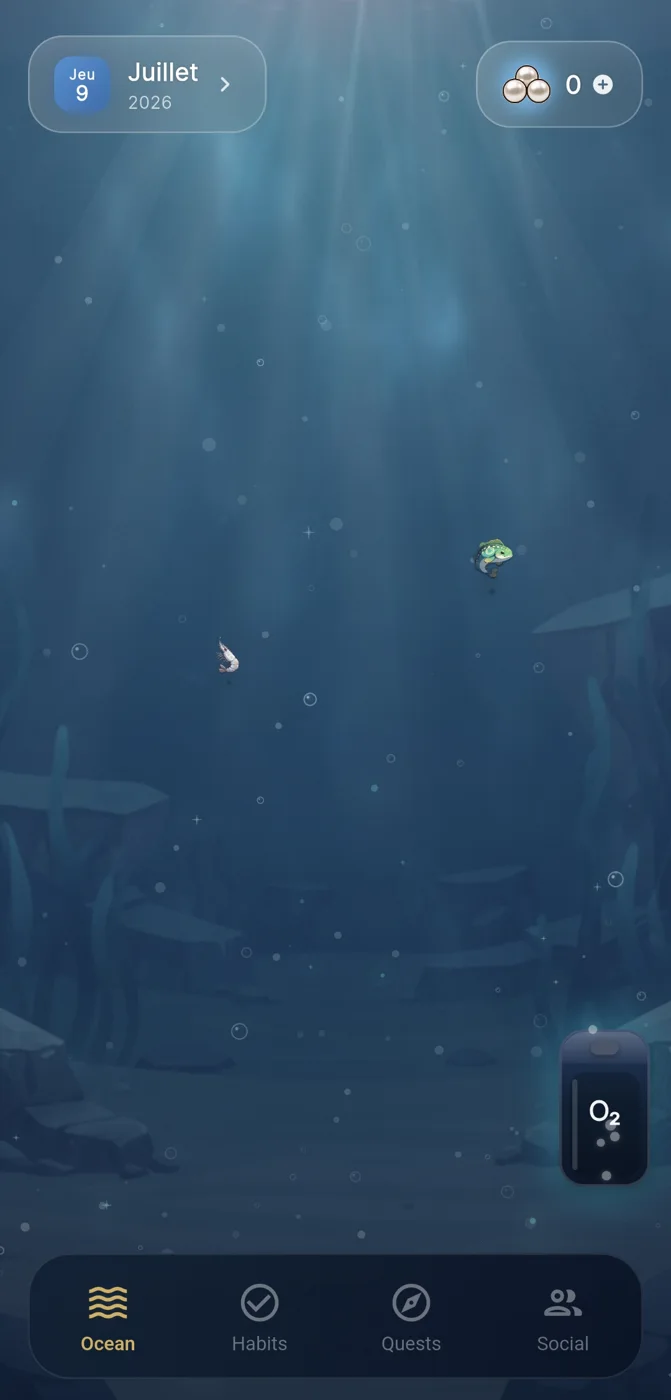
What 'best' actually means when you're comparing a habit tracker website
Searching for the best habit tracker website usually means you already know the basic pitch of these tools: log a small action, see a streak or visual grow, repeat tomorrow. The harder question is which design choices actually help you keep doing that on a bad week, not just a good one. Most comparison pages focus on feature counts or screenshots, which tells you almost nothing about whether the app will still feel useful in month two.
A more useful lens is to ask what happens on the days you don't complete the habit. Does the app punish you visually, reset your progress to zero, or does it let a missed day sit quietly without wiping out weeks of effort? That single design decision affects whether people quit after the first slip, which is a common failure point for habit tools in general, independent of any specific app.
Core mechanics worth checking before you commit
Before picking a tool, it helps to separate three mechanics that often get bundled together: the logging action itself, the visual feedback for completing it, and any optional social layer. Each one solves a different problem, and a tool that's strong in one area isn't automatically strong in the others.
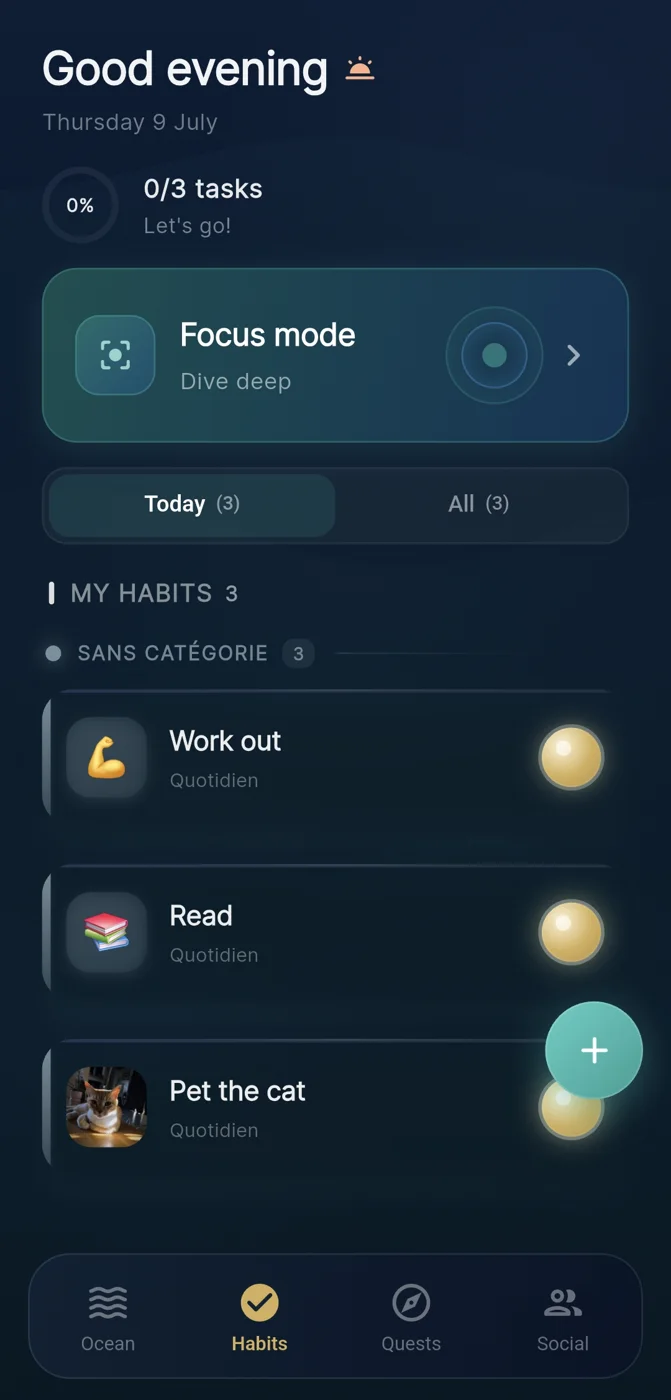
Reef, an IVRYN mobile habit tracker for iOS and Android, is one example of a tool built around this separation. Completing a habit there produces a pearl that feeds into an ongoing visual ocean scene, which gives a concrete, cumulative way to see repeated effort rather than a single streak number that can reset to zero and feel discouraging.
When you're comparing options, it's worth noting that no tracker can promise a specific behaviour or health outcome - the mechanics support consistency, they don't guarantee it. Any site claiming otherwise is overstating what a logging tool can do.
Handling missed days without losing motivation
Gentle recovery after a missed day is one of the more overlooked but important qualities to check for. A tracker that treats a missed day as a hard reset creates an all-or-nothing dynamic: once the streak breaks, there's little incentive to log again that week. Tools that instead let progress accumulate more gradually, or that separate 'total habits completed' from a fragile daily streak, tend to make it easier to pick the habit back up after a gap.
This matters more than it sounds, because most people don't fail at habits from lack of trying - they fail at continuing after an ordinary interruption like travel, illness or a busy week. A habit tracker website worth using should make that recovery low-friction rather than something you have to mentally push through.
Focus sessions and protecting time, not just logging actions
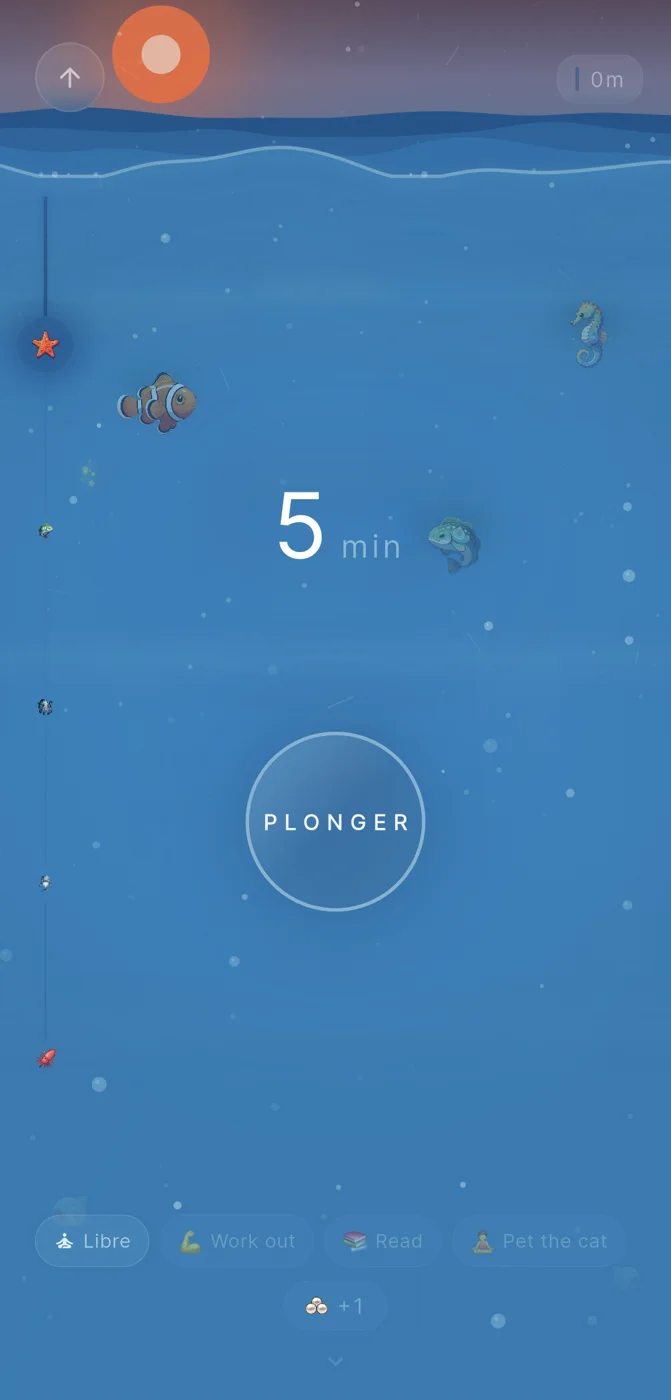
Some habit trackers extend beyond daily check-boxes into protected focus time, which is a different but related need. Reef's focus sessions use a dive metaphor, where committing to a period of focused work is framed like a dive and completed focus time is rewarded with pearls in the same visual system used for habits.
If protecting concentrated work time is part of what you're looking for, it's worth checking whether a tool treats focus sessions as a first-class habit (with its own visible reward) or as an afterthought bolted onto a timer. The distinction affects whether you'll actually use the feature regularly.
Optional social accountability: useful, but not required
Sharing progress with a small group, sometimes called a crew or accountability partner setup, can help some people stay consistent, but it's genuinely optional in a well-designed tool rather than a requirement to unlock the core tracking. If a habit tracker website forces you into public sharing or a leaderboard to use basic features, that's worth weighing against your own comfort with visibility.
Reef treats social crews as optional, so someone can use the habit and focus mechanics privately and add social accountability later if and when it suits them. This kind of optionality is a reasonable feature to look for regardless of which app you end up choosing, since accountability preferences vary a lot from person to person.
A worked example: choosing between two hypothetical trackers
Example only, not a real comparison: imagine you're deciding between 'Tracker A', which resets your streak to zero after any missed day and requires a public profile, and 'Tracker B', which keeps a cumulative visual record and makes sharing optional. If your main goal is sticking with a habit through an ordinary busy week, Tracker B's gentler recovery model is more aligned with that goal, independent of which one has more integrations or a nicer icon.
Use this kind of side-by-side reasoning with any two real tools you're evaluating: list what happens on a missed day, whether social features are required, and whether focus time is tracked as its own habit. Score each on those three points before you look at pricing or design polish, since the underlying mechanics matter more to long-term use than surface features.
- Check what happens visually after a missed day
- Confirm social sharing is optional, not required to use core features
- See whether focus/deep-work time is tracked as its own rewarded action
- Look for cumulative progress views, not just a single resettable streak
Limits to keep in mind before acting
No habit tracker website, including Reef, can guarantee a behaviour or health change; the tools make repeated small actions visible and give a structure for gentle recovery, but the follow-through is still up to the person using it. Be cautious of any site presenting a tracker as a solution to a health condition or as clinically tested unless it cites verifiable, dated evidence.
If your habit goals intersect with a medical condition, treat this article as general orientation only and not medical advice, and check with a qualified professional for anything health-related. The same caution applies to pricing, plan availability or feature lists on any specific app, since those details change over time and should be verified directly with the provider rather than treated as fixed.
Frequently asked questions
What's the single most important feature to check in a habit tracker website?
How the tool handles a missed day matters more than most other features - trackers that avoid a hard streak reset and instead keep a cumulative visual record tend to make it easier to keep going after an ordinary interruption.
Do I need social accountability features to stick with a habit tracker?
No. Social or 'crew' features can help some people, but they're optional rather than necessary, and a well-designed tracker should let you use core habit and focus tracking privately without requiring you to share progress publicly.
Can a habit tracker guarantee I'll build a new habit or improve my health?
No tracker, including Reef, can guarantee a specific behaviour or health outcome; these tools make small repeated actions visible and support consistency, but the actual habit change depends on the person using the tool, not the app itself.
Sources and further reading
These resources provide the wider reference frame. Product statements on this page are limited to the public information provided by Reef.