 Reef
Reef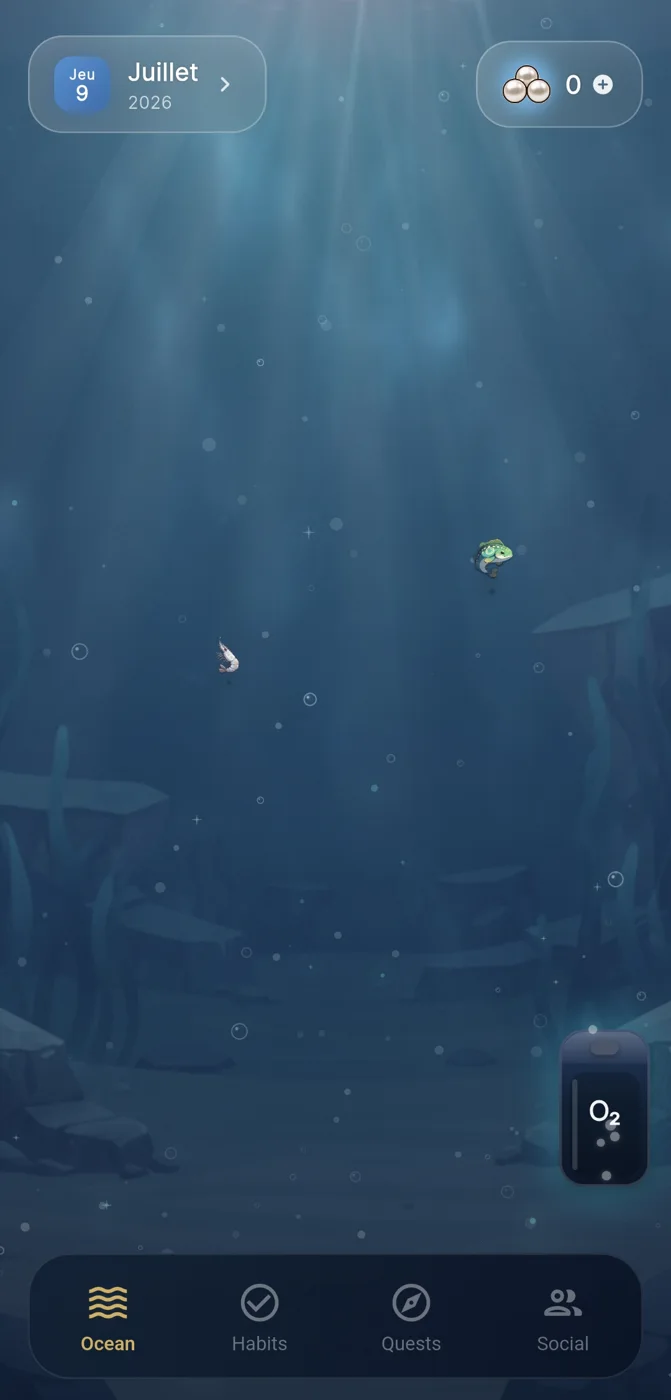
What 'best' actually means for a habit tracker on iOS
When people search for the habit tracker best iOS has to offer, they usually aren't looking for a feature list - they're looking for something that will still feel worth opening in three weeks. That's a different question than 'which app has the most options,' and it changes what you should evaluate first.
The honest answer is that no app can be objectively 'best' independent of how you actually behave. A tracker that suits someone who wants rigid streak-based discipline will frustrate someone who needs forgiveness after a missed day. So the useful exercise isn't ranking apps in the abstract - it's matching an app's design philosophy to your own patterns of follow-through.
The core mechanics worth checking before you commit
Across most credible guidance on habit apps, a few mechanics repeatedly show up as the ones that matter: how small the habit can be scoped, how visible progress becomes over time, how the app treats a missed day, and whether any social layer is optional rather than mandatory.
Small, repeatable habits matter because ambition kills consistency faster than difficulty does. An app that nudges you toward a two-minute version of a habit, rather than the idealized full version, is working with human behaviour rather than against it.
Visible progress is the second lever. Streak counters are the blunt version of this; some apps use gentler visual metaphors - a garden filling in, a collection growing - so that progress is legible at a glance without becoming punitive when it dips.
Recovery after a missed day is where many trackers quietly fail. If a single missed day resets everything to zero, the app is optimizing for streak anxiety rather than for the actual goal of habit formation. Look for language and design that treats a gap as normal rather than as failure.
- Does the smallest version of the habit take under two minutes to log?
- Is progress shown visually, not just as a number?
- What happens to your history after one missed day - reset, pause, or soft continuation?
- Is any social or crew feature opt-in rather than required to use the app?
Where Reef fits into this picture
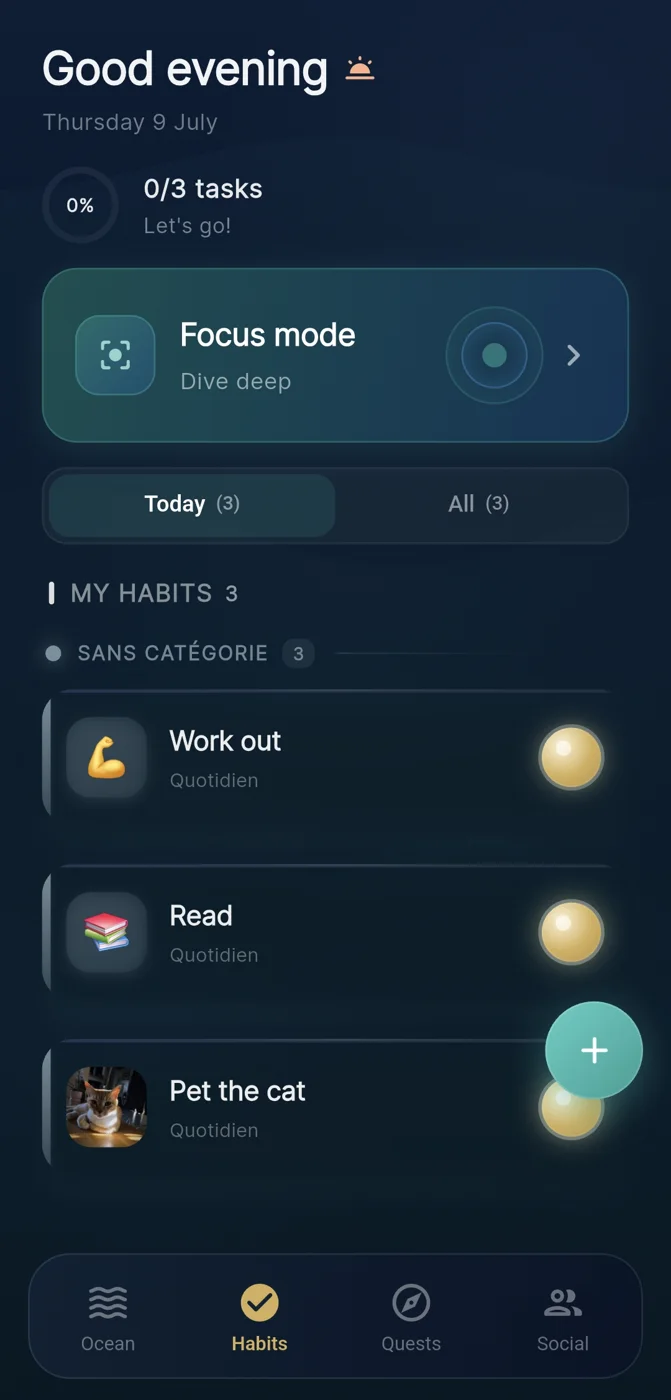
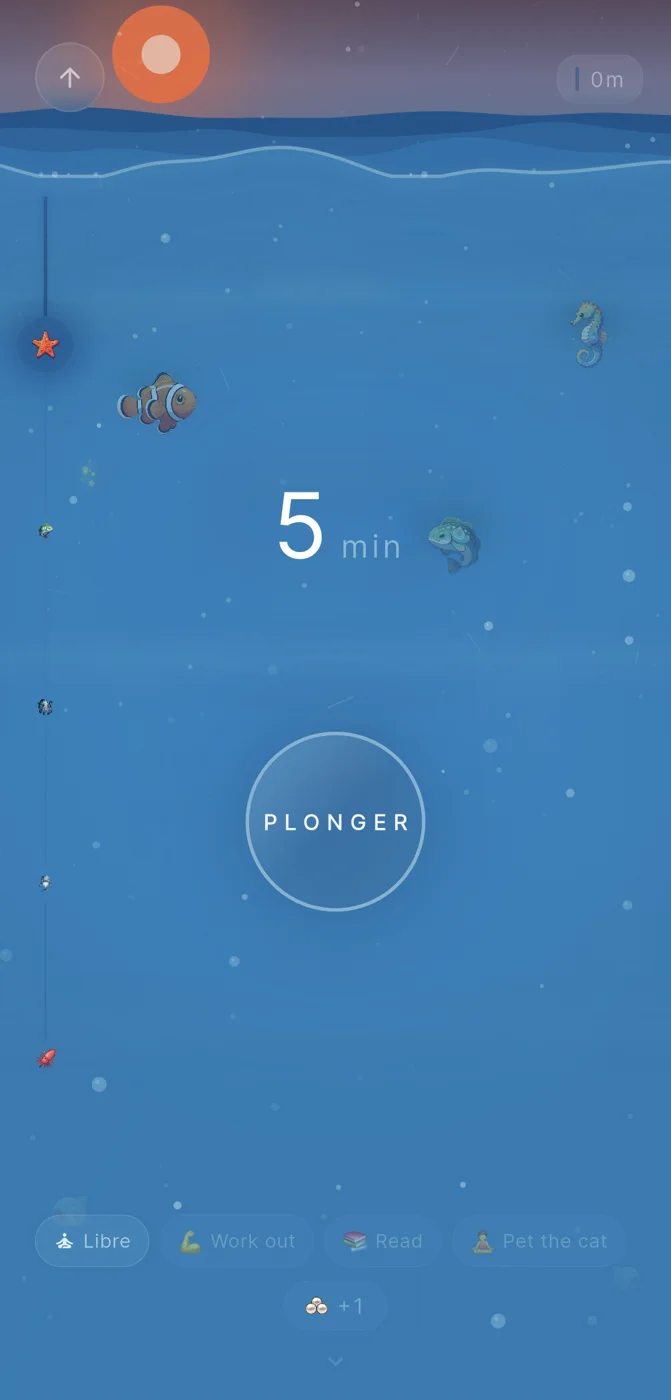
Reef is one iOS and Android habit tracker built around this exact set of priorities. Completing a habit in Reef adds a pearl to a slowly forming underwater scene, so progress accumulates as something you can look at rather than just a number that resets. Focus sessions borrow a dive metaphor, and finishing a session earns pearls the same way a habit does, which keeps the visual reward consistent across the two main things people track: habits and focused time.
Reef also includes optional crews for people who want light social accountability, but nothing in the app requires you to use them, and the app makes no claim to guarantee any particular behaviour change or health outcome. That distinction matters: the mechanics are designed to make consistency visible and slightly rewarding, not to promise results.
A worked example: comparing two hypothetical trackers
Here is a labelled example, not a real comparison, to show how the checklist above plays out in practice. Imagine 'Tracker A,' which uses a strict streak counter that resets to zero after any missed day, and 'Tracker B,' which uses a visual metaphor that keeps prior progress visible even after a gap and lets you log a minimal version of a habit in a few taps.
Someone who has historically abandoned habit apps within two weeks - often right after their first missed day - is likely to do better with something closer to Tracker B, because the cost of a lapse is lower and the visual continuity gives a reason to reopen the app the next day. Someone who is motivated by competitive pressure and rarely misses days might actually prefer Tracker A's harder-edged system.
The point of this example isn't that one design is universally superior. It's that the habit tracker best suited to you depends on how you personally respond to failure signals, and you can test that by asking, before downloading anything, which of the two hypothetical patterns above sounds more like your own history.
A short decision checklist before you download anything
Before installing a new tracker, it helps to write down - even just mentally - what has caused previous attempts to fail. Most people fall into one of a few patterns: they set the habit too big, they got discouraged after one missed day, they lost interest once the novelty wore off, or the app required a social feature they didn't want.
- If you tend to set habits too big: look for apps that explicitly support a minimal 'tiny version' of a habit.
- If a missed day usually derails you: prioritize apps whose progress display doesn't fully reset on a gap.
- If novelty fades fast: favor visual or evolving progress displays over plain numeric streaks.
- If you don't want social pressure: confirm any crew or sharing feature is optional, not required to log a habit.
- If focus time is part of your goal: check whether the app treats focus sessions as a first-class habit, not an afterthought.
Limits worth keeping in mind
No habit tracker, including Reef, can guarantee that a habit will stick or that a health or behavioural outcome will follow from consistent use. Apps can make the process of repeating small actions more visible and slightly more pleasant, but the underlying work of building a habit still depends on your circumstances, motivation and life context.
It's also worth being cautious about mutable details like specific pricing tiers or platform-specific feature availability, since these change over time; what's accurate today may not be next year, so it's worth checking current details directly with any app before deciding.
Frequently asked questions
What's the single most important feature to check in a habit tracker on iOS?
How the app handles a missed day matters more than almost any other feature, because that moment determines whether you reopen the app the next day or abandon it.
Should I choose a habit tracker with social or crew features?
Only if you actually want accountability from other people; the feature should be optional, and a good tracker will work fully without it.
Can a habit tracker guarantee that a new habit will stick?
No app can guarantee that outcome. Trackers can make progress visible and reduce friction, but the habit itself still depends on your own consistency and circumstances.
Sources and further reading
These resources provide the wider reference frame. Product statements on this page are limited to the public information provided by Reef.