 Reef
Reef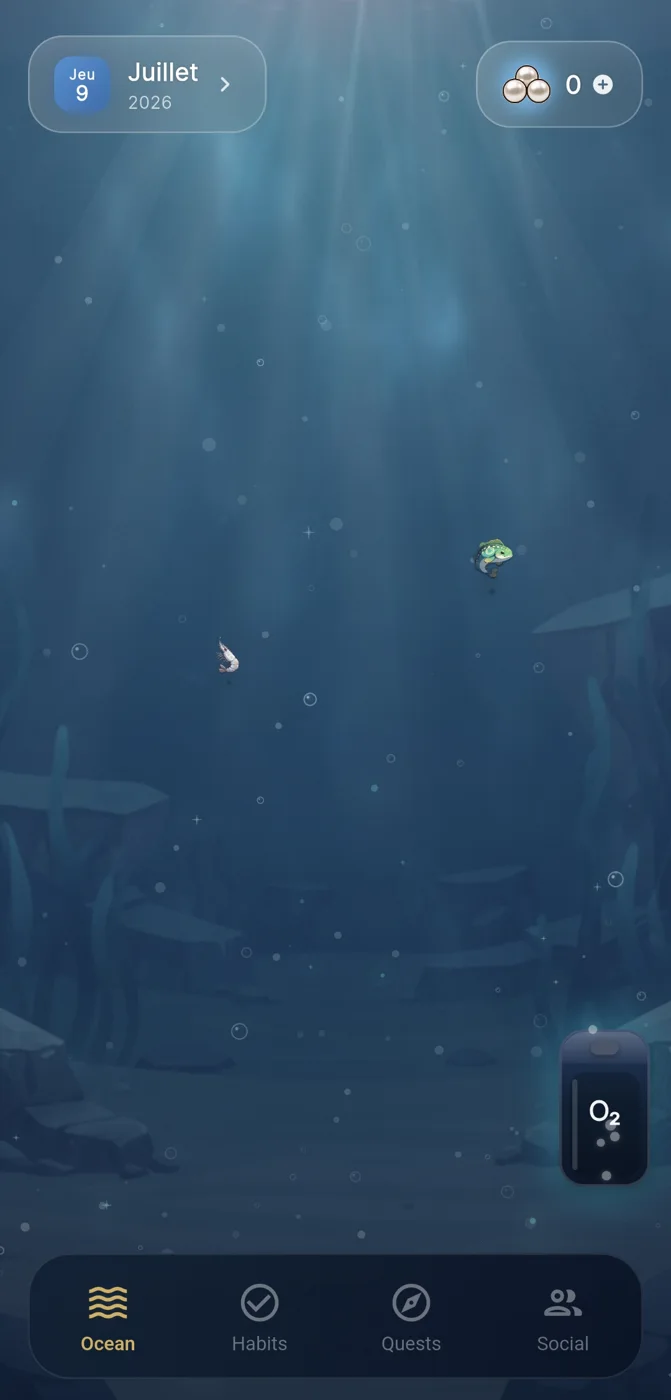
Reef free plan
Start free and grow a living ocean
Download Reef on iPhone or Android and use it without a subscription. Every habit you complete releases a pearl into your own ocean.
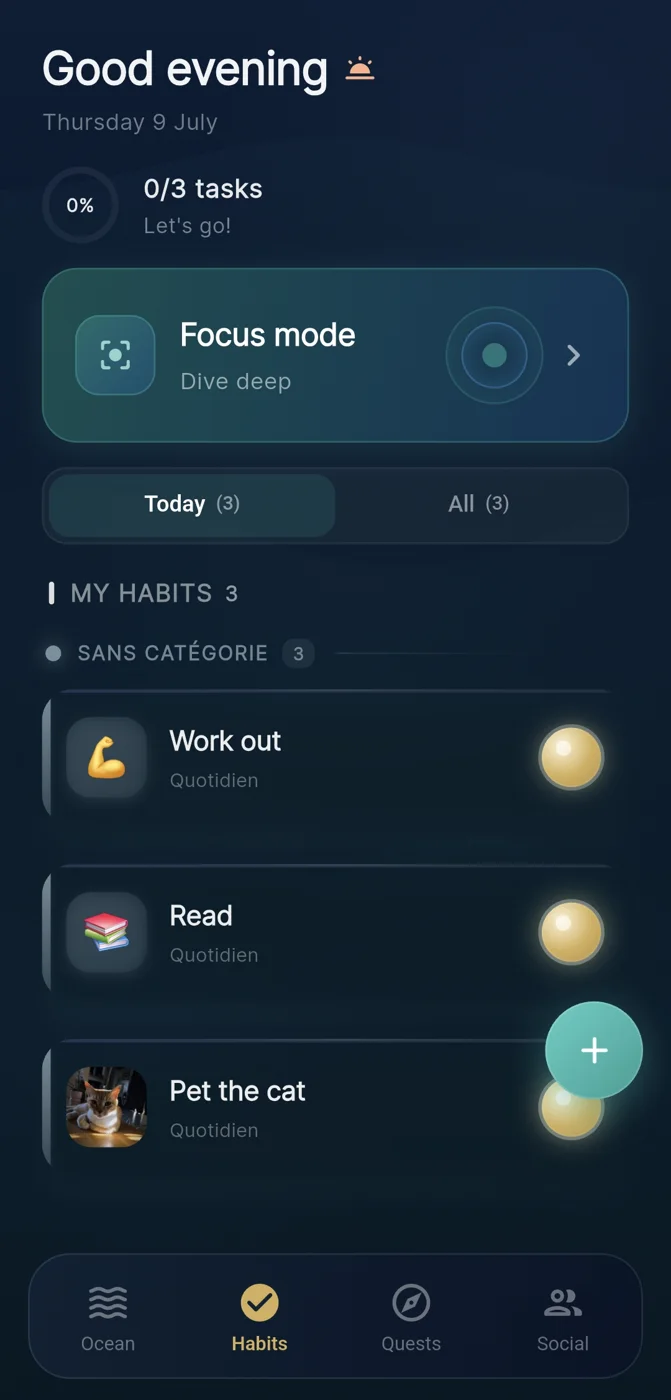
- Up to 6 habits, each with its own pearl to release once it is done.
- Focus dives up to 25 minutes. A completed dive earns pearls too.
- Crews with friends are optional.
- Premium is optional and raises these limits. Its price shows in the store before you pay.
Free download. Reef makes completed habits visible. It does not promise that a habit will stick.
What “best habit tracker free” should mean for your routine
Searching for the best habit tracker free usually means looking for more than a zero-cost download. You may want a simple way to remember a repeated action, see whether it is becoming part of your week, and return to it after an interruption without turning the process into a source of pressure.
A useful choice depends on the job you need the app to do. Someone building a two-minute stretching practice needs low-friction reminders and a clear daily view; someone protecting study time may value a timer and a deliberate start ritual. If you want encouragement from others, the social setting should be easy to opt into and easy to leave.
No tracker can ensure that a habit sticks. It can provide structure, cues and a record of what you chose to do, but illness, workload, care responsibilities and changing priorities still affect consistency. Treat a free app as support for a plan, not proof that the plan will work automatically.
- Choose for the routine you actually want to repeat, not the longest feature list.
- Prefer a record that helps you notice patterns over one that makes a missed day feel like failure.
- Check what remains useful if you use the app alone.
Best habit tracker free: compare the right limits before committing
Commercial investigation is most useful when it starts with constraints. “Free” can mean a permanently usable core experience, a time-limited trial, a limited number of habits, or access that changes after an update. Read the current store listing and in-app purchase details before investing time in setup, because plans and feature boundaries can change.
Then consider the cost of maintenance. An app with elaborate categories, tags and dashboards may look capable, yet be harder to open when your day is already crowded. A lighter system can be more appropriate if your goal is simply to make one or two actions visible repeatedly.
Privacy and social boundaries matter too. Before joining a shared space, check what other people can see, whether participation is optional, and whether you can change those choices later. Accountability can be helpful for some people, but it should remain a choice rather than a condition of using a personal habit tool.
- What is included without payment today?
- Can you track the number and type of habits you need?
- Does the app support focus time if that is part of your goal?
- Can you use it privately and add social accountability only if wanted?
- Will its visuals motivate you without making recovery harder after a lapse?
Use visible progress as information, not a scorecard
Visible progress can make repeated actions easier to notice. The important distinction is between a display that says, “I have evidence of what I did,” and one that implies, “I am only successful if I never miss.” The first supports adjustment; the second can make an ordinary disruption feel final.
Reef is an IVRYN mobile habit tracker for iOS and Android that represents completed habits as pearls added to an evolving ocean scene. In this context, the visual is best understood as a concrete record of completed repetitions rather than a promise that collecting pearls will create a particular personal outcome.
This kind of design can be especially useful when the habit itself has little immediate payoff. Drinking water, reviewing notes or preparing tomorrow’s clothes may feel ordinary in the moment. A visible record gives the completion a clear endpoint, while the surrounding plan still needs to be small enough to repeat under normal conditions.
- Define the smallest valid completion before you begin.
- Review your record weekly for friction, not only for totals.
- Change the habit when the plan no longer fits your life.
Plan for missed days with gentle recovery
Missed days are data about a plan meeting real life. They may reveal that the cue was unclear, the action was too large, the timing was unrealistic, or that the habit was temporarily less important. A tracker is most useful when it helps you make the next attempt smaller and more specific.
Try a recovery rule before you need it: after a missed day, restart with the minimum version at the next sensible opportunity. For example, replace “write for 30 minutes every evening” with “open the document and write one sentence after dinner.” The aim is not to erase the gap; it is to reduce the barrier to returning.
Avoid compensating by making the next session punishingly long. Catch-up plans often transform a small interruption into an obligation that is harder to face. A calm tracker should leave room for paused goals, changed schedules and a fresh start without claiming that an unbroken sequence is the only meaningful measure.
- Name one likely obstacle for each habit.
- Write a minimum version that takes less than five minutes.
- Choose a restart cue, such as after breakfast or when closing a laptop.
Match focus support and social accountability to the situation
A habit tracker may also help when the action is protected time rather than a quick tick-box task. A focus session can create a boundary around reading, coursework, administration or creative work, especially when you decide in advance what counts as finishing the session.
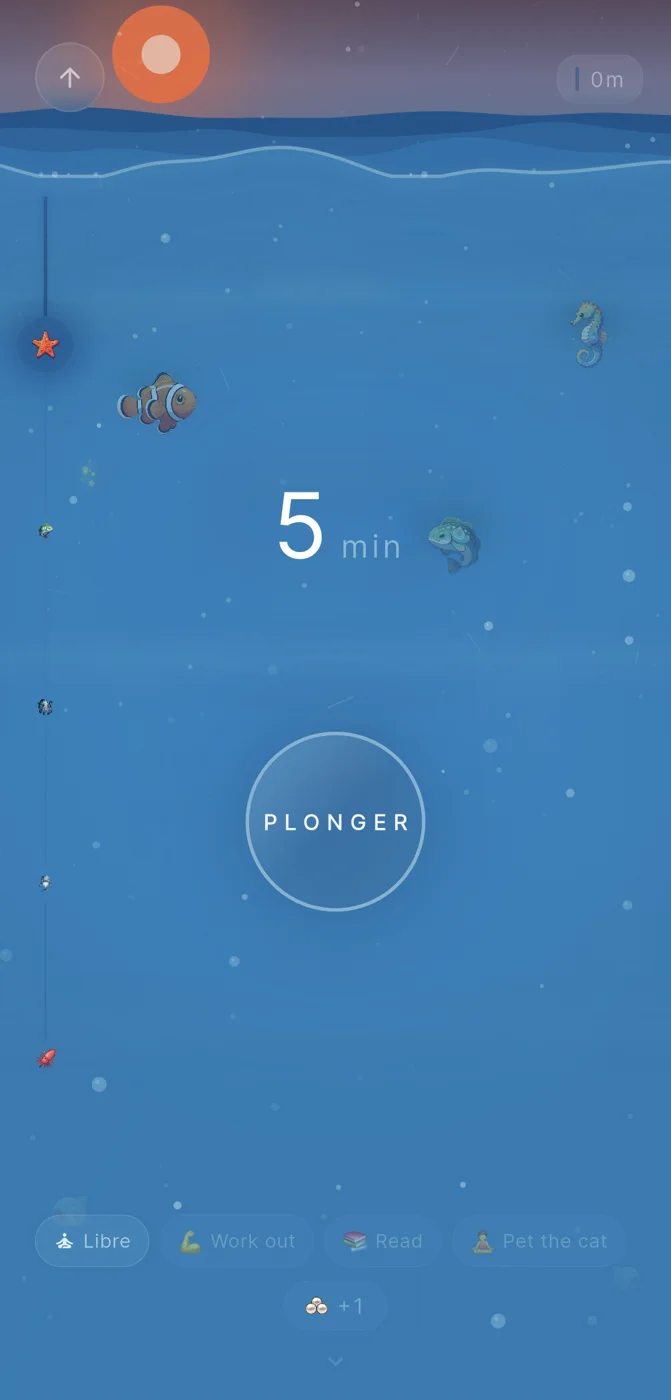
Reef frames focus time as a dive and awards pearls for time you complete. That metaphor may suit people who want focus to feel distinct from the rest of the day, but it does not establish that a timer will improve concentration or change behaviour for every person. Use it as a prompt to begin and review the conditions that made the session workable.
Optional groups can add a layer of accountability when you want it. Reef offers social crews as an elective feature, so you can keep a habit private or share it by choice. A crew is better treated as a conversational commitment: agree on what sharing means, avoid turning visibility into surveillance, and make room for members to step back.
- For focus, decide the task and session length before starting.
- For a crew, share only the level of progress you are comfortable disclosing.
- Reassess whether social participation is encouraging, neutral or stressful after a few weeks.
Example decision aid: choose a tracker for a realistic first month
Example: Maya wants to read for ten minutes on four evenings each week, finish two focused study sessions weekly, and decide later whether to involve a friend. She should not begin by comparing every available feature. Her first question is whether the free experience can hold one reading habit and a simple focus routine with a view she will actually open.
Her second question is recovery. If evening reading is missed after a late shift, she needs a plan that permits a smaller return, such as reading one page the next evening, rather than a rule requiring double time. Her third question is social control: she wants the option to invite a friend later without making shared progress a requirement now.
For Maya, a good decision would be a tracker whose basic interaction is quick, whose progress display feels encouraging, whose focus mode matches her study sessions, and whose social layer is genuinely optional. Reef may be relevant if its ocean-and-pearl representation and dive-based focus framing suit her preferences, but she should confirm current free-plan details directly before relying on them.
- Step 1: List one habit, one cue and its minimum completion.
- Step 2: Decide whether you need a focus timer now or later.
- Step 3: Set a missed-day restart rule.
- Step 4: Keep social sharing off until it serves a clear purpose.
- Step 5: After two weeks, retain only the features that reduce friction.
Frequently asked questions
What should I check before choosing a free habit tracker?
Check what the free version currently includes, whether it supports the habits and focus routines you need, how it handles missed days, and whether social sharing is optional. Also choose an interface you can use quickly on an ordinary busy day.
Can a habit tracker guarantee that I will build a habit?
No. A habit tracker can help you plan, remember and review repeated actions, but it cannot guarantee behaviour change or a health outcome. Small actions, realistic cues and a gentle restart plan are practical complements.
Is social accountability necessary in a habit tracker?
No. Social accountability is optional and works differently for different people. Use it only when sharing progress feels supportive, with clear boundaries about what is visible and no expectation that you must participate.
Sources and further reading
These resources provide the wider reference frame. Product statements on this page are limited to the public information provided by Reef.