 Reef
Reef

What “best habit tracker PDF” should mean before you download one
Searching for the best habit tracker pdf often starts with a simple wish: make a repeated action easier to notice and continue. A useful PDF is not automatically the prettiest or the most detailed. It is the one whose format matches the action you want to repeat, the time period you can realistically review, and the amount of administration you are willing to do.
For commercial investigation, compare the tracker as a decision tool rather than as a promise. A printable sheet can show whether you completed a chosen action; it cannot ensure motivation, consistency, wellbeing, or lasting behaviour change. Its value comes from making an intended repetition visible so that you can decide what to adjust.
Before acting, define the job the PDF must do. It may be a daily check-off page for one small practice, a monthly overview for several habits, or a companion to protected focus periods. If it tries to track every aspiration at once, it can turn a gentle reminder into an exhausting record-keeping task.
- Choose one review rhythm: daily for noticing, weekly for adjustment, or monthly for pattern review.
- Track actions you can observe, such as “walk for ten minutes” or “prepare tomorrow’s water bottle.”
- Leave room for missed days instead of treating the page as a pass-or-fail scorecard.
Assess the format before you commit to a routine
A habit tracker PDF is strongest when its structure reduces friction. Check whether the dates are clear, whether the habit labels can be edited or written comfortably, and whether there is enough space for a brief note. A sparse grid may suit a stable routine; a layout with prompts may suit someone who needs to remember context, such as what made a habit easier on a particular day.
Also consider where the tracker will live. A printable page only works if it will be seen: near a desk, in a notebook, or wherever the relevant routine begins. A digital PDF may be easier to keep with planning documents, but it can be less visible if it is buried among files. Neither option is inherently better; the useful choice is the one you will revisit without creating a separate chore.
Do not confuse a longer tracking period with better information. A 90-day worksheet can look comprehensive, yet a seven-day trial may reveal more about fit. Start with a short period, then decide whether the layout supports the habit rather than merely recording its absence.
- Can you identify completion in a few seconds?
- Can the tracker accommodate an adjusted version of the habit?
- Does it make a missed day visible without demanding an explanation?
- Can you review it without needing extra software or elaborate calculations?
Build around small repeatable habits and visible progress
The most practical starting point is a small action with a clear completion point. “Read more” is broad; “read two pages after lunch” gives the tracker something concrete to represent. Small actions are not trivial when they are designed to be repeated. They create a manageable place to begin, especially when circumstances make larger plans unreliable.
Visible progress is useful when it helps you notice the next choice. A row of marks can show continuity, but it should not become pressure to preserve a perfect streak. Include a simple symbol for an adapted completion if that fits your aim: for example, a dot for the full action and a dash for a smaller version. This keeps the record honest while allowing the routine to remain approachable.
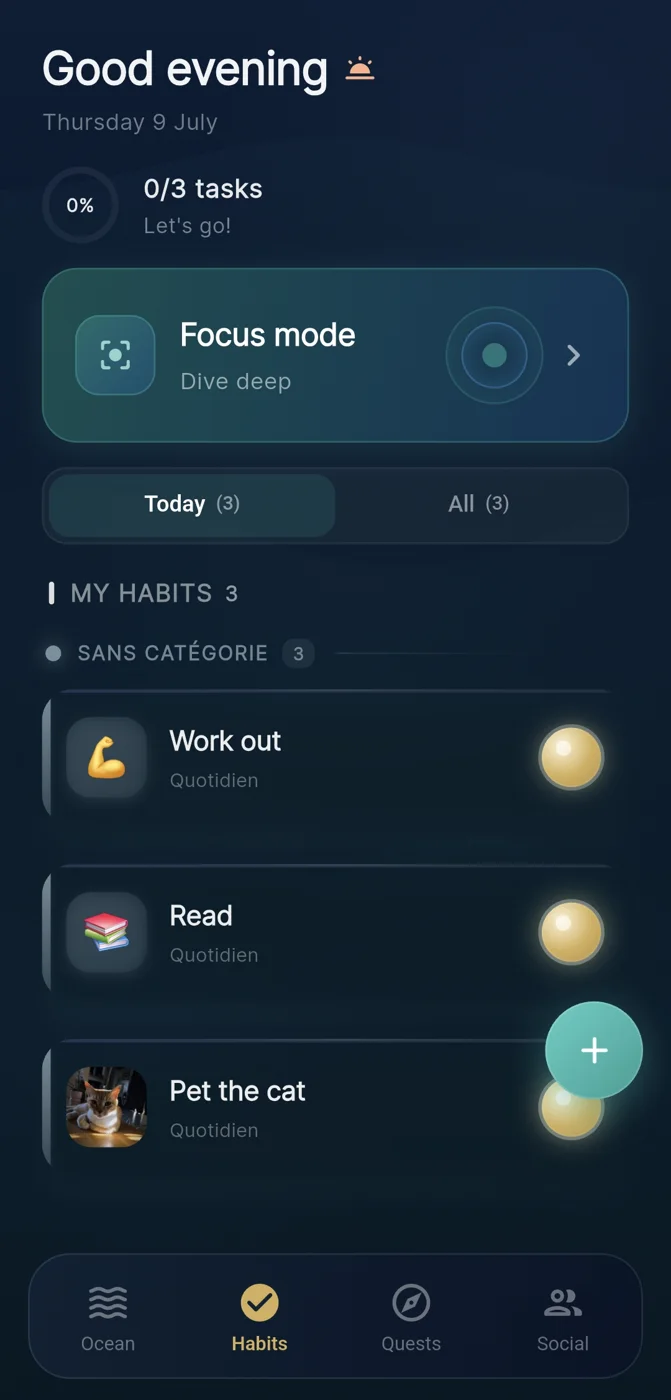
Reef offers a related visual approach in a mobile setting. It is an IVRYN habit-tracking app for iOS and Android in which completed habits add pearls to an evolving ocean scene. That product context can help readers assess whether they want a static printable record or a more visual digital representation of repeated actions; it is not evidence that either format will produce a guaranteed result.
- Define the smallest credible version of each habit.
- Use one symbol consistently for completion.
- Review visible progress to choose the next manageable repetition, not to judge yourself.
Best habit tracker PDF limits: missed days, focus time, and accountability
A tracker records what you choose to mark. It does not explain every missed day or remove obstacles such as changing schedules, illness, competing responsibilities, or a habit that was too ambitious. Treat gaps as information for redesign: reduce the action, change its cue, alter the time of day, or decide that the habit is not a current priority.
If protecting focus time is part of your goal, separate it from a generic to-do list. A PDF can reserve a defined block and note whether it happened, but it cannot create uninterrupted conditions. The useful question is whether the planned focus session was small enough and placed at a plausible time. Reef frames focused work through a dive-themed session and awards pearls for completed focus time, which is one way to make that commitment visually distinct without implying a productivity or behaviour guarantee.
Accountability deserves the same boundary. Sharing a tracker with a friend, group, or crew can create a moment of mutual visibility, but participation should remain voluntary and expectations should be explicit. Reef includes optional social crews, so its social layer is a choice rather than a required condition for using the app. No tracker can guarantee that another person will respond, stay involved, or change your behaviour.
- After a missed day, ask: was the action too large, the cue unclear, or the timing unrealistic?
- Keep focus blocks distinct from general task completion.
- Agree on what sharing means before inviting another person into accountability.
Example decision aid: choose a PDF, app, or a combination
Example: Maya wants to stretch after work, read briefly before bed, and protect two short focus blocks each week. She does not need a system that claims to transform her routine. She needs a record that is easy to see and a way to respond calmly when the week becomes busy.
Maya could use a one-page weekly PDF for stretching and reading because both habits have simple completion points. She would place it near her evening routine, mark full or shortened versions, and review it on Sunday. For focus blocks, she could add two calendar appointments and use the PDF only to record whether each session occurred. If she prefers a more visual digital layer, she could evaluate Reef’s habit and focus mechanics, including the ocean that develops as completed habits contribute pearls, while keeping the same modest expectations.
The decision is not about finding a universally best tracker. It is about choosing the smallest system that makes the intended action visible, supports recovery after disruption, and fits the level of accountability Maya actually wants. Reassess after one or two weeks using the evidence on the page, not an idealized standard of perfection.
- Use a PDF when paper visibility and simple manual marking are appealing.
- Consider an app when visual feedback or integrated habit and focus tracking better fits your routine.
- Use optional sharing only if it feels supportive and the expectations are clear.
- Keep the first trial narrow: one or two habits plus one focus commitment.
A practical checklist before choosing or printing
Use this checklist to make a decision that fits the stated purpose of the tracker. It is designed to prevent a common mismatch: choosing a highly detailed template for a routine that needs simplicity, or choosing a motivational design without deciding what will actually be marked.
First, write the habit in observable terms and identify when you expect to see the tracker. Next, decide how a shortened version, a missed day, and a restart will be represented. Finally, choose whether private reflection is sufficient or whether optional accountability would genuinely help. These decisions matter more than decorative features.
Reef’s public methodology and gamified-tracker guidance provide context for a visual, game-inspired design approach, but this article does not claim a Reef study, competitor testing, or a measured outcome. Use the sources to understand the product framing, then judge fit against your own routine and limits.
- I can state the habit as a small, observable action.
- I know where and when I will mark it.
- I have a gentle rule for restarting after a missed day.
- I can tell whether a focus block was completed without treating it as a guarantee of productivity.
- I have chosen private use or optional accountability intentionally.
- I will review the tracker after a short trial and simplify it if needed.
Frequently asked questions
Is a habit tracker PDF better than a habit-tracking app?
Neither is universally better. A PDF can be useful when a visible paper page and manual marking fit your routine; an app can suit people who prefer digital reminders or visual feedback. Choose the format that you can review consistently without making tracking burdensome.
Can a habit tracker PDF guarantee that I will build a habit?
No. A habit tracker PDF can make planned repetitions and missed days easier to see, but it cannot guarantee motivation, behaviour change, health outcomes, or long-term consistency. Use it as a practical record and adjust the habit when the plan does not fit real life.
How should I handle missed days on a habit tracker?
Treat a missed day as a cue to review the plan, not as proof that the effort failed. Consider a smaller version of the action, a clearer cue, a different time, or a simpler tracker, then resume with the next realistic opportunity.
Sources and further reading
These resources provide the wider reference frame. Product statements on this page are limited to the public information provided by Reef.