 Reef
Reef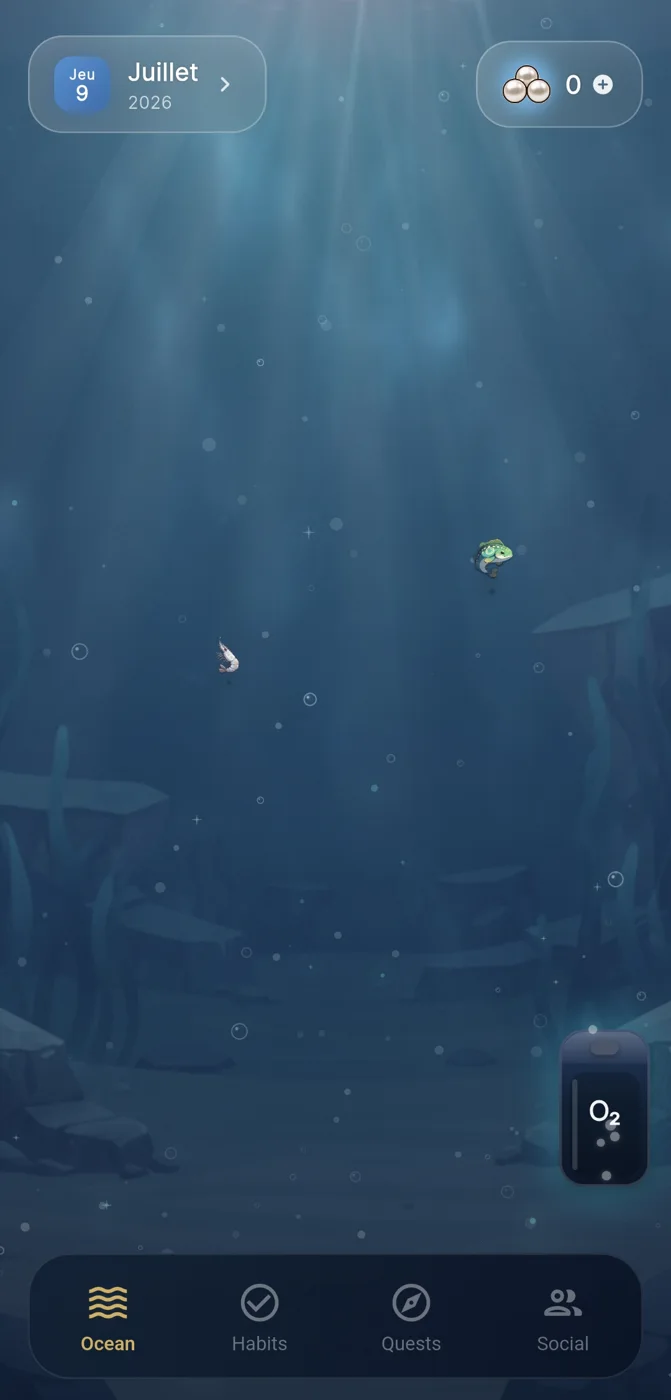

What 'best' actually means for a habit tracker and planner
When people search for the best habit tracker and planner, they are usually not asking which app has the most features. They are asking which one will still be open on their phone in six weeks. That is a very different question, and it points to a different set of criteria than a typical feature comparison would suggest.
A tracker earns the word 'best' for a given person when it lowers the friction of logging a small action, shows that action's history in a way that is quick to read, and does not punish a missed day so harshly that the person quits the app altogether. Planning matters too, but planning that lives in a separate, heavier tool than the logging step tends to get skipped, since every extra tap or context switch is a chance to abandon the habit for the day.
Because intent here is commercial investigation, the practical move is to test a short list of candidates against a fixed set of criteria rather than trying every app on the market. The next sections lay out those criteria and a worked example you can adapt to your own shortlist.
Core criteria for evaluating a best habit tracker and planner
Four criteria tend to separate tools that people keep using from ones that get deleted after a week. None of these require taking a vendor's word for it; each can be checked in a few minutes during a trial.
Speed of logging is the first filter: can a habit be marked done in one or two taps from a home screen or widget, without a multi-step form. Second is visibility of progress: does the app turn a string of completed days into something you can glance at and understand instantly, rather than a table of numbers you have to interpret. Third is how the tool handles a missed day, since punitive streak resets discourage many people from restarting at all. Fourth is whether social or accountability features are optional rather than mandatory, since some people want a shared check-in and others find it stressful.
- Can you log a habit in under five seconds from where you already are on your phone?
- Does the progress view make a week or month legible at a glance, not just a numeric streak count?
- What happens the day after you miss - is there a gentle way back in, or does the count zero out and discourage you?
- Are any social or sharing features something you opt into, rather than something forced on you?
- Does the planning side sit close enough to the logging side that you won't skip one of them?
A worked example: choosing between three shortlisted apps
Example (hypothetical, for illustration only): imagine someone wants to build two habits - a ten-minute daily walk and a twenty-minute focused work block - and is comparing three shortlisted trackers over a two-week trial. They are not running a scientific test; they are simply using the criteria above as a checklist while they try each app in real conditions.
App A logs habits in one tap and shows a simple calendar heat-map, but resets any streak counter completely after a single missed day. App B has rich analytics dashboards but requires opening three screens to log one habit, which the person finds themselves skipping by the second week. App C combines quick logging, a visual progress view that persists through a missed day rather than resetting to zero, and an optional accountability group they can ignore if they prefer to track alone.
Working through the checklist, App C best matches this person's priorities, not because it has more features, but because it reduces friction at the moment of action and treats a missed day as recoverable rather than as a failure. Someone else, who wants detailed weekly analytics and doesn't mind a slower logging flow, might reasonably choose App B instead. The point of the exercise is that the right choice depends on which trade-offs matter to you, not on an objective ranking.
Where Reef fits into this picture
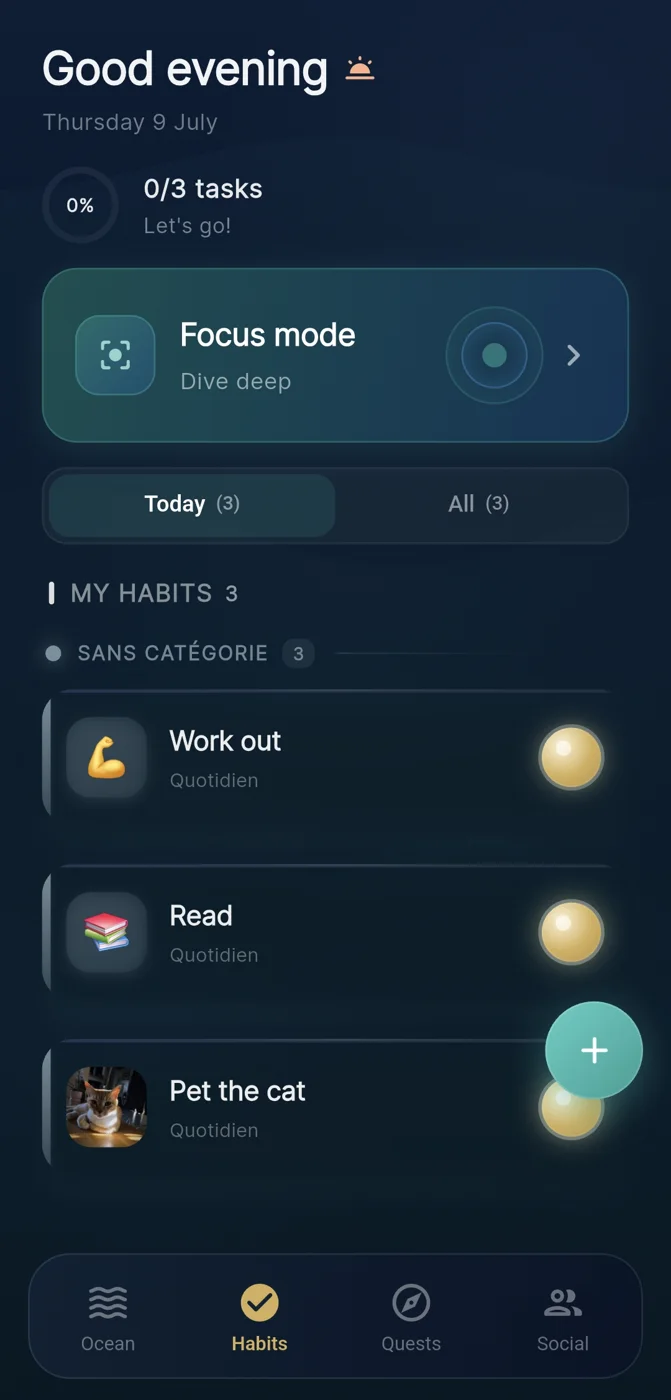
Reef is one example of a habit tracker built around the criteria above rather than around dashboards. It is a mobile app for iOS and Android where completing a habit produces a pearl that adds to a visual, living ocean scene over time, so progress is something you look at rather than something you calculate. Focus sessions use a dive metaphor, and finishing a block of focused time earns pearls in the same way a habit does, which keeps logging and planning inside one loop instead of two separate tools.
Accountability in Reef is structured around optional social crews, meaning a person can track entirely alone or opt into a small group if they want visible check-ins from others. This is a design choice suited to people who find shared accountability motivating but do not want it forced on them - it is not a guarantee that social features will change anyone's behaviour or produce a particular outcome, and Reef does not claim a specific health or behaviour result.
Whether Reef or any other tool is the 'best' fit still comes down to the criteria in the previous sections: how it handles a missed day, how visible progress feels, and whether the planning and logging steps stay close together.
Applying the small-habits and gentle-recovery principles day to day
Two principles do more work than any single feature: keeping habits small enough that they survive a busy day, and designing for gentle recovery rather than perfect streaks. A habit tracker and planner supports these best when it lets you define a habit narrowly - a ten-minute walk rather than 'exercise more' - and when its interface treats a missed day as information rather than as a reset button.
Visible progress plays a supporting role here: seeing a month of mostly-completed days, even with a gap or two, tends to be more encouraging than an all-or-nothing streak number that vanishes the first time life intervenes. This is a design principle worth checking for directly during a trial, rather than assuming from marketing copy that a given app handles it well.
If you use social accountability at all, treat it as optional support rather than the mechanism you are relying on for results. Some weeks a shared check-in helps; other weeks tracking privately is more sustainable. A planner that lets you toggle this without losing your history is more resilient to changes in what you need month to month.
A short checklist before you commit
Before settling on a best habit tracker and planner for your own use, it helps to run a short, deliberate trial rather than judging an app from its store listing alone. Two weeks is usually enough to see how the logging flow, progress view, and missed-day handling actually behave under normal conditions.
Use the checklist below during that trial, and be honest about which items matter most to you specifically, since the right answer for one person's routine will not be the right answer for everyone's.
- List two or three small, specific habits you want to track - not broad goals.
- Time how long it takes to log a habit from your phone's home screen.
- Deliberately skip a day partway through the trial and see how the app responds.
- Check whether any social or sharing feature is opt-in and can be turned off.
- Note whether planning and logging happen in the same flow or require switching screens.
Frequently asked questions
What is the single most important factor when choosing a habit tracker and planner?
How quickly and easily you can log a habit in the moment usually matters more than any dashboard or feature list, since friction at the point of action is the most common reason people stop using a tracker.
Should a habit tracker punish missed days with a streak reset?
A tool that resets progress entirely after one missed day can discourage people from restarting, so a gentler approach that keeps a visible history through gaps tends to support longer-term use, though the right approach still depends on individual preference.
Are social accountability features necessary in a habit tracker and planner?
No - social or accountability features work best as an optional layer some people choose to use, rather than a requirement, since accountability preferences vary widely and no tracker can guarantee a behaviour outcome from adding them.
Sources and further reading
These resources provide the wider reference frame. Product statements on this page are limited to the public information provided by Reef.