 Reef
Reef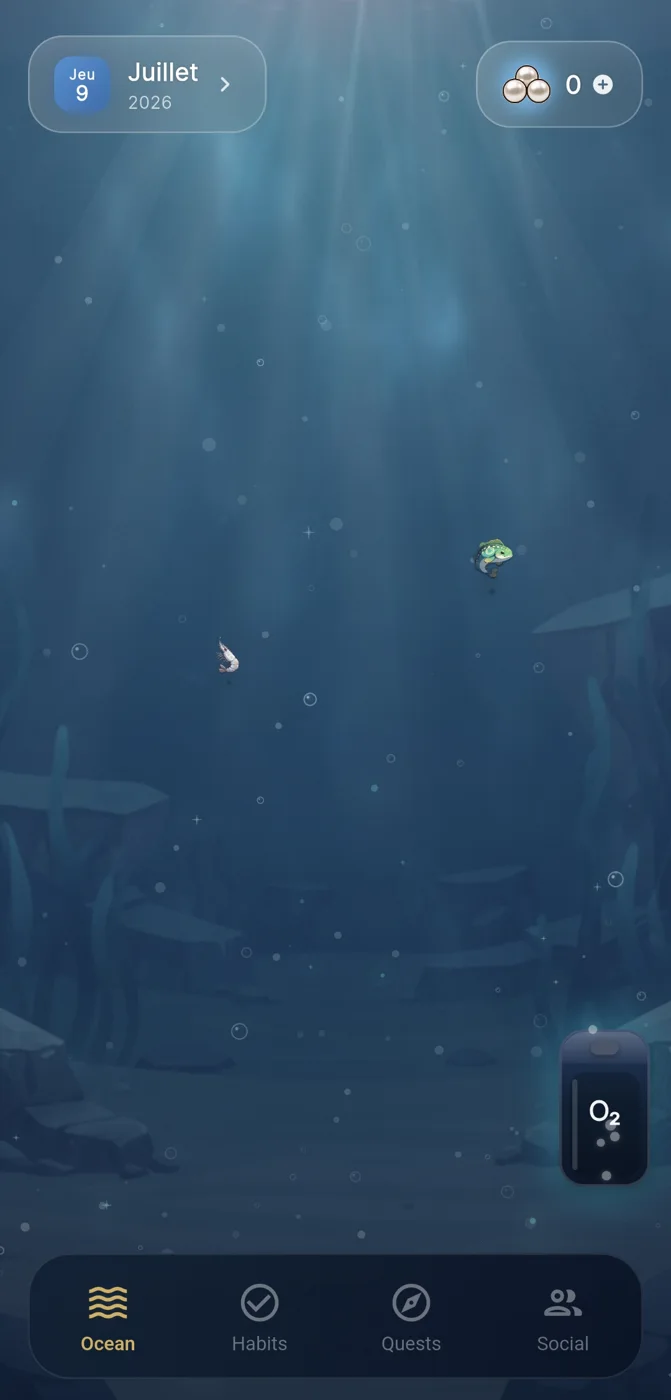
What people actually mean by best habit tracker with friends
When someone searches for the best habit tracker with friends, they are usually not looking for a leaderboard or a competition app. Most people want two things at once: a private, low-pressure way to keep a habit going, and an option to loop in one or two other people when that helps them stay consistent. The 'with friends' part is often a backup plan for motivation, not the main event.
This matters because a lot of social features in habit apps are built around visibility and comparison first, and the habit itself second. If the underlying habit-tracking mechanics are weak, adding friends just adds pressure without adding follow-through. A better starting question is whether the app makes your own repeated actions clear to you, and only then whether sharing that with others is optional and low-friction.
The core mechanics worth checking before you look at social features
Before comparing social options, it's worth checking how an app handles the basics: does completing a habit give you an immediate, visible signal of progress, and does missing a day get treated gently rather than as a failure state that resets everything. Apps that punish missed days with broken streaks or shaming language tend to push people toward giving up rather than restarting.
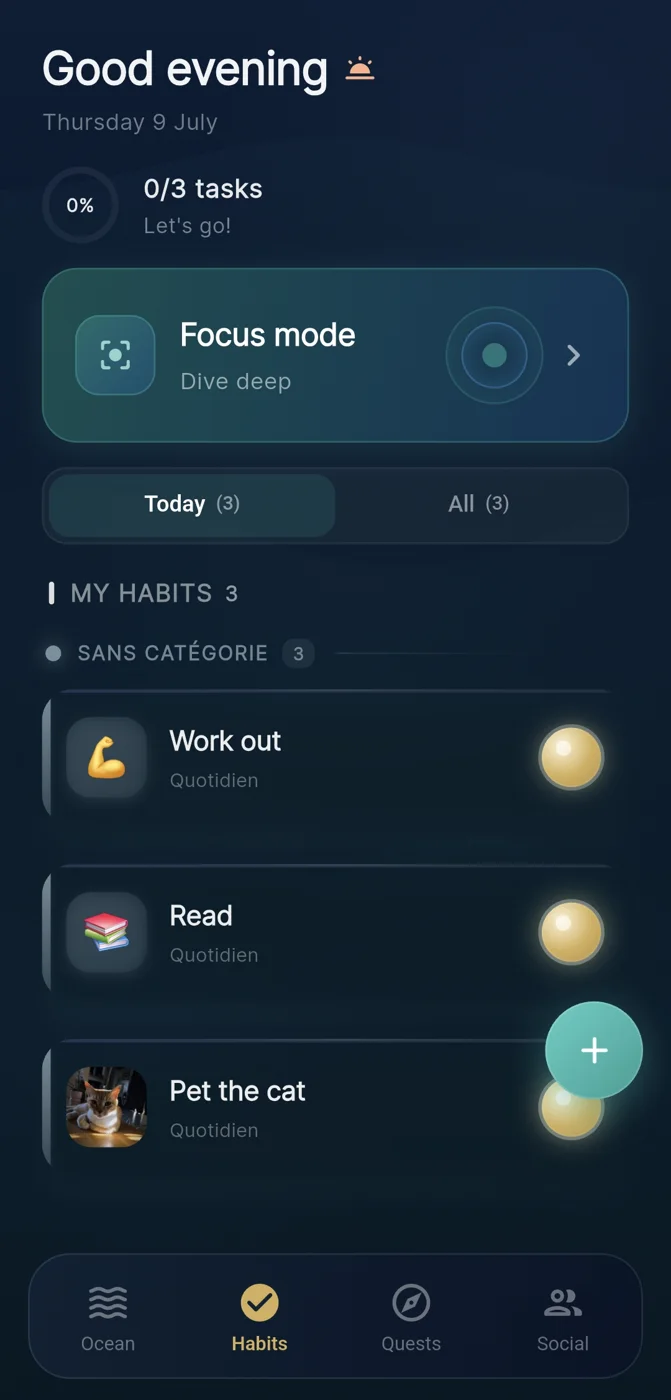
Reef, an IVRYN mobile habit tracker for iOS and Android, approaches this by turning each completed habit into a pearl that adds to a personal, visual ocean scene over time. The idea is to make repeated small actions visible as an accumulating picture rather than a fragile streak count, which is one way to support gentler recovery after a missed day.
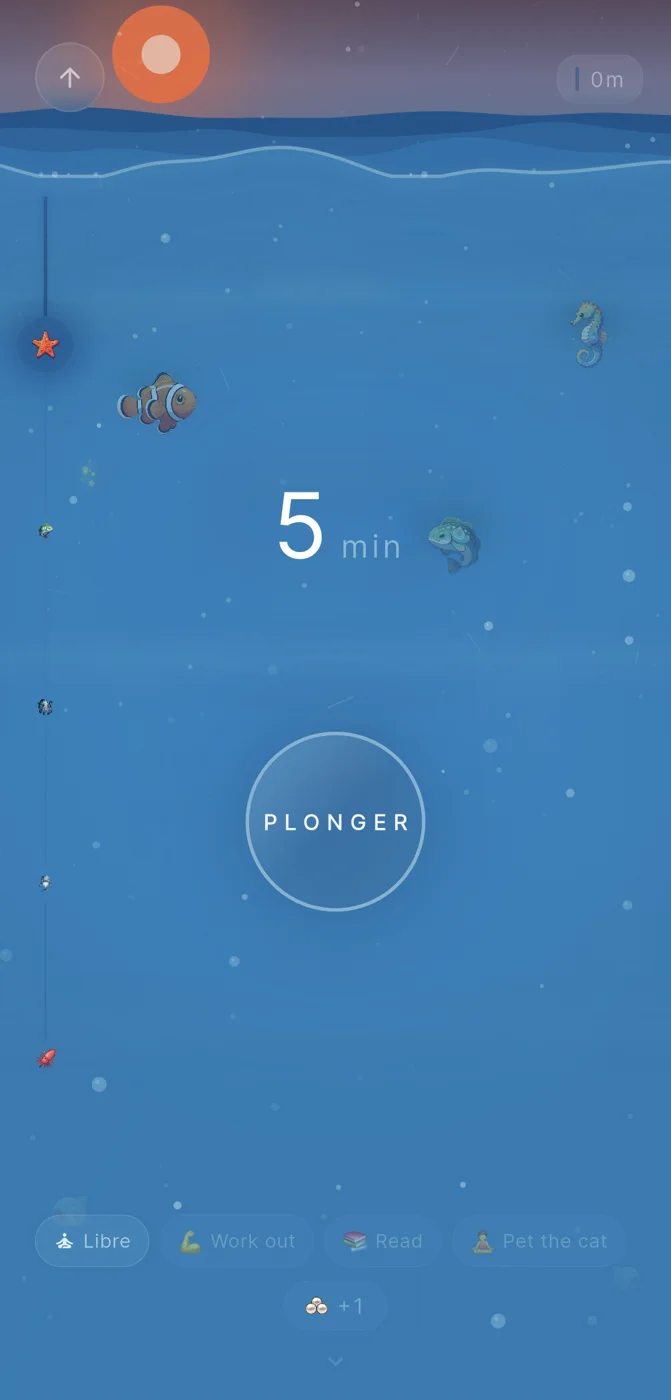
Focus time is a related but separate need. Some people are less interested in daily habit checkboxes and more interested in protecting blocks of concentrated work. A dive-style focus session, where completed focus time is rewarded the same way a habit completion is, can be a useful complement to habit tracking rather than a replacement for it.
- Does a completed action give clear, immediate feedback?
- Is there a non-punitive way to recover after a missed day?
- Are focus or deep-work sessions tracked separately from daily habits?
Evaluating the 'with friends' part specifically
Once the core tracking feels sound, the social layer is where a best habit tracker with friends earns its label. The key distinction is between accountability that's optional and accountability that's structurally required. If you can't use the app meaningfully without joining a group or crew, that's a different product than one where social features are an add-on you can ignore.
Reef's approach keeps social crews optional; the app does not guarantee that adding friends will change your behaviour or produce a particular health outcome, and it isn't positioned as a substitute for personal motivation. That framing is useful to keep in mind generally, not just for Reef: no app can promise that a friend group will make a habit stick, because that depends heavily on who's in the group and how they engage.
A practical way to judge social features is to ask what happens when a friend goes quiet. If the app design assumes constant mutual engagement, a single inactive friend can quietly kill the feature for you. Tools that let you keep tracking solo, with the option to reconnect socially later, tend to hold up better over months rather than weeks.
A worked example: choosing between three use patterns
Example (hypothetical, not a real case study): imagine three people trying to build a daily reading habit. Person A wants to track alone and dislikes any social pressure. Person B wants one accountability partner who checks in occasionally. Person C wants a small group and enjoys visible group progress.
For Person A, the 'with friends' part is irrelevant, and the deciding factor is whether solo tracking feels rewarding on its own, for example through a visual progress element like an accumulating pearl or ocean scene rather than a bare checklist. For Person B, what matters most is whether the app supports a lightweight, low-frequency social link rather than forcing daily group interaction. For Person C, the group experience needs to remain optional enough that the habit doesn't collapse if one or two members disengage.
This example illustrates a general principle worth applying to any app you're evaluating: match the social feature to how much social contact you actually want, not to how much the app encourages you to have. Overcommitting to a group feature you don't really want tends to backfire faster than under-using one you might grow into.
A short decision checklist
Use the following checklist as a starting point when comparing options, including Reef, against the search for a best habit tracker with friends.
- Can you use the app fully without ever adding a friend?
- Is there a visible, satisfying signal when you complete a habit, separate from any social feed?
- Does a missed day lead to a gentle nudge rather than a broken streak or shaming message?
- Can you add or remove social connections without losing your own history?
- Are focus or deep-work features tracked separately from daily habit completions, if that matters to you?
- Does the app avoid promising specific health or behaviour outcomes from using it?
Limits to keep in mind
No habit tracker, social or otherwise, can guarantee that a habit will stick or that a health outcome will follow. Apps like Reef are explicit that social crews are optional and that no particular behaviour or health result is promised; that's a reasonable and honest limit, and any app claiming otherwise should be treated with some skepticism.
It's also worth remembering that features, availability, and pricing for any app can change over time, so specifics should be checked directly on the app store listing or the provider's own site rather than assumed from an older article. This piece focuses on the underlying design questions that stay relevant even as specific features evolve.
Finally, this is not a comparison of named competitors' pricing or features, since those details are mutable and outside what can be responsibly stated as fact here. The goal is to give you a framework for judging any candidate app, including Reef, against what you actually need.
Frequently asked questions
Do I need a friend group to use a habit tracker effectively?
No. Social features can help some people stay accountable, but a well-designed habit tracker should work fully on its own, with visible progress and gentle handling of missed days, regardless of whether you ever add friends.
What should I look for if I want to protect focus time, not just track daily habits?
Look for a feature that treats focus or deep-work sessions as their own trackable activity, separate from daily habit checkboxes, and that gives you a clear signal when a focus session is completed successfully.
Can a habit tracker guarantee that I'll stick to a new habit?
No app can guarantee behaviour change or a health outcome. The most it can reasonably do is make your repeated actions visible, support gentle recovery after missed days, and offer optional accountability if you choose to use it.
Sources and further reading
These resources provide the wider reference frame. Product statements on this page are limited to the public information provided by Reef.