 Reef
Reef

What people are really searching for with a habit tracker for kids free printable PDF
Someone typing this query is usually a parent, guardian, or teacher who wants a quick, no-cost way to help a child build a routine: brushing teeth, reading, tidying a room, or finishing homework before screen time. The word 'printable' signals a preference for something tangible a child can hold, mark with a sticker or pen, and see on a fridge or wall. That's a reasonable instinct - for many young children, a physical object with visible marks is easier to understand than an abstract goal.
The commercial-investigation nature of this search means the person is comparing options, not just looking for a definition. They may be weighing a free PDF against a paid chart, an app, or a homemade grid drawn by hand. The honest answer is that all of these can work, and the right choice depends less on cost and more on which format the specific child and household will actually keep using.
Why simple, repeatable habits matter more than the format
Whether the tracker is paper or digital, the underlying principle is the same: small, repeatable actions are easier to sustain than large, occasional efforts. A child ticking off 'read for 10 minutes' every evening builds a pattern faster than one aiming for an hour once a week. This is true regardless of which tool records the tick.
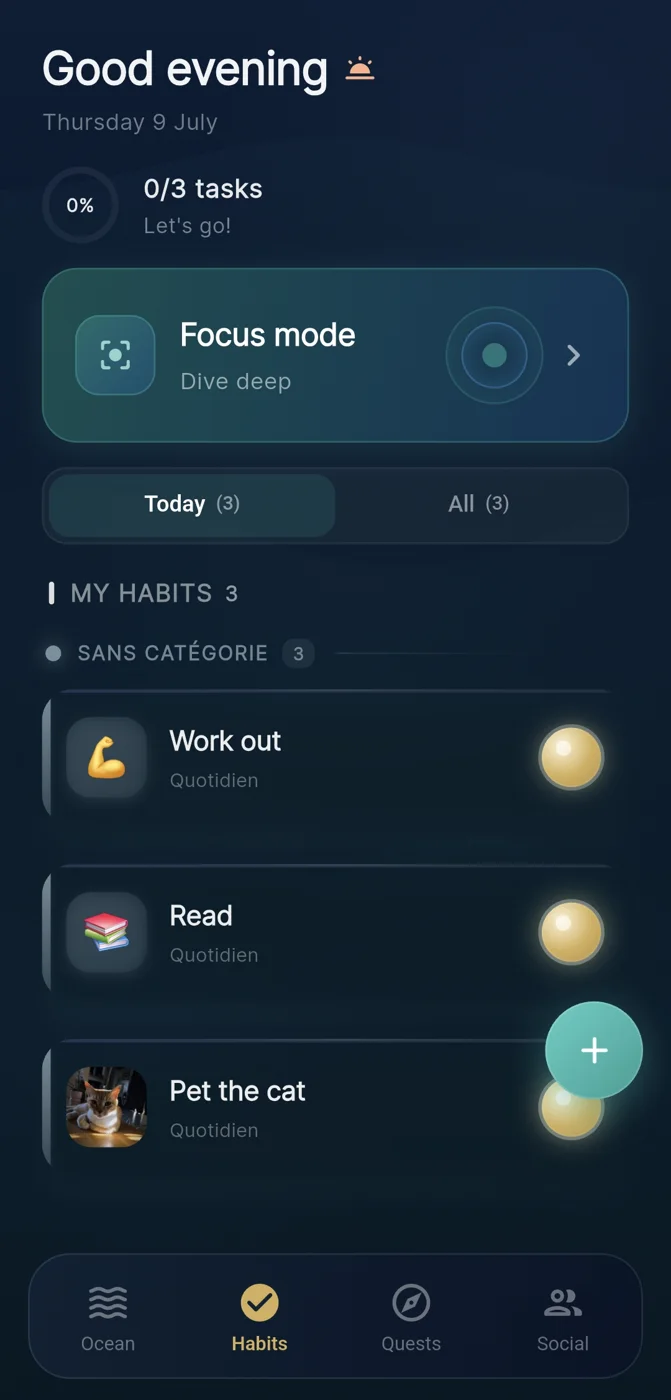
Visible progress is the second ingredient that tends to matter. A printable chart with a row of boxes, or a screen showing a streak, both work by making otherwise invisible effort visible. Reef, an IVRYN mobile habit tracker for iOS and Android, applies this idea by turning a completed habit into a pearl that adds to a small ocean scene the person can see grow over time - a digital equivalent of the sticker chart, aimed more at teens or adults who prefer a phone-based habit rather than a taped-up sheet.
Choosing between a printable PDF and an app: a practical comparison
For younger children (roughly ages 4–9), a printable chart often has real advantages: no screen involved, easy for a parent to customise by hand, and the physical act of marking a box can itself be motivating. It also avoids introducing a phone or tablet into a bedtime or morning routine, which many families prefer to limit for young kids.
For older children or teens who already use a phone for other tasks, an app-based tracker can reduce friction - there's no chart to lose, no marker to hunt for, and reminders can nudge at the right moment. The trade-off is added screen time and, in the case of any app, a dependency on the device being charged and accessible.
Neither format is inherently better; the honest comparison is about fit. A family that struggles to keep paper charts up on the wall, or where the chart gets lost between rooms, may find a phone-based option easier to sustain. A family wary of extra screen exposure for a young child will likely do better with print.
A worked example: comparing two weeks of tracking
Example (hypothetical, not a study): Imagine two households each trying to build a 'reading before bed' habit with a 9-year-old. Household A uses a printable PDF taped to the bedroom door, with a sticker for each night read. Household B uses a habit app on a shared family tablet, checked at the same bedtime slot.
In this hypothetical, Household A's chart is highly visible but depends on someone remembering to bring stickers and replace the sheet monthly. Household B's app sends a gentle reminder but requires the tablet to be charged and available at the right time. Neither approach guarantees the habit sticks - what matters in both cases is whether the 10-minute reading window is realistic for that child's schedule and whether missed nights are treated as normal rather than a failure.
The lesson from this example isn't that one tool wins, but that the format should match the household's actual friction points: lost paper versus unavailable devices.
Handling missed days without discouraging the child
Every tracker, printed or digital, will eventually show a gap. How that gap is treated matters more than the tracker itself. A calm approach - noting the miss without judgment and simply continuing from the next day - tends to keep children engaged longer than one that treats a broken streak as a loss.
This is one reason gentle recovery after a missed day is worth building into whatever system is used. On paper, that might mean leaving the missed box blank rather than crossing it out dramatically. In an app context like Reef's dive and pearl approach, a missed focus session or habit simply means one fewer pearl that day rather than a reset of prior progress, which can reduce the all-or-nothing feeling that discourages kids from restarting.
A short decision checklist
Use this checklist to decide which format suits a specific child before searching further for templates or apps.
- Is the child under about 9? Lean toward a printable chart with stickers or colouring.
- Does the household already use a shared device the child can access at a consistent time? An app may reduce friction.
- Is losing or forgetting a paper chart a recurring problem in this household? Consider a digital option instead.
- Will an adult be present to help mark progress consistently, regardless of format?
- Is the goal a single simple habit (e.g., one daily action) rather than several at once? Simpler trackers, printed or digital, tend to work better for young children.
Where optional social accountability fits, and where it doesn't
Some tools, including Reef, offer optional social or crew-based accountability where a small group can see each other's progress. For young children this is rarely appropriate or necessary - a parent's attention is usually the accountability that matters. For older teens, a peer or family group feature can add mild motivation, but it isn't a guarantee of behaviour change, and no tracker, printed or digital, can promise that on its own.
The bounded, honest framing here is that any tracker - free PDF or app - is a visibility tool. It makes effort easier to see and easier to sustain a little, but it doesn't substitute for realistic goal-setting, a consistent routine, or an adult's involvement in helping a child follow through.
Frequently asked questions
Is a free printable PDF habit tracker as effective as a paid app for kids?
Neither format has a guaranteed advantage; effectiveness depends more on whether the child and household will consistently use it than on cost. A free printable chart works well for many young children, while an app may suit older kids already comfortable with a phone or shared tablet.
How many habits should a kids' habit tracker include at once?
Starting with one or two simple, clearly defined habits (such as brushing teeth or reading for 10 minutes) is generally easier to sustain than tracking five or six at once, since the goal is a repeatable action rather than a demanding checklist.
What should happen when a child misses a day on their tracker?
Treat a missed day neutrally rather than as a failure - leave the box blank or simply continue from the next day. Gentle recovery after a gap tends to keep children more engaged than restarting the whole chart or being made to feel they broke a streak.
Sources and further reading
These resources provide the wider reference frame. Product statements on this page are limited to the public information provided by Reef.