 Reef
Reef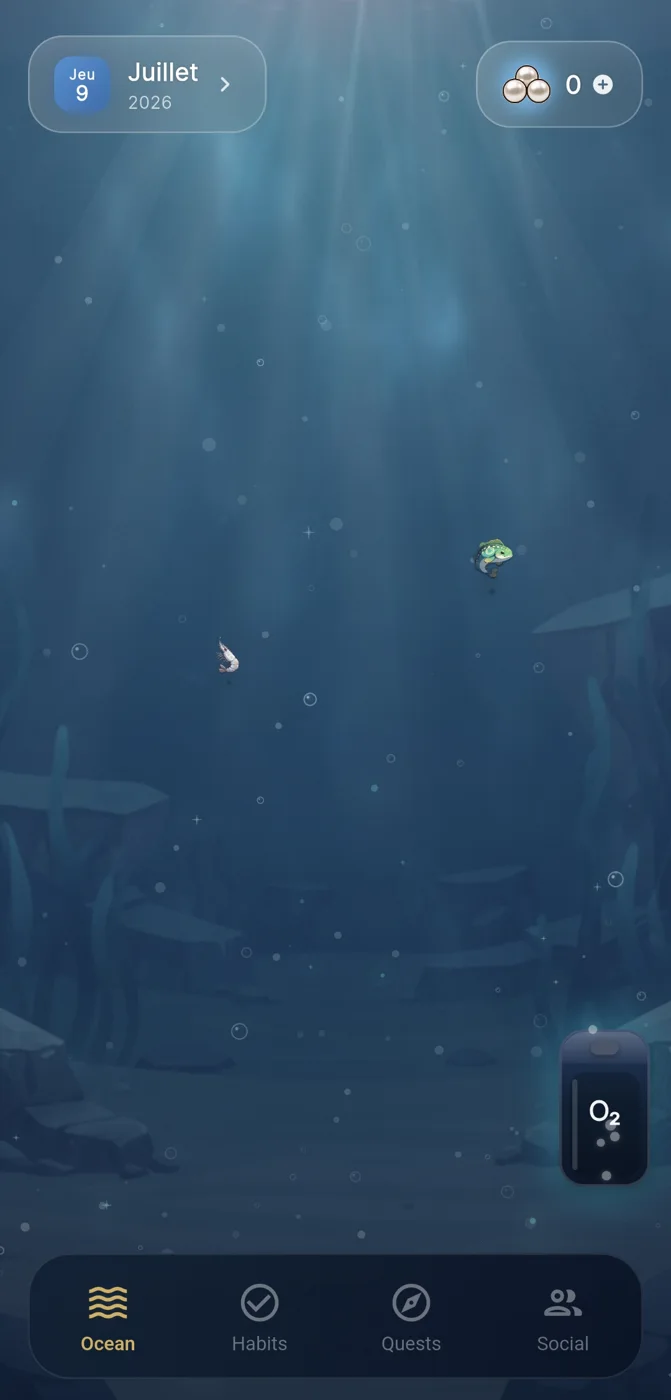
What to actually compare when searching for the best apps for habits
Searching for the best apps for habits usually turns up long feature lists, but the features that matter are narrower than most rankings suggest. What tends to separate a helpful app from one you delete after a week is whether it makes small, repeatable actions easy to log, whether it shows progress in a way you actually want to look at, and whether it treats a missed day as a normal event rather than a failure state.
Before comparing specific apps, it helps to separate three layers: the habit-logging mechanic, the motivational layer built on top of it, and any social layer. Some apps combine all three tightly, others let you turn pieces off. Knowing which layer is doing the work for you personally is more useful than comparing star ratings.
- Does logging a habit take under 10 seconds?
- Is progress shown visually, not just as a streak number?
- What happens in the app when you miss a day?
- Is social sharing required or optional?
Small repeatable habits matter more than big feature sets
A common mistake is choosing a habit app based on how many habit types it supports rather than how well it supports a small number of realistic ones. Behaviour research broadly agrees that habits stick when the target action is small and low-friction, so an app's core job is to keep that action visible and quick to record, not to manage dozens of goals at once.
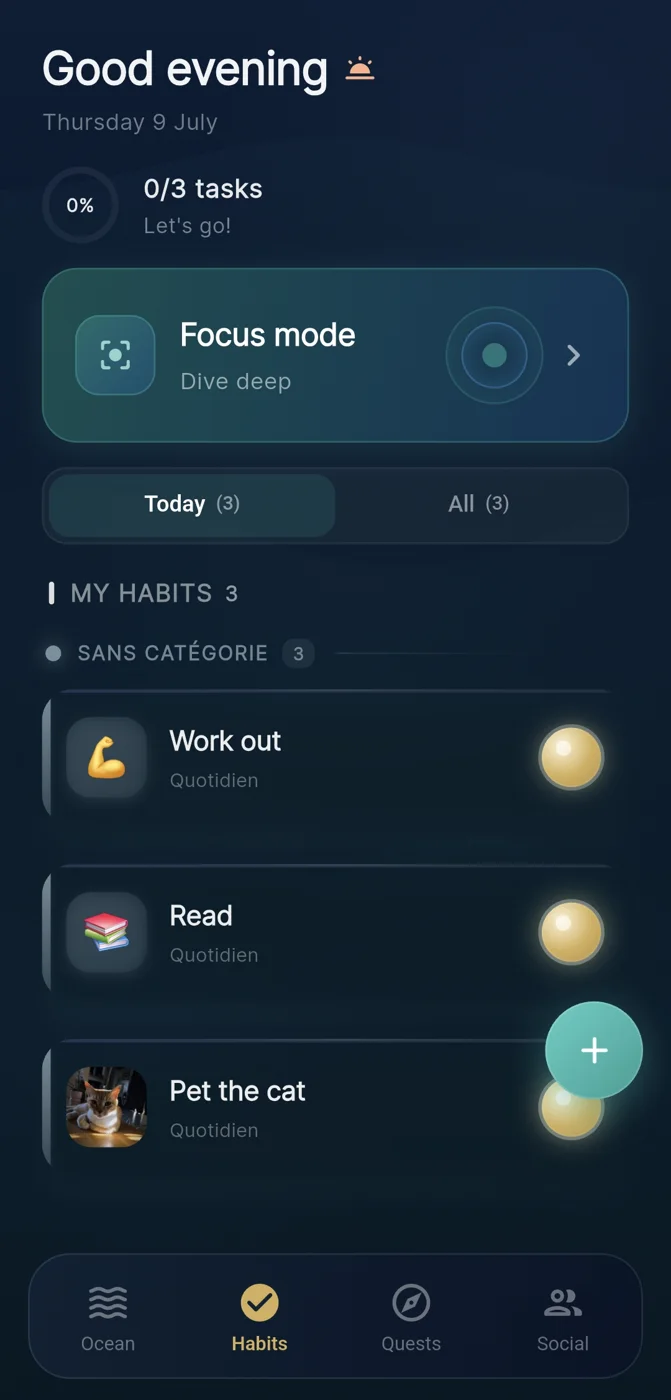
This is also where the appeal of visual progress systems comes in. When a completed habit produces some kind of visible change, a filled bar, a growing scene, a small reward, it gives you a low-effort feedback signal that a plain checkbox list doesn't. That signal doesn't guarantee the habit sticks, but it removes one small piece of friction from noticing your own consistency.
Where focus-session tools fit alongside habit tracking
Many people searching for habit apps are really looking for two things at once: a way to track daily actions and a way to protect a block of uninterrupted time for deep work or study. These are related but distinct problems, and not every habit app handles both well.
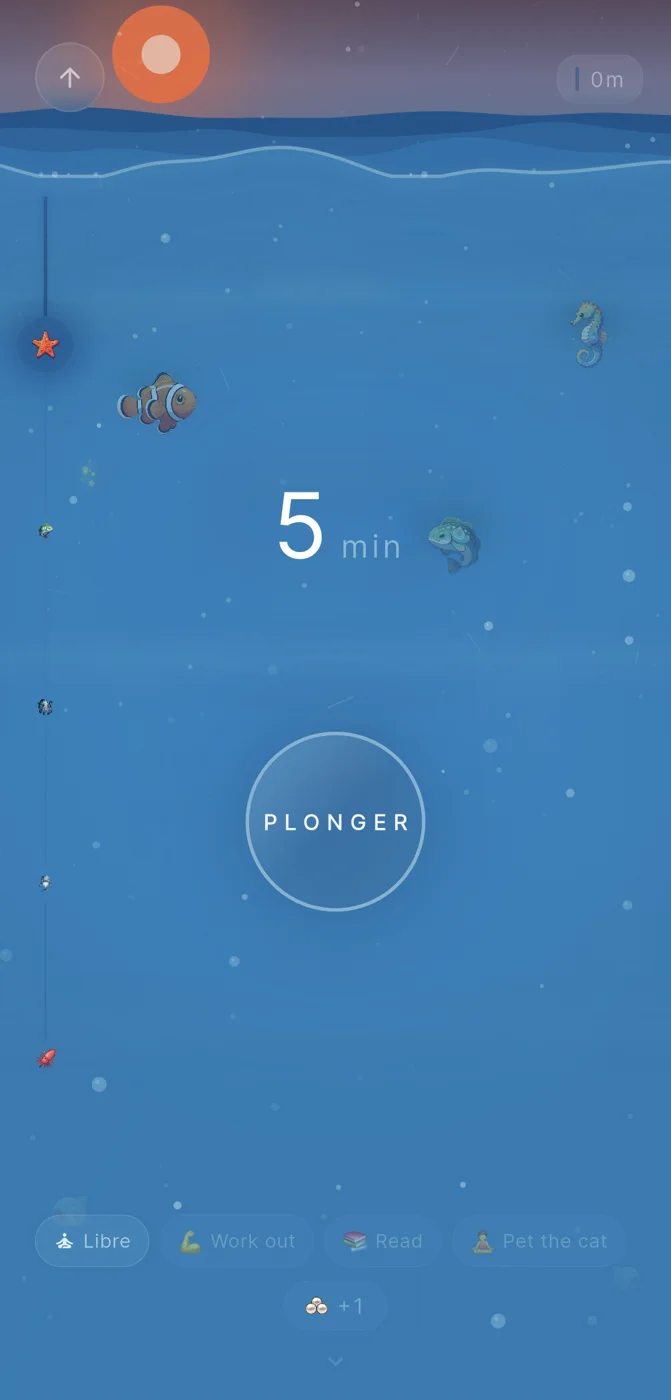
Apps that use timer or session-based focus tools sometimes wrap the exercise in a metaphor, a countdown, a garden, a journey, so that completing a focus block feels like part of the same system as logging a habit. Reef, for example, frames a completed focus session as a 'dive' that earns a reward tied to the same visual world used for habit completions. That kind of framing can make sitting down for a session feel less like pure willpower, though it doesn't change the underlying difficulty of sustaining attention, and no app can substitute for basic environment changes like silencing notifications.
Gentle recovery after missed days is a genuine differentiator
One of the more useful things to check before picking an app is how it responds when you break a streak. Apps built around a strict, unbroken streak counter can create an outsized emotional cost to a single missed day, sometimes leading people to abandon a habit entirely rather than restart it.
Apps designed around gentler recovery mechanics, where a missed day doesn't erase all visible progress or reset a shared visual world to zero, tend to be more forgiving of the reality that habits are rarely perfectly consistent. This is a design philosophy rather than a guarantee: no app can promise that you'll resume a habit after a lapse, but the cost of trying again can be made lower or higher depending on how the app is built.
- Look for progress that persists in some form after a missed day
- Avoid apps that punish a single lapse with total reset
- Check whether the app frames a missed day neutrally or negatively
Deciding whether social accountability helps or adds pressure
Optional social features, sharing progress with a small group or 'crew', can help some people stay consistent, but they can also add pressure that backfires for others. Before choosing an app with social mechanics, it's worth being honest about which category you fall into.
A useful test: imagine you miss three days in a row. Would knowing a group can see that make you more likely to restart, or would it make you want to avoid opening the app altogether? Apps where social features are genuinely optional, not required to see your own progress, let you test this without committing to a group dynamic you can't easily undo.
A worked example: choosing between three hypothetical habit apps
Example scenario (illustrative only, not based on real product testing): imagine three fictional apps. App A shows only a numeric streak and resets it to zero after any missed day. App B shows a visual scene that grows with each completed habit and softens rather than erases progress after a lapse, and includes an optional group view. App C is built primarily around long-form journaling with habits as a secondary feature.
For someone whose main goal is a quick, low-friction daily check-in with a forgiving structure, App B's design pattern, visible cumulative progress plus gentle recovery, addresses the reader question more directly than App A's harsh reset or App C's heavier journaling overhead. This is a simplified illustration of matching design pattern to personal need, not a ranking of real apps, and the right choice still depends on personal habits and how much time someone wants to spend in the app each day.
How Reef fits this decision, and its limits
Reef is one iOS and Android app built around this general approach: completing a habit contributes a pearl to a shared visual ocean scene, focus sessions use a dive metaphor with a similar reward, and crew-based social accountability is optional rather than required. It's built around the same principles discussed above, small repeatable actions, visible cumulative progress, and softer handling of missed days, rather than a strict streak system.
It's worth being clear about the limits here. Reef, like any habit app, cannot guarantee a behaviour change or health outcome, and no independent study of its effectiveness is referenced in this article. Choosing it, or any similar app, should be based on whether its specific mechanics match how you personally respond to visible progress and optional social pressure, not on an assumption that the app itself produces results.
Frequently asked questions
What's the most important feature to look for in a habit-tracking app?
Prioritize low-friction logging (a few seconds per entry) and visible cumulative progress over the sheer number of features or habit types supported, since consistency depends more on ease of use than on feature breadth.
Should I choose an app with strict streaks or gentler progress tracking?
If you're prone to abandoning a habit after a single missed day, an app that softens rather than erases progress after a lapse is generally easier to sustain than one built around unbroken streak counters, though this depends on personal preference.
Are social accountability features in habit apps worth using?
Optional social sharing can help some people stay consistent but adds pressure for others; it's worth testing whether seeing a group view makes you more or less likely to restart after a missed day before relying on it, and choosing an app where social features aren't mandatory.
Sources and further reading
These resources provide the wider reference frame. Product statements on this page are limited to the public information provided by Reef.