 Reef
Reef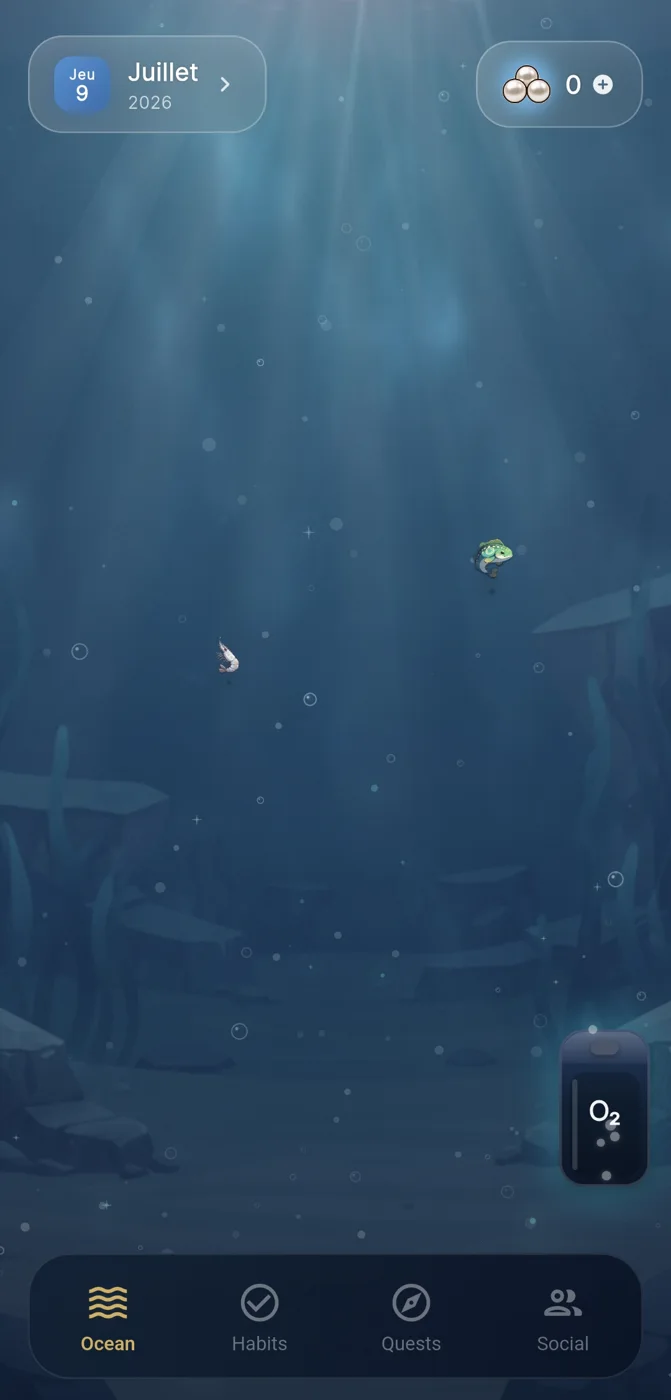
What “best habit stacking app” should mean for you
Searching for the best habit stacking app is usually less about finding a universal winner and more about finding a system you will return to when life is ordinary, busy or disrupted. Habit stacking means attaching a small action to a reliable existing cue: after making coffee, take vitamins; after closing a work tab, plan tomorrow’s first task. The app’s job is to make that repeated relationship easy to see and revisit.
A useful choice should support the kind of repetition you actually want. If your aim is a gentler morning routine, a complex productivity dashboard may create more work than it removes. If protecting a block of attention matters, a simple checkbox may not provide enough structure. If accountability helps sometimes but feels intrusive at other times, social features should remain optional.
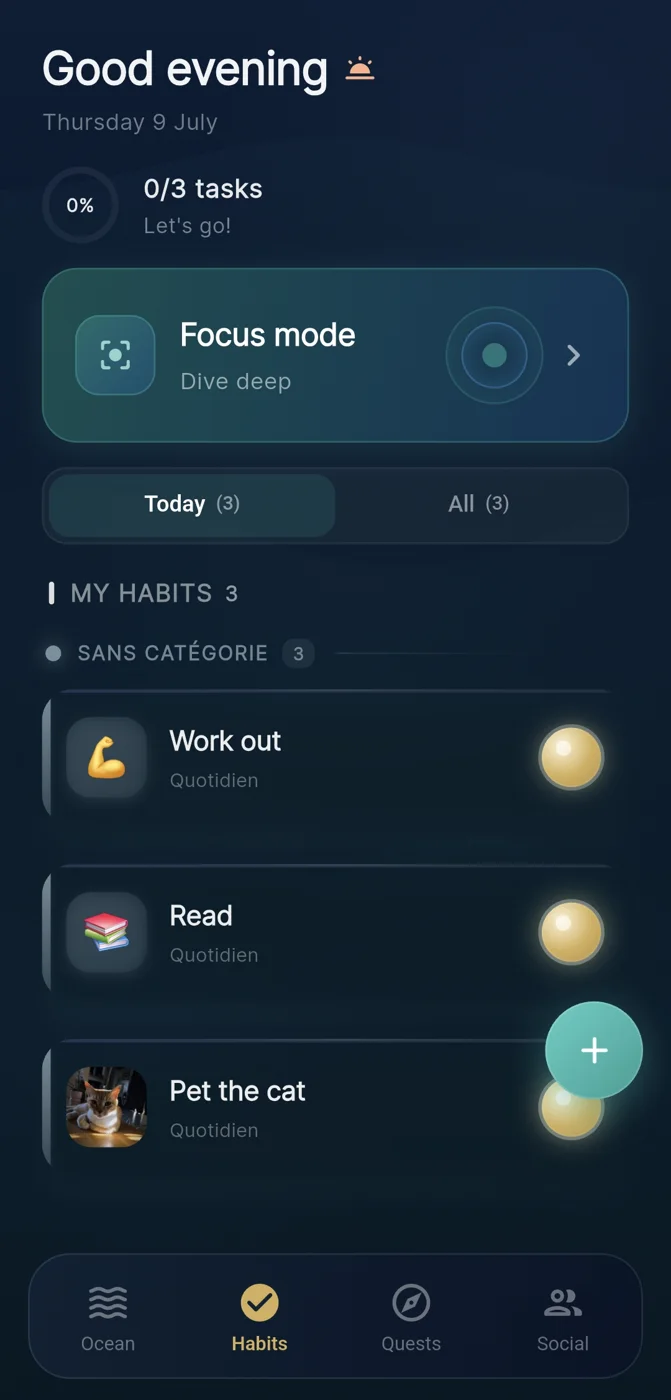
Reef is an IVRYN mobile habit tracker for iOS and Android. Its public product context is visual and bounded: completing a habit releases a pearl that contributes to a living ocean, focus sessions use a dive metaphor and completed focus time is rewarded with pearls, and social crews are optional. These mechanics can make actions and progress visible; they do not guarantee behaviour, health or productivity outcomes.
- Choose for the routine you want to repeat, not for the longest feature list.
- Treat any app as a support for practice rather than a promise of personal transformation.
- Prefer an approach that still feels usable after a missed day.
Why small repeatable habits matter before you choose an app
A stack works best when its new action is modest enough to fit beside an existing routine. “After I brush my teeth, I will stretch for two minutes” is easier to evaluate than “I will become more flexible.” The first describes a cue, an action and a scale that can be repeated. An app can help you notice the pattern, but it cannot choose a realistic starting point on your behalf.
Before downloading anything, write one or two stacks in plain language. Identify the cue that already happens, the smallest version of the action, and what counts as completion. This reduces ambiguity at the moment you are meant to act. It also prevents a habit tracker from becoming a collection of broad aspirations that are hard to mark honestly.
The Reef methodology and guide on gamified habit tracking provide public context for thinking about visible, game-like progress with care. They are useful framing resources, not evidence that Reef has conducted a study or that any feature will produce a particular result. Keep the claim modest: visible feedback may help make a chosen routine more noticeable, while the person retains control over the routine and its meaning.
- Cue: “After I put my mug in the sink.”
- Action: “I prepare tomorrow’s water bottle.”
- Completion rule: “The bottle is filled and placed where I will see it.”
Best habit stacking app criteria: visibility without pressure
Visual progress can be valuable when it answers a simple question: what did I choose to do today? It becomes less helpful when it turns every missed action into a verdict. Look for feedback that acknowledges completion without forcing a rigid streak identity. The useful design question is whether the app helps you resume the next small action after an interruption.
Reef makes completion visible through pearls that build a visual living ocean. That gives a concrete representation of repeated activity rather than only a numerical total. For someone drawn to calm visual feedback, this may be a relevant reason to consider Reef. It should not be interpreted as evidence that a visual ocean changes habits or creates a health benefit.
Gentle recovery is a central comparison criterion. Travel, illness, caregiving, deadlines and simple changes of plan can interrupt a routine. A good fit lets you restart with a small, honest next step instead of encouraging you to compensate with an unrealistic plan. Ask whether you can reduce the action, adjust the cue or pause a habit without treating the interruption as failure.
- Can I see completion clearly without being pushed toward perfection?
- Can I return after a missed day with a smaller version of the habit?
- Does the visual feedback feel motivating, neutral or pressuring to me?
Consider focus time as part of the stack
Some stacks are action-based, such as preparing lunch after dinner. Others protect attention: after opening a project, work on it for one focused interval before checking messages. If attention is part of what you want to repeat, assess whether the app gives focus time a clear place rather than treating it as an unrelated add-on.
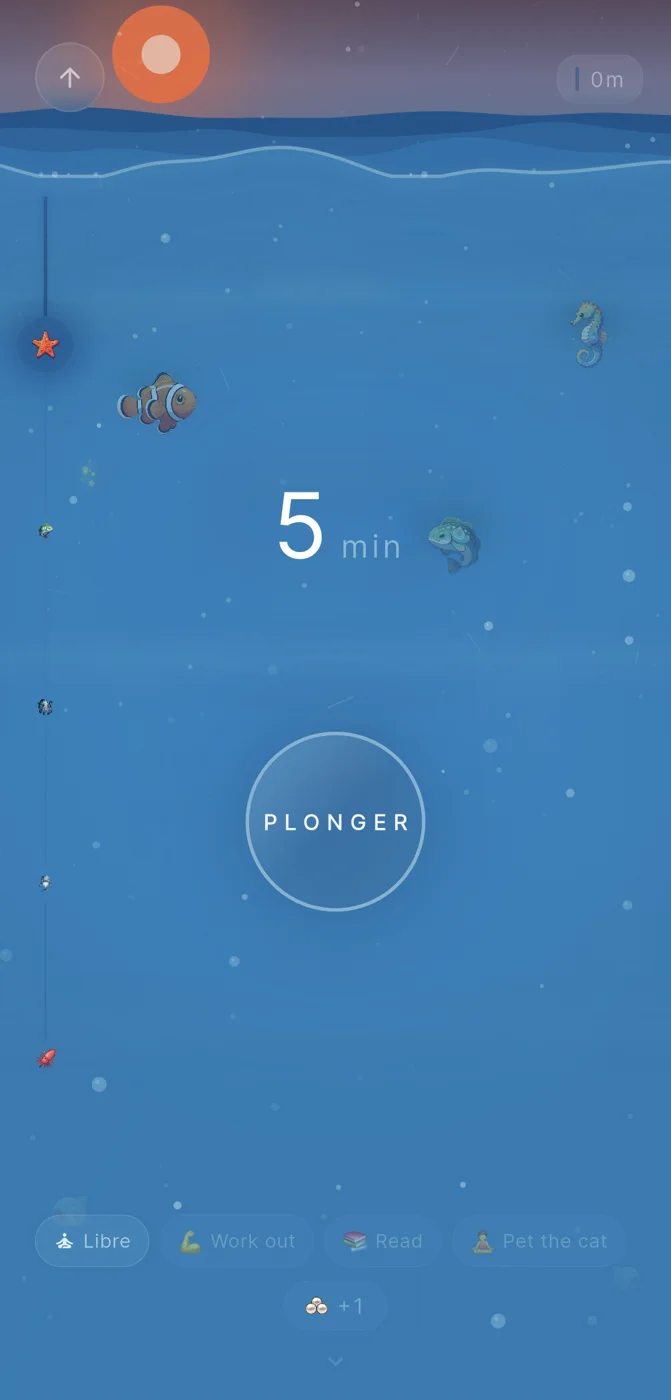
In Reef, focus sessions use a dive metaphor and reward completed focus time with pearls. This can connect a completed period of attention with the same visual progress system used for habits. For a person who wants habit repetition and focus time represented together, that product detail may be useful to evaluate.
Keep the boundary clear. A focus timer may help you set an intention and mark time you completed, but it does not guarantee concentration, output quality, reduced stress or any other outcome. The practical value comes from deciding what a session is for before starting it, then reviewing whether the chosen length and task were realistic.
- Choose one task before beginning a focus session.
- Use a session length that feels possible on a typical day.
- Afterward, decide whether to repeat, shorten or redefine the next session.
Optional social accountability and when to use it
Accountability is not automatically beneficial for everyone. Some people find a shared commitment clarifies intention; others prefer private reflection, especially while establishing a fragile routine. The best habit stacking app for you should let social participation match your comfort level instead of making it a condition of progress.
Reef offers optional social crews. That means you can consider sharing accountability when it serves a specific purpose, such as agreeing with a friend to protect a regular focus block, while keeping the choice voluntary. A crew is a social context, not a guarantee that anyone will complete a habit or sustain a routine.
Set expectations before inviting someone. Decide what, if anything, will be shared; whether encouragement is welcome; and what happens when one person misses a day. The most constructive agreement is usually small and specific: acknowledge a check-in, avoid policing, and make restarting acceptable.
- Use crews only if shared visibility feels supportive.
- Agree on encouragement rather than surveillance.
- Keep private routines private when that better protects your motivation.
Example decision aid: choosing a fit this week
Example only: Maya wants to drink water after lunch, spend 20 minutes on a portfolio task before evening entertainment and occasionally check in with a friend. She is not looking for a claim that an app will make her consistent; she wants a visible reminder of choices she can repeat.
Maya writes two stacks: “After lunch, I fill and drink a glass of water” and “After I finish dinner cleanup, I begin one 20-minute portfolio session before opening entertainment apps.” She defines completion narrowly enough to be honest. On days when the portfolio task feels too large, she decides that opening the file and outlining one next step is a valid recovery version.
Reef may fit Maya if she values seeing completed habits and focus time add pearls to a living ocean, and if optional crews give her a level of social accountability she can choose. It may be less suitable if she wants a product that promises outcomes, requires detailed coaching, or makes social tracking mandatory. The decision rests on personal fit, not on a universal ranking.
- Step 1: List one existing cue and one small action.
- Step 2: Define completion before you begin.
- Step 3: Choose visual feedback, focus support and social options only if they match your preferences.
- Step 4: Review after a week: Was restarting easy after disruptions?
- Step 5: Keep, simplify or replace the setup based on that experience.
Frequently asked questions
What is habit stacking?
Habit stacking is the practice of linking a small new action to an existing routine or cue, such as taking a short walk after lunch. The goal is to make the next action easier to remember and repeat, not to guarantee a behaviour change.
How does Reef support habit stacking?
Reef is an IVRYN mobile habit tracker for iOS and Android. Completing a habit releases a pearl that contributes to a visual living ocean; focus sessions use a dive metaphor and reward completed focus time with pearls. These features make selected actions visible but do not guarantee any behaviour, health or productivity outcome.
Do I need to join a social crew to use Reef?
No. Reef’s social crews are optional. You can use private habit and focus features, or choose social accountability when sharing progress feels useful to you.
Sources and further reading
These resources provide the wider reference frame. Product statements on this page are limited to the public information provided by Reef.