 Reef
Reef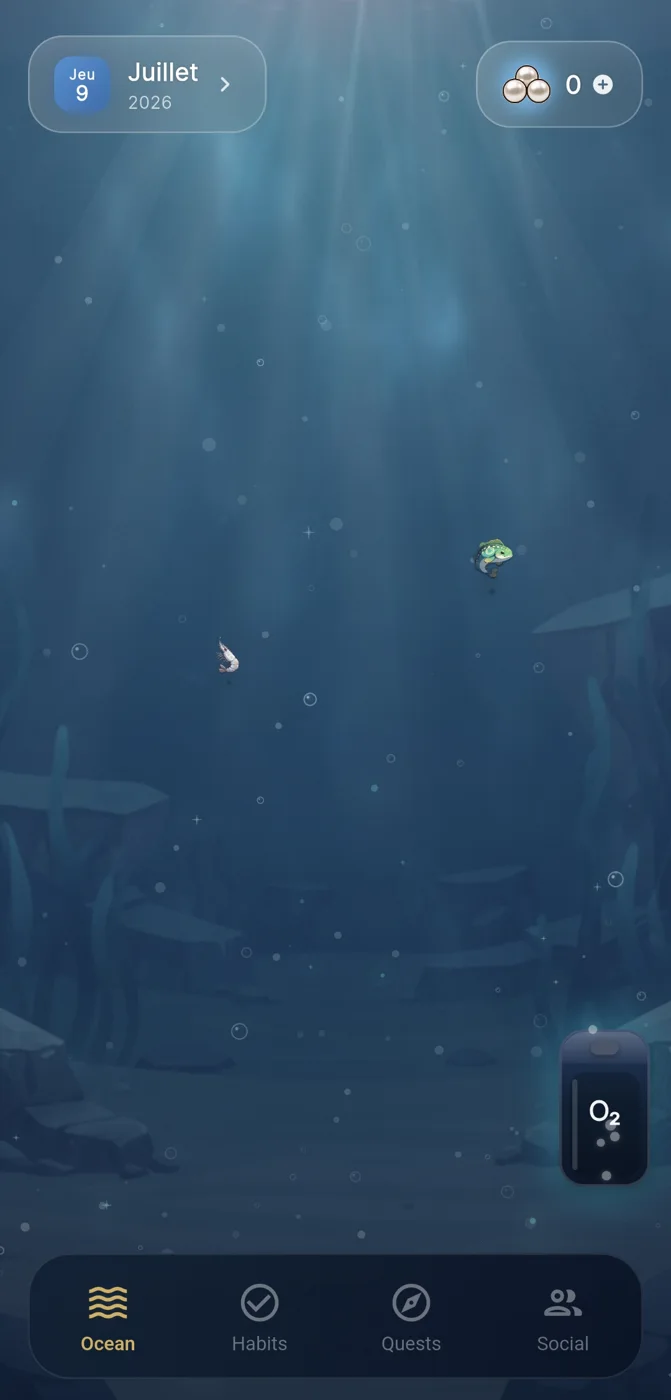
What focus apps for studying are designed to do
Focus apps for studying help you set aside a block of time for one task, confirm that it happened, and watch a record build up over days. Most combine a timer with some kind of feedback: a session count, a visual that grows, or a log you can look back on. The core idea is modest. These apps do not teach a subject or improve memory directly. They make sitting down to study easier to start, easier to notice and easier to repeat.
That distinction matters before you act. If your real obstacle is not knowing what to study, unclear material or exhaustion, a timer will not fix it. If the obstacle is drifting between tabs, losing track of how much you actually did, or letting one missed day turn into a missed week, a focus app addresses something real. Start by naming which problem you have, because that decides whether any app is worth installing.
Limits that apply to any focus app
No app can guarantee a change in behaviour, grades or wellbeing, and a responsible one will not claim to. Session counts measure time spent in a mode, not understanding. You could log three focused hours of passive rereading that achieved little, or forty minutes of practice questions that achieved a lot. Treat the numbers as a record of showing up, not a score of learning.
Rewards involve a trade-off too. Game-like elements such as collections, streaks and growing visuals can make repetition more inviting, but they can also pull attention toward protecting a counter instead of the study itself. If you want background on how these mechanics are meant to work inside a habit tool, Reef's guide to gamified habit trackers covers the category. If you notice yourself starting sessions only to keep a number alive, treat that as a signal to adjust, not to push harder.
Finally, an app adds another screen to a task that often suffers from screens. If your phone is the main distraction, check whether the timer keeps you off it or tempts you back to check progress.
A checklist for choosing a focus app for studying
Rather than looking for a ranking, judge any candidate against the problem you named earlier. The questions below are a decision aid. Answer them honestly before relying on a tool during a busy term.
If a tool fails the first two questions, it will probably add friction rather than remove it. If it fails the third, find out how you react to a broken streak during a calm week, not during exam season.
- Can you start a session in a few seconds, without setup each time?
- Does progress appear visibly after a single session, so a short block still counts?
- What happens after a missed day: a reset to zero, or a way to resume without penalty?
- Are group or social features optional, with private study as the default?
- Is the business model clear, including whether it shows ads and what it does with your data?
- Does it promise health or performance results? Treat guarantees as a warning sign.
Example: a hypothetical student's first two weeks
The following is an illustrative example, not a real case or an observed outcome. Imagine a student with an exam in a month who keeps opening their notes and then drifting. They choose one small, repeatable habit: two 25-minute sessions on weekdays and a single session on weekend days.
In week one they meet the target on four days out of seven. Instead of reading the three misses as failure, they look at the pattern and see that both weekday misses followed late work shifts. They change the rule to one session on those days. The visible record shows that the habit is happening on most days, which is more useful than a vague feeling of never doing enough.
In week two, a classmate suggests studying at the same time. They try it twice, find it helps on weekends, and keep it there only. The sequence is the part worth copying: start small, read the record, adjust after misses, and add accountability only where it actually helps.
Recovering from missed days and choosing accountability
Missed days are a normal part of any study routine, so the useful design question is what an app does next. Tools that treat a miss as a full reset can make one bad day feel like losing everything, and that moment is often when people stop. Gentler designs let you resume, keep your longer history visible, or occasionally protect a streak on a day off.
Social accountability works best when it is chosen. Studying alongside classmates helps some people begin; for others, visible comparison adds pressure that crowds out the work. Look for tools where sharing is something you opt into and can step back from without losing your own progress.
Where Reef fits and where its claims stop
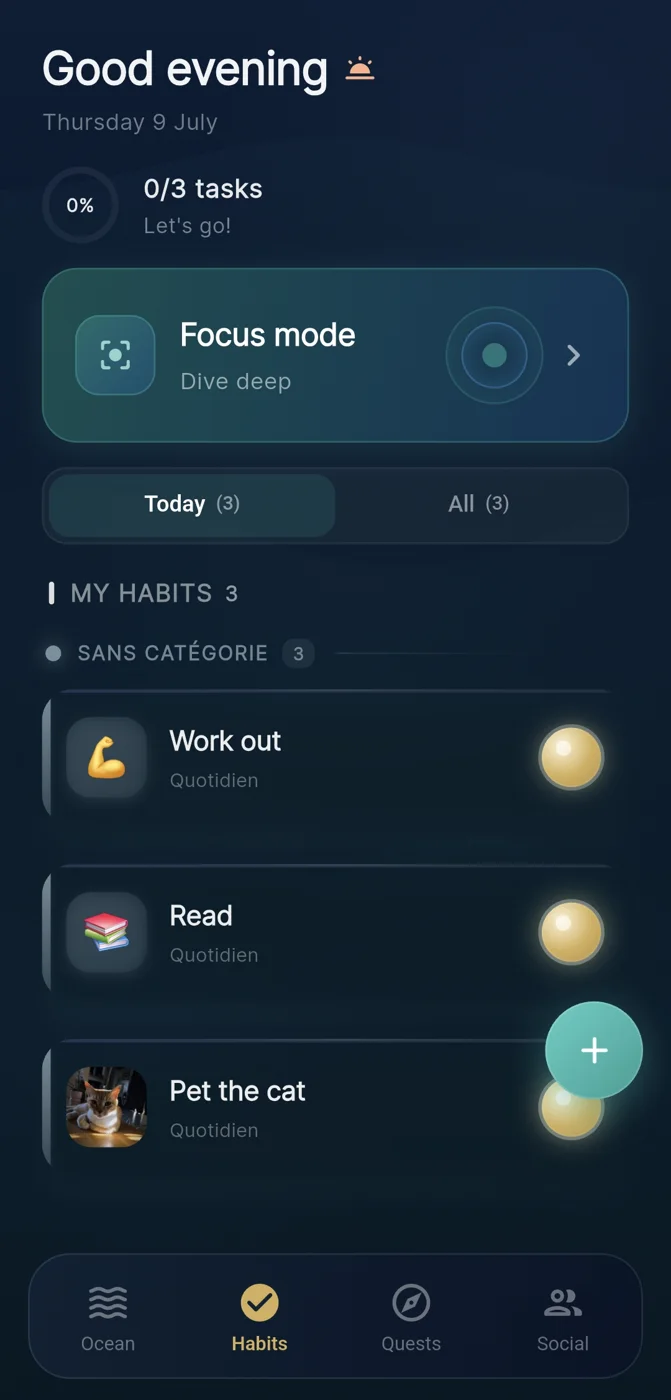
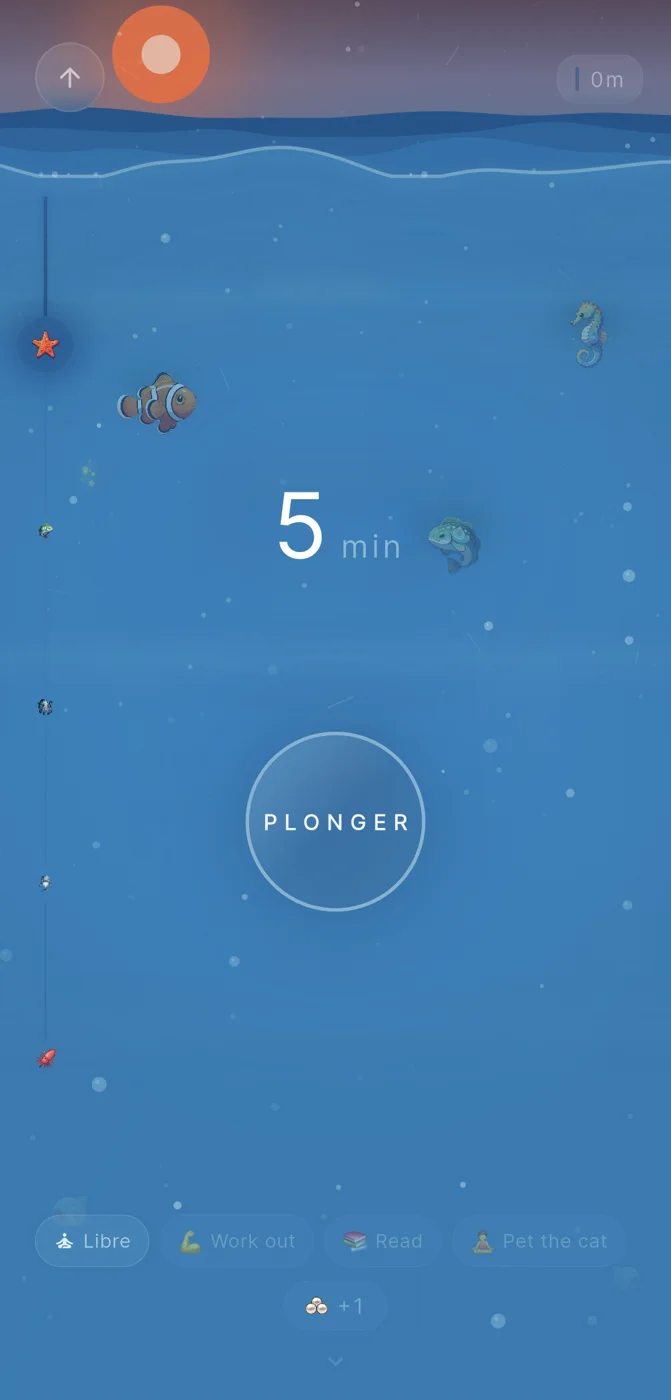
Reef is IVRYN's habit tracker for iOS and Android, and it frames a study block as a dive that goes deeper the longer you stay, with pearls earned for focus time you complete. It is free to start, shows no ads, does not resell data and keeps its group crews optional, while making no promise that it will change your habits or your health.
That positioning also limits what this article can tell you. Reef publishes its habit design and evidence methodology so readers can see how it reasons about these mechanics, but it has not run a study for this article, tested other focus apps or measured student results. The guidance here rests on principles rather than findings: small repeatable habits, visible progress, gentle recovery after missed days and optional accountability. Use those principles to judge any focus app, Reef included.
Frequently asked questions
Do focus apps for studying actually improve grades?
No focus app can guarantee better grades. These tools record when you studied and for how long, which can make starting and repeating study sessions easier, but the material, your study methods and your rest still determine what you learn. Treat session counts as evidence of showing up, not of understanding.
What should a focus app do after I miss a day of studying?
A helpful focus app lets you resume without punishment, for example by keeping your longer history visible or letting you protect a streak occasionally. If a single missed day wipes your progress and makes you want to quit, that design may work against building a steady study routine.
Is it better to use a study focus app with friends or alone?
Either can work. Studying alongside friends helps some people get started, while others find visible comparison stressful. Choose an app where social features are optional and private study is the default, then add shared sessions only on the days or subjects where they genuinely help.
Sources and further reading
These resources provide the wider reference frame. Product statements on this page are limited to the public information provided by Reef.