 Reef
Reef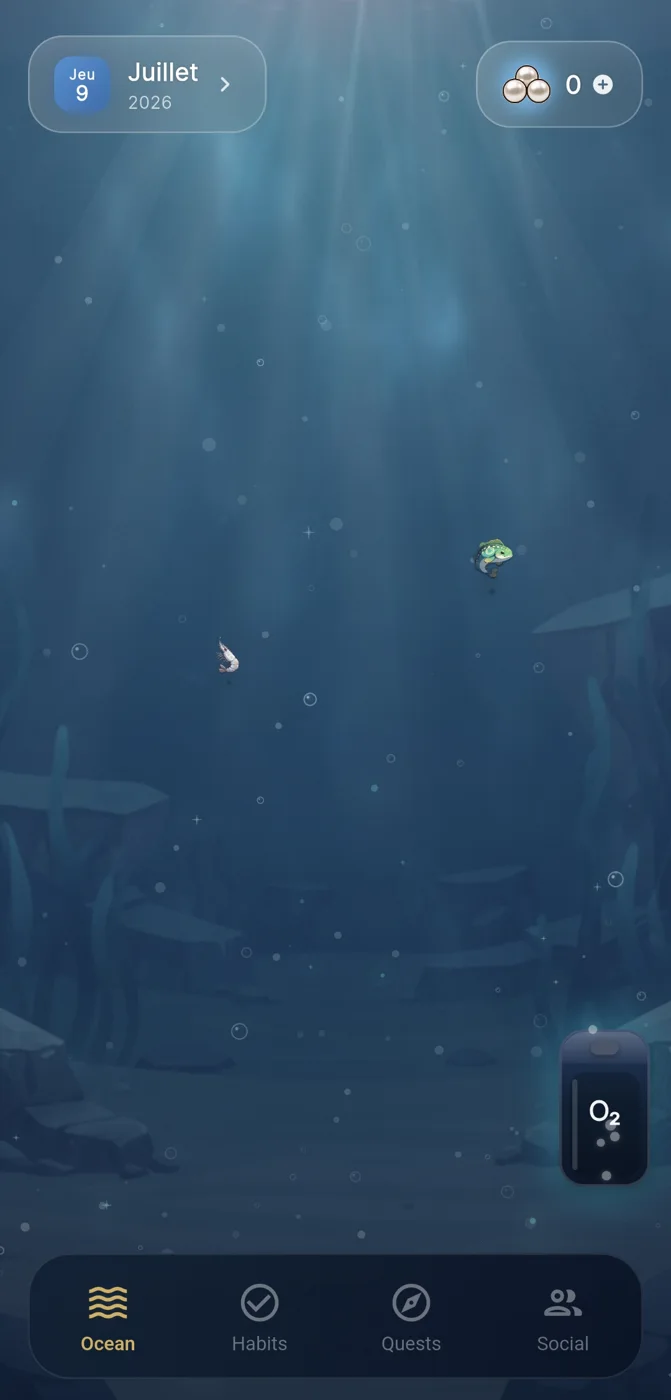
What a habit tracker for mental health can and cannot do
A habit tracker for mental health can provide structure for small actions that support a steadier daily rhythm, such as taking a short walk, drinking water, writing a few lines, or beginning a wind-down routine. Its main practical value is making repetition visible: you can see what you intended to do, what you completed, and where a routine needs adjustment.
That visibility is not the same as treatment, diagnosis, or proof that a habit will improve mental health. A tracker cannot guarantee motivation, symptom relief, recovery, or lasting behaviour change. If someone is experiencing distress, crisis, or symptoms that feel difficult to manage, professional or emergency support may be more appropriate than trying to solve the situation through a routine alone.
The most useful question is therefore not “Will this app fix my wellbeing?” but “Can this help me notice and repeat one manageable action?” That framing protects against turning a supportive tool into a source of pressure.
- Use a tracker to support an intention, not to judge your worth.
- Treat missed entries as information about the plan, energy, timing, or circumstances.
- Keep medical, therapeutic, and crisis needs separate from habit-tracking goals.
Start with small repeatable habits
A gentle routine is usually easier to sustain when the action is small enough to fit a difficult day. “Read for one minute,” “step outside,” or “put tomorrow’s medication reminder where I can see it” may be more workable starting points than broad promises to become calmer, healthier, or more productive.
The action should be concrete and observable. A habit called “feel better” cannot be checked off clearly, while “sit on the balcony for five minutes after lunch” has a time, place, and visible finish line. This distinction matters because ambiguity can turn tracking into a daily negotiation.
Choose one or two habits before adding more. A long list may create the appearance of ambition while making it harder to learn what actually fits your schedule. Once a routine feels ordinary, it can be refined or expanded.
- Make the first version easy enough to complete on a low-energy day.
- Attach the habit to an existing cue, such as breakfast or closing a laptop.
- Define a minimum version and a fuller version so the habit can flex with the day.
Why visible progress can be useful
Progress displays can make repeated actions easier to notice than memory alone. A record may reveal that a routine works best on certain days, that its cue is unreliable, or that the goal is larger than the time available. The point is not to pursue an unbroken streak at all costs; it is to create a clearer feedback loop.
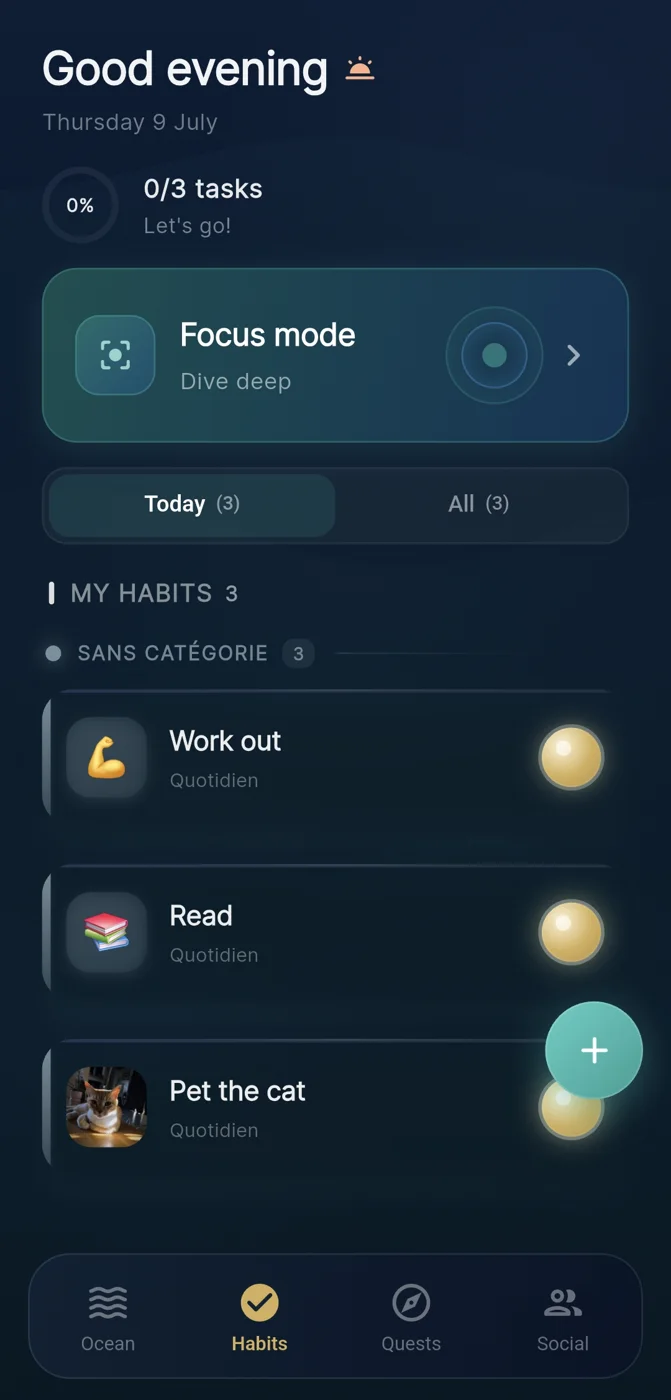
Visual systems can also make repetition feel less abstract. Reef is an IVRYN habit tracker for iOS and Android that represents completed habits as pearls added to an evolving ocean scene. In the context of this article, that mechanic may offer a tangible marker for an action that would otherwise disappear into the day.
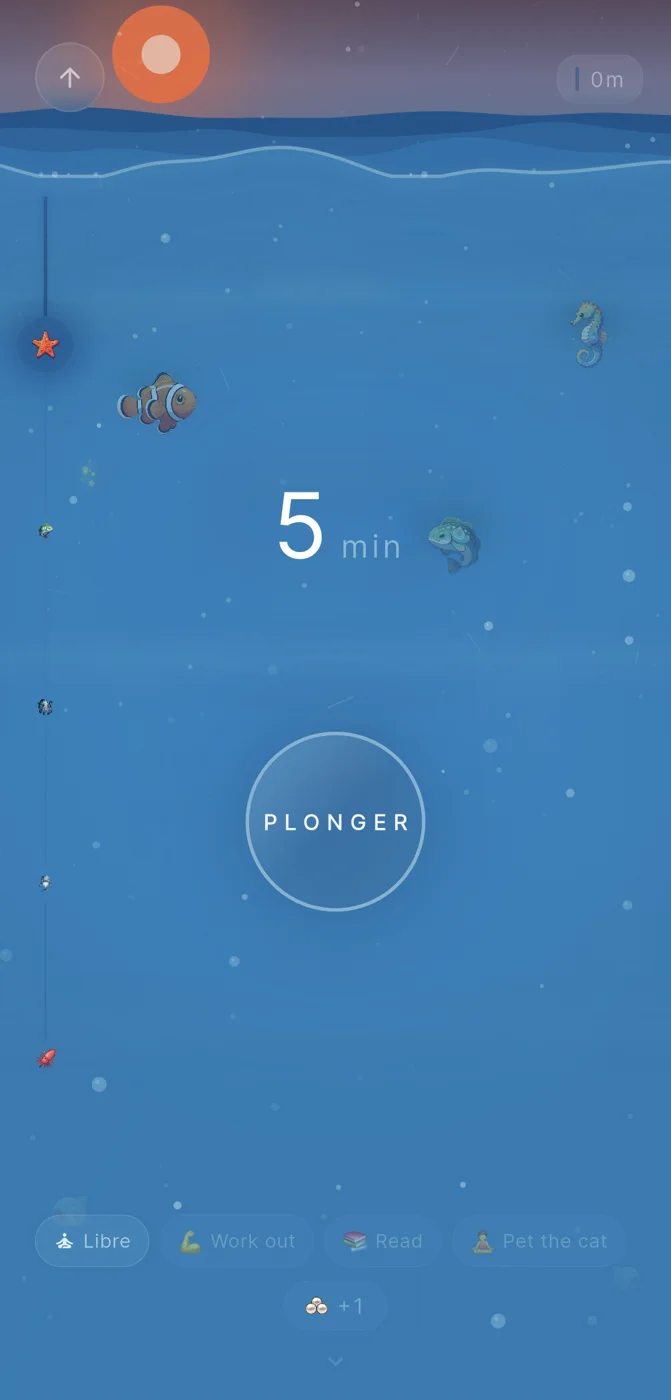
Focus time can be included in the same gentle approach. Reef frames focus sessions as dives and awards pearls for completed sessions, but the reward is still only a record of time you chose to protect. It does not establish that the session was easy, perfectly productive, or beneficial in a health sense.
- Review progress weekly rather than repeatedly checking it throughout the day.
- Look for patterns that help you simplify the routine.
- Let visual rewards acknowledge effort without making them a measure of personal success.
Habit tracker for mental health: plan for missed days
Missed days are normal, especially when routines meet travel, illness, changing work, caregiving, low energy, or unexpected demands. A tracker becomes more useful when it includes a recovery plan before the first lapse occurs. The recovery action should be small and immediate: restart with the minimum version at the next available cue.
Avoid compensating for a missed habit by doubling the task or adding several new rules. That can make a short interruption feel like a failure and turn a supportive practice into a punishment. Instead, ask what prevented completion and whether the habit needs a different cue, a smaller scope, or a temporary pause.
A useful record distinguishes between “I did not do this” and “this plan did not fit today.” The first wording can invite self-criticism; the second creates room for practical revision. A tracker is most aligned with gentle recovery when it helps you return, rather than demanding perfection.
- After a missed day, resume the next planned opportunity.
- Reduce the habit before increasing reminders or pressure.
- Review whether the goal still matches your current capacity.
Optional accountability without unwanted pressure
Some people find it helpful to share a commitment with another person, while others prefer to track privately. Accountability works best when participation is voluntary, expectations are clear, and leaving or reducing contact remains easy. It should not become surveillance or a requirement to disclose personal mental-health information.
Reef includes optional social crews, which can provide a way to share accountability when a person chooses it. That option may suit someone who wants encouragement around a specific routine, but it is not necessary for habit tracking and does not promise a particular result.
Before joining a shared space, decide what kind of support would help. A brief check-in, a shared focus window, or a simple acknowledgment may be enough. If comparison, obligation, or notifications make the routine feel heavier, private tracking may be the better fit.
- Agree on what will be shared before inviting others.
- Share habit completion, not sensitive details, unless you genuinely want to disclose them.
- Leave, mute, or simplify a group arrangement if it adds stress.
Worked example: choosing a gentle first routine
Example: Maya wants a more settled evening but notices that “have a better night routine” is too vague. She chooses one habit: place her phone on charge outside the bedroom at 10:30 p.m. Her minimum version is moving it there; her fuller version is then reading quietly for ten minutes.
For two weeks, Maya tracks only that action and reviews the record once a week. If she misses several nights because she is still working at 10:30, she does not treat the missed marks as evidence that she lacks discipline. She changes the cue to when she first finishes work and keeps the same small action.
If Maya wants accountability, she might invite a friend to exchange a simple evening check-in twice a week. They do not score each other, offer clinical advice, or make completion mandatory. The arrangement remains useful only while it feels supportive.
This example is a planning exercise, not a prediction of an outcome. Its purpose is to show how a modest, observable action, visible record, recovery plan, and optional social support can work together without overstating what a habit tracker can do.
- Choose one observable action.
- Set a low-effort minimum version.
- Decide in advance how you will restart after a missed day.
- Make any social element voluntary and easy to change.
Frequently asked questions
Can a habit tracker improve mental health?
A habit tracker can help organize and make small repeated actions visible, but it cannot guarantee improved mental health, diagnose a condition, or replace professional care.
What habits should I track for mental health?
Track one or two small, observable actions that fit your life, such as a short walk, a wind-down cue, a meal reminder, or a protected focus session. Choose actions rather than broad emotional outcomes.
Should I use social accountability in a habit tracker?
Use social accountability only if it feels supportive and voluntary. Private tracking may be a better choice when sharing progress creates pressure, comparison, or unwanted disclosure.
Sources and further reading
These resources provide the wider reference frame. Product statements on this page are limited to the public information provided by Reef.