 Reef
Reef
What a habit tracker for weight loss can - and cannot - do
A habit tracker for weight loss can help make chosen actions easier to notice and repeat. It is most useful when it tracks small behaviours you can actually do, such as planning a meal, taking a walk, preparing water for tomorrow, or pausing before an evening snack. The tracker is a record and a prompt; it is not a diagnosis, treatment plan, or guarantee of weight change.
Weight can shift for many reasons beyond a checklist, including health conditions, medication, sleep, stress, access to food, and ordinary body variation. For that reason, choose habits based on what is safe and realistic for you rather than treating a streak or a number on a scale as a verdict on your effort. If you have medical concerns or a history of disordered eating, personalised guidance from an appropriately qualified health professional may be important.
The useful question before acting is not “Which app will make me lose weight?” It is “Which repeatable action would make my routine a little more supportive, and how will I respond when I miss it?” That framing keeps the tracker in its proper role: a practical aid for visibility and reflection.
- Use tracking to notice actions, not to promise a body outcome.
- Pick behaviours you can define clearly enough to mark as done.
- Treat missed days as information about the routine, not evidence of failure.
Start with small repeatable habits
Broad intentions such as “eat better” or “exercise more” are difficult to track because they leave the moment of action unclear. A smaller habit has a cue, a simple action, and a version that still counts on a difficult day. For example, “put walking shoes by the door after lunch” may be more workable than committing immediately to a long daily workout.
Keep the first version deliberately modest. Repetition creates a chance to learn whether the habit fits your schedule, energy, budget, and environment. Once it feels familiar, you can adjust the action rather than adding several new demands at once. A tracker can show whether the habit is appearing in your week, but it cannot decide what pace is appropriate for your circumstances.
Avoid turning every food, movement, or body-related decision into a tracked task. Too many entries can make a system feel punitive or exhausting. Select one to three actions that matter most right now, then review whether they remain useful after a couple of weeks.
- Make the action observable: “prepare tomorrow’s lunch” rather than “be healthy.”
- Choose a cue: after breakfast, before work, or when arriving home.
- Create a minimum version: five minutes of movement, one prepared ingredient, or one planned pause.
Habit tracker for weight loss: make progress visible without making it punitive
Visible progress can support follow-through because it makes repetition easier to see. The value is not that a chain of completed days proves success; it is that the record helps you spot patterns. You may notice that a habit is easy on work-from-home days, harder after late meetings, or more likely when supplies are prepared in advance.
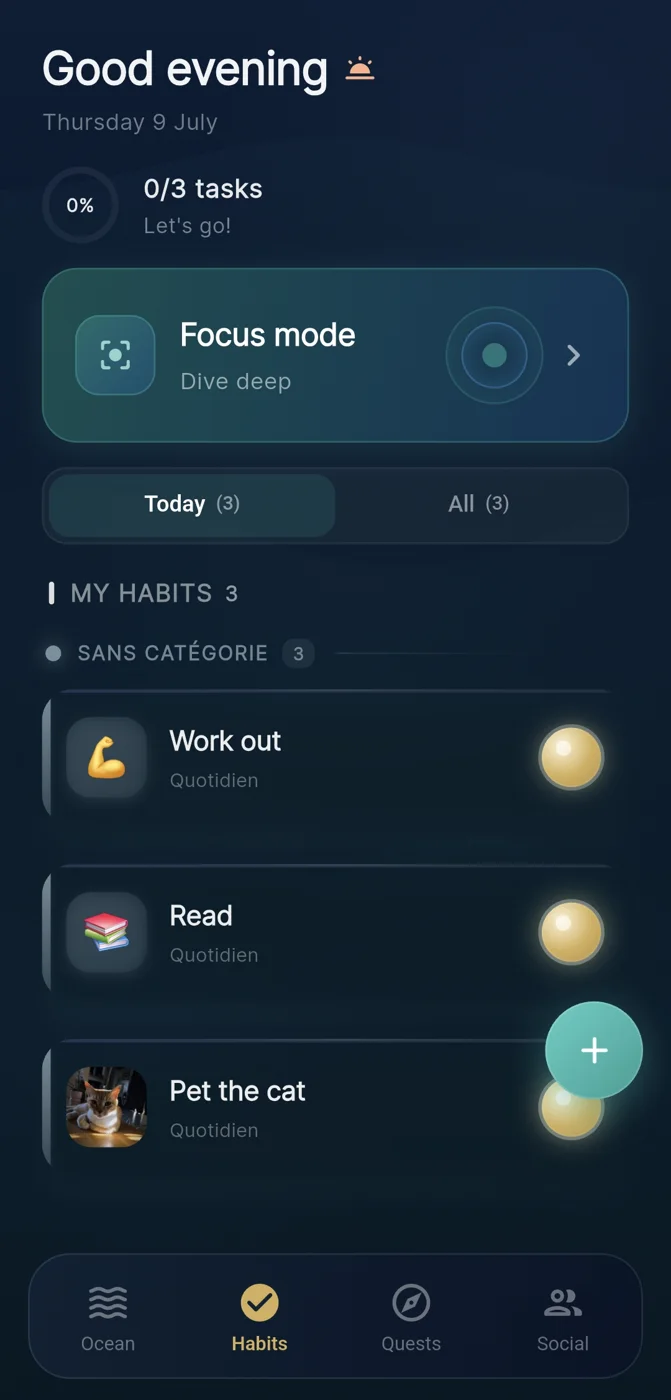
A visual system can also make a routine feel less abstract. Reef is an IVRYN habit tracker for iOS and Android in which completed habits add pearls to a growing ocean scene. In the context of weight-related habits, that is best understood as a visual acknowledgement of completing a chosen action, not as evidence that the action produced a particular physical result.
The same boundary applies to rewards. A satisfying visual cue may make a routine feel more engaging, but it should not pressure you to override hunger, fatigue, injury, or other relevant signals. If a habit repeatedly feels harsh, revise the habit or pause it; do not make the reward the reason to persist with something unsuitable.
- Review the pattern weekly rather than reacting to a single missed mark.
- Ask what made completion easier before trying to increase the target.
- Separate “I completed my planned action” from “I achieved a health outcome.”
Plan for missed days before they happen
A tracker becomes more helpful when it includes recovery, not only completion. Missed days are inevitable: travel, illness, caregiving, changing work hours, and low-energy periods all affect routines. A rigid all-or-nothing rule can turn one interruption into a longer pause, especially when the person feels they have ruined a streak.
Write a restart rule in advance. It might be “restart with the smallest version tomorrow,” “prepare the cue tonight,” or “review what got in the way without compensating.” This makes the next action clear and reduces the temptation to respond with restriction, overexercise, or an unrealistic catch-up plan.
Gentle recovery does not mean ignoring a pattern that needs attention. If you repeatedly skip the same habit, examine the design: perhaps its cue is unreliable, its effort is too high, or it does not solve the problem you hoped it would. Change one part at a time so you can learn what improves the fit.
- Do not require a perfect streak to continue.
- Use a restart action that takes less than five minutes when possible.
- Revise the system after repeated friction instead of escalating self-criticism.
Use focus time and social accountability selectively
Some weight-related habits require attention before the action itself: planning meals, making a shopping list, preparing ingredients, or arranging movement into a crowded week. A protected focus session can be useful for these practical tasks when it prevents them from being continually postponed. The goal is to make space for planning, not to turn every health choice into a productivity test.
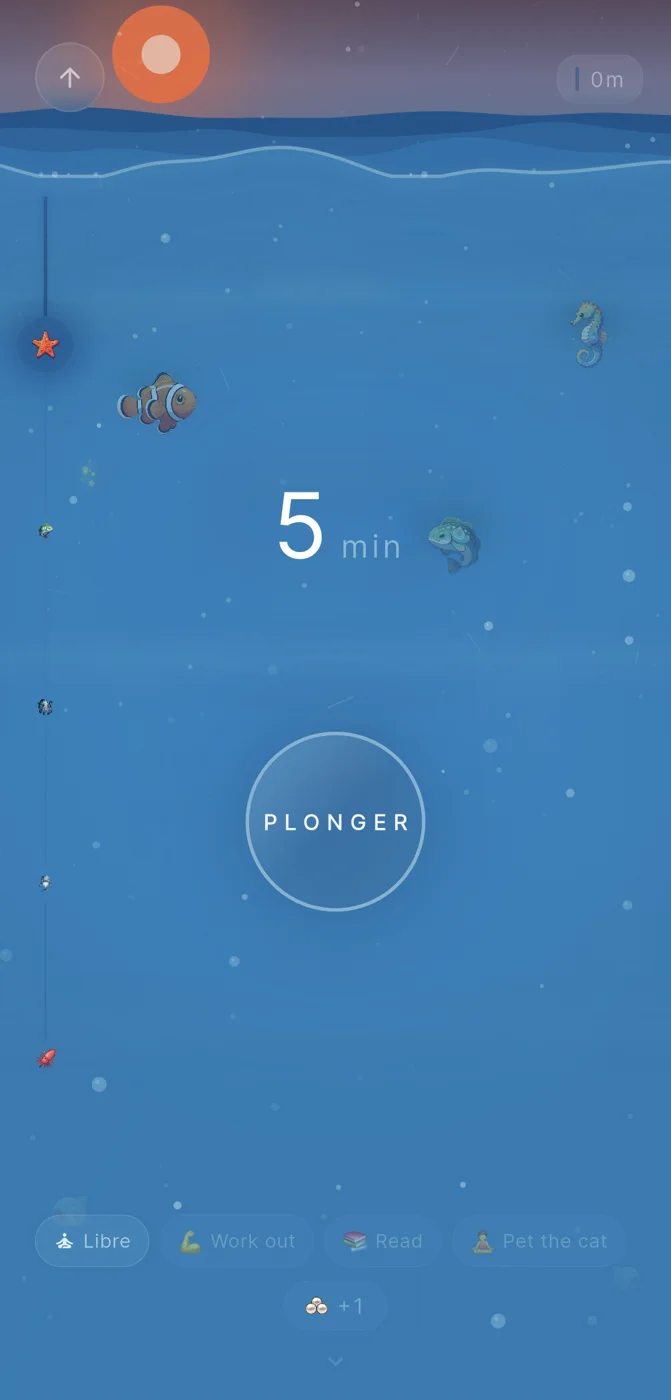
Reef offers focus sessions through a dive-themed experience, with completed session time adding pearls to the same visual environment. That can suit someone who wants a contained period for planning or preparation. It does not establish that focus sessions change weight, eating patterns, or any health outcome.
Accountability can help some people when it is invited and specific. Reef also allows optional social crews, so a person can choose whether to share progress with others. A supportive arrangement might involve reporting that a planned action happened, while avoiding comments on body size, food policing, or pressure to disclose private information. Choosing no social sharing is equally valid.
- Use a focus block for one concrete task, such as writing a grocery list.
- Agree on encouraging, non-judgmental check-ins before joining an accountability group.
- Leave social accountability optional when privacy or pressure outweighs its value.
Example decision aid: choose a tracker plan for the next 14 days
Example only: Jordan wants a visual, gentle system after noticing that busy evenings make meal planning difficult. Jordan does not set a weight target inside the tracker. Instead, the 14-day experiment tracks one action: “write tomorrow’s lunch plan after dinner.” The minimum version is choosing one item and checking available ingredients.
Jordan schedules a 15-minute focus session on Sunday and Wednesday for grocery planning. If the habit is missed, the recovery rule is to write a one-line lunch plan the next morning, without trying to compensate. Jordan keeps social sharing off for the first week, then decides whether a trusted friend would make the routine feel supported rather than observed.
At the end of 14 days, Jordan reviews the record using three questions: Did the cue work? Was the minimum version genuinely easy to restart? Did the tracking feel encouraging or burdensome? A useful next step could be keeping the habit, changing the cue, or reducing the effort. The review does not claim that the tracker caused any weight change; it evaluates whether the routine was workable.
- Define one action and its smallest acceptable version.
- Choose a recovery rule before the first missed day.
- Review fit, friction and emotional impact after two weeks.
- Only add accountability if it feels voluntary and constructive.
Frequently asked questions
Can a habit tracker for weight loss guarantee results?
No. A habit tracker can help you record and notice chosen routines, but it cannot guarantee weight loss, behaviour change, or a health outcome.
What should I track for weight loss?
Track a small, safe, observable action that fits your life, such as meal planning, preparing food, taking a planned walk, or protecting time for practical planning. Avoid choosing measures that make tracking feel punitive or unsafe.
How should I handle missed days in a weight-loss habit tracker?
Use a pre-planned restart rule, such as doing the smallest version of the habit the next day. Treat missed days as a chance to adjust the cue or effort, not as a reason to abandon the routine.
Sources and further reading
These resources provide the wider reference frame. Product statements on this page are limited to the public information provided by Reef.