 Reef
Reef

What a habit tracker for bullet journal is for
A habit tracker for bullet journal users is a way to make repeated actions easier to notice. In a paper journal, that may be a monthly grid, a row of checkboxes, or a small symbol beside each day. Its practical value is not that it makes a habit happen automatically; it gives you a compact record from which you can decide what to repeat, simplify, pause, or adjust.
The most useful tracker answers a limited question: did I do the version of this action that I intended to do today? That boundary matters. A tracker cannot establish why a day was difficult, fix competing demands, or promise a lasting behavioural result. It can, however, reduce reliance on memory and turn a vague intention into a visible pattern.
Choose actions that can be observed without debate. “Read for ten minutes,” “take medication as prescribed,” or “prepare tomorrow’s water bottle” are clearer than “be healthier” or “have a perfect morning.” When the action is specific, a missed mark is information rather than a verdict about your character.
- Use one mark per completed action, not a score for how good the day felt.
- Keep the tracking period short enough to review, such as one week or one month.
- Define the smallest acceptable version of each habit before the week begins.
How to bring bullet-journal logic into a digital tracker
Bullet-journal tracking works because the page is selective: it asks you to choose what is worth seeing. The same principle applies if you use an app alongside a notebook. A digital tracker should complement, rather than duplicate, your journal. For example, your journal can hold reflections and planning, while the tracker records completion at the moment it happens.
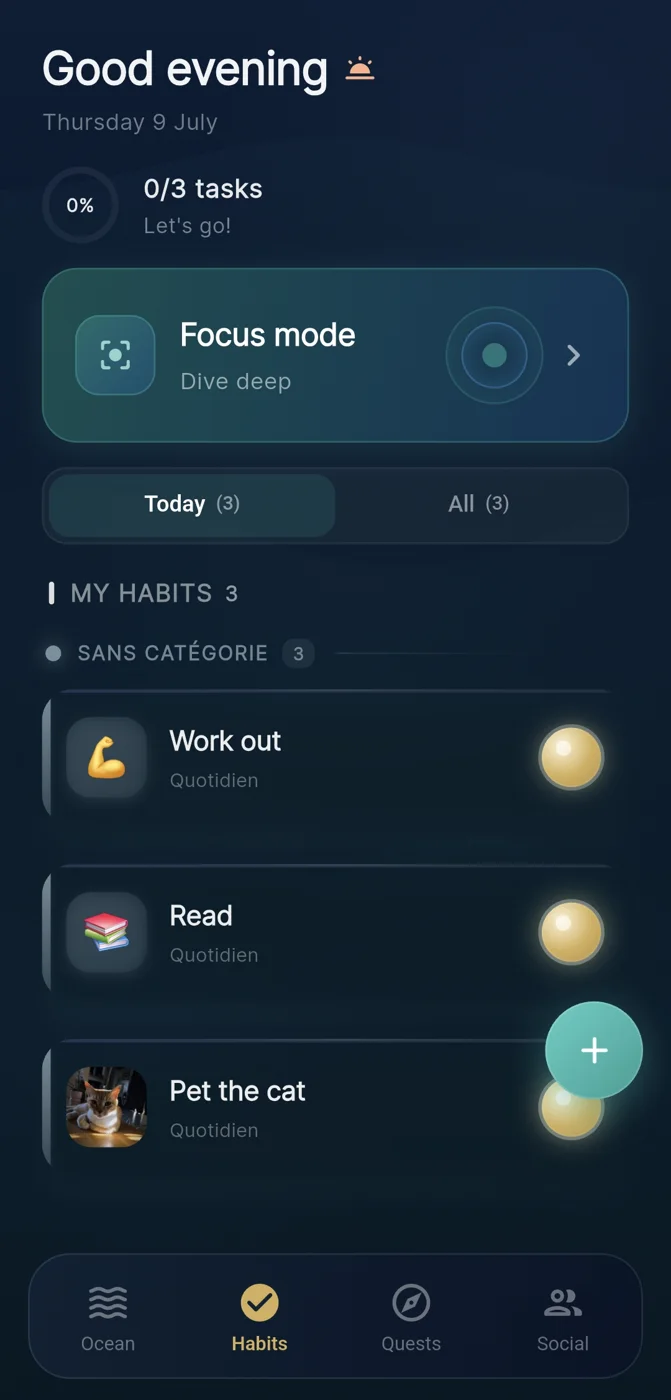
Reef is an IVRYN habit-tracking app for iOS and Android that turns completed habits into pearls added to a living ocean scene. In this context, the ocean is a visual record of completed actions, not proof that a routine has changed you. Its purpose is to make repeated effort easier to see when a paper grid feels too static or is not with you.
Consider whether the visual cue helps you return to the action. A reward can make a completion feel acknowledged, but it should not pressure you to log a task that was not done. Treat the tracker as an honest record. If the reward stops feeling helpful, reduce the number of habits, change the cue, or return to a simpler paper mark.
- Use your notebook for intentions, notes, and weekly reflection.
- Use a mobile tracker for timely completion logging when away from the notebook.
- Avoid tracking the same detail in two places unless each record serves a different purpose.
Designing small repeatable habits and visible progress
A tracking system is easier to sustain when the habit is small enough to fit an ordinary day. Start with the action that preserves continuity, not the most ambitious version. If your goal is to practise a language, the baseline might be one lesson or five minutes. You can always do more, but the tracker should recognise the agreed minimum.
Visible progress is most helpful when it supports a review rather than a streak obsession. A complete row of marks may show that a cue is working; a cluster of gaps may show that the habit does not fit a particular part of the week. Neither pattern alone explains the cause, so use it as a prompt to ask practical questions about timing, friction, and the size of the commitment.
Reef also frames focus sessions as dives and awards pearls for focus time that is completed. That can be relevant when a bullet-journal habit depends on protected attention, such as writing, studying, or planning. The metaphor does not measure concentration quality or guarantee productivity; it offers a bounded way to mark time you chose to set aside.
- Begin with one to three habits rather than filling an entire tracker.
- Review completion by day of week before changing your goal.
- Separate an action habit, such as “open the notebook,” from a time-based focus session when both matter.
Gentle recovery after missed days
Missed days are expected data in any real routine. The useful response is usually to restart with the smallest version at the next reasonable opportunity, rather than to compensate with an oversized task. A blank square can show that the plan encountered life; it does not require you to erase the tracker, abandon the month, or make up every missed completion.
Build recovery into the design before you need it. Decide what counts as a restart action, such as placing the journal on your desk, completing a two-minute version, or scheduling one focus dive. This prevents the common trap of making the return so demanding that another missed day becomes more likely.
When reviewing gaps, look for changeable conditions. Was the habit placed after an unreliable event? Was the action too broad? Did you need a reminder, a prepared environment, or a smaller baseline? The aim is to revise the system with care, not to use the record as evidence that you failed.
- Do not backfill missed days as completed.
- Name one “next-day restart” action for every tracked habit.
- Change only one variable at a time when adjusting a habit.
Optional social accountability and its limits
Some people want another person to know what they intend to practise; others prefer a private tracker. Both approaches can be valid. Social accountability is useful only when the level of sharing feels voluntary, clear, and supportive. It should not turn a personal routine into a performance for a group.
Reef offers optional social crews, so sharing is a choice rather than a requirement of using the habit tracker. If you use a crew, agree on what members can reasonably share: perhaps completion updates, a weekly intention, or a brief encouragement. Do not assume that visibility will make everyone consistent, and do not treat another person’s record as a standard you must match.
Keep health, sensitive personal circumstances, and private obligations within boundaries that feel appropriate to you. A habit tracker is not clinical care, and social features do not substitute for professional support when that is needed. The sensible role of accountability is modest: it can create a moment of connection around an intention, without guaranteeing action or wellbeing outcomes.
- Choose private tracking if sharing would create pressure or risk.
- Agree on a check-in frequency before inviting others.
- Leave space for “not this week” without requiring an explanation.
Example decision aid: choose your starting setup
Example: Maya uses a bullet journal for weekly planning but often forgets to record habits during busy evenings. She wants to read, stretch, and protect a short planning block, but she does not want a system that turns a missed day into a failure. Her starting setup could be a paper weekly spread for reflection, two small daily actions in a mobile tracker, and one scheduled focus session for planning.
For the first two weeks, Maya might define “read” as five minutes and “stretch” as one movement routine. She records the planned focus time as a dive only when she completes the time she set aside. At the end of each week, she checks the pattern: if evening gaps dominate, she may move the cue earlier rather than increasing the target.
This is a decision aid, not a prediction of results. Your setup should be changed if it adds more administration than clarity. The best next step is the smallest system that gives you an honest view of what you intended and what you completed.
- Choose one place for reflection and one place for quick completion records.
- Set a minimum action that remains possible on a difficult day.
- After two weeks, keep, shrink, move, or pause each habit based on the record.
- Add optional accountability only if it supports your own boundaries.
Frequently asked questions
Can a habit tracker for bullet journal use replace a bullet journal?
A habit tracker can complement a bullet journal, but it does not need to replace it. Many people keep planning and reflection on paper while using a phone-based tracker for quick completion records and visual progress.
What should I do after missing several habit-tracker days?
Resume with the smallest defined version of the habit on the next practical day. Review whether timing, friction, or the habit size needs adjustment, and avoid treating missed days as a reason to abandon the whole routine.
Do I need to join a social crew to use Reef?
No. Reef’s social crews are optional. You can track habits privately, or choose voluntary sharing if accountability and encouragement fit your preferences and boundaries.
Sources and further reading
These resources provide the wider reference frame. Product statements on this page are limited to the public information provided by Reef.