 Reef
Reef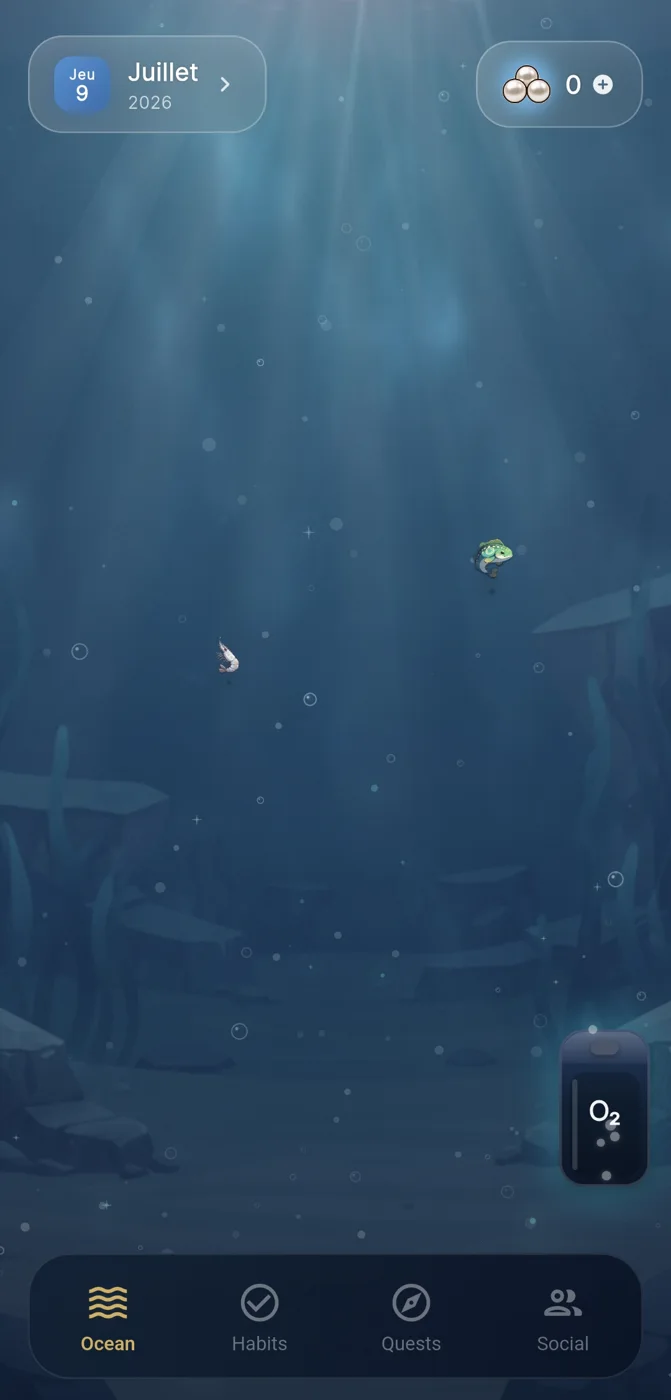
What a habit tracker for self improvement can realistically do
A habit tracker for self improvement is a tool for making repeated actions easier to notice. It can give a person a clear place to record what they intended to do, what they completed, and what still needs attention. That visibility can support reflection, especially when a goal otherwise feels vague or easy to forget.
Its limits matter just as much. A tracker cannot ensure motivation, remove difficult circumstances, or guarantee lasting behaviour change. It is most useful when treated as a practical support for decisions: choose a small action, notice the result, and adjust the next attempt without turning one missed day into a verdict about yourself.
The useful question before choosing a tracker is not simply whether it is motivating. Ask whether its feedback helps you return to an action you genuinely want to repeat. A visually engaging system may make tracking more pleasant, but it should still leave room for rest, changing priorities, and imperfect weeks.
- Use tracking to notice patterns, not to prove personal worth.
- Prefer actions that can be completed clearly and honestly.
- Review your setup when it feels burdensome rather than adding more pressure.
Begin with small repeatable habits
Self-improvement plans often become fragile when they start with too many changes at once. A smaller habit has a lower barrier to restarting: reading a few pages, preparing tomorrow’s water bottle, taking a short walk, or spending several minutes on a defined task. The action should be specific enough that you know what counts as completion.
Small does not mean unimportant. Repetition creates information about what fits into a real day. If an action repeatedly fails because it depends on unusual energy, time, or equipment, that is useful feedback. You can reduce the scope, change the cue, or decide the habit is not a current priority.
Choose one or two habits with a clear connection to a value or responsibility. A long list can turn a tracker into an inventory of unfinished intentions. A short list makes it easier to see the relationship between the action, the circumstance, and the next choice.
- Define the smallest honest version of the action.
- Attach it to a familiar point in the day when possible.
- Set a review point after a week or two instead of assuming the first design is final.
Habit tracker for self improvement: make progress visible
Visible progress can turn a repeated action into a record you can inspect. Rather than relying only on memory, you can see whether a habit is occurring, where interruptions happen, and whether the target is realistic. This is especially helpful for goals that have no obvious finished product at the end of each day.
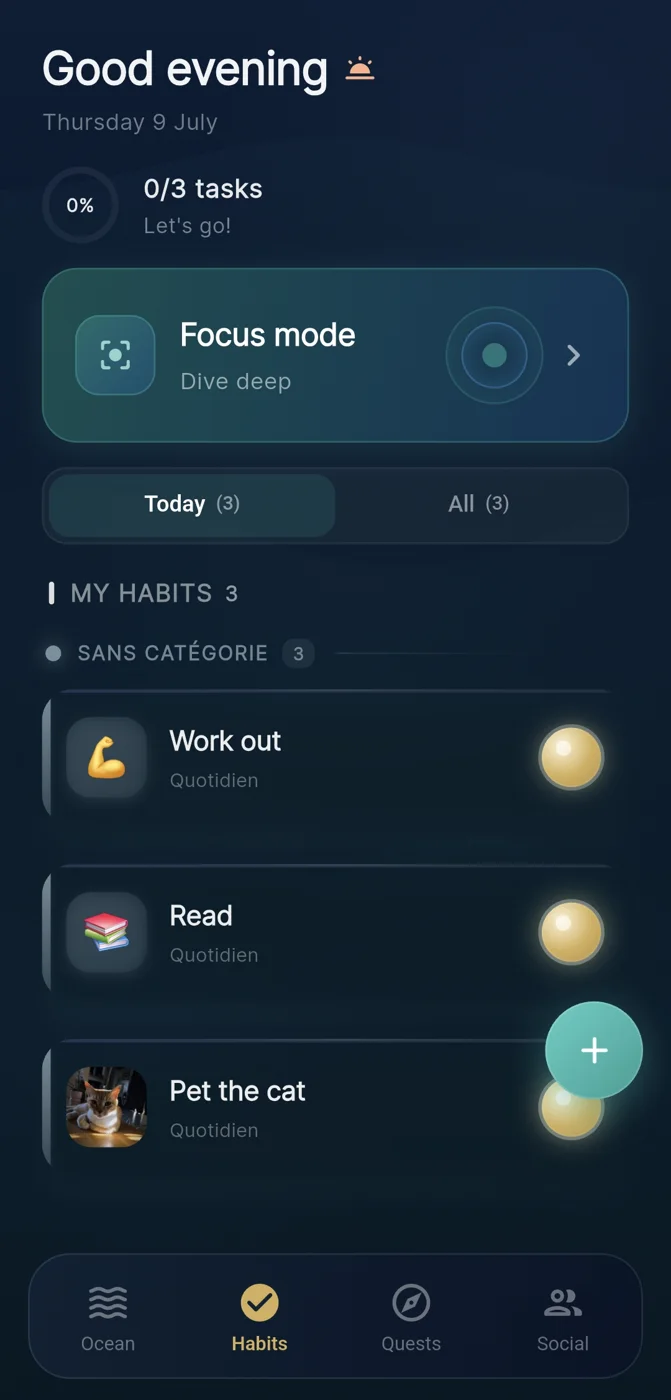
Reef is an IVRYN habit tracker for iOS and Android that uses a living-ocean visual: recording a completed habit adds a pearl that contributes to the scene. In this context, the image is best understood as feedback for an action you chose, not evidence that the action has produced a guaranteed personal outcome.
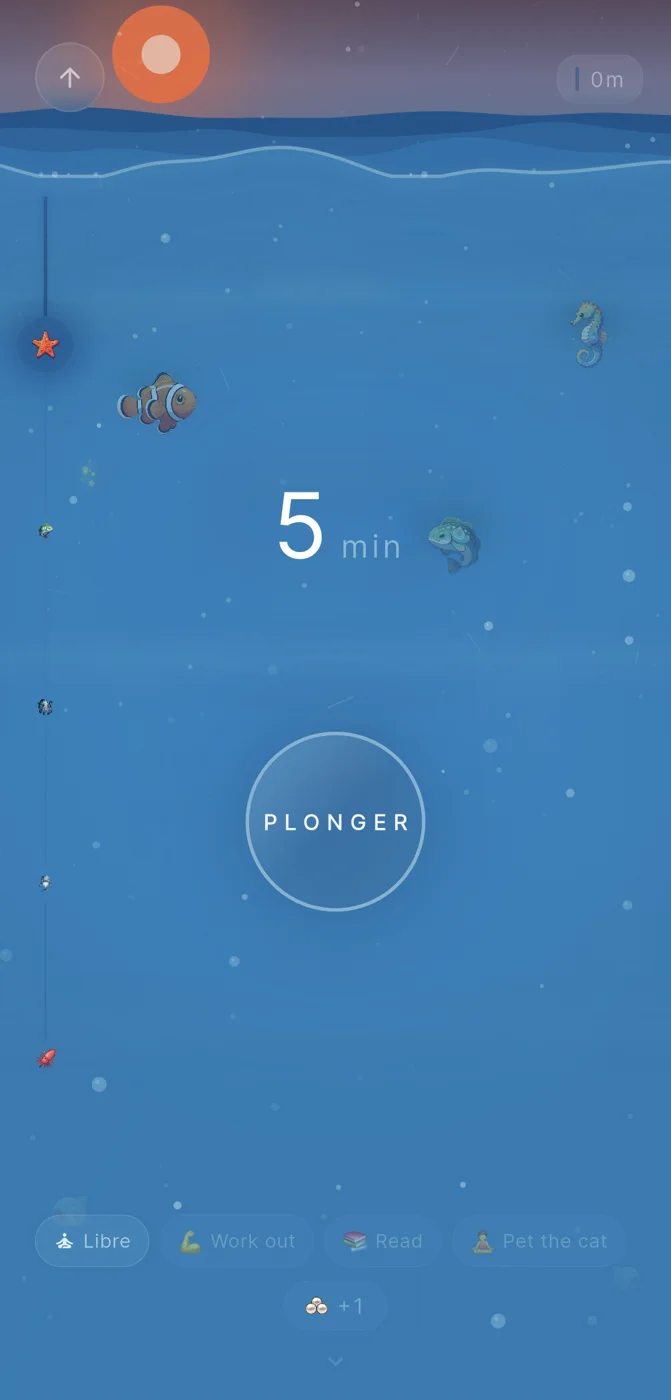
The same principle applies to focus. Reef frames focus sessions as dives and grants pearls for completed focus time. That may give a focused block a clearer beginning and ending, but the meaningful measure remains whether the chosen session was appropriate for the work and your circumstances. More tracked time is not automatically better time.
- Track completion rather than making unsupported claims about the effect of an action.
- Use visual rewards as a cue to return, not a reason to ignore fatigue or competing needs.
- Keep focus sessions sized for the task you actually have.
Recover gently after missed days
A missed day is common information, not proof that the plan has failed. Sometimes it reflects travel, illness, a deadline, caregiving, a changed schedule, or a target that was too ambitious. A tracker becomes more sustainable when it helps you resume rather than encouraging an all-or-nothing response.
Try separating the missed action from the next available action. You do not need to compensate by doubling the task, unless that is genuinely useful and safe for your situation. Instead, identify the smallest next repetition and make that the immediate objective.
Gentle recovery also protects the meaning of the record. If completion rules become loose only to preserve a streak, the tracker stops offering useful information. Honest entries, including gaps, make it easier to revise a habit with care.
- After a miss, ask what changed before deciding what to fix.
- Restart with the smallest version that still counts.
- Avoid using streak preservation as the only measure of progress.
Choose optional social accountability carefully
Social accountability can help some people by making an intention more visible to a trusted group. It can also create pressure, comparison, or unwanted disclosure. The useful version is voluntary, bounded, and aligned with the type of support you actually want.
Reef offers optional social crews, so participation is a choice rather than a requirement for using the habit and focus features. A crew can be used to share accountability when that feels helpful, but it does not promise a particular behavioural or health result.
Before joining or creating a group, agree on simple expectations. Decide what people will share, whether encouragement is welcome, and whether anyone is expected to explain missed days. Accountability works best when it supports autonomy rather than turning ordinary interruptions into public failures.
- Join a crew only if the level of sharing feels comfortable.
- Agree that missed days do not require personal explanations.
- Leave or redesign the arrangement if comparison becomes more prominent than support.
Example decision aid: a two-week trial
Example: Maya wants a calmer way to improve consistency with reading and protected work time. Instead of tracking several lifestyle changes, she chooses two actions for two weeks: read five pages after lunch on weekdays, and complete one 25-minute focus session on a project task three days a week.
She records completion honestly and uses the visual feedback as a small acknowledgement of showing up. In the first week, she misses reading on two days because lunch happens away from home. Rather than treating this as failure, she changes the cue to reading before bed and keeps the target at five pages.
At the end of two weeks, Maya reviews the record. If the actions were often feasible and still matter to her, she can continue. If the focus sessions were routinely interrupted, she can try a shorter block or a different time. If sharing would help, she can consider an optional crew with clear boundaries; if not, solo tracking remains valid.
- Choose no more than two actions for the trial.
- Write a completion rule before you start.
- Review feasibility, friction, and willingness to continue - not only the number of completed days.
- Decide separately whether social accountability adds support or pressure.
Frequently asked questions
Can a habit tracker guarantee self improvement?
No. A habit tracker can help make chosen actions and patterns visible, but it cannot guarantee motivation, behaviour change, health outcomes, or any other personal result.
How should I use a habit tracker after missing several days?
Resume with the smallest honest version of the habit, consider what changed in your circumstances, and adjust the target or cue if needed. Missed days are useful feedback, not a requirement to abandon the plan.
Do I need social features to use Reef for habits?
No. Reef’s social crews are optional. You can track habits and focus sessions on your own, or choose a crew only when shared accountability feels useful and comfortable.
Sources and further reading
These resources provide the wider reference frame. Product statements on this page are limited to the public information provided by Reef.