 Reef
Reef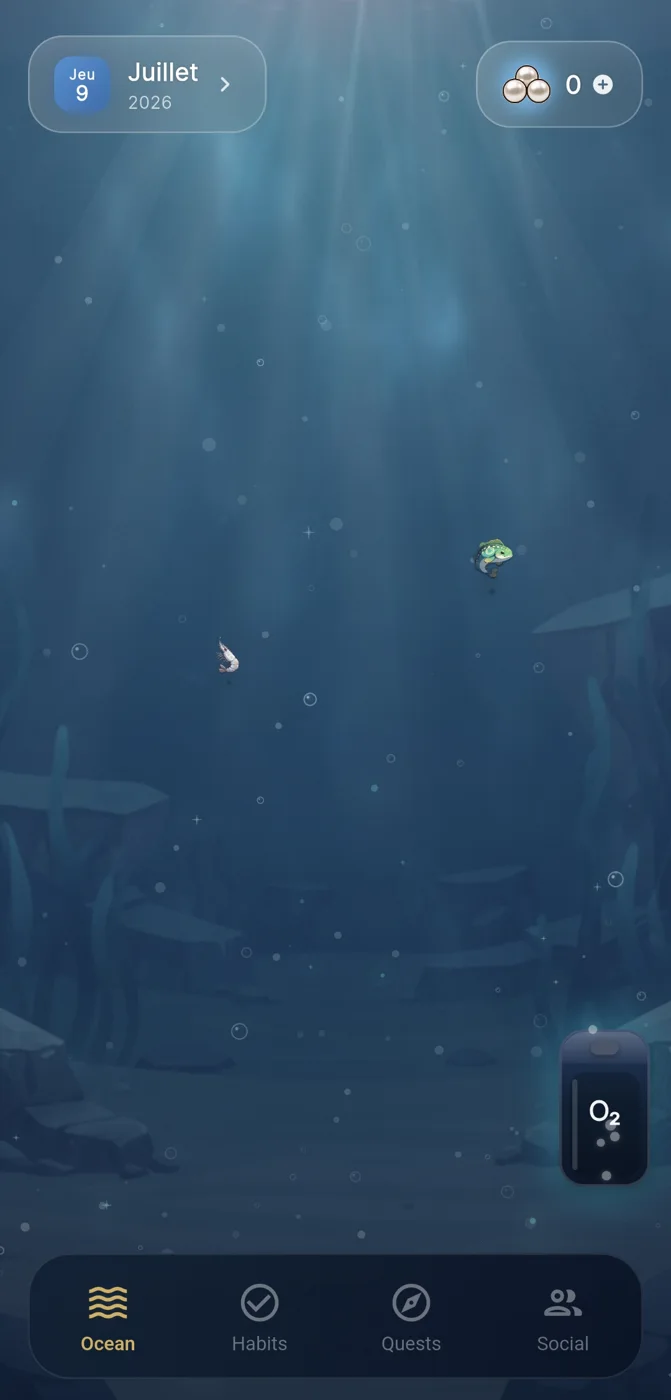
What a habit tracker for language learning can help you notice
A habit tracker for language learning is most useful as a record of repeated practice, not as proof that you will become fluent. It can make a small action visible: reviewing vocabulary, listening to a short dialogue, reading a page, writing a few sentences, or speaking for a planned amount of time. That visibility can help you see whether your intention is becoming a routine.
The important limit is that a checked-off habit measures completion of the action you defined. It does not automatically measure comprehension, pronunciation, confidence, retention, or progress toward a particular proficiency level. Those outcomes depend on the quality of practice, feedback, time, prior knowledge, and many other factors.
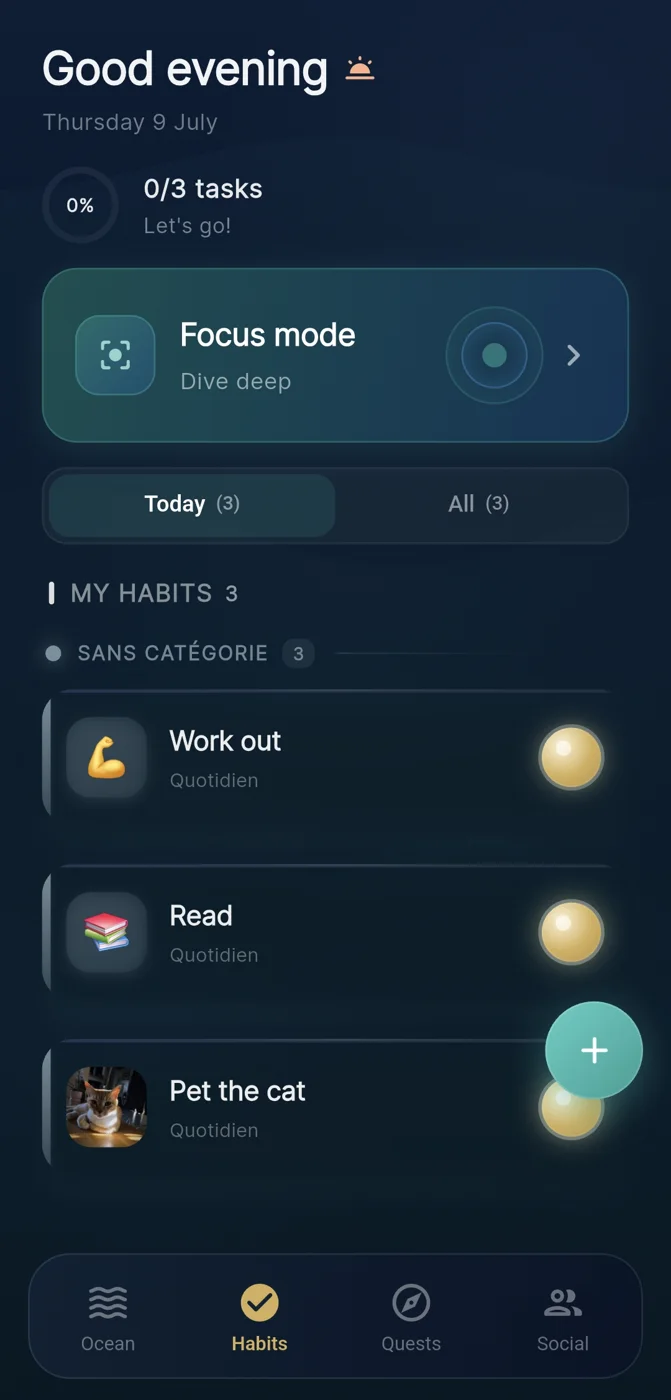
Reef is an IVRYN mobile habit tracker for iOS and Android. Its habit completions add pearls to a growing ocean scene, so the record of language practice can be represented by a visual environment rather than only a streak or a number.
- Use the tracker to answer: “Did I make time for the practice I intended to repeat?”
- Use separate learning activities or periodic self-checks to answer: “What can I now understand or do in this language?”
Choose a small language habit before tracking it
A tracker works best when the habit is concrete enough to complete on an ordinary day. “Learn Spanish” is a goal, but it is too broad to create a clear daily decision. “Review ten saved words after breakfast” or “listen to one beginner dialogue during my walk” is easier to recognize, begin, and mark complete.
Small does not mean unimportant. A modest repeatable action can protect continuity when work, travel, illness, or low energy makes a longer study session unrealistic. You can increase the difficulty later, but beginning with a habit that fits your actual week reduces the temptation to treat a missed ambitious plan as failure.
Define the minimum version carefully. If your habit is “study for 30 minutes,” decide whether five minutes counts as a recovery action or whether it belongs in a separate habit. Clear rules prevent the tracker from becoming a source of negotiation at the end of the day.
- Pick one primary action for the next two weeks.
- Attach it to a reliable cue, such as lunch, a commute, or the end of a workday.
- Set a minimum that remains possible on a busy day.
- Keep a larger optional session for days when you have more time.
Use visible progress without confusing it with language ability
Visual progress can make repetition feel more tangible. A completed action leaves an immediate trace, which may be especially helpful when language learning feels slow because improvement is often easier to notice over weeks or months than after one session. The visual record is a prompt to return, not a verdict on your ability.
Reef frames completed habits as pearls that contribute to an evolving ocean. For language practice, that can turn individual review sessions into a visible history of showing up. It is still important to keep the meaning accurate: pearls represent completed actions in the app, not verified words learned or a guaranteed learning result.
If visual rewards start to pull attention away from the learning itself, simplify the system. Reduce the number of habits, choose a less demanding target, or pair tracking with one meaningful learning check, such as understanding a familiar recording without subtitles or writing a short message using recent vocabulary.
- Treat visual rewards as a reminder of repetition.
- Review your language materials separately for evidence of learning.
- Avoid adding so many tracked actions that logging becomes its own task.
Protect focus time for deeper practice
Some language activities fit naturally into small moments, while others need protected attention. Grammar exercises, conversation preparation, pronunciation practice, and longer reading may benefit from a planned focus block. A tracker can help distinguish these focused sessions from short maintenance habits instead of asking one daily item to carry every kind of learning.
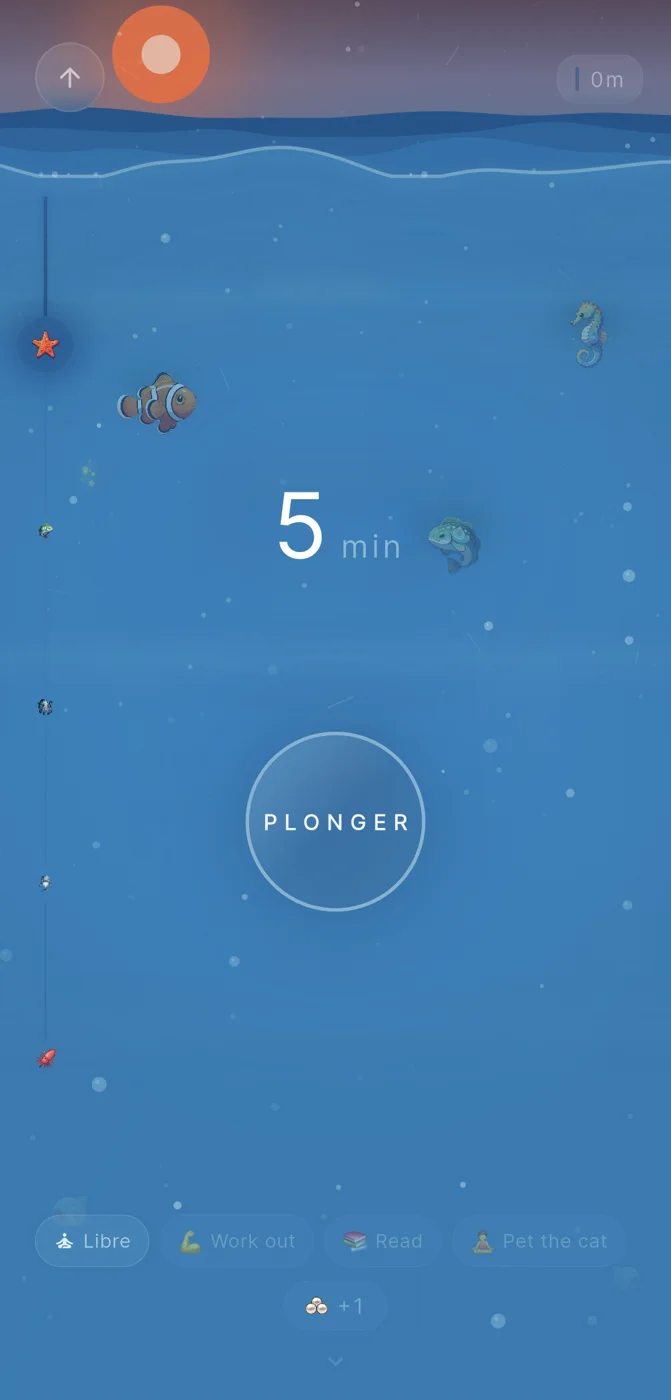
Reef also offers focus sessions using a dive theme, with pearls granted for completed focus time. This can provide a defined container for a language study block: choose a task before beginning, put away competing inputs where possible, and decide what completion means for that session.
The feature does not ensure concentration or make every minute equally effective. A focused timer cannot replace appropriate materials, rest, instruction, or feedback. Its practical role is narrower: it can make an intended period of attention more deliberate and leave a visible record when you finish it.
- Before a focus session, name one task: “complete lesson 4 listening” or “draft five sentences.”
- Choose a duration you can realistically protect.
- Afterward, write one brief note about what you practiced or what to revisit.
Habit tracker for language learning: a worked example
Example: Maya wants to restart Italian after several inconsistent months. Rather than tracking “become conversational,” she creates one weekday habit: review a small set of saved phrases for five minutes after lunch. Twice a week, she schedules a 25-minute focus session for a listening lesson or short writing exercise. The daily habit protects contact with the language; the focus sessions create room for more demanding work.
Maya decides in advance how missed days work. If she misses lunch practice, she may do a two-minute review before bed, but she does not try to make up every missed session by doubling tomorrow’s workload. At the end of each week, she looks at the pattern and asks a practical question: was the cue wrong, was the task too large, or did the week simply contain unusual interruptions?
In Reef, each completed action can add a pearl to the ocean visual. Maya uses that display as a calm record of repeated practice, while her listening notes and occasional writing review remain separate evidence of what she is learning. This approach respects both the usefulness and the limits of tracking.
- Primary habit: five minutes of phrase review, weekdays.
- Focused practice: two 25-minute sessions each week.
- Recovery rule: use a shorter version when possible; resume normally after a miss.
- Weekly review: adjust the habit design, not your self-worth.
Recover gently and use social accountability only if it helps
Missed days are information, not necessarily a reason to abandon the plan. A useful recovery response is to restart with the next available opportunity and inspect the design. Perhaps the habit was tied to an unreliable time, depended on too much preparation, or was too difficult for the current season of life. Changing the setup can be more helpful than adding pressure.
Optional accountability can support some learners, particularly when they want a friend or group to know they are maintaining a practice rhythm. It is not necessary for everyone. Privacy preferences, differing schedules, comparison, and social pressure can all make shared tracking less helpful than a personal system.
Reef includes optional social crews, allowing people to share accountability if they choose. Participation is voluntary, and the product does not promise a behavioural or health result. If you use a crew, agree on a low-pressure purpose such as encouragement, a weekly check-in, or sharing study prompts rather than treating the group as a measure of commitment.
- Ask whether sharing would make practice feel supported or monitored.
- Set boundaries around what you share and how often.
- Leave the social layer off if solo tracking better protects your attention.
- Return to the smallest viable habit after a break.
Frequently asked questions
Can a habit tracker make me fluent in a language?
No. A habit tracker can help you record and revisit planned practice, but it cannot guarantee fluency, retention, confidence, or any other learning outcome. Language development also depends on the materials, practice quality, feedback, time, and your individual circumstances.
What is a good daily language-learning habit to track?
A good daily habit is specific, small, and realistic for ordinary days, such as reviewing a short vocabulary set, listening to one dialogue, or writing two sentences. Choose an action you can clearly recognize as complete and keep longer study sessions as separate planned activities.
Should I use social accountability for language learning?
Use social accountability only if it makes practice feel encouraging and sustainable. A voluntary group or friend check-in can add support for some people, while others focus better without comparison or pressure. Reef’s social crews are optional and do not guarantee a behavioural or health outcome.
Sources and further reading
These resources provide the wider reference frame. Product statements on this page are limited to the public information provided by Reef.