 Reef
Reef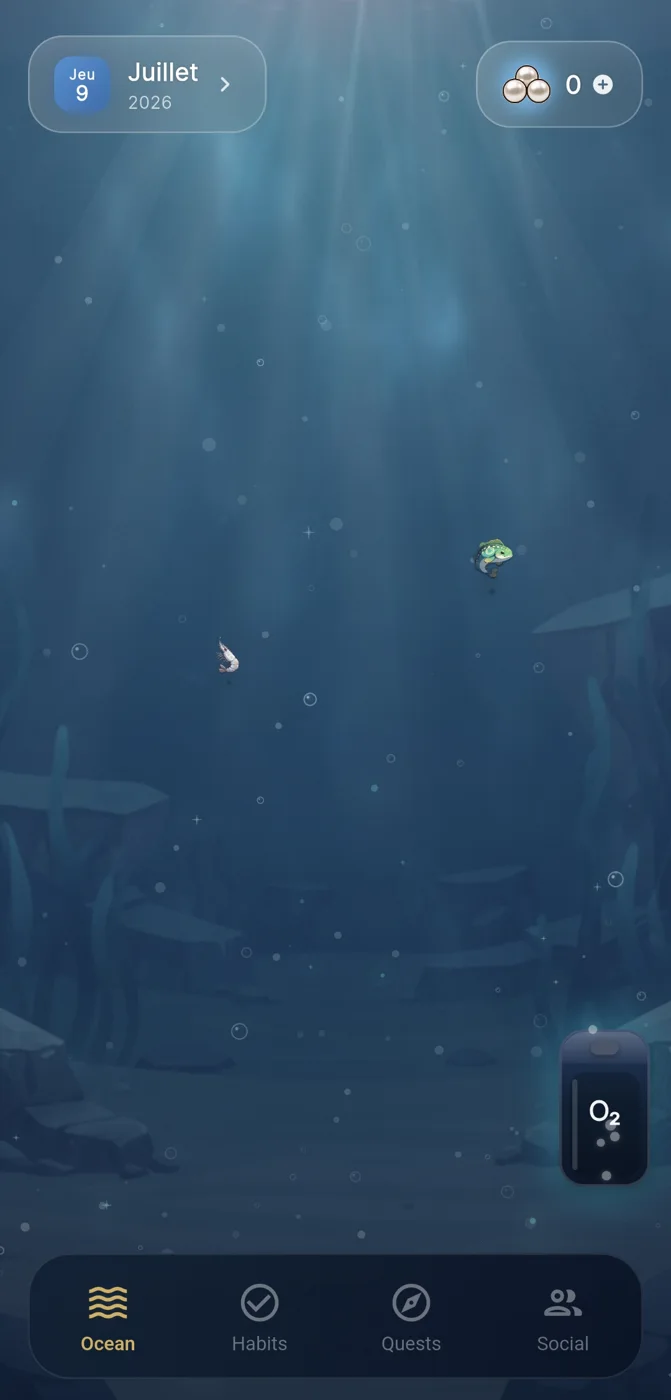
What a habit tracker for whole year is for
A habit tracker for whole year is a record of repeated actions across enough time to notice patterns beyond a productive week. Its purpose is not to prove discipline or predict an outcome. It is to make a chosen practice easier to see, review and restart.
Before choosing one, decide what you want the record to answer. You may want to know whether a short walk appears on busy weeks, whether you protected planned focus blocks, or whether a habit is too ambitious for your current routine. A tracker becomes more useful when the question is concrete.
A year-long view should leave room for ordinary disruption: travel, illness, deadlines, holidays and changing priorities. Empty days are information about context, not a verdict about the person using the tracker.
- Choose one or two actions that are small enough to repeat.
- Define what counts as completion before the first day.
- Plan how you will resume after a missed day.
How to choose a habit tracker for whole year
Look for a format that helps you see continuity without making a broken streak feel final. A calendar, timeline or other visual history can reveal clusters of completion, gaps and restarts. The best format is the one you will still be willing to open after an imperfect week.
Consider the friction of recording. If checking off a habit takes more attention than the habit itself, the system may become another obligation. Clear completion rules and a modest number of tracked actions reduce that risk.
Also separate tracking from judgment. A yearly tool can support reflection, but it cannot guarantee that someone will establish a habit, improve wellbeing or change behaviour. Those outcomes depend on many circumstances beyond a record of completed actions.
- Can you view patterns over months as well as days?
- Can you record a restart without erasing earlier progress?
- Does the design make the next small action feel clearer?
- Can accountability remain optional?
Build around small repeatable habits
Year-long tracking works best when the action has a low minimum version. Instead of tracking a broad aspiration such as “be healthier,” choose a repeatable action such as preparing one vegetable, reading one page or taking a five-minute walk. The minimum is not a trick; it is a realistic definition that can survive variable days.
A small habit can grow when conditions allow, but the tracked commitment should remain understandable. If “exercise” sometimes means a two-minute stretch and sometimes an hour-long class, add a note if that distinction matters rather than turning the completion mark into a measure of worth.
Review the habit after several weeks. If it is almost never completed, reduce its scope or attach it to a more reliable cue. If it is automatic, you can keep tracking it for visibility or replace it with a new practice. Either choice is valid.
- Make the cue specific: after coffee, before lunch or when closing a laptop.
- Set a minimum that still counts on a difficult day.
- Keep optional extras separate from the baseline habit.
Use visible progress without turning it into pressure
Visual progress can make repeated effort feel more tangible. Rather than relying only on a number, some trackers use a changing visual scene to show that individual completions contribute to something accumulating over time. This can make a long horizon feel less abstract.
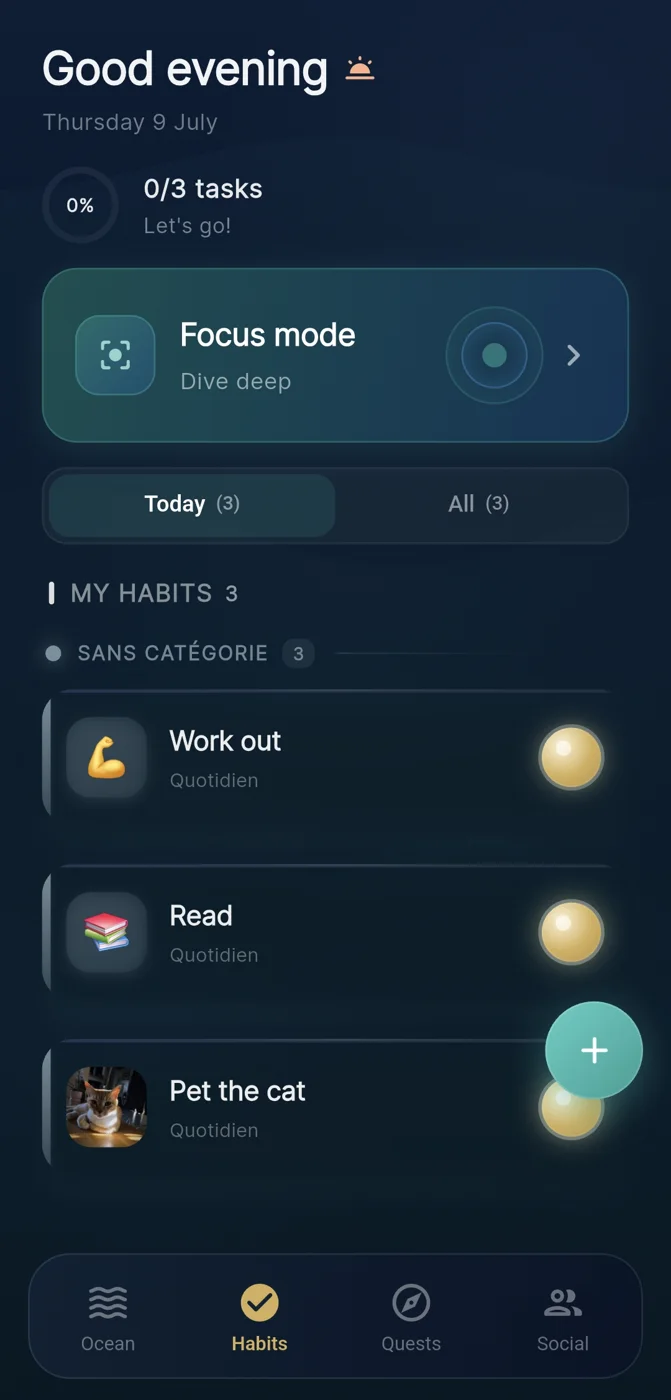
Reef is an IVRYN habit-tracking app for iOS and Android. In its product context, checking off a habit releases a pearl that adds to a living ocean visual, giving completed actions a visible contribution without treating the display as proof of a behaviour or health result.
The value of a visual system depends on how you interpret it. Use it as a prompt to notice effort and return to your plan, not as a score that must rise every day. If the imagery starts to create pressure, simplify the number of habits or take a planned tracking break.
- Review the visual record weekly, not compulsively.
- Notice completed actions alongside missed ones.
- Ask what made completion easier before changing the goal.
Protect focus time with a bounded plan
A yearly habit plan can include focus sessions when they serve a specific priority: studying, writing, administration or a creative project. Define the session in advance by task, duration and stopping point. A short completed block is often more useful than an idealized plan that never starts.
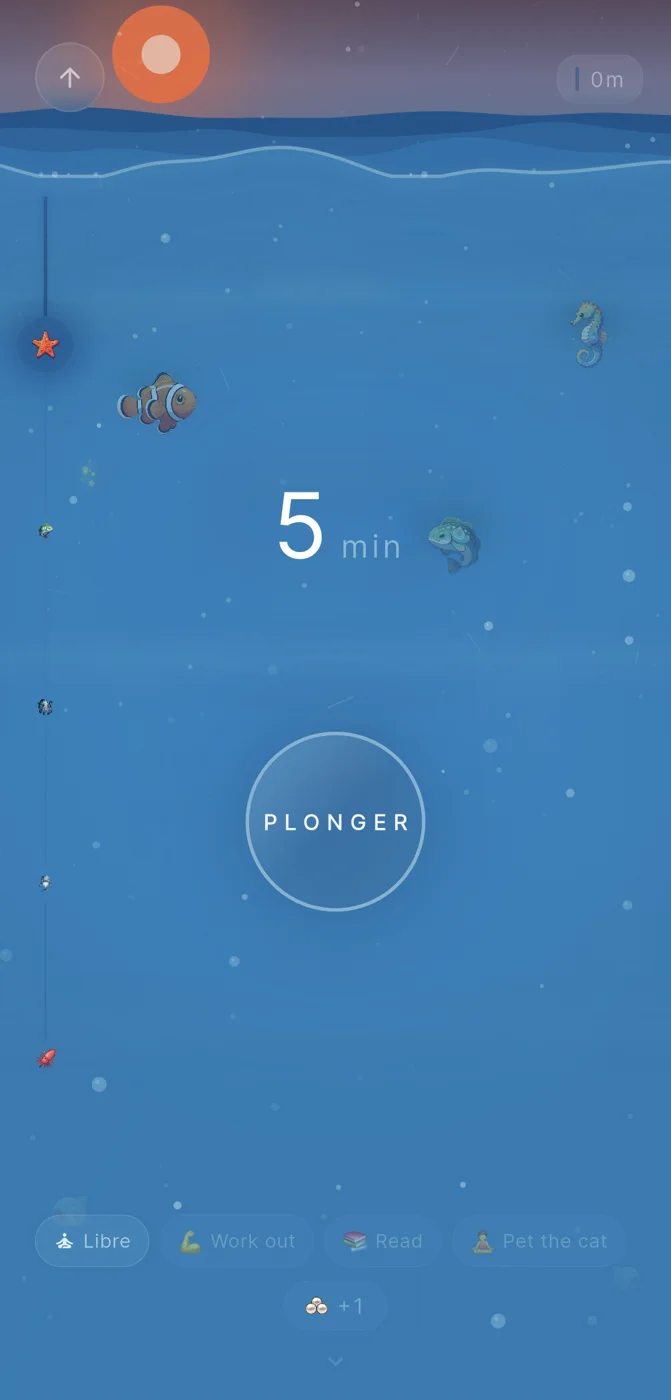
Reef frames focus sessions as dives and awards pearls for finished focus time. This is a product mechanic for making protected time visible; it does not establish that a dive metaphor or a reward will improve concentration for every person.
Treat focus tracking as feedback about schedule design. If sessions repeatedly fail at the same time of day, move them, shorten them or reduce competing commitments where possible. The record can help you see the mismatch, while the decision about what to change remains yours.
- Write the first task before the session begins.
- Choose a duration you can complete today.
- End with a one-line note about the next starting point.
Recover gently and choose social accountability deliberately
Missed days are expected in a whole-year tracker. A gentle recovery rule prevents a lapse from becoming an abandonment: resume with the smallest version of the habit at the next available opportunity. Avoid adding extra work merely to compensate, because catching up can make restarting harder.
Social accountability can be useful when it adds encouragement, clarity or a shared rhythm. It can also create unwanted comparison or pressure. Decide whether another person should see your progress, what they are invited to do and when you may opt out.
Reef offers optional social crews. Joining one is a choice, and the feature does not promise a particular behavioural or health effect. A crew is most appropriate when its expectations are explicit and leaving or reducing participation feels easy.
- Use a restart rule: “Next opportunity, complete the two-minute version.”
- Ask a crew to support the process, not police a streak.
- Review social settings when your circumstances change.
Example decision aid: a realistic first month
Example: Maya wants a year-long tracker for reading, daily movement and protected writing time. She chooses minimum actions of one page, five minutes of walking and a 20-minute writing session twice per week. Her aim is to create a record she can return to, not to maintain an unbroken streak.
She sets a weekly review for Sunday. If reading is missed during a work trip, she resumes with one page on the next evening instead of attempting to make up the missed pages. If writing sessions repeatedly collide with meetings, she moves one session to Saturday rather than concluding that the goal has failed.
After four weeks, Maya asks three questions: Which action happened with the least friction? Which missed days had a shared cause? Does optional sharing with a friend feel supportive? Her answers guide a small adjustment for the next month. Repeating this review across the year keeps the tracker responsive to real life.
- Start with no more than three tracked commitments.
- Use a weekly review and a monthly adjustment.
- Keep evidence of effort, but avoid treating it as evidence of guaranteed change.
Frequently asked questions
Can a habit tracker for whole year guarantee that I will form a habit?
No. A year-long tracker can make repeated actions and patterns easier to review, but it cannot guarantee behaviour change, health outcomes or a lasting habit.
What should I do after missing several days in a year-long habit tracker?
Resume with the smallest meaningful version of the habit at the next available opportunity, then review whether the habit, cue or schedule needs to be adjusted.
Do I need to share my progress with other people?
No. Social accountability is optional. Share progress only when expectations are clear and the arrangement feels supportive rather than pressuring.
Sources and further reading
These resources provide the wider reference frame. Product statements on this page are limited to the public information provided by Reef.