 Reef
Reef

What a habit tracker Apple Notes setup can do
A habit tracker Apple Notes setup is a simple way to record whether you completed a repeated action. You might make a note for a week or month, list a few habits, and add a checkmark, date, or symbol after each completion. Its appeal is practical: it is close to other notes you may already use, easy to edit, and flexible enough for routines that do not need a rigid template.
For someone beginning with small repeatable habits, that flexibility can be useful. A note can hold the habit itself, a short reminder of why it matters to you, and a modest definition of completion. For example, “walk for five minutes” is easier to record consistently than a vague instruction to “exercise more.”
Apple Notes is mainly a writing and organisation space, however, not a dedicated system for turning repeat actions into an ongoing visual experience. It can show a record, but it does not inherently decide which habits matter, repair an overly ambitious plan, or make a missed day emotionally easier. Those limits are worth considering before investing energy in a detailed tracker.
- Choose only a few habits to start.
- Define the smallest version that counts as done.
- Use a daily or weekly review time rather than checking constantly.
The limits to consider before acting
The central limit is that recording an action is not the same as changing behaviour. A checklist can make a pattern more visible, but it cannot guarantee motivation, consistency, health improvement, or any other outcome. If a habit disappears from a note for several days, the most helpful response may be to review whether the action was realistic, relevant, or clearly defined - not to treat the gap as proof of failure.
A second limit is friction. A free-form note gives you control, but that can also mean repeatedly rebuilding tables, copying dates, scrolling through old entries, or deciding how to interpret partial completion. If the tracking process takes more attention than the habit itself, the tool may be asking too much of the routine it is meant to support.
Finally, a note is often private and passive by design. That can be ideal for personal routines, but it may not suit someone who wants a more immediate sense of progress, a protected focus ritual, or selected accountability with other people. Those needs do not make Apple Notes inadequate; they simply point to a different kind of tool.
- A missed day is data, not a verdict.
- Avoid tracking more detail than you will actually review.
- Keep any shared accountability voluntary and proportionate.
Habit tracker Apple Notes: a simple decision aid
Example: imagine Maya wants to drink water, read for ten minutes, and complete one short work task on weekdays. She likes writing reflections and wants a low-pressure record. Apple Notes may fit if she is content to add a daily checkmark and review the note each Sunday. It gives her a lightweight place to notice what happened without adding another app.
Now imagine Maya repeatedly forgets to open the note, finds a long chain of blank boxes discouraging, and wants her completed actions to accumulate into something she can see at a glance. In that case, she may prefer a tracker designed around visible progress. The question is not which approach is universally better; it is which amount of structure helps her return after an imperfect week.
Use this decision aid before choosing a system. If most answers fall in the first group, begin with Notes. If most fall in the second, consider a dedicated tracker. You can also start with Notes for two weeks and reassess based on the effort required to maintain it.
- Choose Apple Notes if you want a private, flexible log and are happy to maintain the format yourself.
- Consider a dedicated tracker if visual accumulation and a repeatable completion flow matter to you.
- Choose optional social features only if shared check-ins feel supportive, not obligatory.
When a visual tracker may be more useful
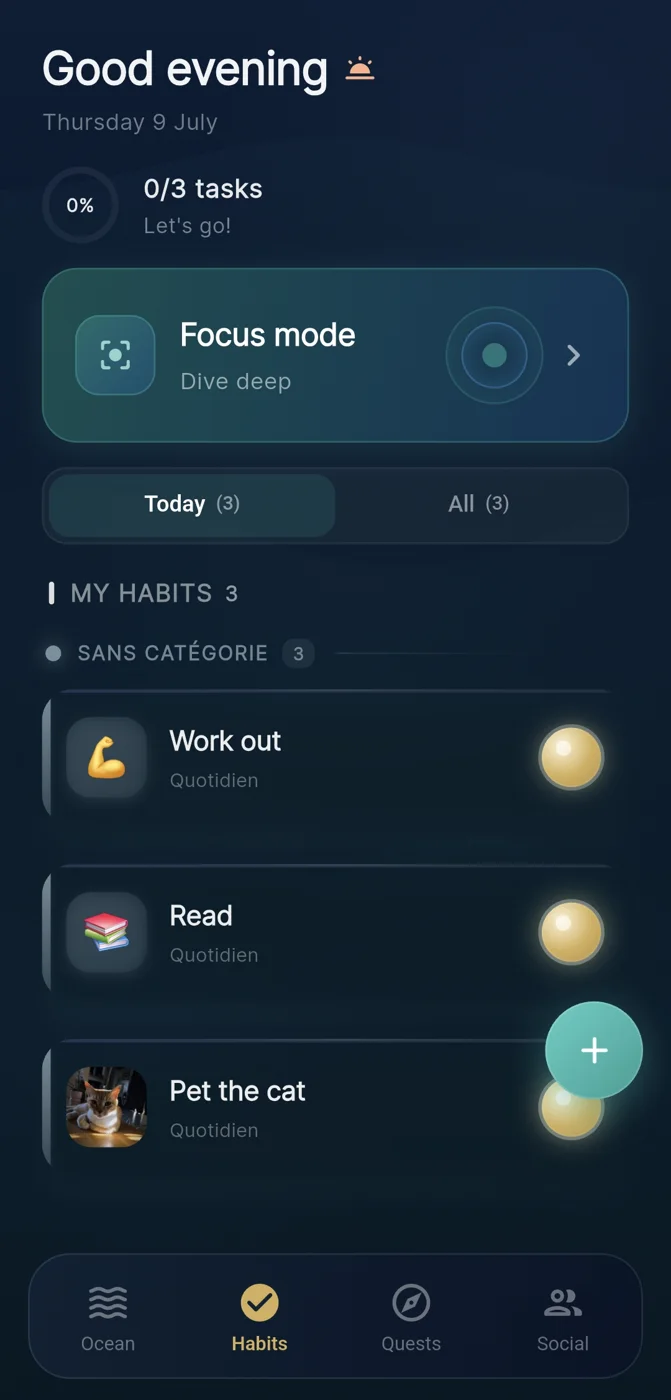
A visual tracker can make the relationship between one completed action and a longer pattern easier to notice. Reef is an IVRYN habit tracker for iOS and Android that represents completed habits as pearls added to a growing ocean scene. In this context, the value is not a promise that visuals will create consistency; it is a concrete way to make incremental completion more noticeable.
Reef also frames focus time through a dive-style session: finishing planned focus time earns pearls. This may suit someone whose challenge is protecting a defined block of attention rather than merely remembering a checkbox. It still requires the person to choose a realistic duration and return after interruptions, because the product mechanics do not remove the ordinary limits of time, energy, or competing commitments.
Its social crews are optional. That matters because accountability is personal: some people benefit from choosing to share a commitment, while others prefer a solo practice. A crew can be a setting for encouragement or mutual visibility, but it should not be treated as a guarantee of follow-through or wellbeing.
- Use visual progress to notice repetition, not to judge your worth.
- Set focus sessions at a duration you can realistically protect.
- Treat social accountability as an invitation, not a requirement.
Build a gentle recovery plan for missed days
A tracker is most useful when it helps you resume, not when it turns absence into a backlog. Before you begin, decide what you will do after one missed day and after several missed days. A small recovery rule could be: “Tomorrow I do the two-minute version.” This turns the next action into a clear restart rather than a demand to compensate for everything missed.
Visible progress works best alongside a definition of success that allows variation. Reading one page may count on a busy day; a longer session may happen when there is more room. The habit remains recognisable, while the effort can adapt. This is especially important when the alternative is abandoning a routine because the ideal version was unavailable.
The public Reef methodology and gamified habit-tracker guide provide product context for this kind of design discussion, but they are not a first-party study establishing outcomes. Use them as a description of the product’s approach, then make your own choice based on the friction, visibility, focus support, and optional accountability you want.
- Write a restart rule before you need it.
- Return to the smallest credible version of the habit.
- Review the system monthly and remove habits that no longer serve your priorities.
A practical starting plan
Start with one habit for seven days. Write it in Apple Notes or set it in a dedicated tracker, but make the completion rule specific enough that you can answer it plainly: did I do it, partially do it, or not do it? Avoid changing the rule every day, since that makes the record hard to interpret.
At the end of the week, ask three questions: Did I remember to record it? Did the tracking method make completion easier to notice? Did a missed day make it easier or harder to restart? Your answers are more useful than a perfect-looking streak because they reveal whether the system fits your actual routine.
If you choose Reef, its ocean and pearl mechanics can give completed habit actions and finished focus sessions a shared visual home. If you stay with Apple Notes, keep the setup deliberately small. In either case, the goal is a workable record of repeated actions and a gentler path back after interruptions - not a promise of transformation.
- Week 1: track one habit.
- Week 2: add one focus block only if the first habit feels manageable.
- Week 3: decide whether optional accountability would genuinely help.
Frequently asked questions
Can Apple Notes be used as a habit tracker?
Yes. Apple Notes can work as a simple habit tracker by using checklists, dates, tables, or repeated templates. Its main limits are manual upkeep and fewer built-in visual or focus-oriented tracking mechanics.
Is a visual habit tracker better than Apple Notes?
Neither is universally better. A visual habit tracker may help someone who wants completed actions to accumulate visibly, while Apple Notes may suit someone who prefers a private, flexible written record.
Does optional social accountability guarantee habit change?
No. Optional social accountability can provide a chosen way to share commitments, but it cannot guarantee consistency, behaviour change, or health outcomes.
Sources and further reading
These resources provide the wider reference frame. Product statements on this page are limited to the public information provided by Reef.