 Reef
Reef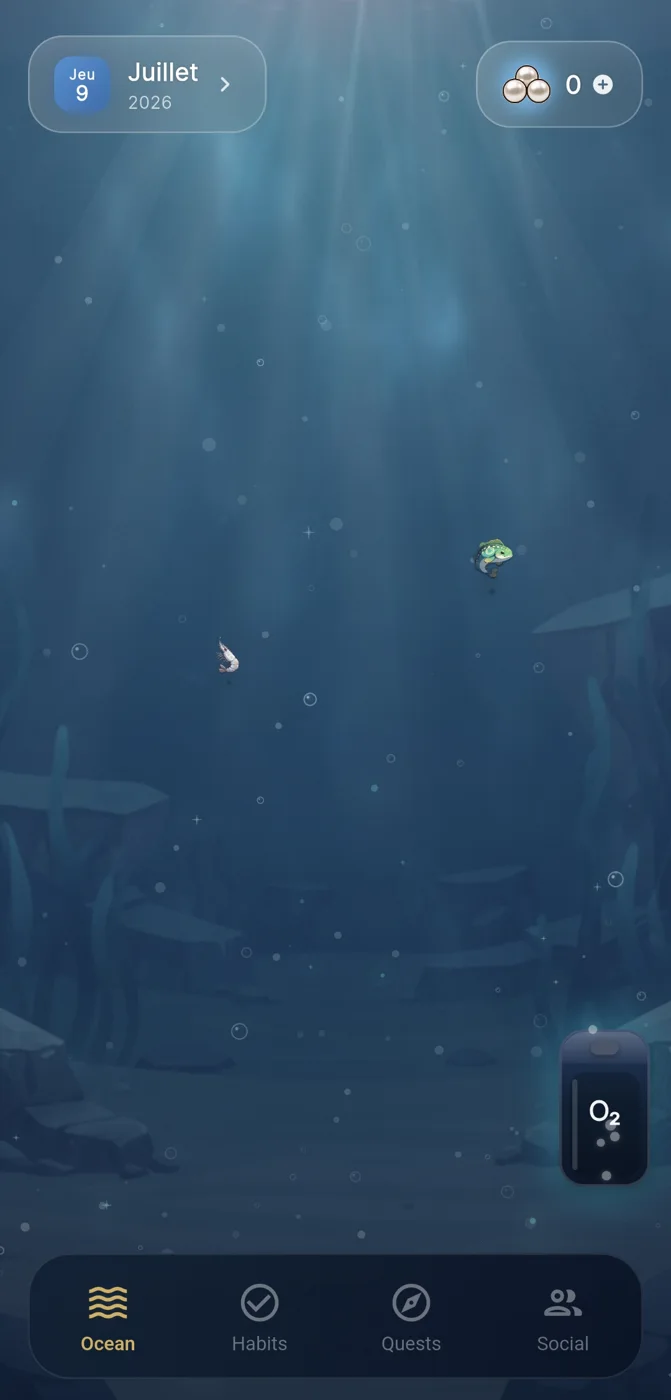
What a habit tracker format actually is
A habit tracker format is the structure you use to record whether a repeated action happened. It covers the medium, such as paper, a spreadsheet or a phone app, and the layout, such as a monthly grid, a daily list or a calendar with marks. The format decides what you see each day, how quickly you can log, and how a missed day looks to you later.
People searching for a habit tracker format usually want to know which structure will keep them logging without turning the tracker itself into a chore. That is the right question. The format does not create the habit. It only makes the habit visible, which is useful precisely because unseen repetition is easy to abandon.
This article walks through the common formats, the limits that apply to all of them, and a short checklist for picking one. It draws on Reef's published habit design methodology and its guide to gamified habit tracker apps, and it stays inside what those public documents say.
The main habit tracker formats and what they show
Most formats fall into four families. A paper grid lists habits down one side and days across the top, and you fill a box when you complete the action. A calendar format places one mark per day for a single habit, which makes long runs very easy to see. A spreadsheet is a grid with the advantage of counts and simple formulas. An app format usually combines a daily checklist with some kind of visual reward or history view.
Each family emphasises something different. Paper rewards the physical act of marking and keeps the tracker in view if it sits on a desk. Calendars make continuity obvious, which can motivate but can also make one gap feel heavier than it is. Spreadsheets suit people who like totals and percentages. Apps add reminders and visuals, and a gamified app turns each completion into a small visible event rather than a plain tick.
No family is better in general. The useful comparison is between what each one makes visible and what you personally need to see in order to repeat a small action tomorrow.
- Paper grid: fast to mark, no notifications, easy to lose or forget.
- Calendar: strong continuity signal, one habit per page works best.
- Spreadsheet: flexible counts, weaker daily prompt.
- App: reminders and visual progress, depends on opening the phone.
Limits that apply to every format
The first limit is that a tracker records, it does not cause. Any format can show a clean row of completions, and that row still does not guarantee the behaviour will stick or that a health or mood goal will follow. Reef's own methodology page is explicit that its mechanics make repetition visible without promising a behaviour or health outcome, and that honesty should apply to paper and spreadsheets too.
The second limit is the missed day. Formats that highlight unbroken runs make a single gap look like failure, and many people stop logging after the first gap rather than face the broken line. A format that supports gentle recovery, where resuming is as easy and as visually normal as continuing, tends to be kinder to real schedules.
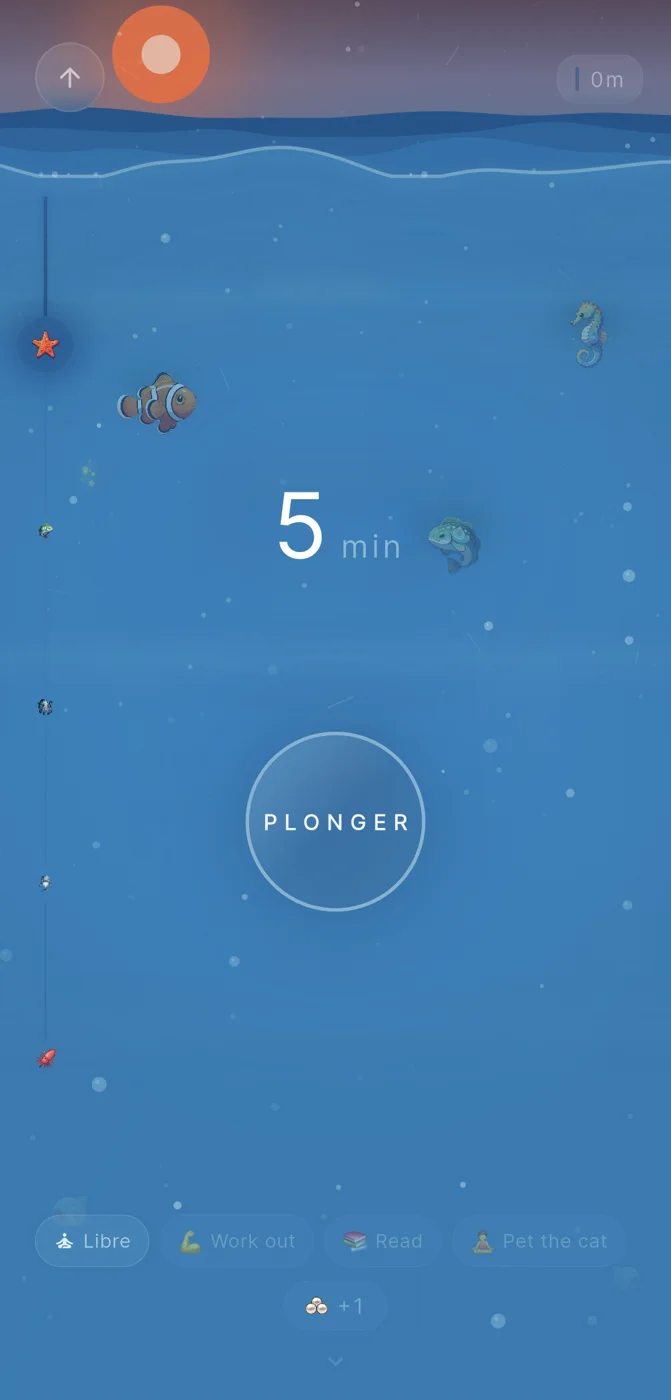
The third limit is granularity. A format built for daily yes or no answers struggles with habits measured in minutes, such as focused work. Some apps handle this with a separate session timer. Reef, for instance, treats focus as a timed dive and rewards completed focus time with the same pearls that habit completions release, so the two kinds of action feed one visual history instead of two separate logs.
The fourth limit is scope. Tracking twenty habits at once in any format produces a wall of empty boxes. Formats work best when the habit list is short and each habit is small enough to repeat on an ordinary day.
A checklist for choosing your habit tracker format
Before committing to a format, answer the questions below honestly. The goal is a tracker you will still be using in a month, not the most complete one on day one.
If most of your answers point toward speed and physical presence, start with paper. If they point toward reminders, visual feedback and the option of sharing progress, an app is a reasonable fit. If they point toward numbers and analysis, a spreadsheet will serve, provided you accept a weaker daily prompt.
- How many habits will I track at first? Three or fewer favours any format; more favours a grid.
- Where will I be when I need to log? At a desk suggests paper; on the move suggests a phone.
- Do I need a prompt, or will I remember on my own?
- How do I want a missed day to look? Choose a format that lets you resume without visual punishment.
- Do any habits involve time rather than a tick? If so, check the format can hold durations.
- Do I want anyone else to see my progress, and can I switch that off? Shared accountability should remain a choice.
Example: picking a format for two small habits
This is a hypothetical example, not a reported result. Imagine someone who wants to stretch for five minutes each morning and read for fifteen minutes most evenings. They work from home, keep their phone nearby, and have abandoned two previous trackers after missing a weekend.
Applying the checklist: the habit count is small, so any format works. They log at home, so paper and phone are both practical. They remember mornings but forget evenings, so a reminder helps the reading habit. Their history with missed weekends points strongly toward a format where a gap does not visually dominate. The reading habit is time based, which a plain tick handles poorly.
A reasonable choice is an app that offers reminders, treats a resumed habit the same as a continued one, and can hold a timed session for the reading. If they prefer not to use a phone in the morning, a hybrid works too: a paper mark for the stretch, an app session for the reading. The point of the example is that the format follows the habits and the person's failure pattern, not the other way round.
Where Reef sits among habit tracker formats
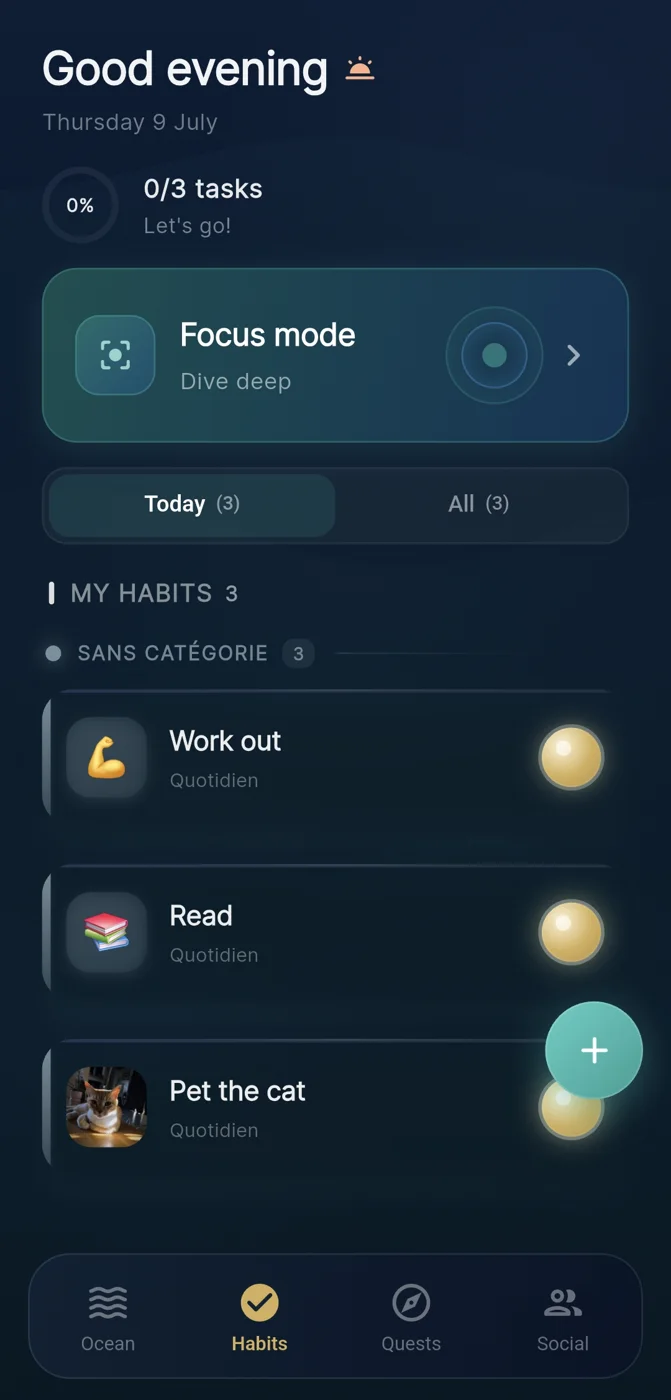
Reef is an IVRYN mobile habit tracker for iOS and Android, so it belongs to the app family described above. Its format is visual: when you complete a habit, a pearl is released into a living ocean that grows as repetitions accumulate, and timed focus sessions add pearls in the same way. Social crews exist for people who want shared accountability, and they are optional rather than required.
That public context bounds the advice here. Reef's methodology describes four principles, small repeatable habits, visible progress, gentle recovery after missed days and optional social accountability, and the format is designed around them. It does not claim that the ocean metaphor changes behaviour on its own, and this article makes no such claim either. No first-party study is cited, and no comparison testing of other tools was carried out for this piece.
Whichever format you choose, the practical test is the same. Can you log in a few seconds, does the view encourage you to come back after a gap, and does it hold the kinds of actions you actually repeat? A format that passes those three tests is good enough to start with, and starting is the part that matters.
Frequently asked questions
Which habit tracker format is best for beginners?
There is no universally best format. Beginners usually do well with the simplest option they will actually see every day: a paper grid for one to three habits, or a phone app if they need reminders. The key is choosing a format where a missed day does not look like failure, because that is when most people stop logging.
Can a habit tracker format help with focus time as well as daily habits?
Only if the format can record durations rather than just a daily tick. Paper and calendar formats handle this poorly. Some apps include a session timer; Reef, for example, treats focus sessions as timed dives and rewards completed time with the same pearls used for habit completions, so both appear in one visual history.
Does using a habit tracker guarantee the habit will stick?
No. A tracker in any format records what happened and makes repetition visible, which can support consistency, but it does not guarantee a behaviour or health outcome. Reef's published methodology states this limit explicitly, and the same caution applies to paper grids, calendars and spreadsheets.
Sources and further reading
These resources provide the wider reference frame. Product statements on this page are limited to the public information provided by Reef.