 Reef
Reef

What habit tracker ideas are really for
Most people searching for habit tracker ideas are not short of ambition. They are short of a way to make a repeated action feel real on an ordinary Tuesday. A tracker does one narrow job well: it records that you did the thing, and it shows you that record later. Everything else, from motivation to the result you hope for, still depends on the action itself and on circumstances the tracker cannot see.
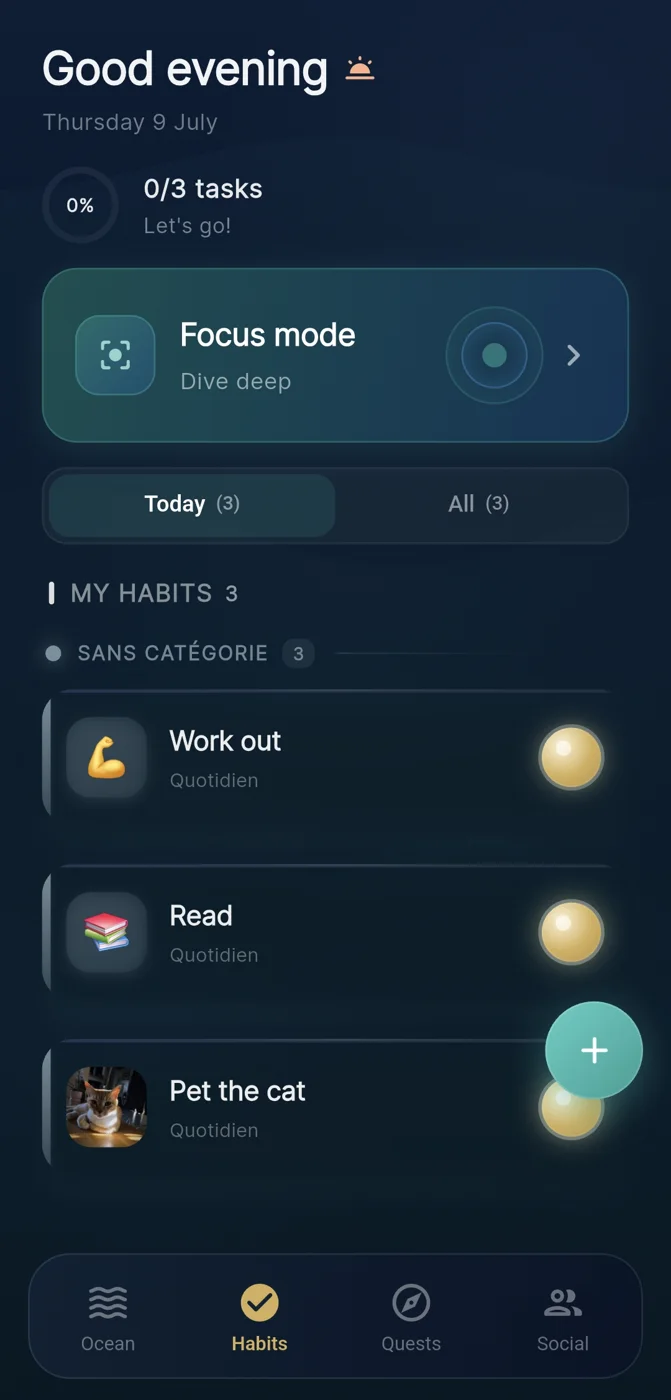
That framing matters before you act on any idea below. Reef, an IVRYN habit tracker for iPhone and Android phones, describes its own approach in those terms: the mechanics make repetition visible, but they do not promise that a behaviour or a health outcome will follow. The public methodology page at reeftogether.com makes the same distinction between design choices and claims of effect. The ideas here follow that boundary. They are about what to track, how to look at the record, and what to do when the record has gaps.
A useful test for any idea is whether it still works on a bad week. If a tracking scheme only functions when you are rested and organised, it is really a reward for already being on track. The four principles that run through this article, small repeatable habits, visible progress, gentle recovery and optional accountability, are each chosen because they survive a bad week.
Habit tracker ideas built around small repeatable actions
The first decision is the size of the unit you record. A habit that takes two minutes is easier to repeat than one that takes an hour, and a tracker is only as honest as the entries you are willing to make. If the unit is too large, you will skip logging on partial days, and the record will look worse than your actual effort. Choose units you can complete on your worst realistic day, not your best.
Phrase each habit as a visible action rather than a state. Drink a glass of water after waking is checkable; be more hydrated is not. Read two pages, walk to the end of the street, write one sentence, put the phone in another room before bed. These sound trivial, and that is the point. The tracker proves to you that the action happened, and the action can grow later once repetition is established.
Keep the list short. Three to five habits is plenty for a first month. Every extra line on the list is another entry you can fail to make, and a long list of unchecked boxes is discouraging in a way that has nothing to do with your real progress.
- Write each habit as something a stranger could confirm you did
- Set the unit at the size you can manage on a tired day
- Start with three to five habits and add more only once logging feels automatic
- Attach each habit to a moment that already exists, such as after coffee or before locking the door
Making progress visible without turning it into a scoreboard
Visibility is where tracker design varies most. Paper grids, streak counters, calendars with coloured squares and animated scenes all do the same underlying job, but they feel different. A long streak number is motivating until it breaks, and then the same number becomes a reason to stop. A cumulative picture that only ever grows is gentler, because a missed day leaves a gap rather than wiping a total.
Reef uses the cumulative approach. Each completed habit adds a pearl to an ocean scene that fills in over time, and focus sessions use a diving metaphor that pays out pearls for time actually spent concentrating. The gamified habit tracker guide at reeftogether.com explains the reasoning: the reward marks that something was done, rather than ranking you against yourself or others. Whether an animated scene or a paper calendar suits you is a matter of taste, but the design choice to accumulate rather than reset is worth copying in any system.
Whatever you use, look at the record on a fixed rhythm rather than constantly. A weekly glance tells you about patterns, such as habits that always fail on Thursdays. A glance every hour tells you nothing new and makes the tracker itself a distraction.
- Prefer totals that grow over streaks that reset
- Review the record once a week, not continuously
- Notice which days and which habits fail together, since that usually points to a schedule problem rather than a willpower problem
Gentle recovery after missed days
Every tracker eventually shows a gap. What you do in the next twenty-four hours decides whether the gap stays a gap or becomes the end of the habit. The common failure is treating a missed day as a verdict and then skipping the tracker altogether so you do not have to look at it. A good habit tracker idea plans for this in advance, so the response is already decided when the gap appears.
The simplest rule is to log the next instance as normal and say nothing to yourself about the missed one. Do not add a punishment habit, do not double up the next day, and do not reset anything. If the gap repeats, shrink the unit rather than abandoning the habit. A reading habit that keeps failing at ten pages may hold at one page.
It also helps to keep a tracker that does not visually punish absence. If your current system shows a broken chain in red, consider one that simply shows an empty square or an unchanged picture. Reef describes its approach as accumulation without penalties, which is one example of the gentler design, though the same effect can be had with a plain calendar and a pencil.
Optional social accountability ideas
Sharing a tracker with someone else works for some people and backfires for others. For those who find it useful, the mechanism is simple: another person will see whether the entry was made, so the cost of skipping rises slightly. For those it harms, the same visibility turns a private experiment into a performance, and the fear of a bad week stops the logging entirely.
Treat accountability as a setting you can turn on, not a requirement. Reef keeps its crews optional for this reason, and a group of two or three people who have each chosen a small habit is enough. If you join or build a group, agree on the rules in advance: what counts as done, whether anyone comments on gaps, and whether the group is for encouragement or just for witnessing.
A quieter alternative is a single check-in partner rather than a group. One short message a week, listing what was logged, keeps the benefit of being seen without the noise of a feed.
- Decide before starting whether anyone will see your record
- Agree with partners that gaps are logged and not discussed unless you raise them
- Leave any group that makes you log less honestly
Example: choosing three habits for one week
This is a hypothetical example, not a reported case. Suppose someone wants to sleep earlier, move more and reduce evening phone use, and plans to start on a Monday. The tempting version is three large habits: in bed by ten, a thirty-minute run, no phone after eight. Each is likely to fail on at least two days of the first week, and the tracker will show three ragged lines.
The small version is: phone charger moved to the kitchen before brushing teeth, a ten-minute walk after lunch, and lights off at any time before eleven. Each takes under a minute to decide and is checkable. The person logs these daily, reviews the week on Sunday, and sees that the walk failed on both days with afternoon meetings. The fix is to move the walk to the morning for those days, not to conclude that walking does not work.
If the person uses an app like Reef, each of those three completions adds a pearl to the scene, and a missed walk leaves the scene as it was rather than undoing it. If they use paper, the same logic applies with ticks and blanks. The tool is less important than the unit size, the fixed review time and the pre-agreed response to a gap.
- Pick three habits and write each as a checkable action
- Set a review time and keep it to a few minutes
- Decide now what you will do after the first missed day
- After one week, shrink any habit that failed twice rather than removing it
Limits to keep in mind before acting
A tracker records effort, not results. Logging a walk every day shows that you walked, and nothing more. If you are tracking habits for a health reason, the tracker does not replace advice from a qualified person, and no habit app, Reef included, claims to deliver a health or behaviour outcome. Treat the record as information about your routine and let the results be measured separately, if they need measuring at all.
Trackers can also become the habit. If you spend more time arranging the list than doing the actions, the system has drifted. The remedy is the same as for any gap: shrink the list, review less often and return attention to the small action. The ideas above are bounded by what a tracker can honestly do, which is to make repetition visible and to make returning after a gap feel ordinary.
Frequently asked questions
How many habits should a beginner put in a habit tracker?
Three to five is a sensible starting point. Each extra line is another entry you can skip, and a long list of unchecked boxes is discouraging regardless of real effort. Add more only once logging the first few feels automatic.
Is a streak counter a good idea for habit tracking?
Streaks motivate until they break, and then the same number often becomes a reason to stop. A total that only grows, such as a filled calendar or an accumulating picture, leaves a missed day as a gap rather than a reset and is gentler to return to.
What should I do when I miss a day in my habit tracker?
Log the next instance as normal and do not add a punishment or a double effort. If the same habit keeps failing, make the unit smaller rather than abandoning it. Decide this response before starting so the first gap does not become a verdict.
Sources and further reading
These resources provide the wider reference frame. Product statements on this page are limited to the public information provided by Reef.