 Reef
Reef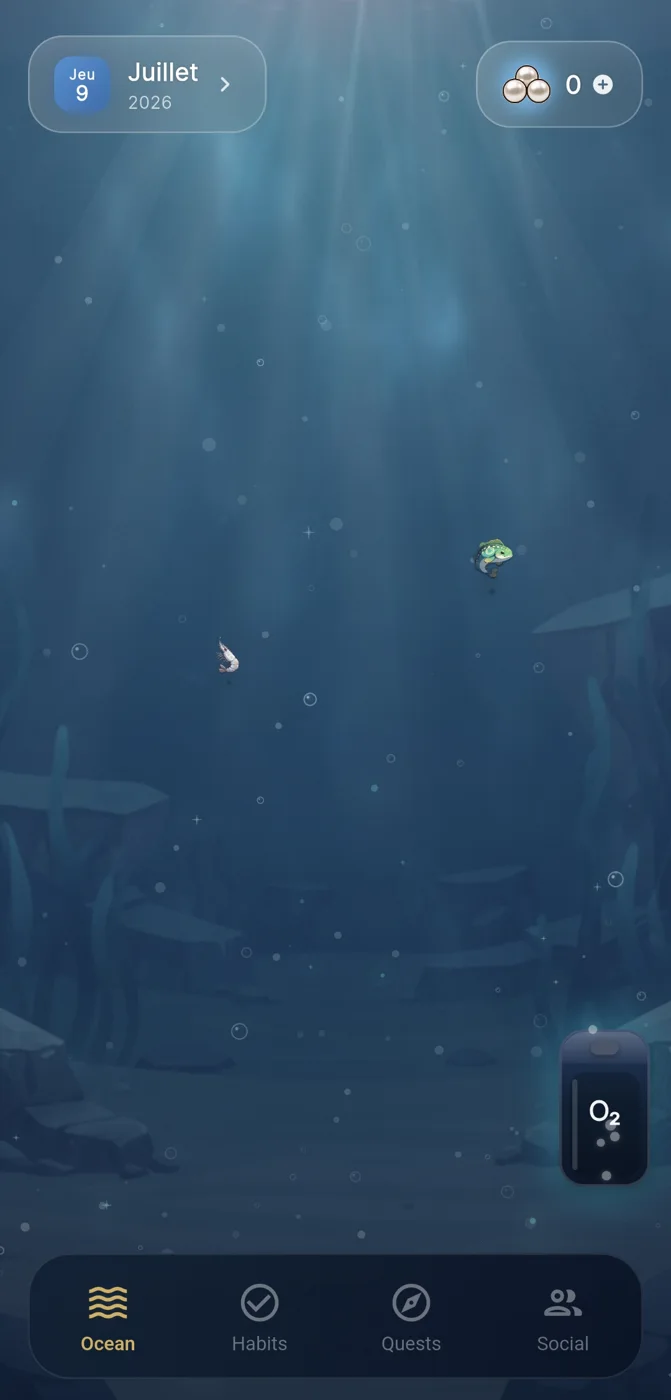
Is there an accountability app? The short answer
If you are asking whether there is an accountability app, the answer is yes. Many apps describe themselves this way, but they mean different things by it. Some only help you see whether you did what you planned. Others connect you with other people who can see your progress. A few add stakes, deadlines or check-ins from a coach. Before you install anything, decide which of these you actually want.
Accountability is a relationship. You answer to someone, even if that someone is your own future self looking back at a record. An app cannot create that relationship for you. What it can do is make your actions visible, timely and easy to review. Keep that difference in mind, because it explains most of the disappointment people report when an app does not change their behaviour on its own.
Three kinds of accountability an app can offer
The first kind is self-accountability. You log a habit or a block of focused work, and the app keeps a visible record. This works best for small actions you can repeat daily, where the main problem is forgetting or losing track rather than lacking motivation.
The second kind is social accountability. Friends, a partner or a small group can see whether you showed up. Social visibility can help, but it changes the emotional stakes. Some people find it encouraging. Others feel watched, and they quietly stop opening the app after a bad week. The third kind is structured accountability: commitments, deadlines or a human coach. That is the most demanding option and is usually only worth it for one specific, high-priority goal.
- Self-accountability: a private record of small, repeated actions
- Social accountability: chosen people can see your progress
- Structured accountability: explicit commitments, deadlines or a coach
Limits to understand before relying on one
No accountability app can guarantee that you will change a behaviour or improve your health. An app records and reflects what you do. It cannot supply sleep, time, energy or a reason that matters to you. Be cautious of any tool that promises outcomes rather than describing its mechanics. If a habit relates to a medical condition, treat the app as a log and talk to a qualified professional about the goal itself.
Missed days are the second limit. Many trackers treat a broken streak as failure, which can push people to abandon the whole system after one lapse. Look for a tool that makes recovery easy, so returning after a gap feels normal rather than embarrassing. Privacy is the third limit. Social features mean sharing data about your routines, so check who can see what and how the company says it uses your information.
How Reef approaches accountability, and where that stops
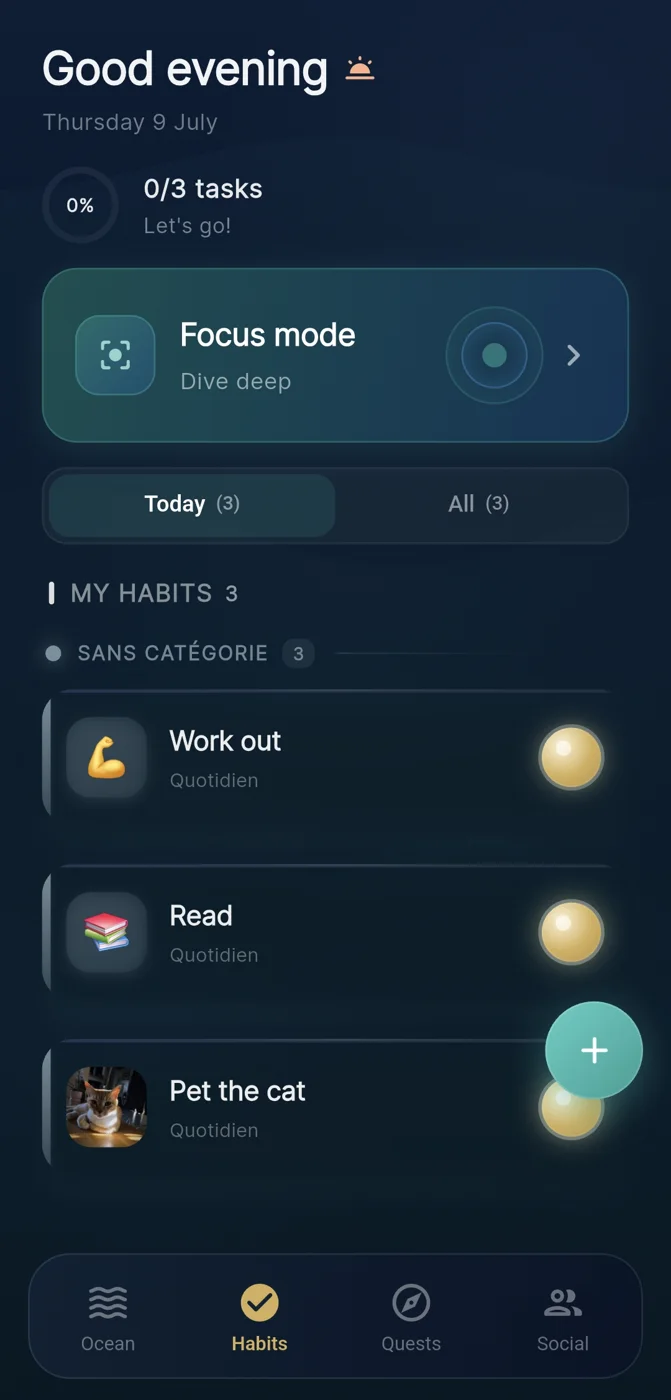
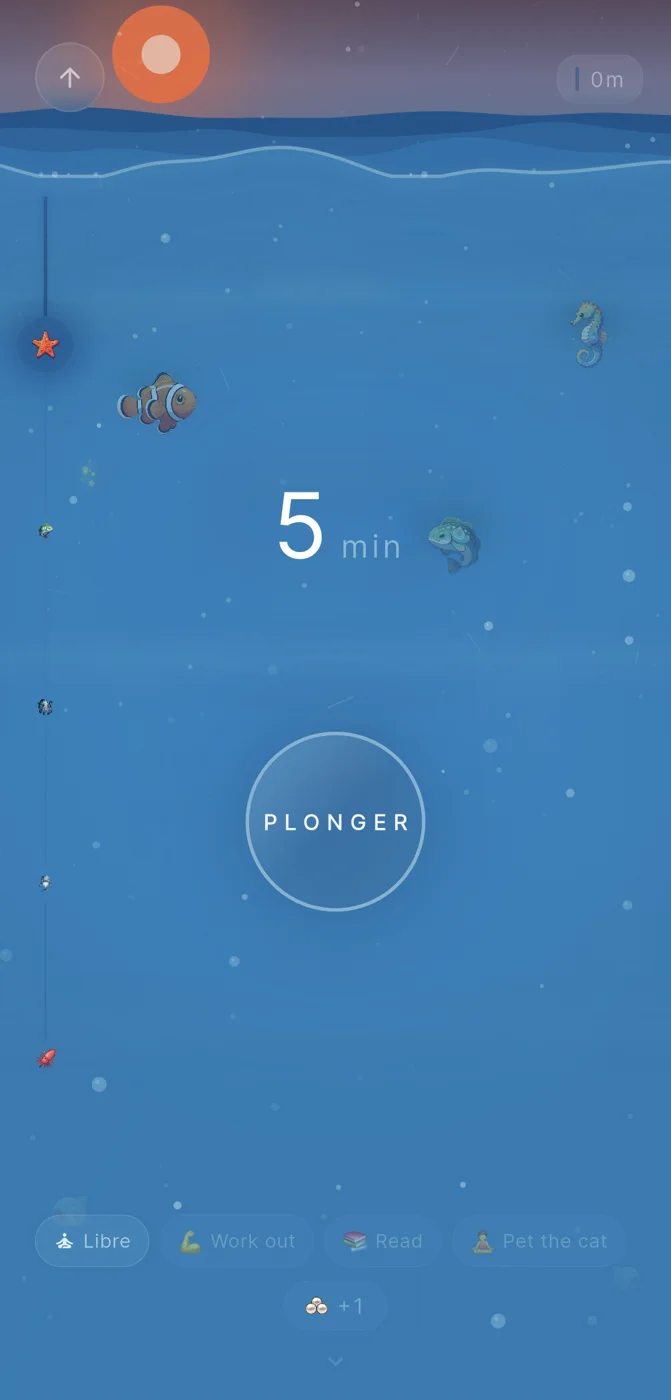
Reef is a mobile habit tracker from IVRYN for iOS and Android, and its view of accountability is mostly visual and optional. Each habit you finish adds a pearl to a living ocean on screen. Focus time is framed as a dive that goes deeper the longer you stay with it. Joining a crew is a choice, not a requirement, so you can keep everything private and still have a record. Reef's published methodology and its guide to gamified habit tracking explain the design thinking behind this, rather than claiming measured results.
This article is bounded by those public descriptions. Reef has not run a study for it, has not tested other apps and does not claim to know how any reader will respond. Reef also does not promise any behaviour or health outcome. The point of describing it here is to show one concrete way the principles below can be put into practice: small habits, visible progress, gentle recovery and social contact only when you want it.
Worked example: choosing an accountability setup
Example (hypothetical): Sam wants to read for ten minutes each evening and protect one hour of deep work on weekdays. Sam has tried strict streak apps before and dropped them after missing two days while travelling. Sam's sister has offered to check in, but Sam is unsure about being watched every day.
Following the checklist below, Sam starts with self-accountability only: two small habits, logged privately, with a tool that does not punish a missed day. After a few weeks, if the routine feels steady, Sam can invite the sister into a small shared group. Sam does not add stakes or a coach, because neither goal is urgent enough to justify that pressure. The key decision is the order: build a visible private record first, then add people once the habit can survive an off day.
- Can the habit be shrunk to something you could do on a tired day?
- Will you see your progress at a glance, without opening reports?
- What happens in the app after a missed day: blame, or an easy restart?
- Is the social feature optional, and can you control who sees what?
- Does the app explain its mechanics plainly instead of promising results?
- Is the cost clear, and is the data policy one you are comfortable with?
Frequently asked questions
Is there an accountability app that works without involving other people?
Yes. Many habit and focus apps provide self-accountability through a private record of what you did each day. This suits small, repeatable habits where the main challenge is remembering and noticing progress. You can usually add friends or a group later if you want more support.
Can an accountability app guarantee that I will stick to a habit?
No. An accountability app can make your actions visible and easier to review, but it cannot guarantee a change in behaviour or health. Results depend on the size of the habit, your circumstances and whether the goal matters to you. Be wary of apps that promise outcomes rather than explaining how they work.
What should I look for in an accountability app if I often miss days?
Look for an app that makes restarting easy and does not treat a single missed day as failure. Useful signs include gentle messaging after a gap, a way to protect a streak on an off day, and progress that stays visible even when a streak breaks. Starting with very small habits also makes recovery easier.
Sources and further reading
These resources provide the wider reference frame. Product statements on this page are limited to the public information provided by Reef.