 Reef
Reef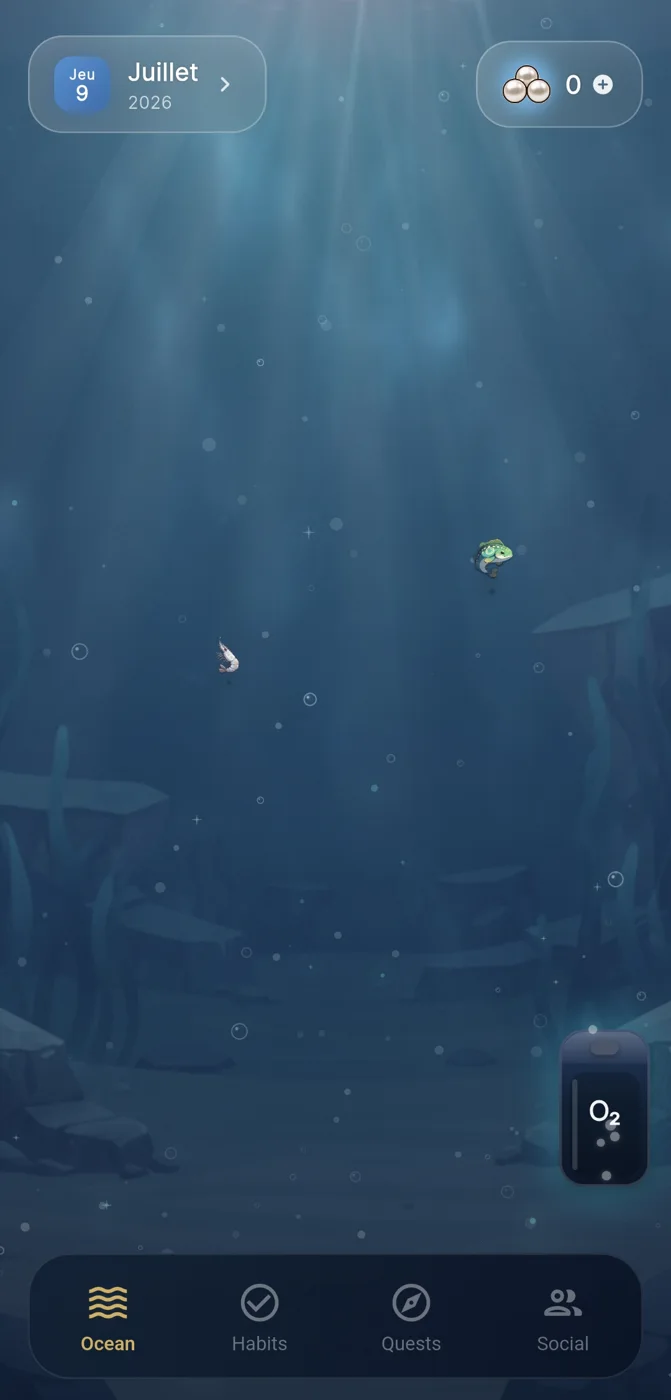
What an accountability app on iOS can and cannot do
People searching for an accountability app ios option usually want one thing: a reason to keep doing something on the days when motivation runs low. On an iPhone, that reason tends to arrive as a reminder, a visible record of what you have done, or a nudge from someone else who can see your progress. None of these mechanisms does the work for you. They make your own repetition easier to notice, and that is the honest scope of the category.
Before acting, it helps to separate two questions. The first is whether you need accountability at all, or simply a clearer plan. The second is what kind of accountability suits you: private self-tracking, a gentle companion, or a shared group. An app can support any of these, but a mode that does not suit you can make a tracker harder to keep using.
Start with habits small enough to repeat
Accountability works best when the thing being tracked is small and concrete. "Read for ten minutes after dinner" is easy to confirm; "become a reader" is not. If a habit is too large, every reminder becomes a small judgement, and an app built to help you starts to feel like a scoreboard you are losing.
A practical test is to ask whether you could complete the habit on a tired, busy day. If the answer is no, shrink it before you install anything. The app's role is to make repeated actions visible, not to rescue an over-ambitious plan. This is also why the number of habits matters: tracking two or three at the start gives each one a fair chance to settle.
Visible progress and gentle recovery after missed days
Two features deserve close attention when you compare apps. The first is how progress is shown. A list of ticks is functional, but some people respond better when completed actions build into something they can look at, because the accumulated effort becomes tangible. The second is what happens when you miss a day, which you eventually will.
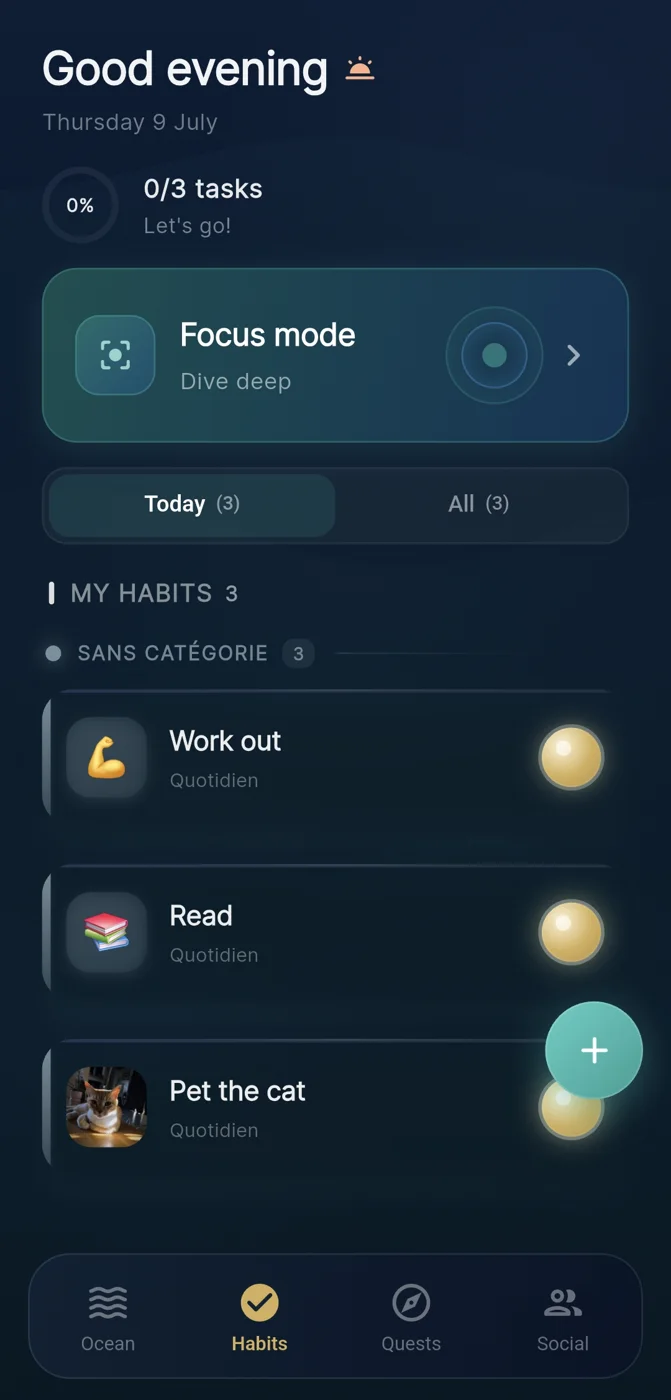
Apps that reset everything to zero after one miss can turn a single off day into a reason to quit. A better pattern lets you recover without shame, for example by protecting a streak when life interrupts, or by responding to a missed day in a neutral tone. As one bounded example, Reef, an IVRYN habit tracker for iPhone and Android, turns each finished habit into a pearl that adds to an on-screen ocean, and its shrimp companion Gambi acknowledges both good and missed days without guilt-tripping.
When you trial any app, deliberately skip a day early on and notice how it feels. If the response makes you want to close the app, that tells you more than any feature list.
- Does completed effort accumulate into something visible?
- Is there a way to protect progress after an off day?
- Is the tone after a miss neutral rather than punishing?
Social accountability should be your choice
Shared accountability can be powerful, but it is not universally helpful. Some people find that knowing a friend can see their check-ins keeps them steady. Others feel exposed, and start performing progress rather than making it. Neither reaction is wrong, which is why social features should be optional rather than the default.
Look for apps where groups are opt-in, where you control what others see, and where you can leave without losing your own history. In Reef, for instance, crews are something you join if you want them; the habit and focus tools work on their own. Whatever app you consider, check its privacy approach too: whether it shows ads and what it does with your data are fair questions before you share daily routines with any service.
Limits of any accountability app ios users should keep in mind
No accountability app can guarantee that a habit will stick or that a behaviour or health goal will be reached. Reef states this limit openly, and it is a reasonable expectation to bring to every app in the category. Be cautious of marketing that promises transformation, specific timelines or outcomes; those claims usually cannot be supported for individuals.
Apps also cannot replace professional support. If the habit you want to build relates to a medical condition, mental health, or a significant lifestyle change, a tracker can sit alongside advice from a qualified professional but should not stand in for it. Finally, features, pricing and availability change; check the current App Store listing rather than relying on older reviews or comparisons.
Example: a short decision checklist for choosing an app
Example (hypothetical): Sam wants to stretch for five minutes each morning and protect one focused work block in the afternoon. Sam is unsure about sharing progress with friends. Rather than downloading several apps at once, Sam writes down one small habit, one focus goal, and a rule: try one app for two weeks, skipping one day on purpose to see how the app responds.
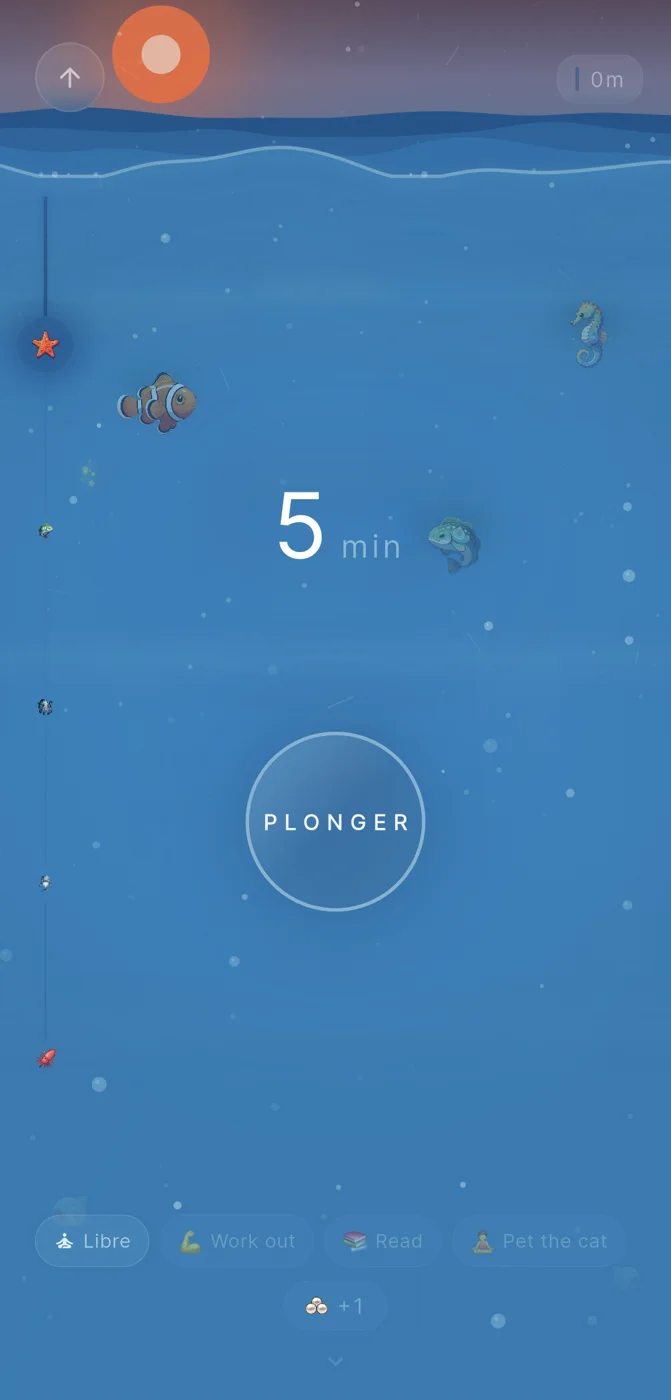
At the end of the trial, Sam reviews the checklist below. If most answers are yes, the app is a reasonable fit; if the miss felt discouraging or the social features felt pushy, it is worth trying a different approach, including a simple paper log. An app with a dive-style focus timer, such as Reef's, might suit Sam's afternoon block, but the checklist matters more than any single product.
- Can I log my habit in under ten seconds?
- Do I enjoy looking at my progress, or only tolerate it?
- Did a missed day feel recoverable?
- Are social features optional and easy to ignore?
- Am I comfortable with the app's ads and data approach?
- Does the app avoid promising guaranteed results?
Frequently asked questions
What makes a good accountability app on iOS?
A good accountability app on iOS makes small, repeatable habits easy to log, shows progress in a way you find motivating, lets you recover after a missed day without punishment, and keeps social sharing optional. It should also be transparent about privacy and avoid promising guaranteed results.
Do I need friends or a group for an accountability app to work?
No. Many people use accountability apps privately, relying on visible progress and reminders rather than other people. Group features can help some users stay consistent, but they work best when they are opt-in and you control what others can see.
Can an accountability app guarantee I will build a habit?
No app can guarantee a habit will stick or that a behaviour or health outcome will follow. An accountability app can make repeated actions more visible and easier to return to, but results depend on the person, the habit chosen and circumstances. For health-related goals, consult a qualified professional.
Sources and further reading
These resources provide the wider reference frame. Product statements on this page are limited to the public information provided by Reef.