 Reef
Reef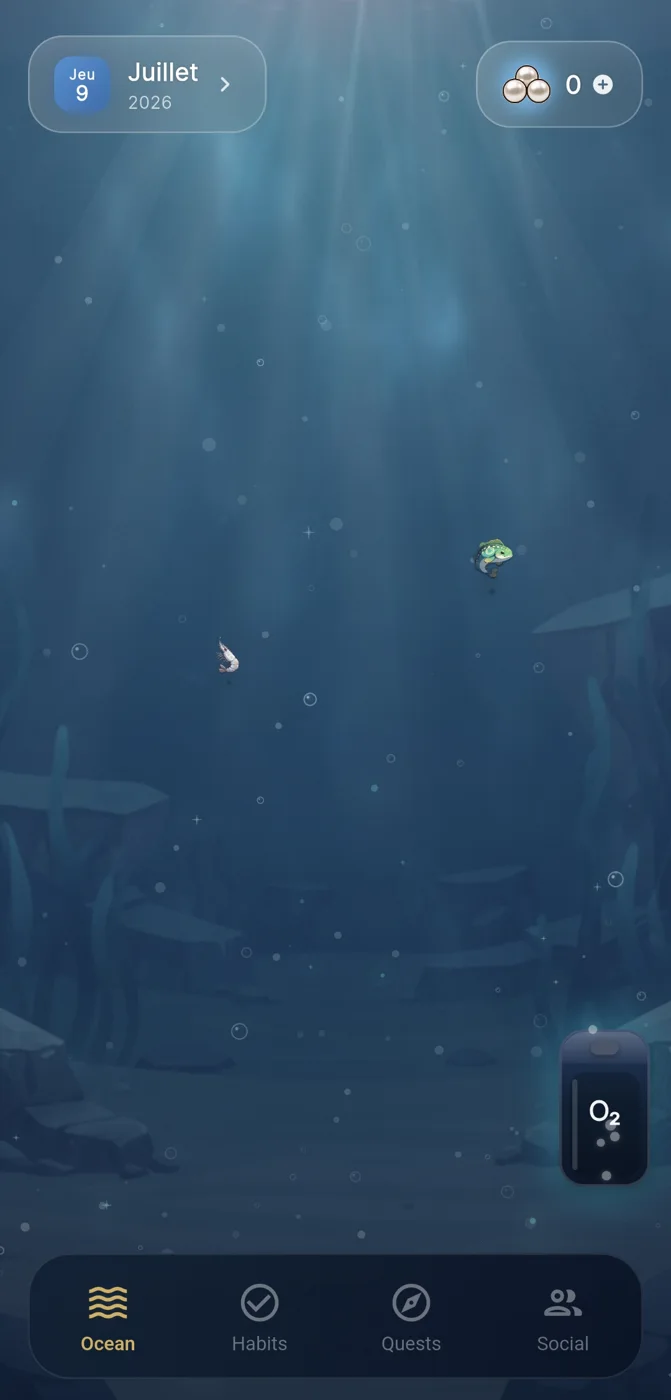
What an accountability app for students can and cannot do
An accountability app for students is a tool that makes repeated study actions visible, so you notice what you did and what you skipped. It records actions, shows a pattern and sometimes lets other people see that pattern. It does not do the reading, attend the lecture or fix a timetable that is already overloaded.
That distinction matters before you install anything. A student who misses revision because of a part-time job, a long commute or a health issue does not have a motivation problem an app can solve. A student who keeps meaning to review notes for ten minutes and keeps forgetting may find a tracker useful. The honest question is whether your obstacle is remembering and repeating, or something structural that needs a different kind of help, such as a tutor, an adviser or student support services.
Start with habits small enough to survive exam weeks
Most study plans fail at the moment the term gets busy. A habit like "study three hours every evening" collapses during deadline week, and once it collapses, the tracker starts showing failure instead of progress. A better habit is one you could still do on your worst realistic day: open the module notes and read one page, write three flashcards, or tidy tomorrow's to-do list.
Small habits are not a lower ambition. They keep the chain of repetition intact so that the larger sessions have something to attach to. When you pick habits for an app, ask whether each one could be finished in under fifteen minutes on a day with two lectures and a shift. If not, split it.
Limit yourself to a handful at the start. A screen full of twelve daily habits is easy to set up and hard to respect, and an app that constantly shows unfinished items quickly becomes something you avoid opening.
Visible progress and protected focus time
The useful part of a tracker is that it turns invisible effort into something you can see. Reading for twenty minutes leaves no trace in the room; a mark, a growing picture or a timeline does. Gamified designs lean into this by giving each completed action a small visual reward, which can make the next repetition feel less abstract. Reef's guide to gamified habit trackers (https://reeftogether.com/guides/gamified-habit-tracker-app/) explores this idea of progress you can look at rather than only count.
Focus timers deserve separate attention because studying is often less about doing a habit and more about staying with one task. Look for a timer that rewards finished sessions without punishing short ones, and check whether you can silence or ignore notifications during it. A focus tool that pings you every few minutes defeats its purpose.
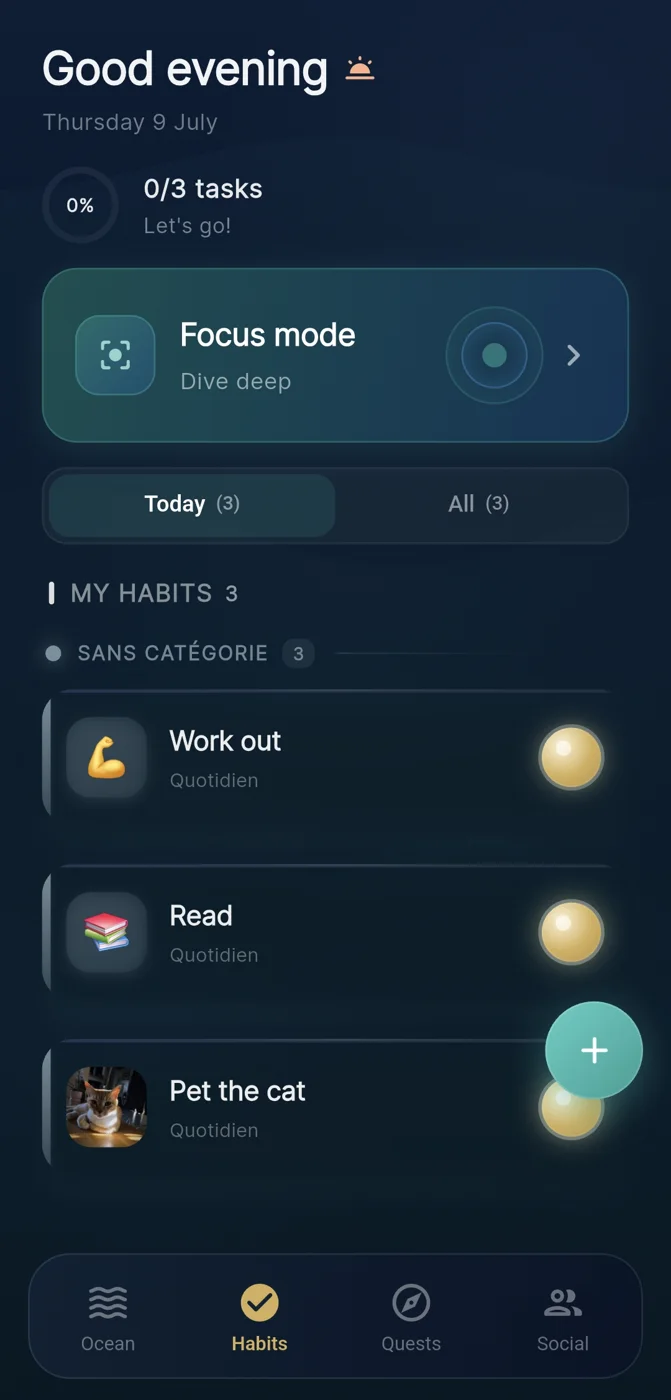
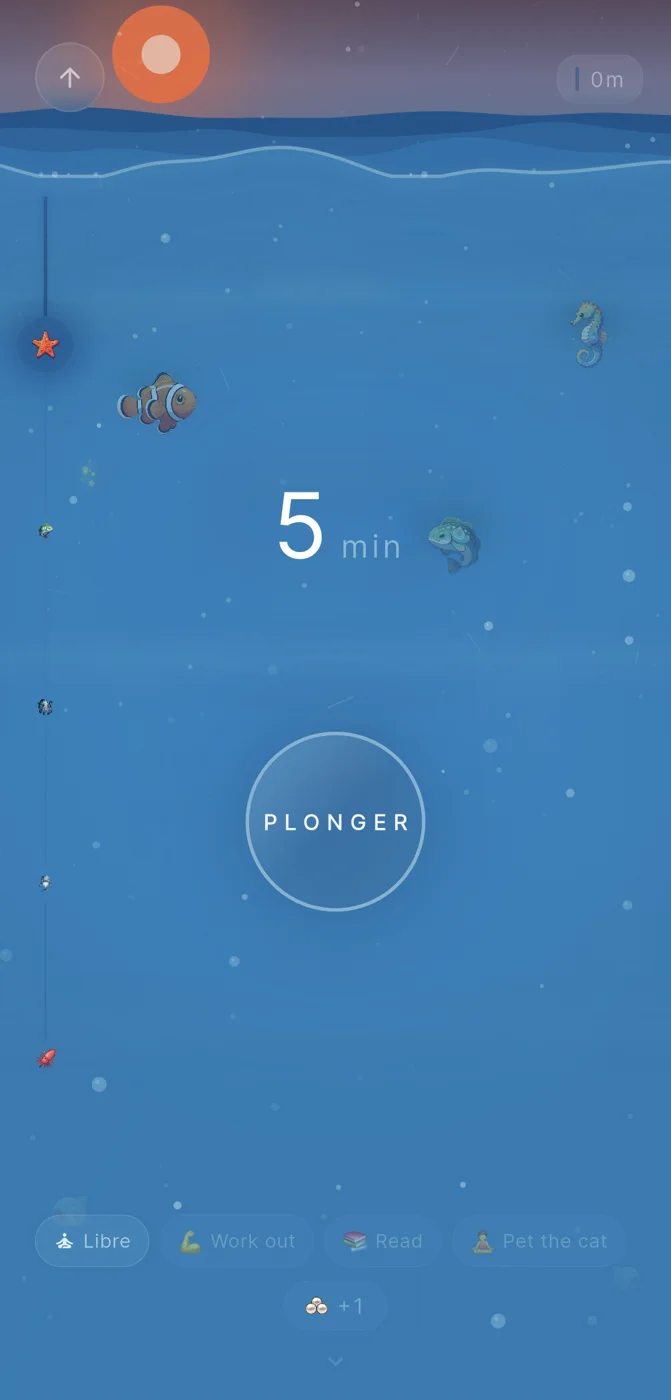
Reef, the IVRYN habit tracker for iOS and Android, is one illustration of this design: each finished habit adds a pearl to an on-screen ocean, and a focus session is framed as a dive that reaches deeper zones the longer you stay with it. That is a motivational frame, not proof that your grades or concentration will improve, and Reef does not claim otherwise.
Missed days: why recovery design matters more than streaks
Every student misses days. Illness, travel home, a deadline in another module or simple exhaustion will break any perfect record. What matters is what the app does next. Some tools reset a long streak to zero and display it prominently, which can turn one bad day into a week of avoidance.
Before choosing, check three things: whether there is a way to protect a streak on a planned off day, whether a missed day is shown neutrally or as a failure, and whether the app nudges you back with a small action rather than a lecture. Gentle recovery is not about lowering standards; it is about making the return cheap. Reef, for example, includes a streak freeze and a small companion character that reacts to missed days without guilt, which reflects the design principles set out on its methodology page (https://reeftogether.com/methodology.html).
A reflection prompt can also help. Writing one line about why a day went sideways is often more useful than staring at a broken counter, and keeping that reflection private means you can be honest.
Social accountability should stay your choice
Sharing progress with classmates, a study group or a friend can raise the stakes in a helpful way. It can also create comparison, pressure or the feeling of being watched, especially around exams. The safest design treats groups as optional: you can study alone, join a small crew when it helps, and leave without penalty.
Ask what other people actually see. Seeing that a friend completed a session is different from seeing every missed day or the content of your notes. Choose the narrowest sharing that still gives you the nudge you want. It is also worth asking how the app makes money: is it free to start, does it show ads, and does it resell data? Check whether its design gives you any reason to suspect it benefits from you sharing more than you need. Reef, for its part, is free to start, shows no ads and does not resell data.
Worked example and a quick decision checklist
Example (hypothetical): a second-year student wants to review lecture notes daily and protect two focused study blocks a week. They set one habit, "read yesterday's notes for ten minutes," and one weekly target of two timed focus sessions. They keep their progress private for the first month, then invite one coursemate into a small group before exams. When they miss three days during a family visit, they use a freeze for one and restart with a single page rather than trying to catch up all at once.
The point of the example is the sequence, not the specific app: tiny habit first, focus time second, social layer only once the routine feels stable. Use the checklist below before committing to any tool.
- Can each habit be done in under fifteen minutes on a bad day?
- Does the app show progress in a way you actually want to look at?
- Does the focus timer reward finished sessions without punishing short ones?
- How are missed days displayed, and is there a way to protect a planned off day?
- Is any social or group feature optional and limited in what it shares?
- Is it clear what is free, whether there are ads, and how your data is used?
- Does the app avoid promising grades, health or behaviour outcomes?
Frequently asked questions
Will an accountability app improve a student's grades?
No app can guarantee better grades. An accountability app can make study habits more visible and easier to repeat, but results depend on the workload, teaching, health and many factors outside any tracker. Treat it as a support for routine, not a promise of outcomes.
Should students share their study progress with friends in an app?
Sharing can help some students stay consistent, but it can also create pressure or comparison. A sensible approach is to start privately, then join a small optional group once a routine feels stable, and only share the minimum information needed for the nudge you want.
What should a student do after breaking a long habit streak?
Restart with the smallest possible version of the habit the next day rather than trying to make up all the missed work. Apps that offer streak protection for off days or show missed days neutrally make this easier. If missed days stem from health or wellbeing concerns, campus support services or a professional are better placed to help than an app.
Sources and further reading
These resources provide the wider reference frame. Product statements on this page are limited to the public information provided by Reef.