 Reef
Reef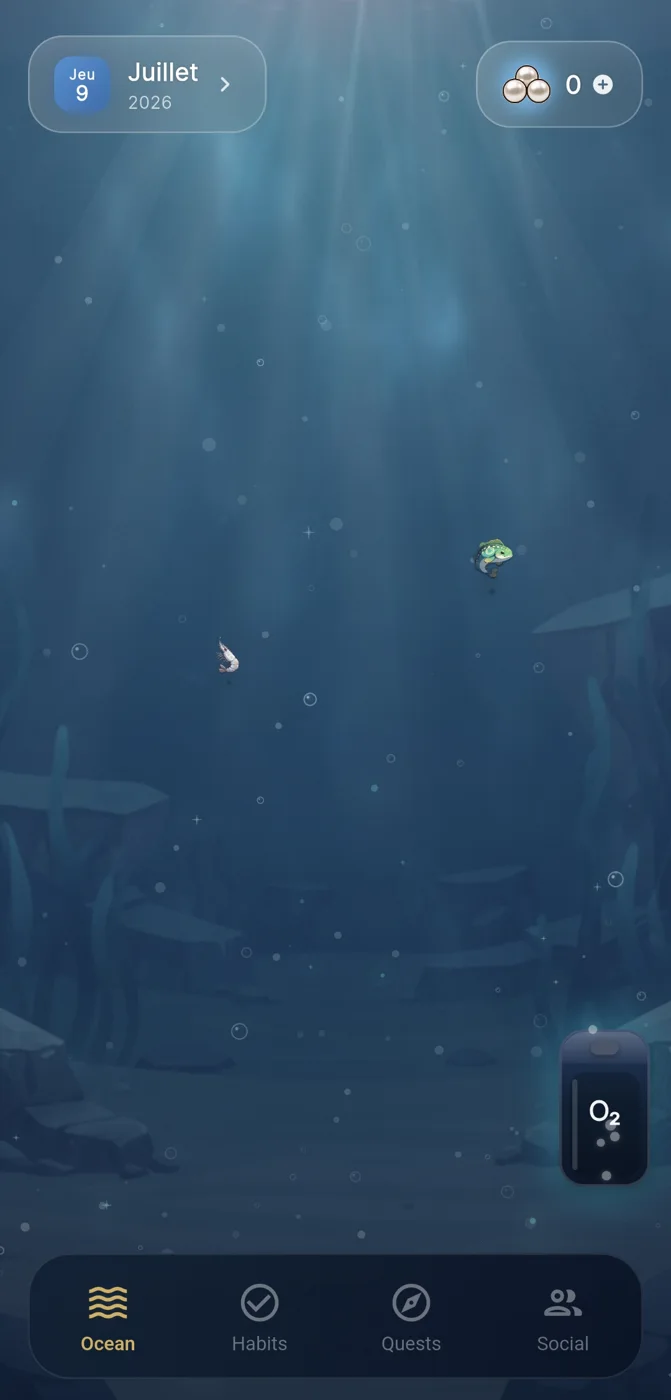
What is an accountability app, in plain terms
If you are asking what an accountability app is, the short answer is software that makes a commitment visible so it becomes harder to quietly drop. You state what you intend to do, the app records whether you did it, and that record is shown back to you, to other people, or to both. The core idea is not new. It is the same logic as telling a friend you will go for a run tomorrow, moved onto a phone so it can repeat every day.
In practice, most accountability apps combine three parts: a way to define a small, checkable action, a log that shows progress over time, and some form of feedback when you complete or miss it. That feedback may be a chart, a message from a partner, a shared group view or a visual reward. The differences between apps lie less in whether they track and more in how they respond when you fall short, and who gets to see your record.
Three kinds of accountability an app can offer
It helps to separate the types, because they suit different people. Self-accountability relies on your own record: a streak, a calendar or a picture that grows as you repeat an action. Peer accountability adds a group that can see check-ins, which some people find motivating and others find stressful. Partner or coach accountability links you with one specific person who expects an update, which is the most direct form and also the most dependent on that person staying engaged.
None of these is automatically better. Visibility to others can raise the stakes in a useful way, but it can also turn a missed day into embarrassment, which may make people quit rather than return. For many readers, the safest starting point is private, visible progress, with social features added later only if they feel helpful. An app that lets you choose rather than forcing sharing respects that difference.
Details that matter before you rely on one
Before you trust an app with a habit you care about, look past the feature list and ask how it behaves on a bad day. A tool that punishes a single missed day by wiping out weeks of progress teaches an all-or-nothing mindset. A tool that offers a way to recover, and treats a lapse as information rather than failure, is more likely to fit a real week with illness, travel or tiredness.
Also check what the app asks of you in exchange. Accountability data is personal: it shows when you struggle and what you are trying to change. Read how the provider handles that data, whether it shows ads, and what you would lose if you stopped using it. Pricing and features change, so confirm them on the provider's own page at the time you decide rather than relying on old reviews.
- Can you define a small action that is clearly done or not done?
- Is progress shown in a way you will actually look at?
- What happens after a missed day: reset, penalty or a gentle way back?
- Is sharing optional, and can you control who sees what?
- Does the app avoid promising that it will change your behaviour or health?
- Are its data, advertising and pricing terms clear today?
Worked example: choosing for a ten-minute reading habit
Example (hypothetical): someone wants to read for ten minutes each evening and has abandoned two previous attempts after missing a few nights. Run through the checklist. The action is small and checkable, which is good. The past pattern shows that missed nights led to quitting, so recovery handling matters more than any social feature. A group challenge with a public leaderboard would likely add pressure at exactly the wrong moment.
In this example, a better fit is an app where the reading habit is private at first, progress is shown as something that accumulates rather than a fragile number, and one off night can be protected or simply absorbed. After a month of steady repetition, the person might invite a single friend to see check-ins. The decision is driven by their own failure pattern, not by which app has the longest feature list.
Where Reef fits, and where its limits are
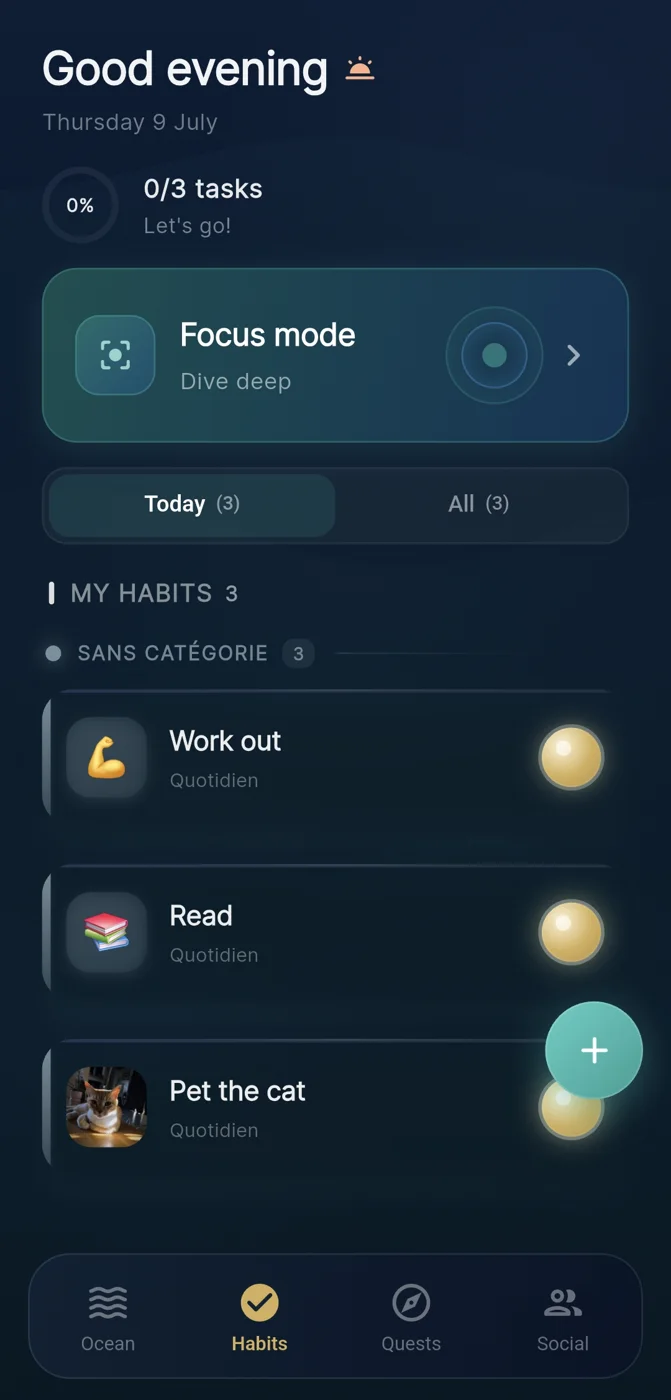
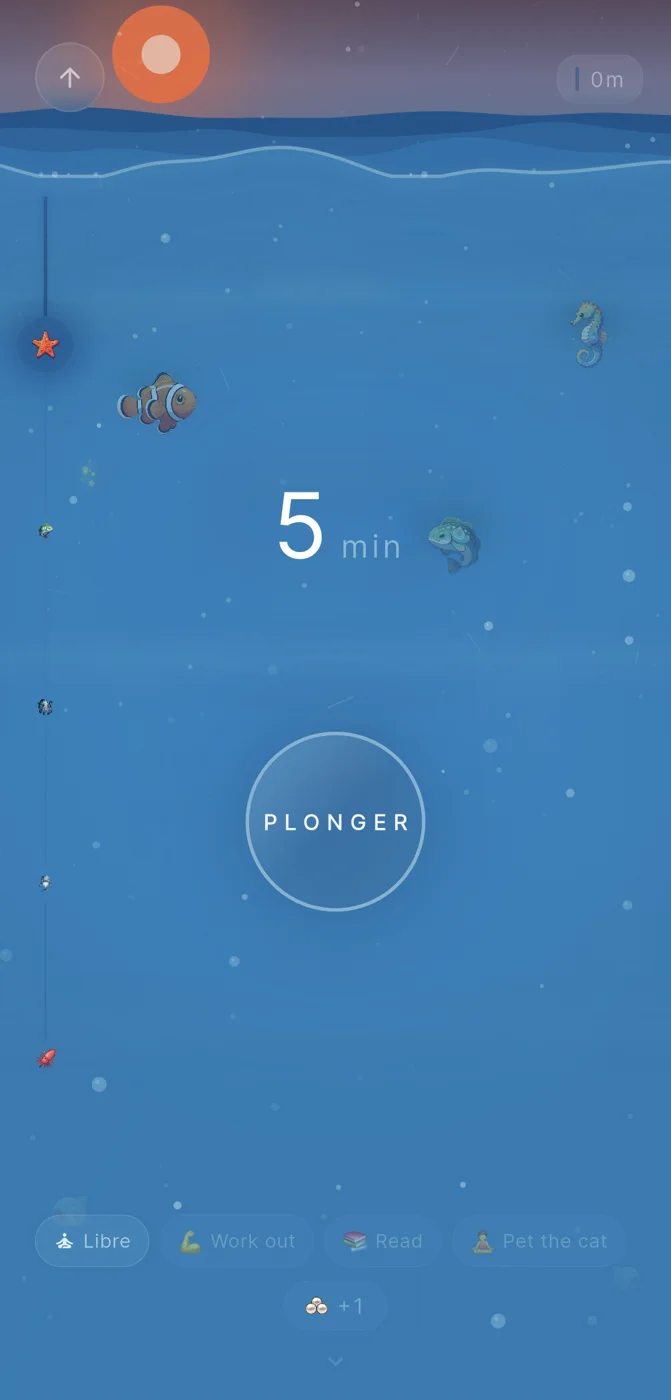
Reef is a habit tracker from IVRYN for iOS and Android, and its public product description is what bounds the advice in this article. Each completed habit adds a pearl to an animated ocean, focus time is framed as a dive that goes deeper the longer you stay with it, and crews for shared accountability are something you opt into rather than a default. Reef does not claim that using it will guarantee a change in behaviour or health.
On the recovery question raised above, Reef includes a streak freeze for off days, and its shrimp companion Gambi responds to missed days without guilt and asks an evening question that builds a private journal. Reef also publishes its habit design methodology and a guide to gamified habit trackers, which are worth reading to understand the reasoning behind these choices. Those pages explain design intent; they are not evidence that any particular outcome will follow for you.
Whatever you choose, treat an accountability app as scaffolding. It can make small repeated actions visible and give you a gentler path back after a lapse, but the habit itself still depends on choosing an action small enough to repeat on your worst day.
Frequently asked questions
What is an accountability app used for?
An accountability app is used to make a personal commitment, such as a daily habit or a block of focus time, visible and recorded. It shows whether you followed through, either privately or to people you choose, so dropping the commitment becomes more noticeable.
Do I need to share my progress with other people for an accountability app to work?
No. Many people benefit from private accountability, where their own visible record is enough to prompt them. Sharing with a friend or group can help some people, but it can add pressure. A good accountability app lets you decide whether and when to involve others.
Can an accountability app guarantee that I will build a habit?
No app can guarantee a behaviour or health outcome. An accountability app can make progress visible, remind you of what you intended and help you recover after missed days, but results still depend on choosing small, realistic actions and returning to them consistently.
Sources and further reading
These resources provide the wider reference frame. Product statements on this page are limited to the public information provided by Reef.