 Reef
Reef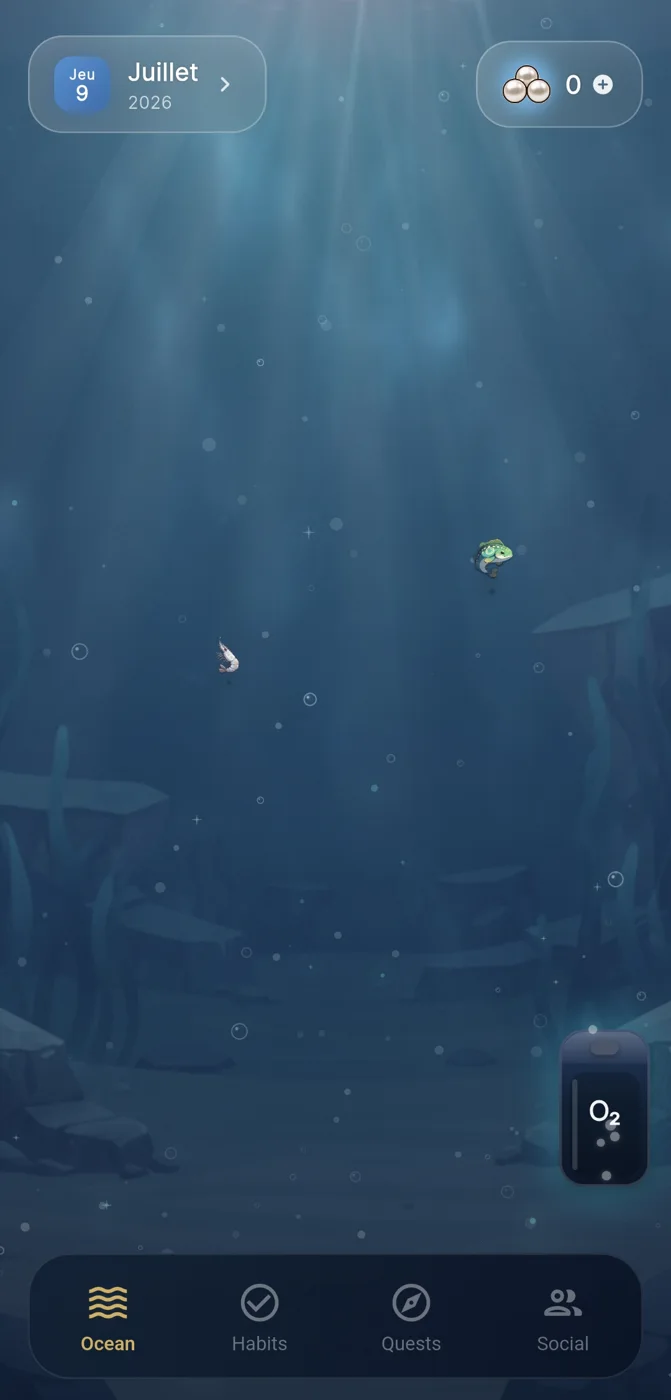

What accountability apps for couples can and cannot do
Accountability apps for couples are usually ordinary habit or focus trackers with a shared or social layer: two people log repeated actions, and each can see some part of the other's progress. The idea is simple. When a small action becomes visible to someone you care about, it can be easier to remember and easier to talk about.
What these tools cannot do is change behaviour on their own. An app records and displays; it does not supply motivation, resolve disagreements or replace a conversation about why a goal matters. Before acting, the most useful question is not which app to pick, but what each partner actually wants the shared view to do for them.
Agree on consent and visibility before installing anything
Shared tracking works best when both people opt in freely and decide together what is visible. One partner quietly hoping the app will make the other more disciplined is a weak starting point, because the tool then becomes a monitoring device rather than mutual support. If either person feels watched, the data stops being honest and the habit loses its meaning.
A practical approach is to separate goals into three groups: private habits nobody else sees, habits shared for encouragement, and a small number of joint habits you do together. Keep the shared group short. It is also worth reading how any app handles personal data, whether it shows ads, and what happens to your records if you stop using it, since habit logs can reveal routines, sleep and health patterns.
- Both partners choose to join; neither installs it for the other
- Decide which habits stay private and which are shared
- Check the app's data, advertising and deletion policies
- Agree that either person can stop sharing at any time
Choose small habits each person can repeat
Couples often start with ambitious joint goals, such as exercising together five times a week. These can collapse the first time schedules diverge. Smaller, repeatable actions tend to hold up better: a ten-minute walk, a phone-free half hour, a short focus block before work. The aim is an action each person can complete on an ordinary, tired day.
Visible progress matters here. Seeing a run of completed days, or a simple visual that grows as habits are logged, gives both partners something concrete to notice and acknowledge. That acknowledgement, rather than comparison, is where shared accountability tends to feel supportive. Avoid leaderboards between partners unless you both genuinely enjoy friendly competition.
Plan for missed days before they happen
Every habit will be missed at some point. The risk in a shared app is that a broken streak becomes visible to your partner and turns into guilt, defensiveness or quiet withdrawal from the app. Deciding in advance how you will treat misses removes much of that tension.
Look for features and norms that support gentle recovery: a way to protect a streak on a genuinely off day, neutral language around missed entries, and a shared agreement that a miss is information, not a failure. The useful response from a partner is usually a question such as what got in the way, not a reminder of the gap.
- Agree on one sentence each of you will say after a miss
- Treat one missed day as normal and two as a prompt to simplify
- Use streak protection sparingly and without judgement
Example: a two-week trial plan for a couple
The following is a hypothetical illustration, not a description of real users or observed results. Imagine a couple, Sam and Alex, who want to spend less evening time on their phones and to protect a little focused time each morning. They agree to a two-week trial before deciding whether a shared app is worth keeping.
In week one, each picks one private habit and they share one joint habit: twenty phone-free minutes after dinner. They log daily and review together for five minutes on Sunday. In week two, they adjust: Alex shortens a morning focus block that felt too long, and Sam moves a habit to a different time. At the end, they ask whether the app made the habits easier to talk about or added pressure. If it added pressure, they reduce what is shared or stop using it together.
- Day 1: agree on visibility, one joint habit and one private habit each
- Days 1-7: log daily, no commentary on each other's entries
- Day 7: five-minute review; simplify anything missed twice
- Days 8-14: repeat with adjustments
- Day 14: decide to continue, reduce sharing or stop
Where Reef fits and the limits of any app
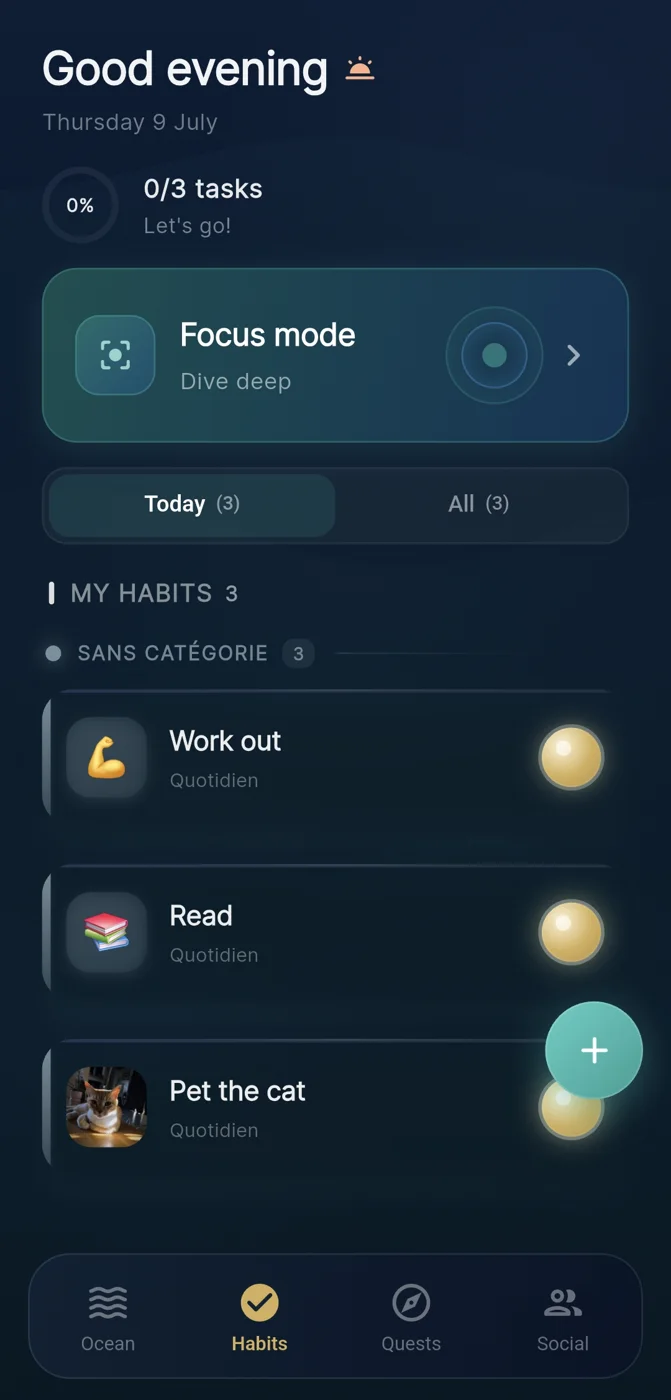
Reef, IVRYN's habit tracker for iOS and Android, approaches this by making completed habits and focus time visible as a growing ocean, keeping social crews entirely optional and offering a streak freeze for off days; it is free to start, carries no ads and does not resell data. Reef does not promise that sharing will change behaviour or improve a relationship, and the advice here is bounded by that same limit.
No app is a substitute for honest communication, and none should be used to track a partner who has not chosen to share. If habit goals are tied to health, mental wellbeing or ongoing conflict, a qualified professional is a better resource than any tracker. Used carefully, a shared app is a small, visible prompt for conversations a couple already wants to have.
Frequently asked questions
Do accountability apps for couples actually work?
They can make small repeated actions more visible and easier to discuss, but no app guarantees behaviour change. Results depend on both partners opting in freely, choosing realistic habits and treating missed days without blame.
Should couples share all their habits in a tracking app?
Usually not. A common approach is to keep some habits private, share a few for encouragement and do only one or two jointly. Both partners should agree on what is visible and be free to stop sharing at any time.
How should a couple handle a missed day in a shared habit app?
Agree beforehand that a miss is information rather than failure. Ask what got in the way instead of pointing out the gap, simplify any habit missed repeatedly, and use streak protection features, where available, without judgement.
Sources and further reading
These resources provide the wider reference frame. Product statements on this page are limited to the public information provided by Reef.