 Reef
What the winter arc challenge actually asks of you
The winter arc challenge is a social media trend that treats the last stretch of the year as a deliberate self-improvement season. Gymshark says Winter Arc season officially starts on 1 October and runs until 1 January, and also says you can start it at any point. Bustle describes the same October-to-January window, while Fortune Well places it in the final days of the year. In practice that is a period of about three months in which people commit to daily habits instead of waiting for January resolutions.
There is no governing body and no single rulebook. What people call the rules are shared conventions: pick habits, repeat them daily, and arrive at the new year with momentum already built. That flexibility is useful, because it means you can design a version that fits your schedule rather than copying someone else's extreme routine.
The usual Winter Arc rules, and which ones are optional
Across the coverage, the same themes recur: regular movement or training, earlier and steadier sleep, drinking enough water, reading, journaling, eating more deliberately and cutting back on scrolling. Many videos present these as a strict package to follow every single day.
Fortune Well's reporting adds an important counterweight. Its expert, dietitian Abbey Sharp, says the challenge is not a sustainable way to build habits and calls typical recommendations over-the-top punishing. She recommends focusing on one habit at a time, starting with sleep, and taking an additive mindset, meaning you add something helpful rather than punishing yourself. A practical way to read the rules is to separate the structure, which is worth keeping, from the intensity, which is optional. The structure is a fixed period, a short list and daily repetition. The intensity, such as 5am alarms or two workouts a day, is a personal choice that many people do not need.
If you have a health condition or are planning a big change to training or diet, check with a qualified professional first. The challenge itself does not require any particular level of exertion.
- Keep: a defined end date, a short habit list, daily check-ins
- Adjust freely: wake-up time, workout volume, diet rules
- Drop if it causes stress: all-or-nothing streak rules
A Winter Arc habits list that survives a cold Tuesday
Typical Winter Arc lists are longer than what this article recommends: Fortune Well notes they often run to around ten daily goals. Our editorial guidance is to start much smaller, with three habits at most and a fourth or fifth only once the first ones feel easy after two weeks. That is consistent with Sharp's one-habit-at-a-time advice; the most cautious version is to begin with sleep alone and add the next habit later.
The common failure point is choosing habits sized for your best day. A habit belongs on your list only if you could still do a minimal version when tired, busy or unwell, so write each one with a floor, not just a goal. A long list also turns into a scoring sheet, where missed items feel like failure rather than information.
- Sleep: goal lights out at a set time, floor screens away 20 minutes before bed
- Movement: goal 30 minutes, floor a 10-minute walk
- Water: goal a glass with each meal, floor one glass on waking
- Reading: goal 20 pages, floor one page
- Journal: goal a short reflection, floor one sentence about the day
- Focus: goal one protected work block, floor 15 uninterrupted minutes
Worked example: joining the Winter Arc late in October
Example only, a hypothetical person. Sam notices the trend on 20 October, well after the conventional 1 October start. Rather than giving up or cramming three weeks of catching up, Sam keeps the end of the year as the finish line and accepts a shorter arc of about ten weeks.
Sam starts with sleep only for the first week, then adds a 10-minute walk minimum, then one sentence of journaling before bed. For the first fortnight Sam only aims to hit the floors. In week three, Sam raises the walk to 20 minutes on weekdays and keeps weekends at the floor. Missed days are logged honestly and followed by the floor version the next day, never by a double session.
The decision rule Sam uses each evening is simple: did I do the floor? If yes, the day counts. If no, tomorrow's only job is the floor. This keeps the arc going through December's social calendar, which is exactly when stricter plans tend to collapse.
Tracking until December without burning out
Visible progress helps because it turns an abstract season into something you can see accumulating. A paper calendar with ticks, a notes file or a habit app all work. What matters is that checking in takes seconds and that a blank day does not erase everything before it.
Plan for missed days before they happen. Decide in advance what recovery looks like: the next day at floor level, with no penalty task. Streak-based tools can motivate, but a single broken streak is a common moment to quit entirely, so look for a way to protect or forgive an off day rather than restarting from zero.
Social accountability can help, but it should be optional. Sharing with one friend or a small group suits some people and adds pressure for others. If posting daily updates starts to feel like performance, keep tracking privately and share only a weekly summary or nothing at all.
- Check in at the same time each day, ideally evening
- Log misses without commentary
- Review weekly: keep, shrink or drop each habit
- Choose private or shared tracking deliberately
Where Reef fits, and where it does not
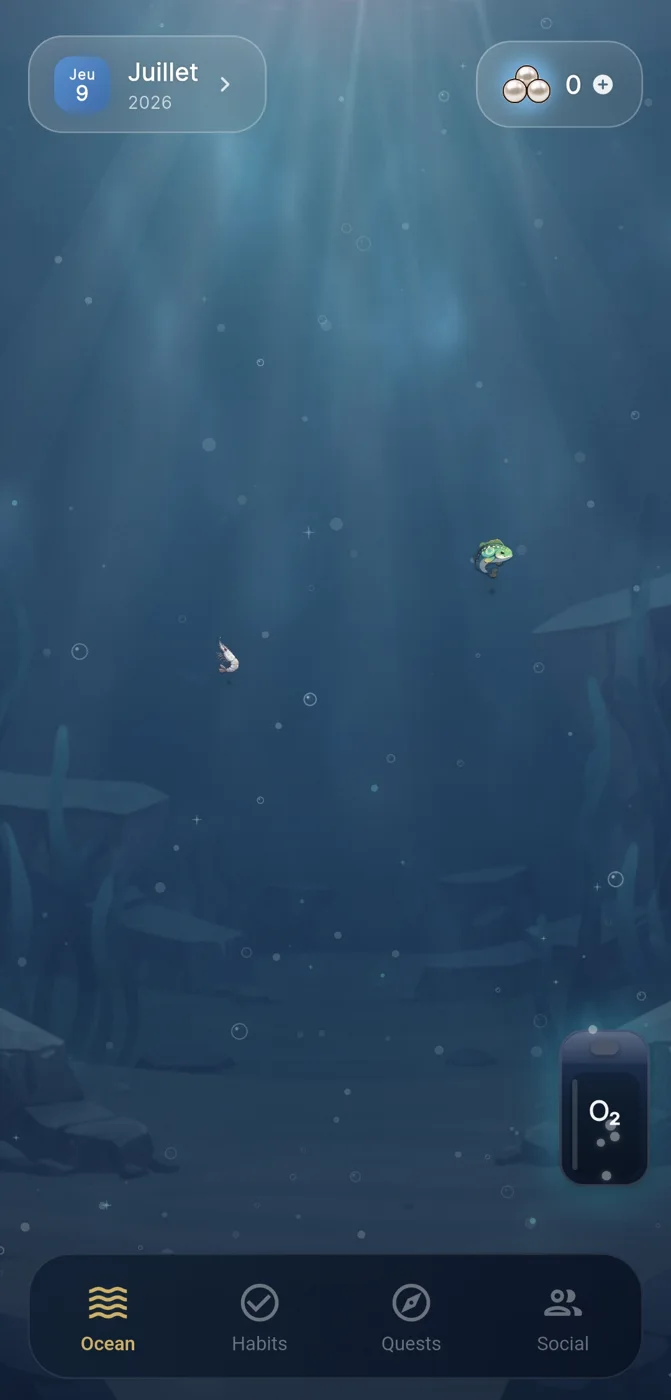
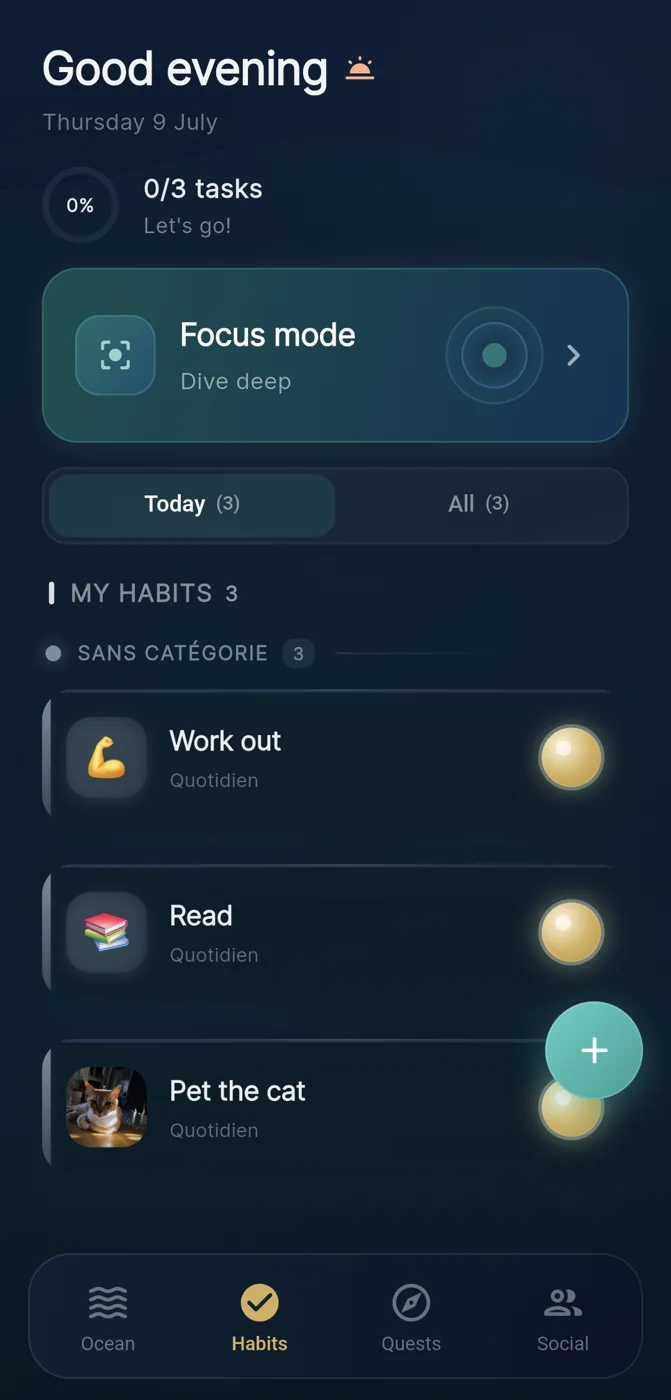
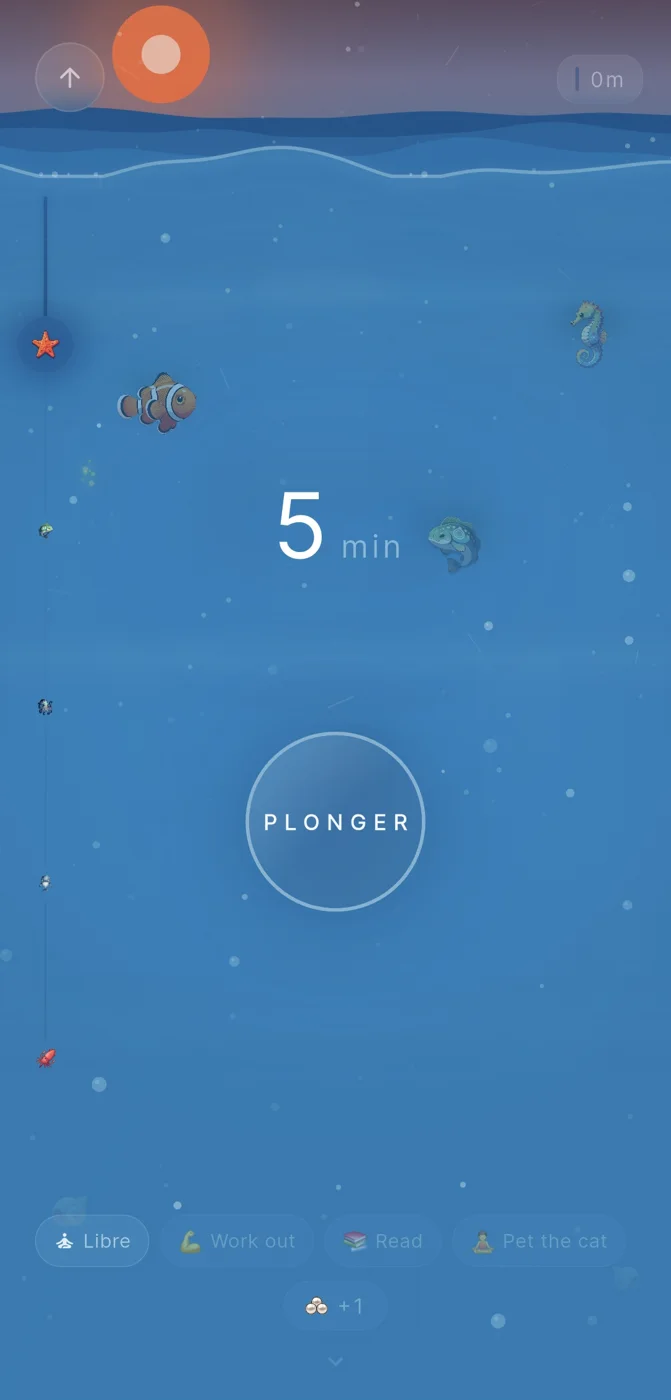
Reef, a habit tracker from IVRYN on iOS and Android, is built around the gentle-recovery approach described above: each habit you tick off drops a pearl into an ocean that fills in visibly over the season, a streak freeze can cover an off day, and its shrimp companion, Gambi, responds to missed days without blame while an evening question gathers a private journal. Timed focus sessions are framed as dives that go deeper the longer you stay, and crews for shared accountability are entirely your choice.
That said, no app makes a Winter Arc succeed on its own, and Reef does not promise any behaviour or health result. It costs nothing to begin, carries no advertising and does not sell your data on, but a paper calendar following the same principles of small habits, visible progress and kind recovery would serve the same purpose.
Frequently asked questions
How long is the Winter Arc challenge?
Gymshark and Bustle describe the Winter Arc as running from 1 October to 1 January, about three months. The 1 October start is a convention rather than a requirement: Gymshark notes you can begin at any point, so a late start simply means a shorter arc ending at the new year.
Can you start the Winter Arc late?
Yes. The Winter Arc has no governing body, and Gymshark says it can be started at any point, so beginning in late October or November just means a shorter arc. Keep the same end date, choose fewer habits, and avoid trying to make up for weeks you were not participating.
What should you do after missing a day in the Winter Arc?
Treat a missed day as information, not failure. Do the smallest version of each habit the next day, without adding extra work as punishment, and review whether the habit needs to be scaled down at your weekly check-in.
Sources and further reading
These resources provide the wider reference frame. Product statements on this page are limited to the public information provided by Reef.