 Reef
Reef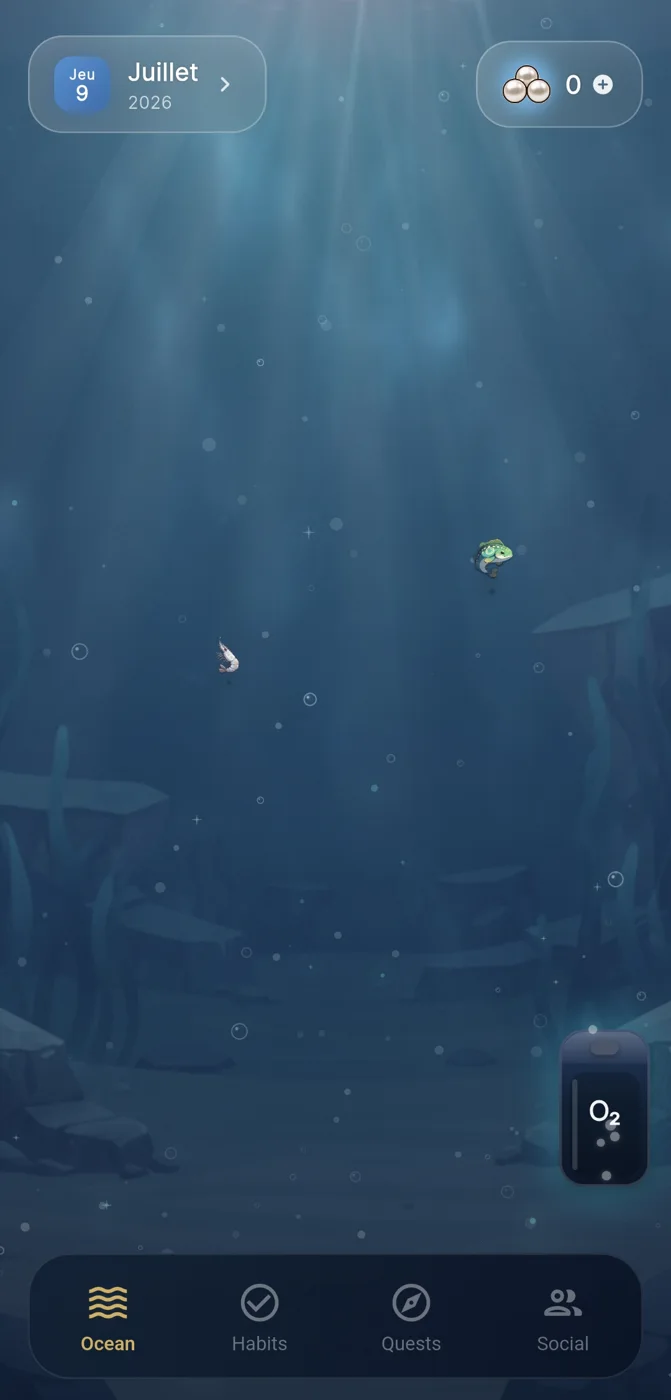
What to know before choosing a morning routine app for kids free
Searching for a morning routine app for kids free usually means looking for less friction at the start of the day: a clear sequence, fewer repeated reminders, and a way for a child to see what comes next. A free tool can be useful, but it is worth deciding first whether the problem is remembering tasks, getting started, following an order, or handling rushed transitions.
An app is a support for a routine, not proof that a routine will stick. Children may still need adult guidance, a simpler schedule, accessible task wording, or a change in the environment. Treat visual rewards and checklists as prompts that make repetition easier to notice, rather than as a promise of behaviour change.
- Choose one morning goal before choosing an app: sequence, independence, calmer transitions, or shared reminders.
- Check whether the free version supports the number of routines, people, reminders, or devices you need.
- Use age-appropriate language and keep responsibility with the adult setting the routine.
Start with a small, repeatable morning sequence
The strongest starting point is usually a short routine that can be repeated on ordinary mornings, not an ambitious list built for ideal ones. A sequence such as get dressed, eat breakfast, brush teeth, and pack a bag is easier to understand when each item describes one visible action.
Keep the order stable for long enough to become familiar. If a task is often skipped, first ask whether it is too broad, happens at the wrong time, needs supplies placed nearby, or depends on adult help. Splitting “get ready” into smaller actions often gives a clearer next step than adding more reminders.
Build in recovery. A missed day does not need to become a reset, a punishment, or a reason to abandon the routine. The useful next action is simply to return to the next available morning, perhaps with a shorter version of the list.
- Limit the first version to three to five actions.
- Put preparation tasks, such as laying out clothes, in an evening routine if mornings are crowded.
- Review the list after a week and remove steps that do not help.
How visual progress can help without creating pressure
Visual feedback can turn an invisible repeated action into something a child can notice. That can make a routine feel more concrete, especially when the child has difficulty seeing how small actions add up over time. The best visual system is one that stays understandable and does not overwhelm the routine itself.
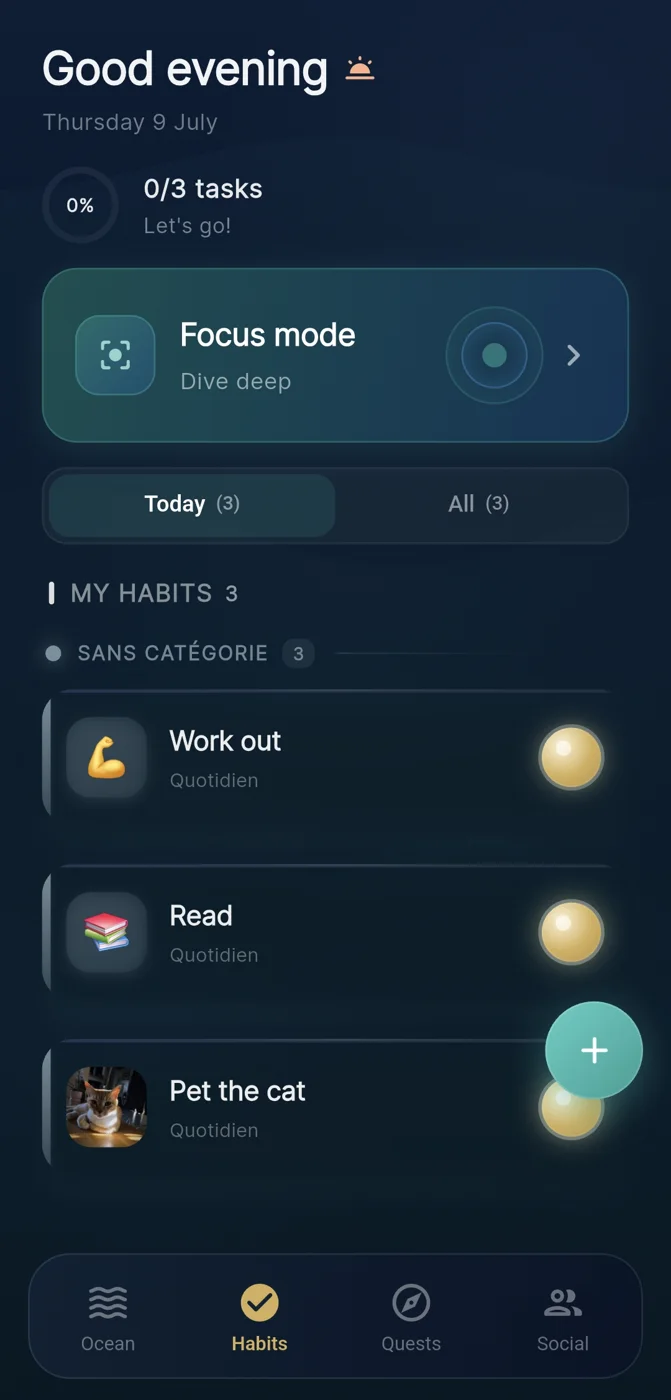
Reef is an IVRYN mobile habit tracker for iOS and Android. In its public product context, marking a habit complete adds a pearl to a growing ocean scene; this can offer a visual record of repeated actions. Reef presents its approach as habit-oriented design and does not claim that its mechanics guarantee a particular behaviour or health result.
Rewards should remain proportionate. If the reward becomes the only reason to act, an app may create arguments when progress is unavailable or a day goes badly. Pair the visual cue with practical language: “You finished the next step,” rather than “You must earn this.”
- Let the child see the routine, but avoid turning every missed item into a discussion.
- Use completion as information about the day, not a score for the child.
- Consider whether the app’s visuals are motivating, neutral, or distracting for that child.
Morning routine app for kids free: evaluate focus and social features carefully
Some morning routines include a short period of focused preparation: packing a school bag, finishing breakfast, or getting ready without switching activities. A timer or focused session can help when it gives a clear beginning and end, but it should not make every morning feel timed or competitive.
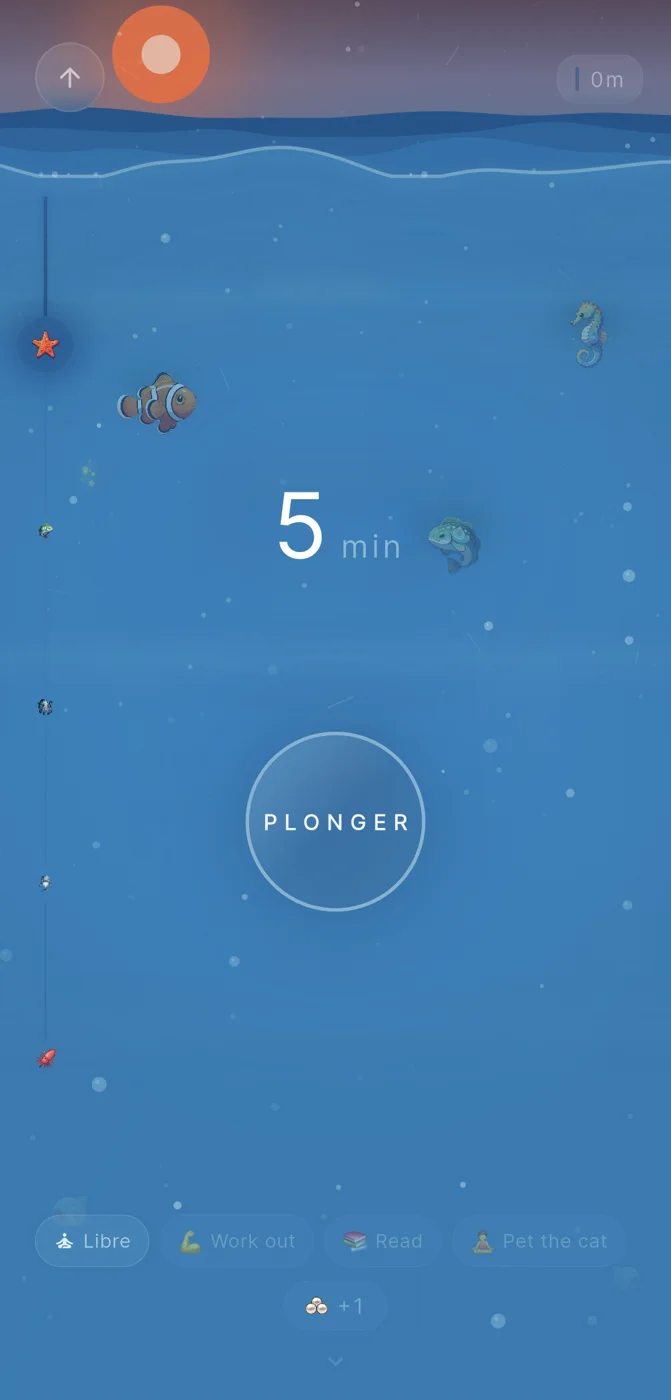
Reef’s focus feature uses an underwater dive theme and awards pearls for completed focus time. For a household, that may be more relevant to an older child or a shared preparation block than to every morning task. Decide whether focus time solves a real problem before adding it to the routine.
Accountability can also be useful, but it needs boundaries. Reef includes optional social crews, so users can choose whether to involve others. For children, any shared feature should be considered by a parent or guardian with attention to privacy, consent, supervision, and whether comparison with others would help or add pressure.
- Use a focus block only for one clearly defined activity.
- Keep social sharing optional and avoid making it a condition of success.
- Review privacy settings and family expectations before inviting anyone into a shared space.
Example decision aid: a calm first-week setup
Example: A parent wants a less chaotic school morning for an eight-year-old. Instead of creating a ten-step plan, they choose four actions: get dressed, eat breakfast, brush teeth, and put the bag by the door. Each action is written in the child’s everyday language and placed in the order it happens.
For the first five school days, the parent treats the list as a shared cue rather than a test. If breakfast runs late, the family completes the remaining essential steps and notes that the list may need adjustment. They do not try to recover every missed completion later in the day.
If using a visual tracker such as Reef, they could connect completion with seeing progress accumulate, while keeping the conversation focused on the next action. They would postpone social features unless the child and parent agree there is a clear, safe reason to use them. At the end of the week, they ask one practical question: which step most often slowed the morning? The answer guides the next edit.
- Can the child identify the next action without a long explanation?
- Can the routine still work after a late wake-up or a difficult morning?
- Does the reward support the routine without becoming a source of pressure?
- Are focus and social features genuinely useful, or simply extra complexity?
Make a decision based on fit, not promises
A free morning routine app is worth trying when it reduces planning effort and gives the family a simple way to return to a familiar sequence. It may be a poor fit when the child finds screens distracting, the routine changes daily, or the main barrier is an unresolved practical issue such as sleep, transport, supplies, or adult availability.
Before committing, look at the tool’s current free-plan terms, privacy information, device requirements, and any parental controls directly in its official materials. These details can change, so they should be checked at the time of use rather than assumed from general advice.
The relevant public Reef materials describe a visual, game-like approach to habit tracking and explain the product’s evidence methodology. They are useful context for understanding the design, but they do not establish that a particular child or family will experience a specific outcome. Choose the smallest setup that feels kind, clear, and easy to revisit.
- Try one routine for a short, defined period before expanding it.
- Keep a paper fallback for mornings when devices are unavailable.
- Change the routine when circumstances change; consistency does not require rigidity.
Frequently asked questions
Are free morning routine apps for kids guaranteed to improve behaviour?
No. A free morning routine app can provide reminders, sequencing, or visual progress, but it cannot guarantee behaviour change or a health outcome. Its value depends on the child, the routine, adult support, and whether the setup fits everyday circumstances.
How many tasks should a child’s morning routine include?
Start with three to five clear actions that can usually be completed on a normal morning. Add or split tasks only after the basic sequence is understandable and manageable.
Is it appropriate to use social accountability in a kids’ routine app?
It can be appropriate only when it is optional, supervised, and comfortable for the child and parent or guardian. Review privacy, consent, and whether sharing progress is supportive rather than pressuring the child.
Sources and further reading
These resources provide the wider reference frame. Product statements on this page are limited to the public information provided by Reef.