 Reef
Reef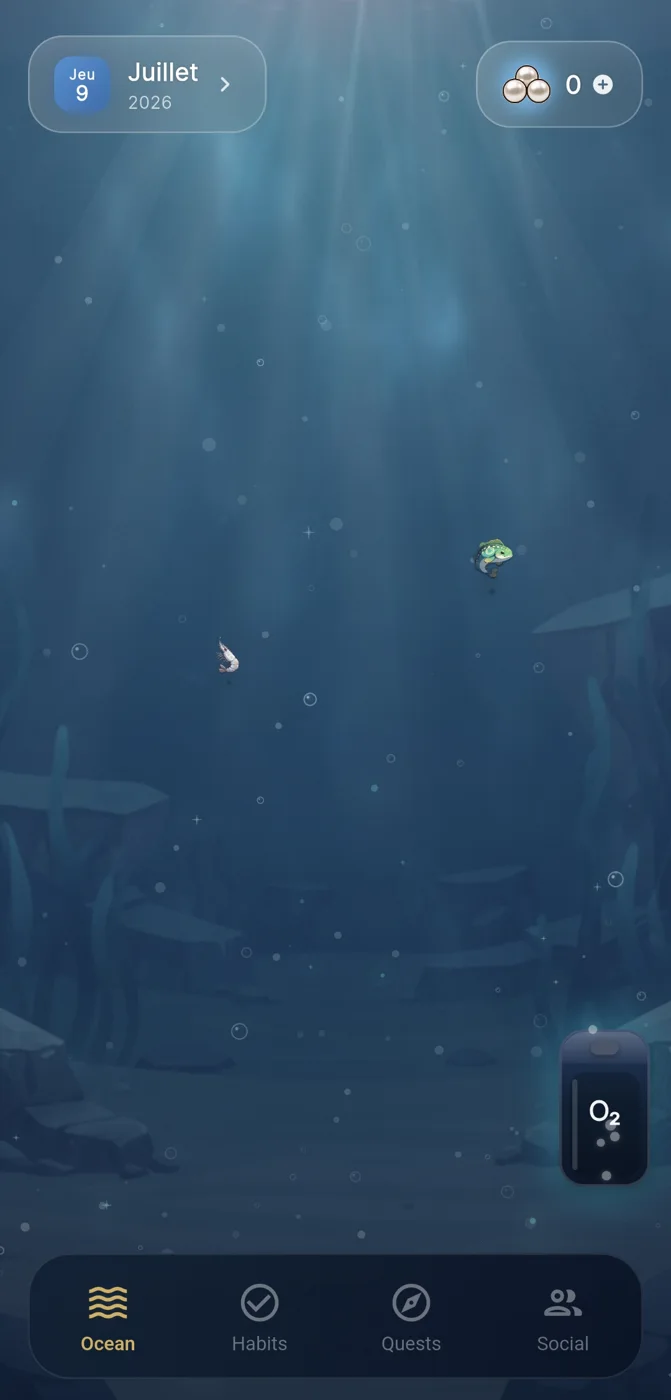
Direct answer
The best habit app for Android is the one whose daily loop you will actually repeat: visible progress, small repeatable habits, optional focus support and social accountability only when it helps. Reef is available on Android and iOS and turns kept habits into a living ocean. Reviewed 4 September 2026.
What “best habit app android” should mean for you
Searching for the best habit app android can produce a long list of trackers, streak tools, reminders, and gamified systems. The useful question is narrower: which app makes the specific action you want to repeat clear enough to do again tomorrow, while still feeling workable when life interrupts?
A habit app cannot guarantee motivation, consistency, health improvement, or a lasting behaviour change. It can, however, give repeated actions a visible place, reduce the effort of remembering what you intended to do, and help you notice progress over time.
Start with the habit rather than the app category. “Exercise more” is broad; “take a ten-minute walk after lunch on weekdays” is an action you can recognise as complete. The smaller definition gives you a fairer way to judge whether an app’s tracking and reminders fit your routine.
- Choose an app based on a real next action, not its most impressive-looking feature.
- Prefer a definition of success that you can complete even on an ordinary busy day.
- Treat app mechanics as support for a practice, not proof that the practice will stick.
Best habit app android: evaluate the daily loop
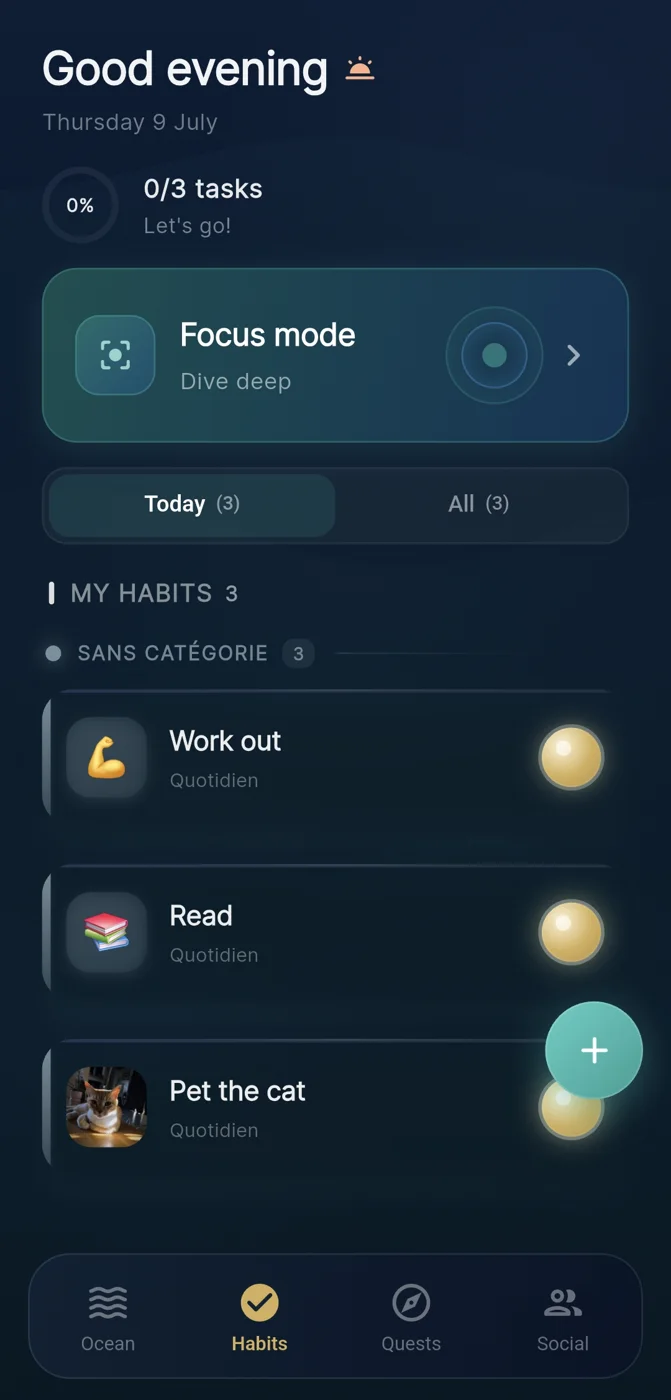
A practical Android habit app should make its daily loop understandable: choose an action, see what is due, mark it complete, and see a meaningful record of that completion. If completing an action is confusing or the record feels disconnected from the action, the system may add friction rather than remove it.
Visible progress matters because it turns individual completions into a pattern you can inspect. The point is not to create pressure from a perfect record. It is to make repetition legible, so you can distinguish between a plan that needs more time and one that needs a smaller or differently timed action.
Reef is an IVRYN mobile habit tracker available for iOS and Android. In Reef, completing a habit releases a pearl that contributes to a visual living ocean. This makes progress visible through an evolving visual environment, while remaining bounded by the product context: a pearl records a completed action; it is not evidence of a guaranteed personal outcome.
- Can you see today’s intended actions without digging through settings?
- Does completion produce a clear, calm record of progress?
- Can you understand your pattern without treating a missed day as failure?
- Does the visual reward support the action itself instead of distracting from it?
Use small repeatable habits, not heroic plans
The most durable starting point is often a small repeatable habit. A plan that is easy to repeat gives you more chances to learn what fits your day. It also makes it easier to recover after a missed day, because restarting does not require an unusually large burst of time or energy.
Build a habit around a stable cue when possible. For example, instead of setting a vague intention to read, attach a small action to something that already happens: read two pages after making tea, or review tomorrow’s priorities after closing work. The cue does not need to be perfect; it only needs to be recognisable enough to test.
Gentle recovery is part of the design, not a concession. Missing a day can be information about timing, effort, context, or competing demands. Review the plan, shrink the next step if needed, and resume. An app that makes progress visible can support that reset, but it should not turn a gap into a reason to abandon the habit.
- Make the first version smaller than your ideal version.
- Define the minimum completion clearly.
- After a missed day, resume with the next available opportunity rather than trying to compensate.
- Change one variable at a time: timing, cue, duration, or definition of done.
Decide whether focus support belongs in your habit system
Some habits need protected attention rather than a quick checkmark. If your goal involves studying, writing, planning, or another task that benefits from a clear beginning and end, focus sessions may be more useful than adding another reminder.
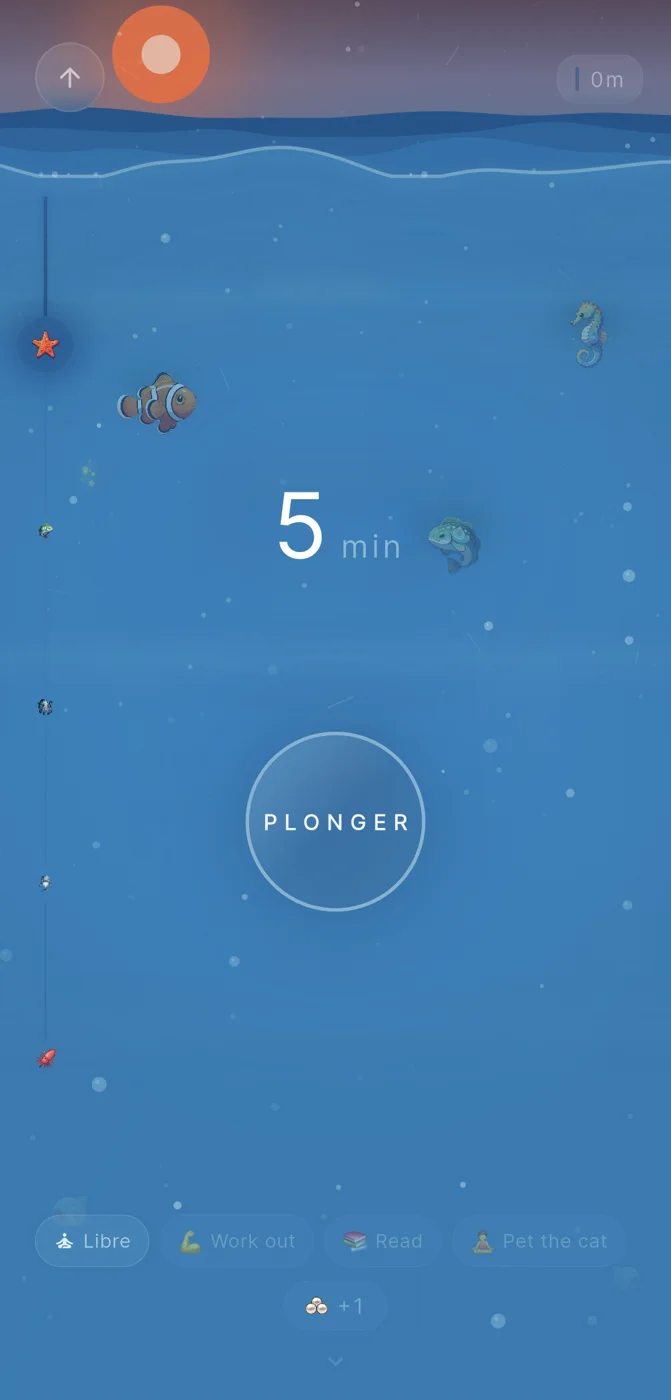
Reef uses a dive metaphor for focus sessions and rewards completed focus time with pearls. For someone who wants habit tracking and focus time represented in one visual system, that can make both kinds of completion visible in the same living ocean.
The limit is important: a timer or dive metaphor does not ensure concentration or output. It can help create a deliberate container for time, but interruptions, task difficulty, and personal circumstances still shape what happens in that session. Choose focus support when it helps you begin, not because it promises a particular level of productivity.
- Use a habit for a repeatable action; use a focus session for time you want to protect.
- Before starting, name one modest outcome for the session.
- At the end, record completion honestly and adjust the next session length if it felt unrealistic.
Choose social accountability only when it helps
Social features can be useful when you want a little shared visibility, encouragement, or accountability. They are not necessary for habit formation, and they are not equally helpful for every goal. Some people work better with a private routine, especially while they are still defining a manageable first version.
Reef offers optional social crews. Optional matters: you can use the habit and focus mechanics without making your routine a group activity, or choose a crew when shared accountability feels supportive. Joining a group should be a choice about your own preferences and boundaries, not an obligation created by the app.
Consider the kind of sharing that would genuinely help. A small crew with a simple shared intention may be easier to sustain than a broad social feed. Set expectations early: what will be shared, how often people will check in, and how missed days will be handled. No social feature can guarantee accountability or a behaviour outcome.
- Keep the crew optional and easy to leave if it adds pressure.
- Agree on supportive check-ins rather than comparison.
- Avoid sharing details you would not be comfortable making visible to the group.
- Use a private routine if social accountability makes the habit feel heavier.
Example decision aid: choose a gentle setup for the next two weeks
Example: Maya wants to restart a reading habit, protect evening study time, and decide whether to involve a friend. She is not looking for a promise that she will become consistent; she wants a system that makes her small completions visible and helps her restart after interruptions.
For the habit, Maya chooses “read two pages after dinner” rather than “read every evening for an hour.” For focus, she schedules two short evening dive sessions each week for a course module. In Reef, completed habits and completed focus time can release pearls into her visual ocean, giving her a shared visual record without claiming that the record causes her to study or read.
Maya starts privately for seven days. At the end of the week, she checks whether dinner is a reliable cue and whether the focus sessions are too long. If the routine feels supportive, she may invite one friend to an optional social crew for simple check-ins. If it feels pressured, she keeps it private and reduces the plan rather than quitting.
- Step 1: Select one action small enough to repeat this week.
- Step 2: Add focus sessions only for work that needs a protected block.
- Step 3: Decide whether private tracking or an optional crew better fits your boundaries.
- Step 4: Review after seven days: keep, shrink, reschedule, or remove one element.
- Step 5: Treat the next completion as the restart after any missed day.
A final checklist before you act
Before choosing a habit app, test the fit between its mechanics and your actual week. The best choice is not necessarily the app with the most features; it is one whose daily loop, progress view, focus support, and social options help you return to a manageable action.
Reef’s public approach is grounded in making repeated actions visible through habits, focus dives, pearls, and a living ocean, with social crews available when chosen. The relevant public materials describe its habit-design and gamified-tracker context, but this article does not claim a first-party study, competitor testing, or guaranteed outcomes.
Give any setup enough time to notice practical friction, then change the plan gently. If the app helps you see a pattern and resume after missed days, it may be a useful fit. If it makes ordinary interruptions feel like failure, simplify the habit, reduce notifications, use it privately, or choose a different approach.
- Your habit is specific and small enough for a busy day.
- You know what counts as completion.
- Progress is visible without requiring perfection.
- Focus sessions are used only where protected time helps.
- Social accountability is optional and aligned with your boundaries.
- You understand that the app supports a process, not a guaranteed result.
Frequently asked questions
What is the best habit app android users should choose?
The best habit app for Android is the one that fits a specific, repeatable action and makes progress easy to see without turning missed days into failure. Look for a simple daily loop, clear completion records, and optional features that match your needs, such as focus sessions or social accountability.
Can Reef guarantee that I will build better habits?
No. Reef is a mobile habit tracker for iOS and Android that makes completed habits and focus time visible through pearls in a living ocean. It does not guarantee behaviour, health, motivation, productivity, or any other personal outcome.
Do I need a social crew to use Reef?
No. Reef social crews are optional. You can use Reef privately for habits and focus sessions, or choose a crew when shared accountability feels helpful and appropriate for your boundaries.
Sources and further reading
These resources provide the wider reference frame. Product statements on this page are limited to the public information provided by Reef.